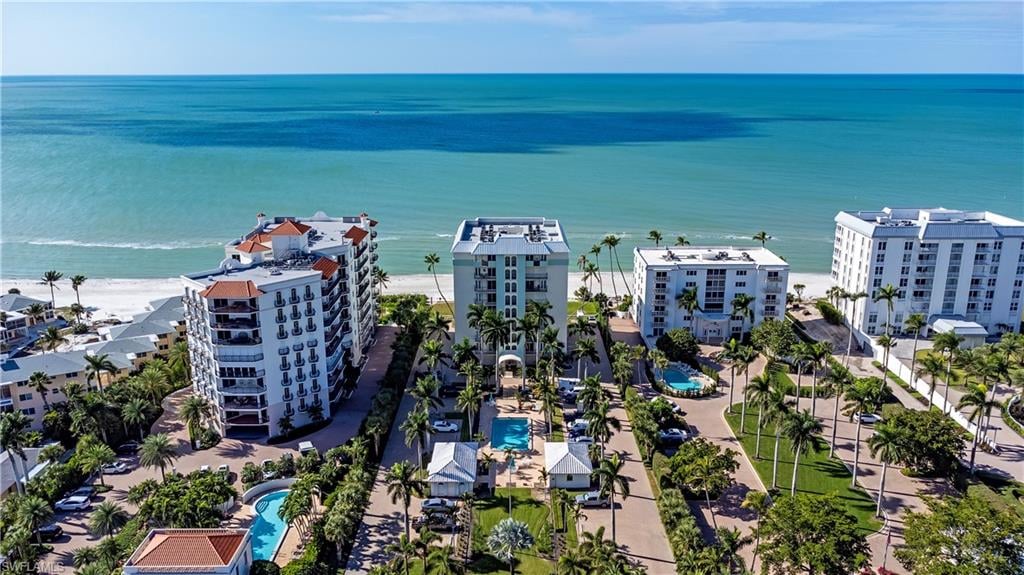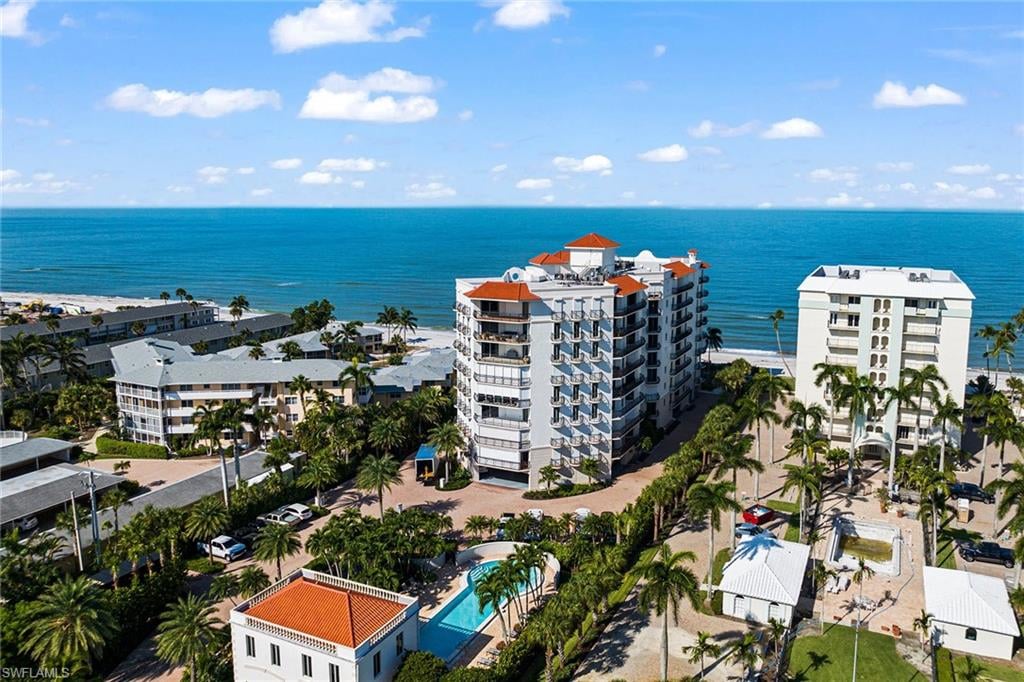
The Landings - Riverside Yacht Club Estates
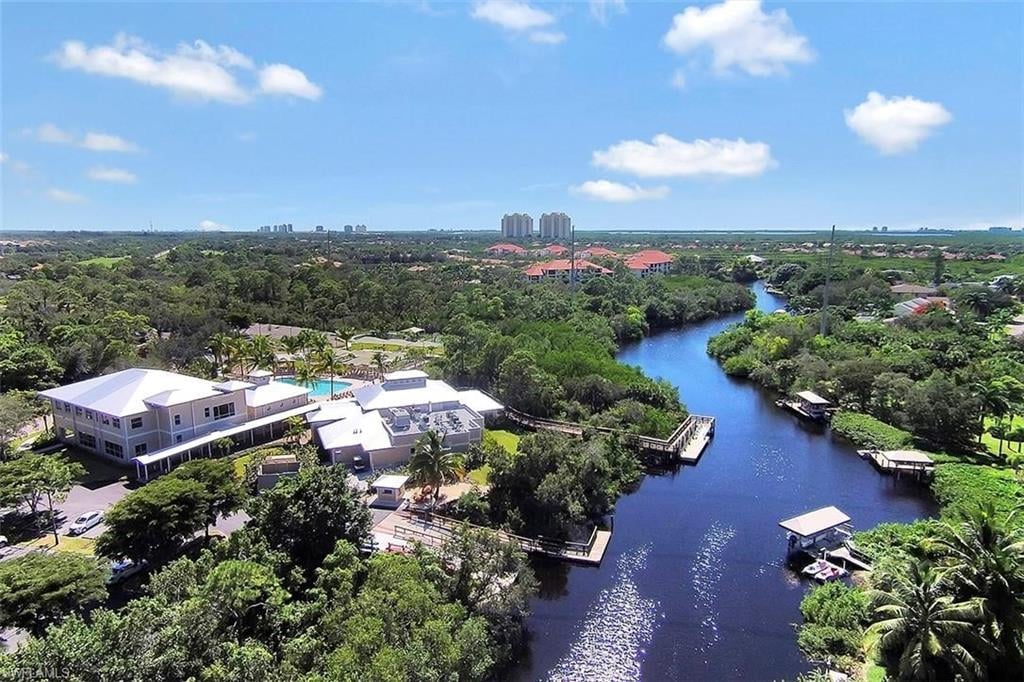
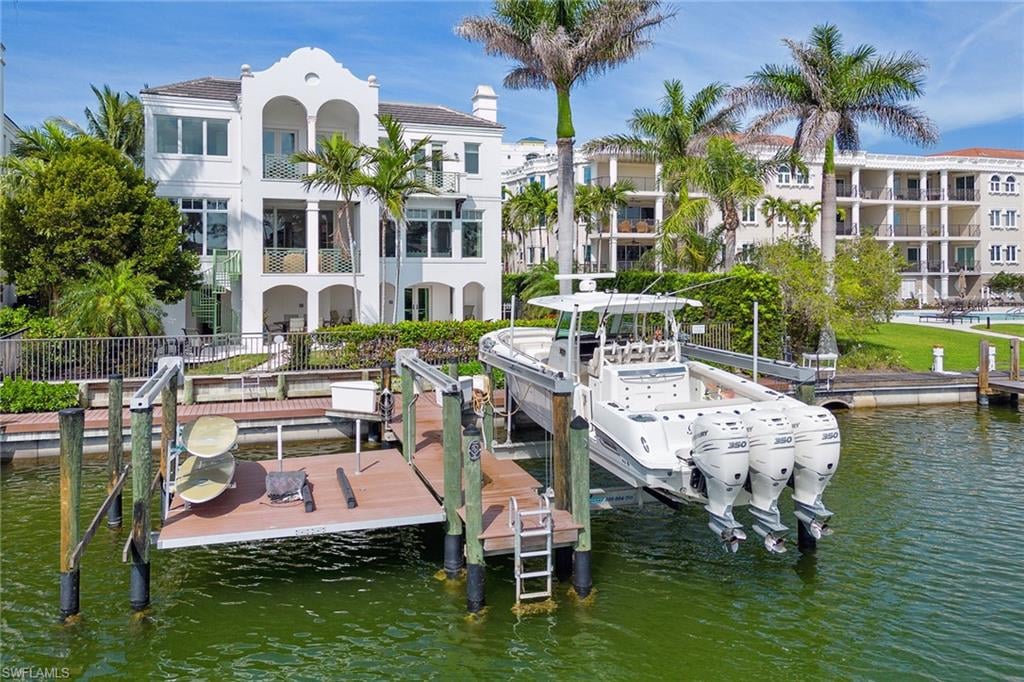
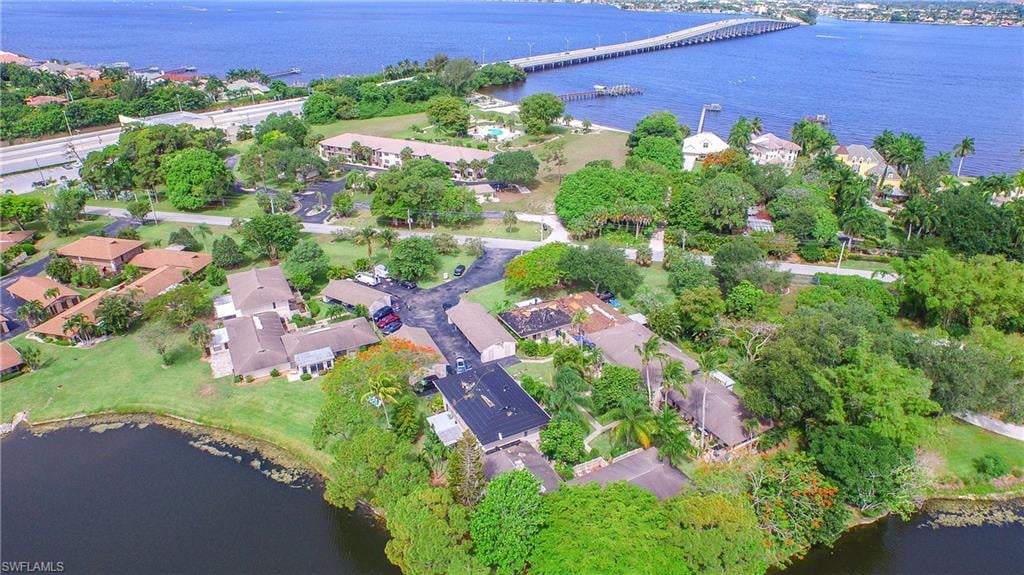
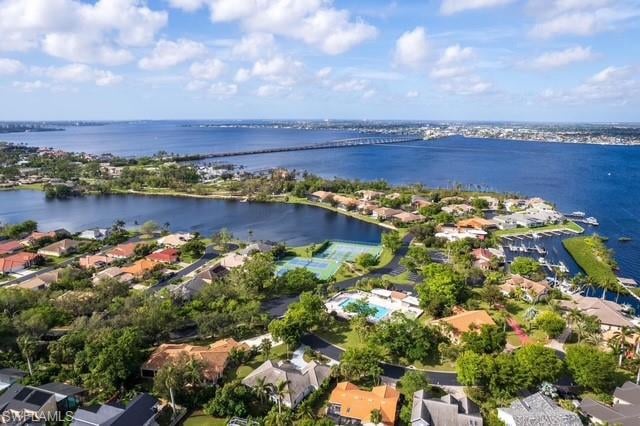
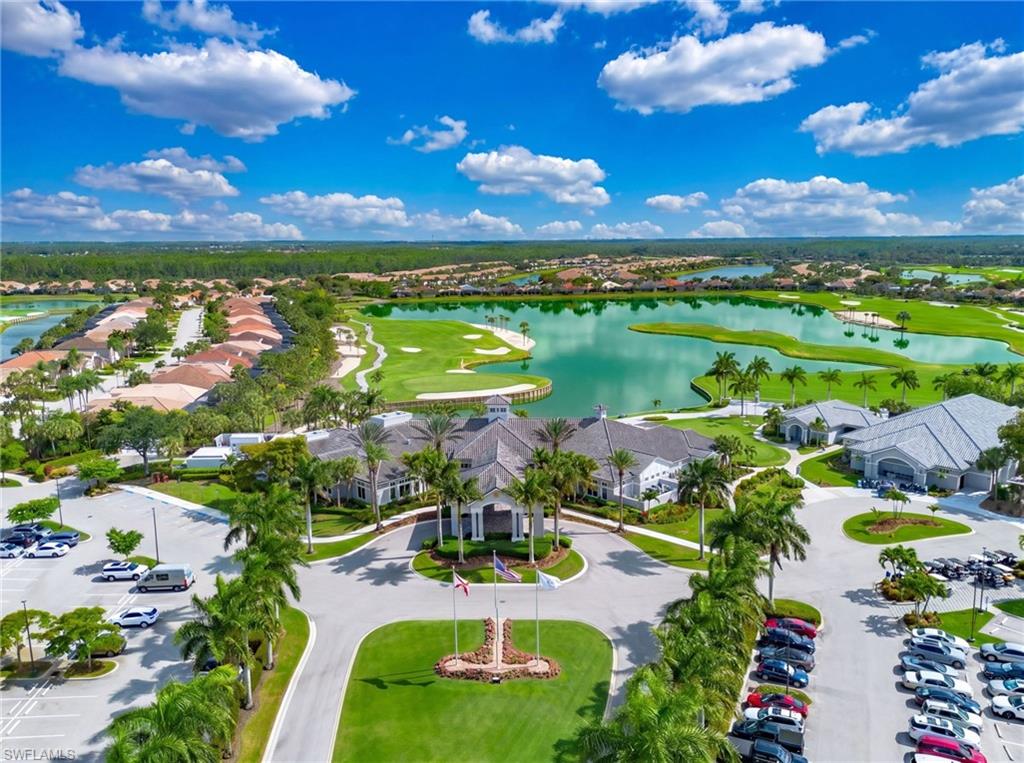
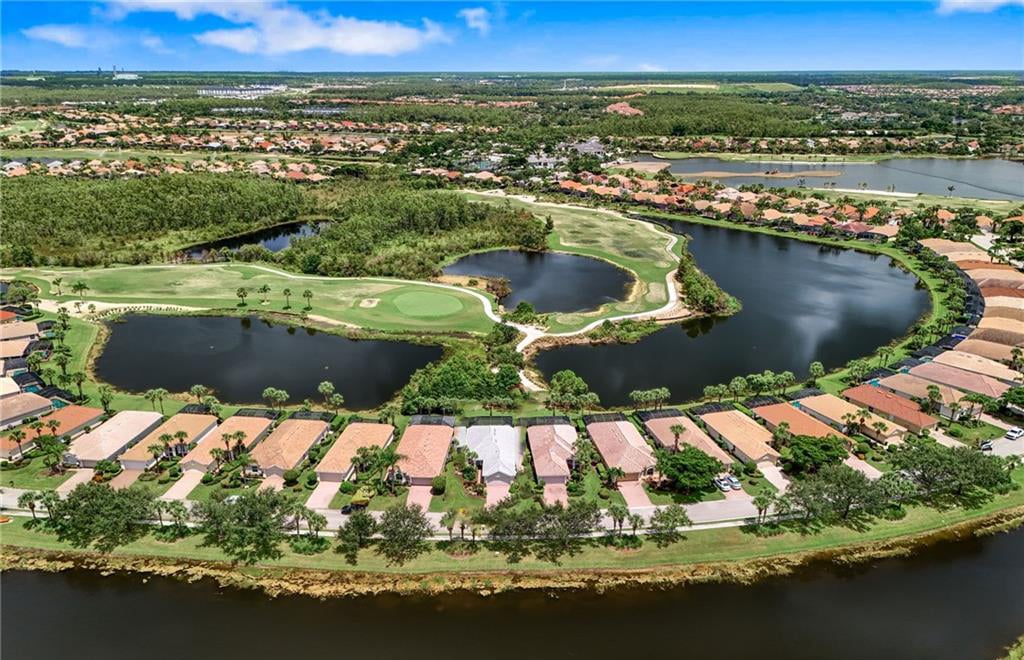
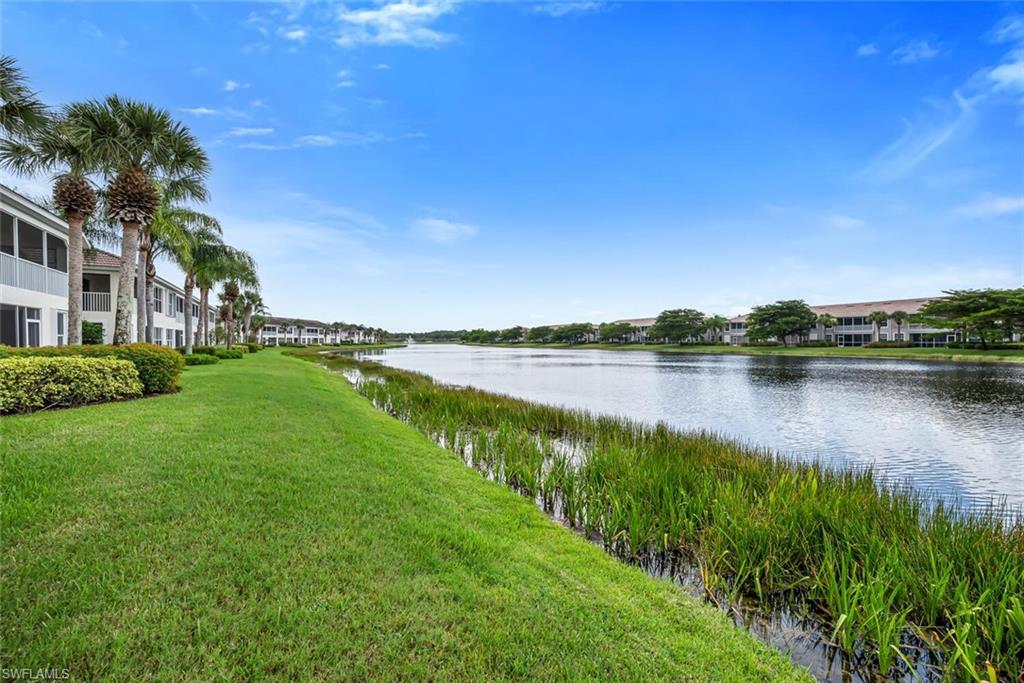
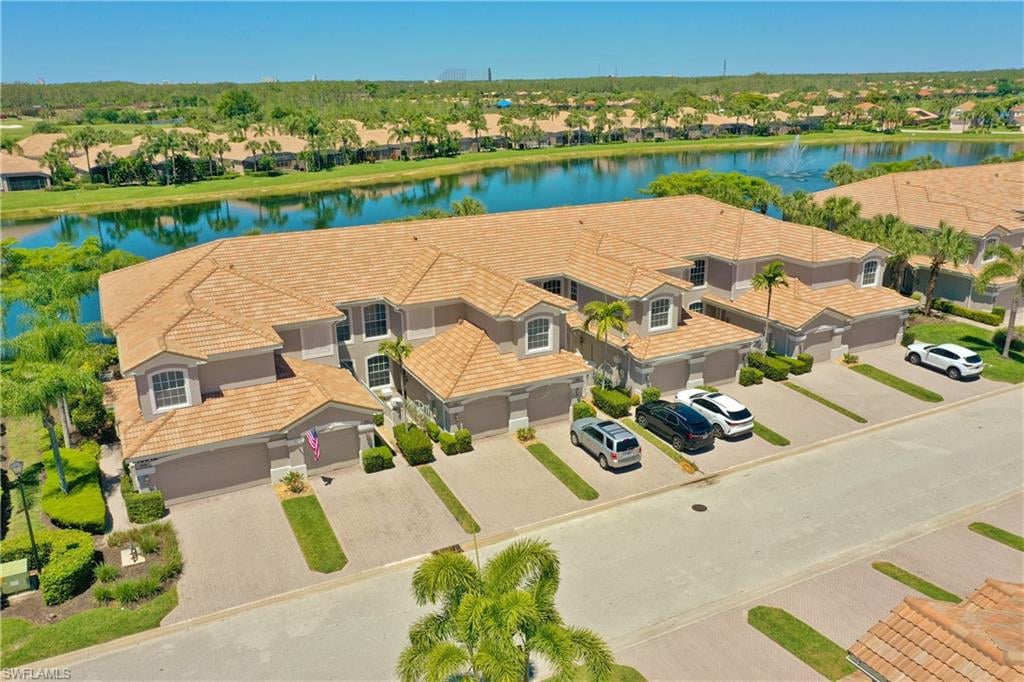
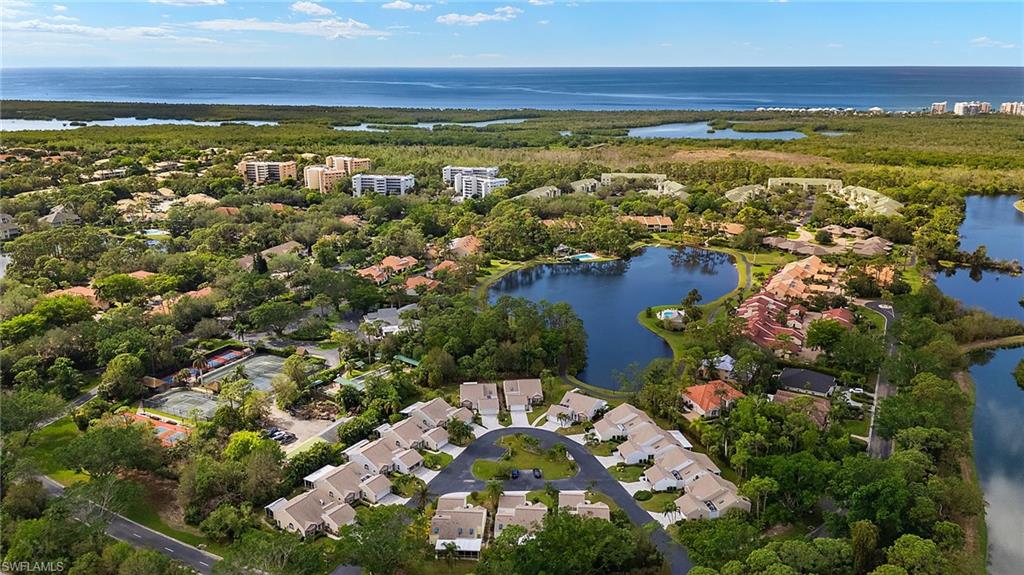
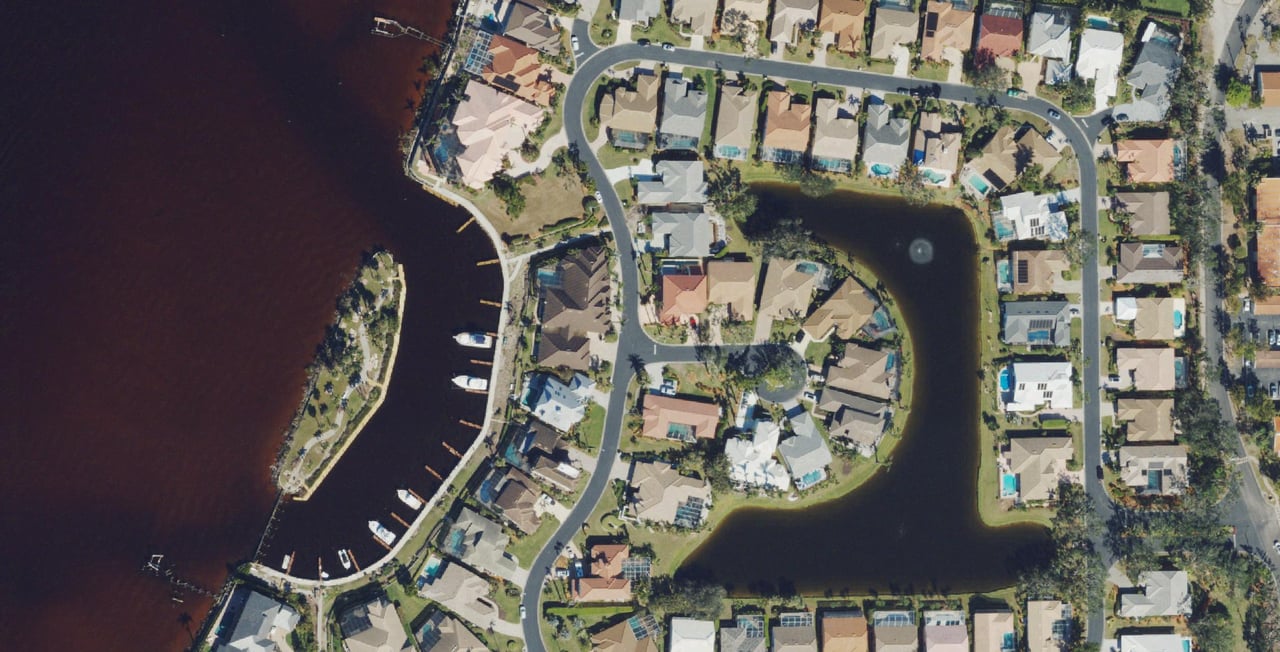
The 83-home gated enclave inside The Landings where a detached home can come with its own separately deeded marina slip, on a protected basin with open Gulf access.
The 83-home gated enclave inside The Landings where a detached home can come with its own separately deeded marina slip, on a protected basin with open Gulf access.
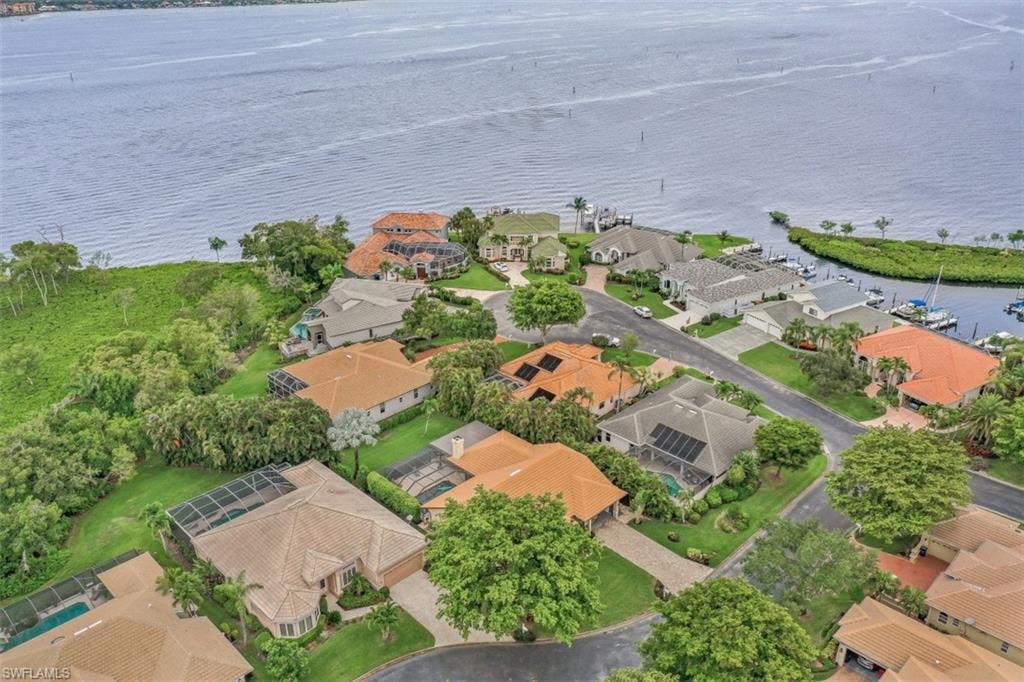
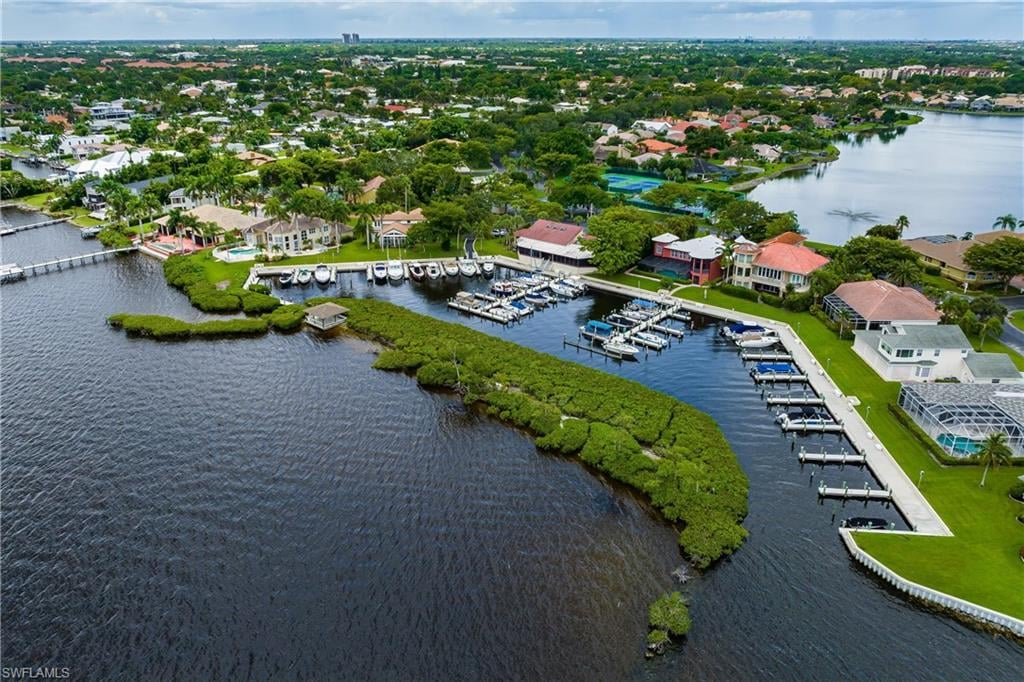
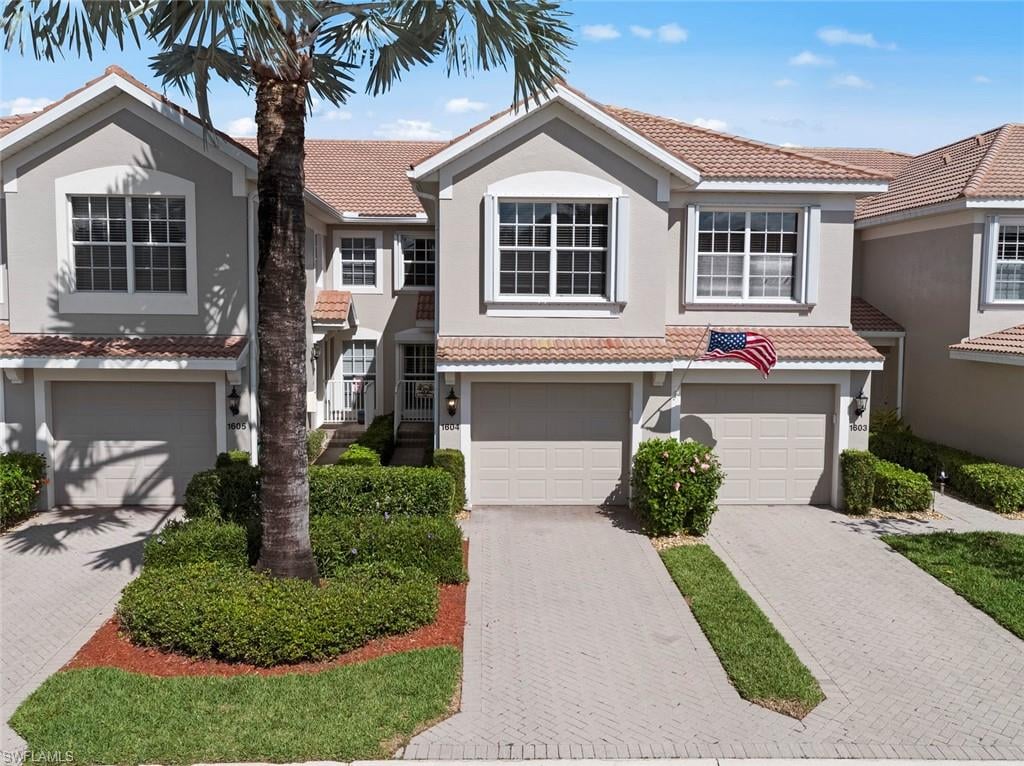
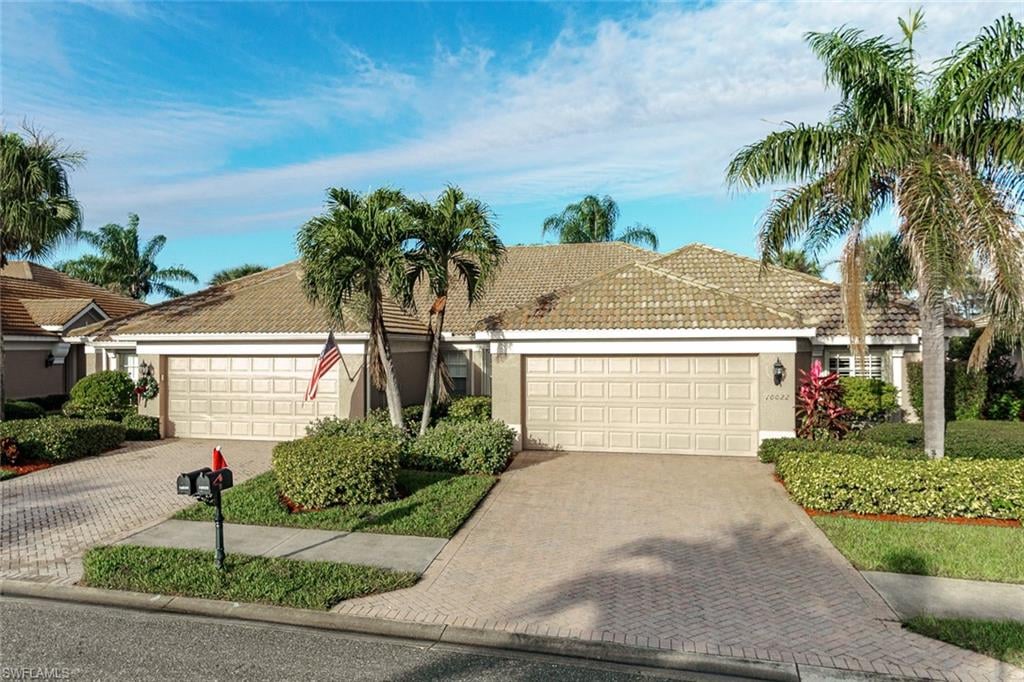
Riverside Yacht Club Estates is a gated enclave of 83 detached single-family homes on 92 platted lots inside the master-planned community of The Landings Yacht, Golf and Tennis Club in Fort Myers, Florida. It is the only address inside The Landings where a house comes with a separately deeded, individually taxed marina slip, and the only one that sits outside both the condominium regime and the community's two core homeowner associations.
By Jesse McGreevy and Marc Comisar, McGreevy and Comisar, Domain Realty Group. Updated September 2026.
If you are selling a waterfront home here, that combination is your entire pricing argument. If you are buying, it is the reason this subdivision behaves nothing like the twelve condominium villages that surround it.
Riverside Yacht Club Estates is the only neighborhood inside The Landings where a buyer gets a detached home on a platted lot together with fee simple title to a boat slip. Thirty five slips are their own tax parcels, assessed at $20,000 each, and they have changed hands 77 times since 1992 independently of any house.
That is not a marketing distinction. It is a recorded one, and it has three consequences a buyer feels immediately.
Everywhere else in The Landings, marina access is space available through the club. Here the Sixth Amendment to the Declaration (OR 3026/3159, 1998) created the slips as parcels and prescribed the deed language that conveys them, with the Marina Plan recorded at OR 3026/3236 through 3238. A Riverside slip is fee simple title to an envelope of air space beginning six inches above the river bottom, with no upper boundary.
⚠️ And it matters in the other direction too. The club's own membership instruments expressly exclude Riverside members from the club marina's wet slips, dockage and dry storage. Read together with covenants that leave no room for a trailer, a lift or dry storage on a lot, a deeded slip here is not a nicety. For most owners it is the only lawful way to keep a boat.
The Cape Coral Bridge is upriver from Riverside, not downriver. Running west toward open water, the only fixed structure between a Riverside slip and the Gulf is the Sanibel Causeway main channel span at 70 feet (NOAA Coast Pilot 5, Chapter 4, 13 September 2026). Every 55 foot Caloosahatchee bridge matters only to an owner headed east toward Lake Okeechobee.
Riverside Yacht Club Estates is a Chapter 720 homeowners association of detached single-family homes. Florida Statutes 553.899(3)(a) reaches only condominium and cooperative buildings of three or more storeys, and 553.899(4) exempts single-family dwellings; 718.112(2)(g) reaches only a residential condominium association. Nine of the twelve condominium associations inside The Landings carry milestone and SIRS obligations. Riverside carries neither.
If you're searching for the best realtor for Riverside Yacht Club Estates in The Landings, Fort Myers, whether you're ready to sell your Riverside Yacht Club Estates home or buy your next one, McGreevy and Comisar is the team that delivers. We lead Domain Realty Group, the #1 real estate team in Southwest Florida since 2012, Top 1% Nationally since 2008, with over $2.5 billion sold as a team and $900 million in personal sales between Jesse and Marc.
Recent Riverside Yacht Club Estates track record (last 12 months): in the trailing twelve months Riverside Yacht Club Estates has seen one resale close through the Southwest Florida MLS, MLS 2026004922 at 12756 Yacht Club Cir, listed at $899,000 and closed at $790,000 on 10 June 2026, $360.24 per square foot, 38 days on market.
⚠️ We are showing you the honest denominator rather than a flattering one. One closed sale across 83 homes is roughly 0.9% annual turnover. No agent, ours included, can claim a meaningful market share of a single transaction, and any team that quotes you a median sale price or an average sale-to-list ratio for this subdivision is computing it from one data point. What we can tell you is what that scarcity does to your position, and that conversation is the reason to call.
Honors and recognition: - Top 1% Real Estate Agents Nationally Since 2008 - 5 Star Award for Customer Satisfaction for 21 Straight Years. Only 5 out of 21k+ Licensees (Gulfshore Life Magazine) - #1 Team in Southwest Florida since 2012 - McGreevy and Comisar and their Domain Realty Group team have sold over $2.5 Billion in Real Estate - McGreevy and Comisar alone have over $900 million in Sales - Nationally Recognized Top Producing Realtors - Platinum Sales Production Award Winners
Selling your Riverside Yacht Club Estates home? Get a free home valuation at https://mcgreevyandcomisar.com/home-valuation OR call Jesse direct at (239) 898-6072.
Buying a home in Riverside Yacht Club Estates? Call Marc at (239) 287-5873 for a personalized buyer consultation.
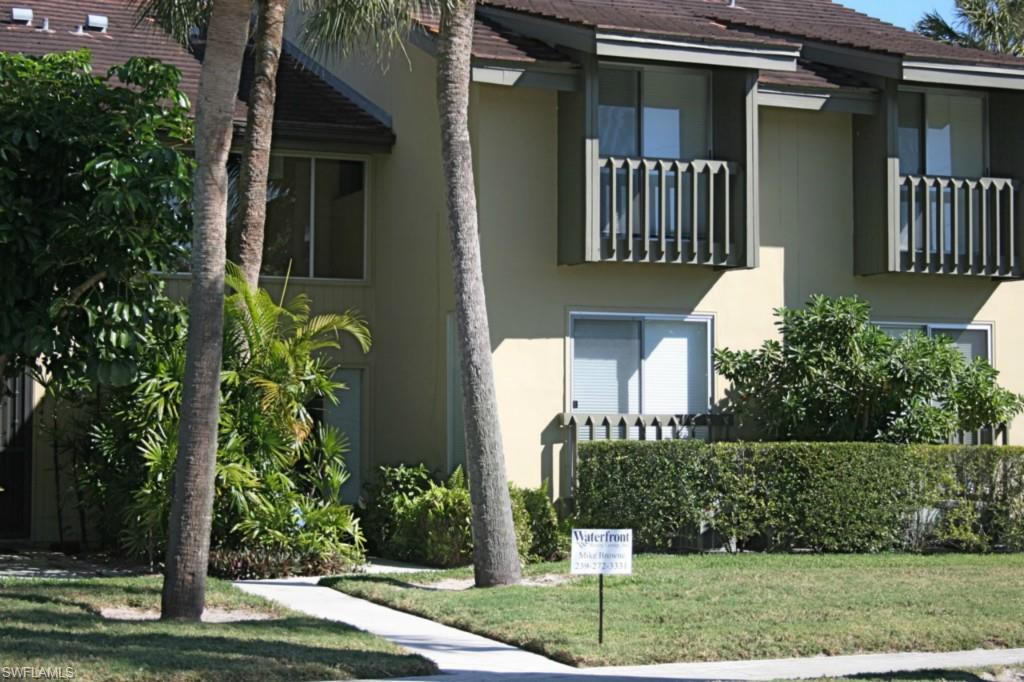
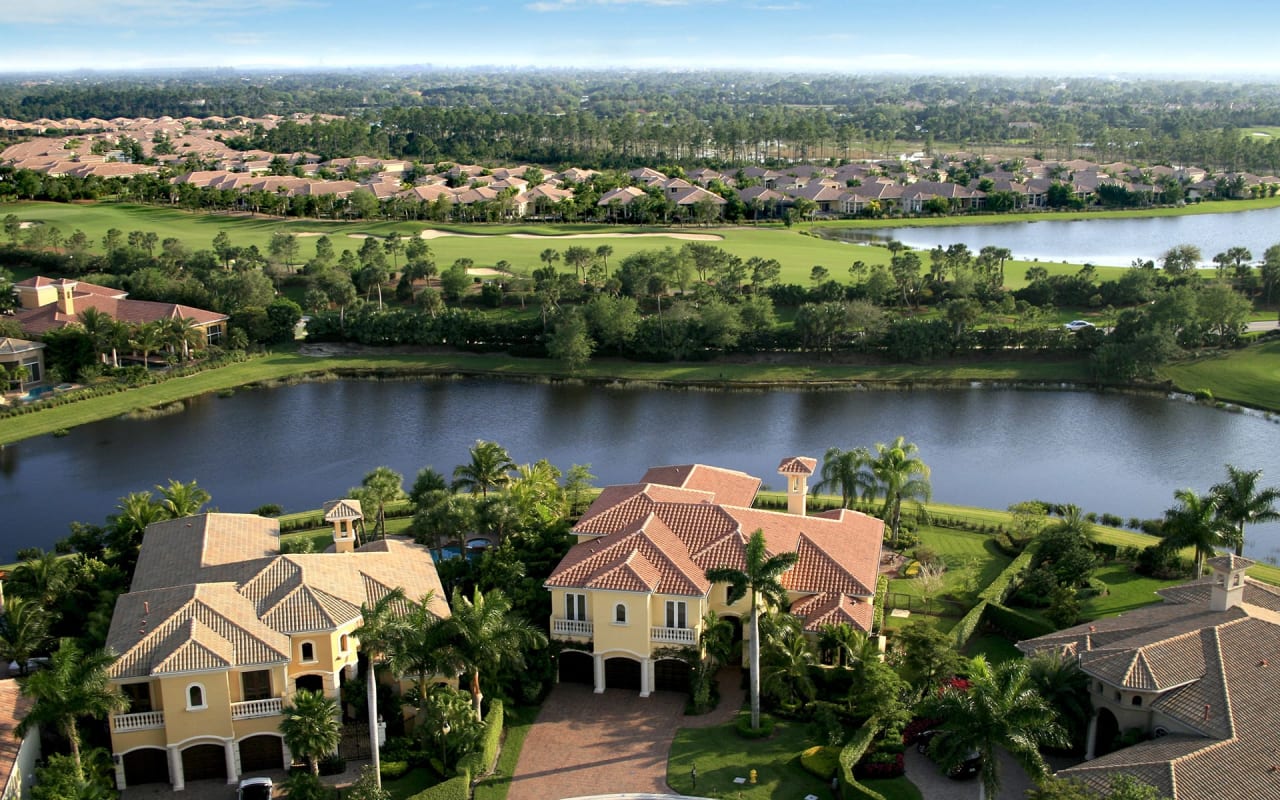
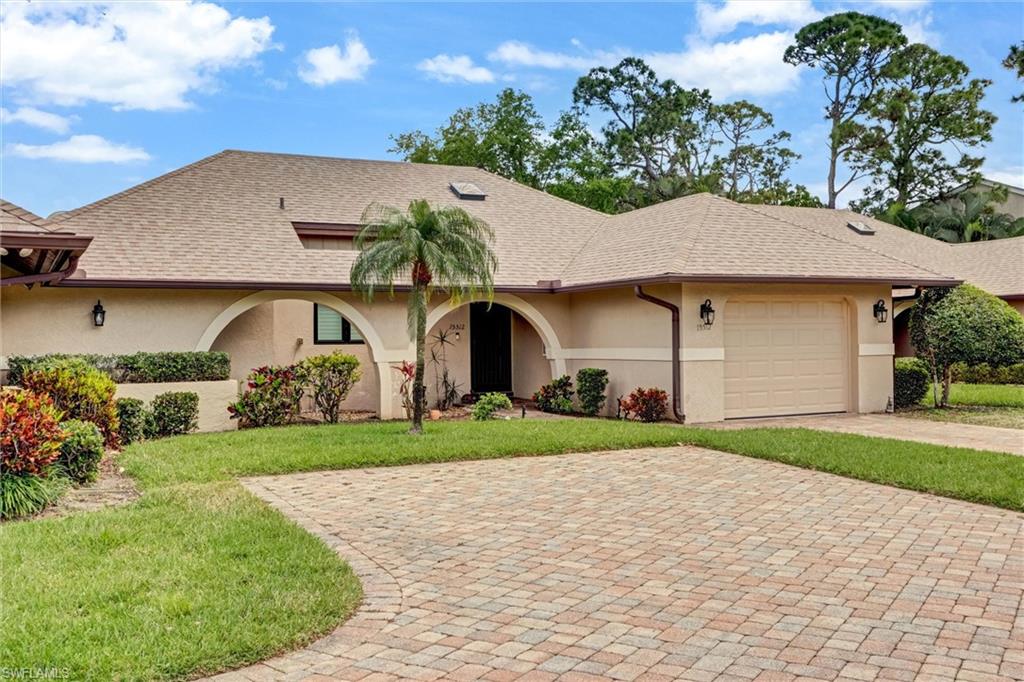
Riverside Yacht Club Estates holds 92 platted lots, eight of which were absorbed into neighbouring parcels, leaving 84 lot parcels: 83 carrying a house and exactly one still vacant. The houses run 1,521 to 7,091 heated square feet, are overwhelmingly single-storey concrete-block ranches, and 91 percent of them have a pool.
The plat that created Riverside Yacht Club Estates, Plat Book 47, Pages 21 through 24, numbered 92 lots, and the original Declaration allocated assessments as "one ninety-second" shares against that number. Eight of those lots no longer exist as separate tax parcels. They were combined into the lot next door, which the Declaration permits, and the Lee County Property Appraiser's own condensed legal descriptions name six of the eight on the face of the roll: Lot 30 into 12796 Yacht Club Circle, Lot 33 into 12788, Lot 64 split between 12817 and 12807, Lot 67 split between 12805 and 12801, and Lots 91 and 92 split between 12745 and 12741 (LCPA 2026 Preliminary NAL12D8 certified tax roll, subdivision code 17-45-24-02, https://www.leepa.org/Roll/NalZip.aspx).
Note the arithmetic trap before anyone repeats it wrong. Three of those lots were halved and each half went to a different neighbour, so "eight lots absorbed" is five whole lots plus three lots split two ways. It is not eight homeowners buying the vacant lot next door.
That leaves 84 residential tax parcels. Eighty-three carry a house. One is vacant: 12792 Yacht Club Circle, platted Lot 31, STRAP 17-45-24-02-00000.0310, assessed for 2026 at $983,535 with a building value of zero, sitting on the yacht basin between the two most valuable houses in the subdivision. Its last recorded sale was 3 March 2015 at $650,000.
Two Lee County products disagree on how many houses are here, and this page reports both rather than picking one: the certified 2026 Preliminary NAL roll, exported 1 July 2026, returns 83 improved single-family parcels, while the live Lee County GIS parcel layer and the Lee County GIS Building Footprints service (https://services2.arcgis.com/LvWGAAhHwbCJ2GMP/arcgis/rest/services/Building_Footprints/FeatureServer/0, filtered to STRAP 17452402%) return 85 improved parcels and 85 distinct single-family building footprints. The flood analysis elsewhere on this page is computed on the footprint layer and therefore says 85. Both figures are cited, both are county products, and they carry different dates. If you need the number to be exact for a specific purpose, order it from the Property Appraiser in writing on the day you need it.
Three home parcels and one slip parcel appear on the certified NAL roll and in the Florida Department of Revenue sales file but return nothing from the LCPA address search, the legal-description search or the cost-card service, and no Folio ID has been issued for them: 10132 Bertram Lane, 10134 Bertram Lane, 12827 Yacht Club Circle and Marina Slip 23. The building-footprint layer names two more address-suppressed parcels, 10106 Hatteras Court and 12833 Yacht Club Circle. The most likely explanation is an owner-record confidentiality exemption under Fla. Stat. §119.071(4)(d), which the Property Appraiser administers through its Disclosure Exemption programme (https://www.leepa.org/DisclosureExemption/DisclosureExemptionInfo.aspx).
The practical consequence matters more than the cause. Every characteristic table below is built on 80 readable homes, not 83. Bedroom counts, bath counts, storey counts, model codes and extra features are all n=80. Values, year built and sales for the suppressed parcels come from the certified roll and the DOR sales file, which do carry them.
Heated area was reconstructed for every readable home from the LCPA cost card's building sub-area detail (http://fieldcards.leepa.org/CostCard/Folio/{FolioID}?TaxYear=2026), summing every sub-area at 100 percent of base. That matters, because Lee County's NAL "LivingArea" field actually carries total area under roof. Anyone rebuilding these numbers from the NAL alone will publish a 16,989 square foot house that is really 7,091.
The smallest is 1,521 heated square feet at 12834 Yacht Club Circle, built 1996. The median is 2,202. The largest is 7,091 at 12788 Yacht Club Circle, which gets its own section below.
The storey split across all 83 homes is 63 one-storey, 16 two-storey and three three-storey, plus one house the older roster silently dropped: 12800 Yacht Club Circle, which Lee County codes at 1.8 storeys because of the half-storey under its Cape Cod roof. It is 1,810 heated square feet on the basin, built 1991. Sixty-three plus sixteen plus three is 82. The 1.8-storey house is the eighty-third.
Across the 80 readable homes the bed mix is 3BR (58), 4BR (15), 5BR (6) and 6BR (1), plus three 2-bedroom homes that earlier inventories left out entirely: 12844 Yacht Club Circle at 1,983 square feet, 12764 at 2,242 and 12767 at 2,132 on the lake. None of them is small. They are large two-bedroom ranches, which is a real and sellable product here, not a data error.
Baths run to 6.5, not 5.5. The house that sets the ceiling is 12796 Yacht Club Circle, a 6-bedroom, 6.5-bath riverfront home of 6,722 heated square feet (LCPA cost card, Folio for STRAP 17-45-24-02-00000.0290).
Lee County assigns every improvement an architectural model code, which is the county's classification rather than an agent's adjective. Across the 80 readable homes:
LCPA model | Count | What it is on the street |
|---|---|---|
102 Ranch | 64 (80%) | The default Riverside house: single storey, hip or gable concrete tile, 3BR/2BA, attached garage, screened cage on the back |
100 Colonial | 11 | Two and three storey, formal massing, 3 to 5 bedrooms |
108 Southern Colonial | 3 | The riverfront statement houses, all columned two-storey: 12788, 12784 and 12782 Yacht Club Circle |
110 Southern Ranch | 1 | 12796 Yacht Club Circle, the 6BR/6.5BA river house |
107 Southern Cape Cod | 1 | 12800 Yacht Club Circle, the 1.8-storey |
Read the element codes on the cost cards and the subdivision is remarkably consistent. Exterior wall code 17, CB stucco. Roof cover code 7, concrete tile. Interior wall code 5, drywall. Heating fuel electric, forced air ducted, air conditioning central. Quality codes run 3.0 average through 4.0 and above, with the riverfront houses at the top of that band. If you are budgeting a renovation here, you are working on a 1990s Florida block-and-tile house, and that is true on nearly every lot.
From the LCPA extra-features schedule, counted across the 80 readable homes: 73 have a pool, which is 91 percent. Forty-two have a concrete patio, 34 a brick-and-tile patio, 21 a spa, eight a fireplace. Six have a residential pier, five have a concrete seawall, four have a wooden boat dock, and exactly one has a residential elevator, at 10123 Bertram Lane.
Only seven readable homes have no pool at all: 12846, 12820, 12772, 12750, 12742, 12821 and 12793 Yacht Club Circle.
The seawalls, piers and private docks sit exactly where you would expect, on the river and basin row: 12788, 12784, 12782, 12780 Yacht Club Circle and 10136 Bertram Lane. So a handful of riverfront owners have dockage at the house in addition to whatever deeded slip they hold in the basin.
The largest house inside The Landings stands in Riverside Yacht Club Estates: 12788 Yacht Club Circle, 7,091 heated square feet inside 16,989 square feet under roof, on two platted lots plus a vacated public right-of-way. Lee County assesses it at $2,797,107 for 2026, and it sold in 2014 with the marina's only double slip.
STRAP 17-45-24-02-00000.0320, Folio 10203735. The recorded legal reads RIVERSIDE YACHT CLUB ESTS PB 47 PG 23 LTS 32 + 33 + VAC R/W OR 2577/1514, which is two platted lots plus a right-of-way the county vacated under Petition 94-35 and Resolution 95-02-08. The result is 0.505 acres, 21,998 square feet, the largest parcel in the subdivision and roughly 2.2 times the subdivision's median lot.
Built 1996. Two storeys, 5 bedrooms, 5.5 baths. LCPA model 108 Southern Colonial, quality grade 4.0 above average, ceiling heights of 11 to 13 feet. The 7,091 heated square feet is 3,214 of base area plus 772 of cathedral floor area plus 3,105 of finished upper storey, taken from the cost card's sub-area detail.
The gap between 7,091 heated and 16,989 under roof is 9,898 square feet of unheated structure: a 2,786 square foot screened pool enclosure, 946 square feet of finished garage, 2,939 square feet of finished open porch, plus balcony and courtyard. It is a 7,091 square foot house wrapped in a 16,989 square foot footprint.
From the LCPA extra-features schedule for this parcel: residential pool, waterfall pool, spa, 212 feet of concrete seawall, a 52 by 4 foot wooden boat dock, a 30 by 3 foot residential pier, brick-and-tile patio, 1,868 square feet of concrete patio, an outdoor kitchen, an outdoor shower and lawn irrigation.
The 2026 certified just value is $2,797,107, of which $2,112,259 is land, meaning 76 percent of the assessment is dirt and water frontage. The 2025 figure was $2,886,291. The land line on the cost card carries frontage code 132, SFR River, zoning RM-2.
It last sold on 16 September 2014 for $2,425,000, instrument 2014000193951, and that deed conveyed the house together with Marina Slips 31 and 32, the only double slip parcel in the basin (STRAP 17-45-24-02-00031.0000). Before that, the vacant lot sold on 1 September 1993 for $675,000, OR 2426/645, which is still the dearest homesite ever sold in the subdivision.
The smallest residence inside The Landings is 647 heated square feet at 4160 Steamboat Bend East. At 7,091, 12788 Yacht Club Circle is roughly eleven times that, and it is the largest dwelling of any type, house or condominium, inside the gates. The runner-up is also in Riverside Yacht Club Estates and also on the river: 12796 Yacht Club Circle at 6,722 heated square feet.
Riverside Yacht Club Estates was built water first. The first three construction permits here all issued on 6 July 1990, on consecutive numbers, for three adjoining basin lots. Riverfront went up in 1990 and 1991, the interior in 1993 and 1994, the lake row in 1995 and 1996, and the last house was finished in 2004.
Permits RES199007315, RES199007316 and RES199007318 all issued on 6 July 1990 for platted Lots 25, 26 and 27, today 12808, 12806 and 12804 Yacht Club Circle, three adjoining parcels on the yacht basin. Three consecutive permit numbers on one day for three adjoining lots is one applicant pulling three permits together (LCPA parcel record, Building / Construction Permit Data panel, https://www.leepa.org/Display/DisplayParcel.aspx?FolioID=10203713&PermitDetails=True).
Eighty original new-construction permit numbers and dates were recovered from the LCPA permit panel across 79 of the 80 readable home parcels. By year pulled: 1990 (3), 1991 (5), 1992 (5), 1993 (8), 1994 (15), 1995 (15), 1996 (23, the peak year), 1997 (2), 1998 (1), 2000 (2), 2004 (1).
Completions, taken from actual year built on the certified roll across all 83 homes: 1990 (3), 1991 (3), 1992 (6), 1993 (8), 1994 (13), 1995 (16), 1996 (25), 1997 (4), 1998 (1), 1999 (1), 2001 (1), 2002 (1), 2004 (1).
Cross-tabulate year built against the LCPA land-line frontage code and the sequence is unambiguous. In 1990 and 1991, six houses went up and all six were on the river or the basin. Not one interior lot and not one lake lot was built in those two years. The interior peaked in 1994 with twelve houses. The lake row ran 1995 and 1996, nine then twelve. After 1997 the developer picked off leftovers for another eight years.
The last house built in Riverside Yacht Club Estates is 12830 Yacht Club Circle, platted Lot 8, permit RES2001-05290, completed 2004.
No builder or contractor of record can be named for any of the 83 houses from any free public source, so this page does not name one. Three routes were worked and each failed for a stated reason:
https://aca-prod.accela.com/LEECO/Default.aspx), the county's permitting system of record, holds these parcels only from roughly 2001 forward, and its converted legacy records expose an Applicant field and no licensed-professional or contractor field. The 2001 permit for the last house built, RES2001-05290 at 12830 Yacht Club Circle, names its applicant as the owner at that same address, with the project described as "YACHT CLUB LANDING / SFR LOT-8". No contractor anywhere on the record.Anyone who tells you the name of the builder here is telling you something that is not in the public record. Ask them where they got it.
The permit series shows repeated same-day, consecutive-number clusters across non-adjacent lots, which is the signature of one builder pulling a batch rather than 83 unrelated custom jobs. Examples: RES199305423 and 5424 on 11 June 1993 (Lots 39 and 40); RES199401670 and 1672 on 16 February 1994 (Lots 80 and 44, at opposite ends of the street); RES199602414, 2415 and 2416 on 5 March 1996 (Lots 10, 7 and 11).
Then there is the document worth pulling. On 1 September 1995, instrument OR 2635 / 285 conveyed 23 lots in a single deed for $1,115,000, roughly $48,478 per lot, which is about 40 percent of a retail lot price at the time. Those 23 lots are now 12836, 12834, 12832, 12826, 12824, 12810, 12758, 12756, 12752, 12746, 12740, 12831, 12829, 12817, 12773, 12771, 12769 and 12745 Yacht Club Circle; 10124 and 10120 Bertram Lane; and 10103, 10104 and 10108 Hatteras Court.
Whoever took title under OR 2635/285 built 23 of the 83 houses in Riverside Yacht Club Estates. Read the grantee on that instrument at the Lee County Clerk and the builder question is answered for more than a quarter of the subdivision. Two smaller assemblages are worth the same treatment: OR 2387/3487, recorded 1 May 1993 at $139,800 for Lots 16 and 17, and OR 2782/2612, recorded 23 December 1996 at $580,000 for the same pair improved, which is a builder buying two lots, building two houses and selling them as a pair.
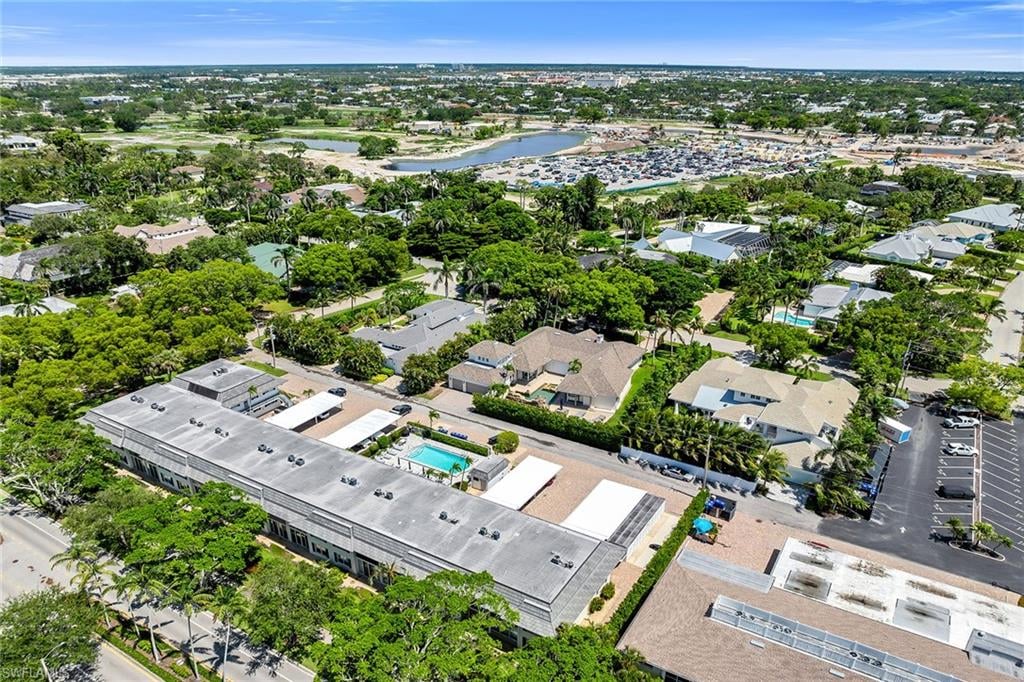
Riverside Yacht Club Estates has exactly three streets: Yacht Club Circle with 70 addressed parcels, Hatteras Court with seven, and Bertram Lane with seven, totalling 84, which is the 83 houses plus the one vacant lot. Hatteras and Bertram are sportfishing boat builders, a naming family used nowhere else in The Landings.
Counted from site addresses on all 123 active parcels on the certified roll and confirmed against the plat sheets: Yacht Club Circle, 70 parcels running 12740 to 12846, platted as Tract A right-of-way on PB 47 PG 22 and PG 23; Hatteras Court, 7 parcels, 10100 to 10108; Bertram Lane, 7 parcels, 10120 to 10136. The 35 marina slip parcels carry no street address at all. They address simply to BOAT SLIP.
Hatteras Yachts and Bertram Yacht are the two defining American sportfishing convertible builders, founded in New Bern, North Carolina in 1959 and in Miami, Florida in 1960. Every other village in The Landings is named from sailing rigging and hull vocabulary: Windjammer, Schooner, Clipper Cove, Trawler, Marlinspike, Bowsprit, Spanker, Jib Boom, Crossjack, Taffrail, Foremast, Mainmast, Mizzenmast.
Riverside Yacht Club Estates is the only village in the community named from powerboat manufacturers. It was platted in 1990 by a different developer, roughly fifteen years after the first village went in, for buyers who wanted a sportfisher at the end of the garden. The street signs tell you that before the listing does.
This is worth owning plainly, because search engines cannot tell these apart.
Riverside Yacht Club Estates is inside The Landings Yacht, Golf and Tennis Club, Fort Myers, Lee County, Florida, LCPA subdivision code 17-45-24-02. It is not any of the following:
Use the full name. Never the short form.
One more distinction, and it is the one that costs buyers money when they get it wrong. Tract D, the yacht basin, is Riverside Yacht Club Estates' own 2.48-acre protected basin, shown on the plat with an island in it and with Tract B, the 0.49-acre marina parking, behind it. It is owned and operated by Riverside Yacht Club Estates Homeowners' Association, Inc., Sunbiz N40930.
The Landings club marina is a separate facility, and Riverside owners are covenanted out of it. The club-membership grant in the operative Declaration (Instrument 2007000250180) reads: "Owner shall have a limited right and easement of enjoyment in and to all The Landings Yacht, Golf and Tennis Club, Inc. facilities (except that Owner shall have no use rights in the Marina's wet slips, wet or dry dockage or dry storage)."
The exclusion is four words long and it is the whole reason this subdivision built its own basin. A Riverside owner who wants a boat inside The Landings needs a Riverside slip, because the club's dockage is closed to them by covenant.
The 35 deeded marina slip parcels at Riverside Yacht Club Estates are the reason this subdivision exists as a distinct product. Each is fee simple title to an air-rights parcel with its own STRAP and its own tax bill, each is assessed at $20,000, and they have traded on their own, without a house attached, in every decade since 1992.
The Sixth Amendment to the Declaration, OR Book 3026, Page 3159, recorded 22 October 1998, created the slips and says so in terms: it substitutes a new Marina Plan "which designates marina slips numbered 1 through 32, and A through D." That is 36. The Marina Plan itself, Composite Exhibit "A", is recorded at OR 3026, Pages 3236 through 3238, five sheets showing the river, the seawall, the island, the slips ranged along the basin and adjoining Lots 21 through 32.
The tax roll carries 35 parcels, not 36, and the reconciliation is on the face of the roll: slips 31 and 32 are assessed as one parcel, STRAP 17-45-24-02-00031.0000, legal RIVERSIDE YACHT CLUB ESTS PB 47 PG 23 MARINA SLIP NOS 31 + 32, at a 2026 just value of $40,000, exactly double every other slip parcel.
The slip dimensions confirm it independently. Each slip parcel's cost card carries a land line with front and depth in feet, and counting them gives four 30-foot slips at 12 feet deep (which are exactly slips A, B, C and D), eighteen 40-footers at 14 feet (slips 1 through 18), and fourteen 50-footers at 17 feet (slips 19 through 32, with 31 and 32 as one parcel). Four plus eighteen plus fourteen is 36 slips. One hundred and twenty plus 720 plus 700 is 1,540 linear feet of dockage, which matches the Declaration's own §3.2(c) rate table exactly. Thirty-six slips exist. Thirty-five are separately assessed parcels. Nothing is missing.
A Riverside slip is not a licence, not a lease and not a club allocation. It is real property. The operative Declaration, §1.22 of Instrument 2007000250180, defines it:
"'Marina Slip' or 'Slip' means an air rights parcel within the Marina Parcel being the area to be used and occupied by a Vessel, excluding any improvements or portions of improvements contained in such Marina Slip ... The Marina Slip consists of an envelope of air space that shall have 0.5 feet above the bottom land, as same may vary from time to time, as its lower boundary, and having no upper boundary."
Read that carefully. You own a column of air and water whose floor is six inches above the river bottom and which has no ceiling. You do not own the bottom land, and you do not own the pilings, walkways, piers or dolphins, which are expressly excluded and stay with the Association. That is why dredging the basin is an Association matter and not an owner's project.
The conveyance formula is recorded, which is what makes a slip transferable on its own. The Sixth Amendment prescribes it verbatim: "Marina slip number ____, of Riverside Yacht Club Estates, according to the Marina Plan as described in that certain Declaration ... recorded in Official Records Book 2189, at Page 2979, of the Public Records of Lee County, Florida as amended by [the First through Sixth Amendments]."
Every one of the 34 readable single slip parcels carries an identical 2026 certified just value of $20,000 and an identical cost-card land line of $31,666, whether it is a 30-footer or a 50-footer. The double parcel carries $40,000 and $63,332. The Property Appraiser does not price slip length here. Lee County's own neighbourhood code for the slips is 22-144.5 THE LANDINGS - DOCKOMINIUMS, distinct from the code it uses for the houses.
So the correct statement is not "slips are assessed at $20,000 to $40,000." It is: every slip is assessed at $20,000, and the one double parcel at $40,000.
Rebuilt from the recorded sales history on the slip parcels themselves and cross-checked against the DOR sales file, there are 77 recorded conveyances since 1992 in which the deed touched only slip parcels and no house. The first two were both recorded on 1 December 1992: Slip 18 at $35,000 (OR 2349/4238) and Slip 9 at $35,000 (OR 2352/2768).
The most recent is the cleanest data point on this page: Marina Slip 25, recorded 22 December 2025, $40,000, clerk file 2026000003980, DOR qualification code 01, arm's length, vacant flag. Three slips changed hands in 2025 alone: Slip 9 on 10 April at $30,000 (clerk file 2025000102332), Slip 12 on 21 April at $25,000 (clerk file 2025000115897), and Slip 25 in December. Roughly one slip in twelve traded last year. This is not a dormant asset class.
Read the register with two cautions. Bulk and blanket deeds, notably OR 2777/2032 and /2034 on 24 December 1996 and OR 3025/2881 on 14 October 1998, moved many slips under one price and must never be divided to make a per-slip figure. And a large number against a slip parcel is almost always a package deed conveying a house at the same time: instrument 2024000171640 shows $1,700,000 against Marina Slip 10, and that is a riverfront house on Bertram Lane sold with its slip, not a slip price.
Here is the restraint, quoted from §19.5 of the operative Declaration, and it belongs beside the price, not buried under it:
"No Marina Slip shall be sold, leased, lent or otherwise conveyed to any person or entity who is not the Owner of a Lot within Riverside Yacht Club Estates or within The Landings."
A member of the general public cannot buy one. A lease is allowed, but only to an owner or resident of Riverside Yacht Club Estates or The Landings, and it must run at least three months during each year of the term.
§19.5 continues, and this is the part a seller needs to hear before closing, not after:
"In the event any Marina Slip Owner shall sell or otherwise convey his Lot ... without simultaneously selling or otherwise conveying title to his Marina Slip, he shall immediately notify the Association that his Marina Slip is available for sale. If the Marina Slip Owner has not, within one year after the closing ... sold or otherwise conveyed his Marina Slip to another person or entity who is the Owner within Riverside Yacht Club Estates or within The Landings, then the Association shall have the right (but not the obligation) ... to purchase the Marina Slip, and the Marina Slip Owner shall sell the Marina Slip to the Association, for an amount equal to the purchase price originally paid by the Marina Slip Owner."
At the original price paid. If you bought a slip in 2004 for $30,000, sold your house in 2026 and kept the slip, and you have not placed it with a qualified buyer twelve months later, the Association can compel you to sell it back at $30,000. That is a quantifiable exposure in any house-without-slip transaction and it should be on the table at listing, not discovered at estoppel.
Slip owners are Class B members of the Association, with their own vote and their own seat. Under Bylaws §8.2, "The Director elected by the Class B members shall be Chair of the 'Marina Committee'", and that committee considers the operations of the marina and its budget requirements under the same notice and record-keeping duties as the Board. Under Declaration §19.4(l), the Board may adopt marina rules "provided, however, that the Board member elected by the Class B members shall have the right to veto any such proposed rule or regulation."
Class A members, meaning lot owners, do not vote on issues the Board determines deal exclusively with the marina or the slips. An owner who holds both a lot and a slip votes in both classes and pays assessments in both.
Declaration §13.5 entrenches it: "No amendment shall alter the provisions of this Declaration granting special veto or approval rights to the Owners of Waterfront Lots, or with respect to the Tract D Drainage and Public Utility Easement, Tract B or the island within Tract D, without the unanimous consent of those Owners so affected." A simple majority cannot repurpose the basin, the parking or the island.
The rules are specific and they are worth knowing before you buy the boat. No liveaboards, full stop, under §19.4(b): "No person shall be permitted to remain on any Vessel within the Marina Parcel overnight for any purpose." No one is to be in the marina between midnight and 6:00 AM except arriving or departing. No lifts and no dry storage (§19.4(c)). No major repairs, routine maintenance only (§19.4(g)). No refuelling, no fuel sales and no fuel storage (§19.4(h)). No bait, fishing supplies, food or beverage sales (§19.4(i)). No fish cleaning on a vessel or in the marina (§19.4(e)). No for-sale or for-rent signage visible anywhere on the marina parcel or on a vessel (§19.4(k)). Houseboats, floating homes, pontoon boats, seaplanes, airboats, hovercraft and charter or commercial vessels are prohibited outright (§19.4(a)).
Every slip owner must carry liability insurance on the vessel occupying the slip in a minimum amount of $300,000, covering death or injury and damage to property including other vessels and marina improvements, and must file a certificate with the Association providing at least ten days' written notice of cancellation (§9.3).
The lettered slips carry a hard vessel limit: "A, B, C, and D slips may only contain a vessel, length overall, of no more than thirty feet" (§19.4(j)(6)).
Data updated: September 2026
Riverside Yacht Club Estates produced exactly one closed MLS sale in the trailing twelve months, which is the finding rather than a gap in the research. Across 83 homes that is roughly 0.9 percent annual turnover. The number that matters to a buyer here is not price. It is how rarely anything comes up.
From the Southwest Florida MLS Matrix, criteria Status Closed, City Fort Myers, Sub/Condo Name RIVERSIDE YACHT*, status date 0 to 365 days, pulled 18 September 2026:
Field | Value |
|---|---|
MLS number | 2026004922 |
Address | 12756 Yacht Club Circle, Fort Myers FL 33919 |
Sold | 10 June 2026 |
List price | $899,000 |
Sold price | $790,000 |
Sale to list | 87.9% |
Sold per square foot | $360.24 |
Living area | 2,193 sq ft |
Days on market | 38 |
Cumulative days on market | 125 |
That sale is independently corroborated. The same June 2026 transfer appears in the Lee County recorded sales history at $790,000, clerk file 2026000159159. Two custodians, two methods, the same number.
One sale is not a market statistic. There is no median here, no average sale-to-list and no price-per-square-foot benchmark that can honestly be derived from a single transaction, and this page will not publish one. Anybody who hands you a "Riverside median sale price" for the last twelve months has computed it from one house.
If you are buying: inventory is the constraint, not price. At this rate roughly one house per year reaches the open market in Riverside Yacht Club Estates. You do not get to compare three riverfront listings side by side and pick the best one, because in most months there will not be three. You need to be financed, decided on your criteria and ready to move when something does list, and you need patience measured in seasons rather than weeks. And if the deeded slip is why you are here, note that the slip market is a separate queue with its own timing.
If you are selling: scarcity works for you. A buyer who has decided they want a detached home with a deeded slip inside The Landings has precisely one subdivision to shop, and in a given year very little of it is for sale. That is a genuinely strong position. It also cuts the other way on pricing discipline, because with so few comparable closings an appraiser has thin material to work with, and the one 2026 sale closed at 87.9 percent of list after 125 cumulative days. Overpricing in a market this thin does not get corrected by competition. It just sits.
For breadth, and clearly labelled as a separate measurement from a separate custodian: on the 2026 certified Lee County roll, the parcels whose most recent qualified sale is dated 2024 or later give a median of $699,500 across n=10, with a range of $460,000 to $1,700,000. That is a window of roughly two and a half years from the Property Appraiser's records, not a twelve-month MLS figure, and the two must never be presented as the same thing.
The ten transfers, sorted: $460,000 · $500,000 · $585,000 · $588,000 · $649,000 · $750,000 · $790,000 · $805,000 · $805,000 · $1,700,000.
On the same roll, just value for homes only has a median of $596,194, running from $398,164 at 12772 Yacht Club Circle up to $2,797,107 at 12788. The top ten parcels by value are all waterfront.
One more caution when reading raw records here. Of the 30 transfers touching this subdivision in the 2026 roll window, only six carry DOR qualification code 01, meaning qualified and arm's length. Twenty-one carry code 11 and three carry code 99, which are trust, family, corrective or nominal-consideration transfers. Two thirds of the "sales" in a raw record pull on Riverside Yacht Club Estates are not market transactions.
Days on market beyond this single sale, and any count of active listings, cannot be sourced publicly and are not stated here. Days on market is an MLS field. It does not exist on the Lee County Property Appraiser roll, in the Florida Department of Revenue sales file or in the Clerk's official records, all of which carry recording dates and consideration only. Active listing counts come from an MLS or IDX feed at the moment you ask. Anyone publishing either figure for this subdivision from a public record has estimated it. Ask for the live feed instead.
Riverside Yacht Club Estates sits at the top of the price ladder inside The Landings and is structurally unlike every one of its fourteen sibling villages. It is the only place in the community where a detached single-family home comes with a separately deeded marina slip, and the only village outside both the condominium regime and the two core homeowners associations.
The yardstick below is one measurement applied consistently: the median recorded sale price for parcels whose most recent qualified sale is dated 2024 or later, taken from the 2026 certified Lee County roll. It is not a twelve-month MLS figure. Counts are stated because several are small.
Village | Units | Type | Sale median, 2024 onward | n |
|---|---|---|---|---|
Riverside Yacht Club Estates | 83 homes + 35 slips | Detached single family, HOA | $699,500 | 10 |
Lighthouse Village | 27 | Detached single family, HOA | $717,500 | 2, indicative only |
Mariner's Cove Village | 48 | Detached single family, HOA | $665,000 | 9 |
Harbortown | 73 | River frontage condominium | $552,500 | 10 |
Windjammer Village | 195 (largest) | Mixed condominium | $329,750 | 26 |
Ariel | 135 | The only high-rise | $320,000 | 18 |
Steamboat Bend East | 120 | Entry tier condominium | $242,500 | 14 |
Lighthouse Village shows a higher median than Riverside, and that number rests on two sales. Treat it as indicative, not as a ranking. On absolute range, nothing in the community is close: Riverside's recorded sales since 2024 run to $1,700,000 and its top assessment is $2,797,107, against $963,320 at the top of Lighthouse and $896,365 at the top of Ariel.
Every one of those villages has boating access of some kind through The Landings Yacht, Golf and Tennis Club marina, and in each of them it is space-available through the club. In Riverside Yacht Club Estates the slip is a deeded parcel you own, and in Riverside Yacht Club Estates alone the club's own dockage is closed to you by covenant. Those two facts are the same fact seen from both ends. It is the only village in the community where a detached house and a deeded slip come in the same transaction, and it is also the only one where the deeded slip is the only option.
Twelve of the fifteen villages in The Landings are condominium associations. Two more, Mariner's Cove Village and Lighthouse Village, are the community's core homeowners associations on the golf side. Riverside Yacht Club Estates is outside both groups: it is a platted subdivision, PB 47 PGS 21 through 24, governed by Riverside Yacht Club Estates Homeowners' Association, Inc., Sunbiz N40930.
Because it is not a condominium, Florida's SB-4D milestone inspection requirement and the structural integrity reserve study requirement do not apply to it, and the fee stack looks nothing like the twelve condominium associations' does. For a buyer reading 2026 headlines about Florida condominium assessments, that is a meaningful structural difference and not a marketing line.
On price per heated square foot across the same 2024-onward window, Riverside Yacht Club Estates runs a median of about $336, with a range of $231 to $561. Mariner's Cove is higher at roughly $363 and Lighthouse higher still at roughly $394 on two sales, because both are smaller-footprint houses. Harbortown tops the condominium ladder at about $276 and Ariel is the cheapest per foot in the community at about $161. So Riverside is the top of the community on absolute price and mid-pack among the single-family villages per square foot, which is what you would expect from the village with the biggest houses.
Riverside Yacht Club Estates is the strongest boating product inside The Landings and the answer for one specific buyer, not for every buyer. The case for it is the deeded slip, the size of the houses and a fee structure that sidesteps Florida's condominium inspection regime. The case against it is scarcity, a closed slip market and an unverified basin depth.
The deeded slip, and it is genuinely unique here. Thirty-five slip parcels, each with its own STRAP and tax bill, each assessed at $20,000, created by the Sixth Amendment OR 3026/3159 and mapped at OR 3026/3236 through 3238. Nowhere else in The Landings can a homeowner own dockage outright.
No bridge between here and the Gulf. Turn downriver out of the basin and the Cape Coral Bridge is behind you, not in front. For anyone with air draft, that removes the single most common Southwest Florida constraint.
Much of the waterfront row is in Zone X. The 17 November 2022 Lee County flood map revision moved 40 of the 85 measured building footprints out of the Special Flood Hazard Area, and not one building here moved to a higher-risk zone on that date. On a federally backed mortgage, that is the difference between flood insurance being legally mandatory and being optional.
No SB-4D milestone inspection and no structural integrity reserve study, because this is a platted HOA subdivision and not a condominium.
Club membership is optional here, which is unusual inside a country-club community and is covered in detail elsewhere on this page.
The largest houses in The Landings. Median 2,202 heated square feet, a 7,091 square foot maximum, and 91 percent of the homes have a pool.
No liveaboards, by covenant. §19.4(b) keeps anyone from staying aboard overnight and clears the marina between midnight and 6:00 AM. The basin stays a basin and does not become a neighbourhood.
Turnover is about 0.9 percent a year. One closed MLS sale in the trailing twelve months across 83 homes. If you want a specific product here, riverfront, or a particular size, or a house that already carries a slip, expect to wait, possibly for more than one season.
The dollar assessments are not public until estoppel. The Declaration sets out the formula, the one ninety-second lot share and the per-linear-foot marina assessment, but the actual annual dollar figures are not published in any public record. You get them from the management company on an estoppel certificate, which means you cannot fully model carrying cost before you are under contract.
The basin's controlling depth is unverified. No public record gives the controlling depth of the Riverside yacht basin or its entrance channel. The slip geometry bounds the boat's length, 30, 40 and 50 feet, but says nothing about how much water is under it. A deep-draft buyer must confirm depth independently before committing, either with the Association or with a sounding. Do not accept a number from a listing on this point.
The slip buyer pool is closed. §19.5 limits any sale or lease of a slip to an owner within Riverside Yacht Club Estates or The Landings. That protects the community and it also means your slip is illiquid by design. Add the one-year clause: sell the house, keep the slip, fail to place it within twelve months, and the Association can compel a buy-back at the original price you paid.
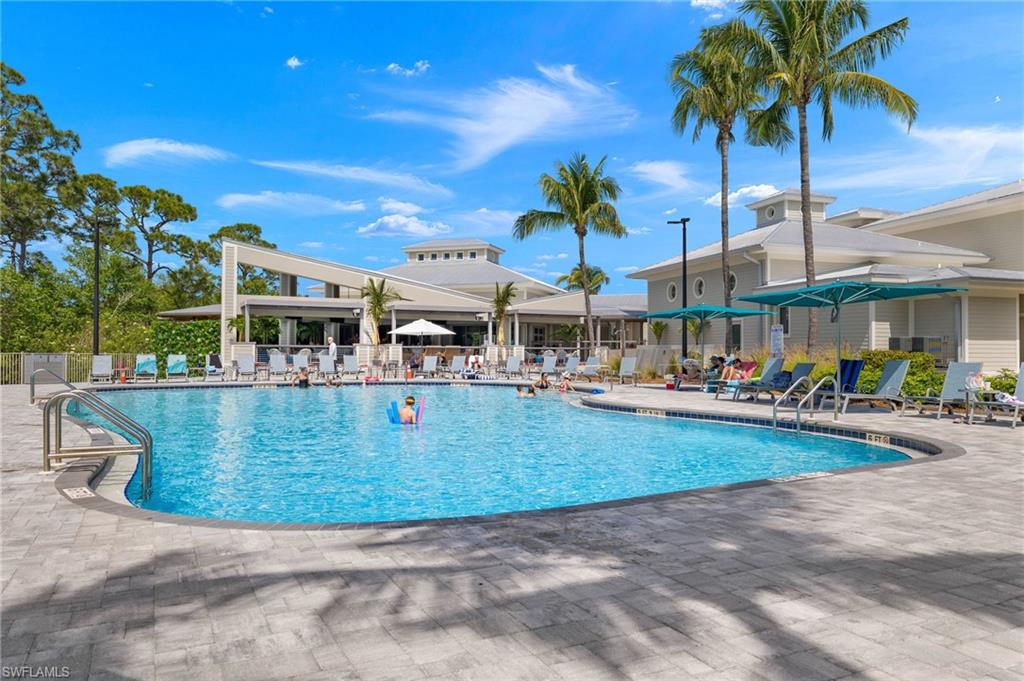
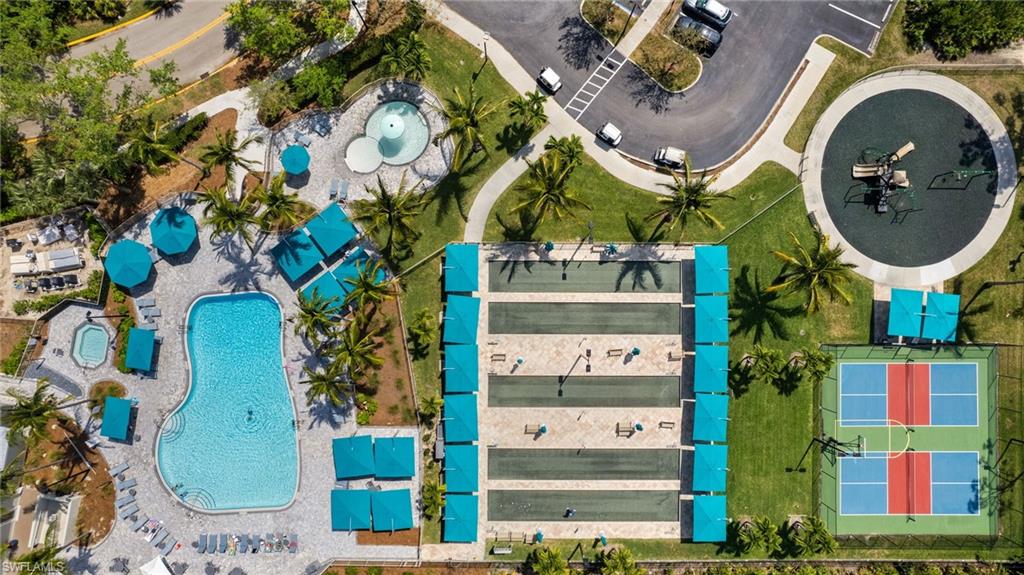
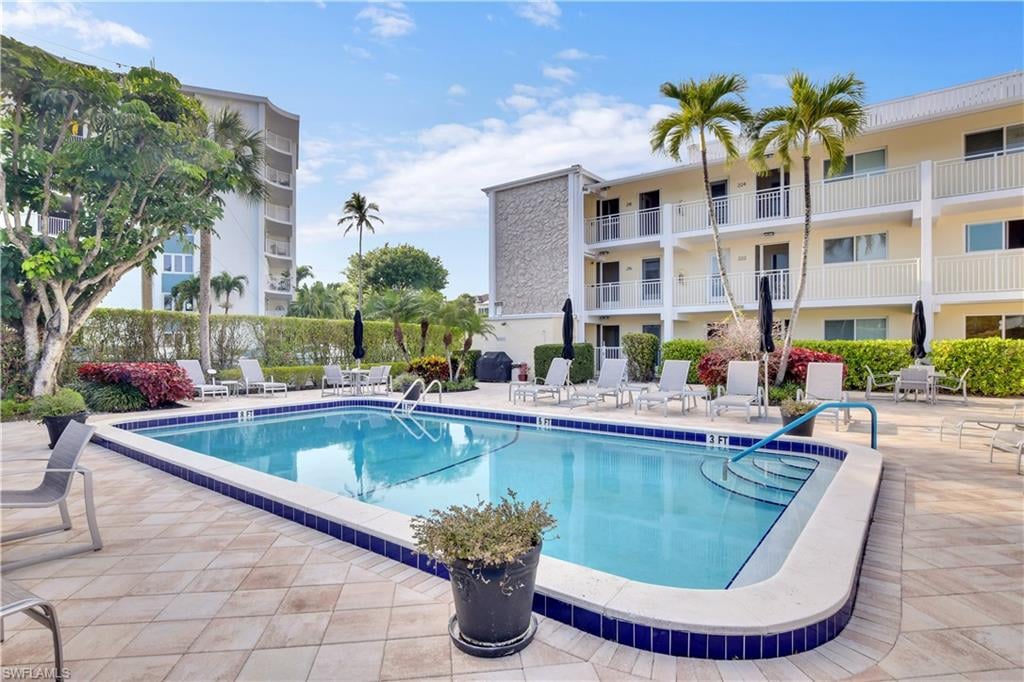
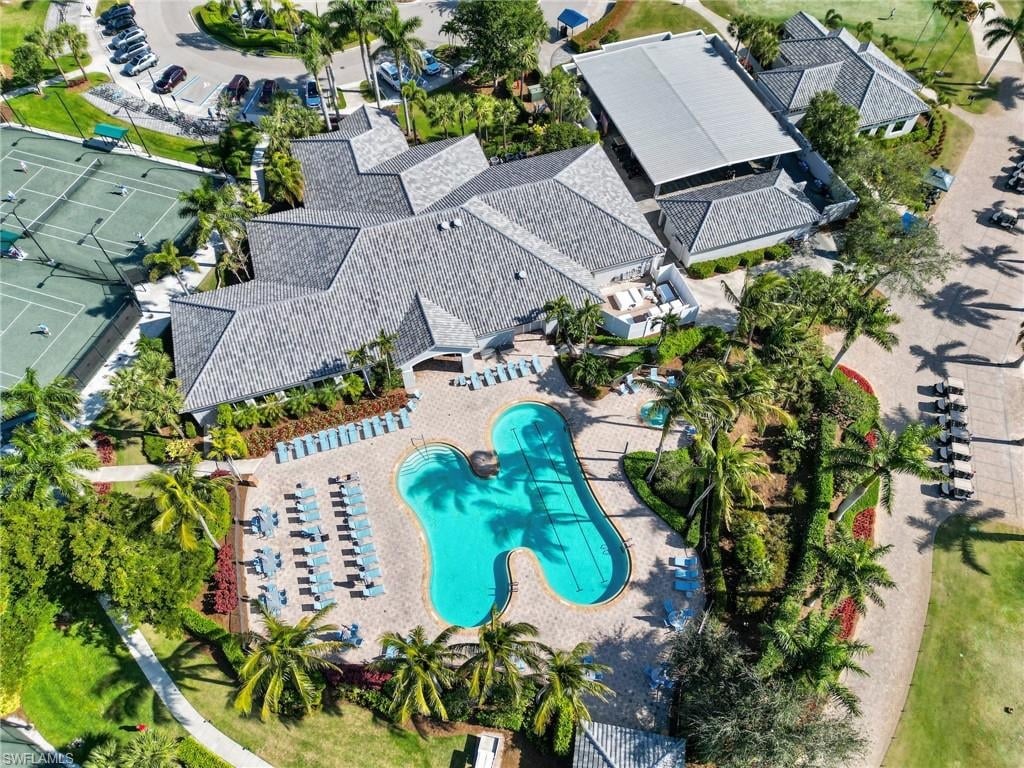
No pool and no clubhouse of its own. The Association's three common-element parcels all carry a building value of zero on the certified roll, and the plat's tract inventory lists roads, common area, marina parking, basin and lake, with no recreation tract. Riverside spent its common money on a 2.48-acre yacht basin, an island and a parking lot. Every social facility a Riverside owner uses belongs to the club and requires an activated membership.
The whole subdivision is in hurricane Evacuation Zone A, Lee County's first-called zone. Being outside the Special Flood Hazard Area is not the same as being outside the surge zone, and those two facts have to sit next to each other.
Eighty-two of the 85 measured houses were built between 1990 and 2001, which is before the Florida Building Code took effect on 1 March 2002. On the wind mitigation form OIR-B1-1802, that means the FBC construction credit, the single largest line on the form, is generally unavailable here. What Riverside does have is roof age, and 77 of 85 houses carry a roof permit dated 2004 or later, which is exactly what the top roof-covering credit requires. Chase that credit instead, and expect the first wind-mit inspection to tell your buyer the same thing.
Riverside Yacht Club Estates is governed by Riverside Yacht Club Estates Homeowners' Association, Inc., a Florida not-for-profit corporation, Sunbiz document number N40930, filed November 26, 1990. The operative recorded covenant is the Amended and Restated Declaration at Instr. 2007000250180, amended twice since, most recently in April 2020.
The entity is active and current. Sunbiz N40930 shows FEI/EIN 65-0240745, status ACTIVE, and a last event of AMENDED AND RESTATED ARTICLES filed 07/12/2007. There is no name history, no merger, no conversion and no administrative dissolution anywhere in thirty-six years of filings, and annual reports are on file every single year from 1995 through the 2026 Annual Report filed 04/23/2026 (Florida Department of State, Division of Corporations, Detail by Entity Name, N40930).
That matters more than it sounds. An association with a clean, unbroken Sunbiz history is an association whose lien rights and standing have never lapsed. I have worked deals in Lee County where a reinstatement filing turned up mid-contract and cost everyone two weeks.
Per the 2026 Annual Report filed under Sunbiz N40930 on 04/23/2026, the officers are Donald Simon, President; Edward Volz, Vice President; Jeff Larson, Secretary; Henry Pescatore, Treasurer and Director; and Robert Mahoney, Director. The Amended and Restated Bylaws recorded as Exhibit "B" at pages 42 through 56 of Instr. 2007000250180 fix the Board at five members, with two-year terms, three seats elected in even years and two in odd years, and directors serving without compensation.
One caution for anyone reading the Sunbiz page cold: every officer address of record is the management company's office, not a house in the subdivision. Do not read those as residential addresses.
Day-to-day management sits with Suitor, Middleton, Cox & Associates, 15751 San Carlos Blvd., Suite 8, Fort Myers, FL 33908, which has been the registered agent and the principal and mailing address of record since January and April 2024 (Sunbiz N40930). The related firm licence is public: D.G. Suitor & Associates, Inc., Florida DBPR CAM Firm licence CAB3297, status Current, expiring 09/30/2027 (myfloridalicense.com, Licence Detail CAB3297). The prior manager was Sentry Management, Inc., named as the association's management company in the association's own recorded 2019 notice, Instr. 2019000271580.
Quote the 2007 restatement or you are quoting the wrong document. Instr. 2007000250180, recorded 08/10/2007, is a 62-page package containing the Amended and Restated Declaration (Articles 1 through 20), the Amended and Restated Bylaws as Exhibit "B", and the Amended and Restated Articles of Incorporation as Exhibit "A". Its own header says so: "SUBSTANTIAL REWORDING OF DECLARATION, SEE ORIGINAL DECLARATION ARTICLES I THROUGH XVII FOR ORIGINAL TEXT." It was adopted at a noticed members' meeting on April 17, 2007.
Exactly two things have changed it since. Instr. 2019000034393 through 2019000034398, recorded 02/14/2019, amended §3.9 to track the F.S. 720.3085 lien safe harbor. Instr. 2020000087217, recorded 04/09/2020, rewrote §5.3 on pets. Nothing later than April 9, 2020 amends this Declaration.
The full recorded chain runs twenty-two instruments deep, beginning with the original Declaration at OR 2189/2979 (11/30/1990) and running through a First Amendment at OR 2239/1861, a Second at OR 2347/3961, a Third at OR 2504/4039, a Fourth at OR 2591/1478, further amendments at OR 2640/3179, OR 2713/2725, OR 2926/0442, OR 2926/0445, OR 2978/0924 and OR 2978/0930, and the pivotal Sixth Amendment at OR 3026/3159 (10/22/1998) that created the marina slips.
Two footnotes a careful buyer should hear. First, the 2007 Certificate of Amendment mis-cites the First Amendment as Book 2339; the clerk index, the Declaration recital and the Sixth Amendment all say 2239/1861, and 2239 is correct. Second, the Lee Clerk indexes the Third Amendment (OR 2504/4039) and the 2019 §3.9 joinders under the document type "DECLARATION OF CONDOMINIUM." That is an indexing artifact, nothing more. Riverside Yacht Club Estates is not a condominium and never was.
In Instr. 2019000271580, recorded 11/26/2019, the association filed a Notice of Preservation under F.S. 720.3032 and the Marketable Record Title Act, Chapter 712, listing all nineteen predecessor instruments in Exhibit "A" and preserving the whole chain from extinguishment. Between that and Article 15.1, which gives the Declaration a thirty-year term from recording with automatic ten-year renewals unless seventy-five percent of owners vote to terminate, these covenants are not going anywhere.
All Lee Clerk instruments above are retrievable at https://or.leeclerk.org/LandMarkWeb/ by instrument number or by book and page. Lee County serves document images only inside a browser session, so there is no permanent link to paste; cite the instrument number and search it.
Riverside Yacht Club Estates runs two assessment budgets, not one. Under §3.2(a) of the Amended and Restated Declaration, Instr. 2007000250180, Lot Owners pay 100 percent of every association expense that is not marina, and Marina Slip Owners pay 100 percent of marina operation, maintenance and reserves. Slips are billed by the linear foot.
The clause reads: "assessments of the Association shall be apportioned between: (i) Lot Owners who shall pay 100% of the total assessments of the Association that are not related to the Marina Facilities and (ii) Marina Slip Owners who shall pay 100% of the total assessments for the operation and maintenance of the Marina facilities including assessments for the Marina Reserve Accounts. The Marina assessment items are to be clearly identified in the annual operational budget and reserve account line items of the Association" (§3.2(a), Instr. 2007000250180).
Read that twice if you are buying a house without a slip. You are not subsidizing the yacht basin. Read it twice again if you are buying a house with a slip, because §3.2(d) says the plain thing: "A Lot Owner who also owns a Marina Slip shall be responsible for assessments levied both on the Lot and on the Marina Slip." Two line items, always.
§3.2(b) sets each lot's share at "one-ninety second" of the lot-side budget, which tracks the ninety-two lots numbered on the recorded plat at Plat Book 47, Pages 21 through 24. The same subsection adds a rule most buyers never hear: "Any lot without a Certificate of Occupancy will be assessed one half of the lot assessment." A platted lot with no house on it pays half.
Marina Slip Owners are not assessed equally. Under §3.2(c), the marina budget is divided by linear foot against a 1,540-foot total: a 30-foot slip pays 30/1,540ths, a 40-foot slip pays 40/1,540ths, a 50-foot slip pays 50/1,540ths. The slip inventory behind that number, identical in the 1998 Sixth Amendment (OR 3026/3159) and the 2007 restatement, is four 30-foot slips, eighteen 40-foot slips and fourteen 50-foot slips.
So a 50-foot slip carries roughly sixty-seven percent more marina assessment than a 30-foot slip. If you are comparing two slips on the market, the bigger one costs more every month, not just once.
This is the single most under-marketed line in the whole record. §6.6 gives the owners of Lots 18 through 36, inclusive, defined in the Declaration as the Waterfront Lots, "the option of assuming responsibility for mowing their own lawns and maintaining their own landscaping in accordance with standards no less than those adopted from time to time by the Association," and an owner who does so "shall be entitled to a twenty-five percent reduction of his monthly maintenance assessments."
Nineteen lots can cut a quarter off their monthly assessment by handling their own yard. The election is surrendered voluntarily on thirty days' notice, or involuntarily after a failure to cure within ten days or after three notices in any twelve-month period, and an owner who loses it cannot re-assume it for twelve months (§6.6, Instr. 2007000250180). Seawalls, retaining walls, the surface water management system and the irrigation system including sprinkler heads stay with the association either way.
§3.3(a) through (k) itemizes it: utilities to the Common Areas, all association insurance premiums, fidelity bonds, maintenance and repair and replacement of the Common Areas, administration including the management company's fee, indemnification of officers and directors, reserve funding for replacement and capital refurbishment of the Common Areas, road maintenance, bulk maintenance contracts, and the cost of any bulk cable or electronic communication contract the Board enters. §6.1 adds landscaping, trees, shrubs, grass, sprinkler heads, walks, drives and parking areas other than each parcel's own walkway and driveway, plus operation and maintenance of the surface water management system to South Florida Water Management District requirements.
Then there is §6.2, which is the one that should stop a waterfront buyer cold: "The Association shall be responsible for the maintenance and repair of seawalls and retaining walls wherever situated upon the Property."
On a subdivision with forty-three river-frontage parcels, that is a materially different risk allocation from most Southwest Florida waterfront, where a failing seawall is the individual owner's problem and a six-figure one. Here it is an association expense. The honest counterweight is that you should still ask for the reserve study and the seawall reserve line, because nothing in Chapter 720 forces this association onto a funding schedule the way Chapter 718 forces condominiums onto a SIRS.
Assessments are budgeted annually and billed in equal monthly installments payable in advance on the first day of each month (Bylaws §10.2, Exhibit "B" to Instr. 2007000250180), with §3.7 of the Declaration confirming payment in advance as the Board determines. Miss by ten days and §3.10 imposes "an administrative late charge as provided by law or $25.00 or 5 percent of the installment, whichever is more."
The remedies stack fast after that. §3.10(a) through (g) allows acceleration of the full calendar year, lien foreclosure, suit at law, court-ordered diversion of a tenant's rent to the association or a receiver, and termination of existing leases with a prohibition on future renting until the default is cured. §12.1 adds the association's enforcement costs plus a ten percent service charge and attorneys' fees, assessed against the owner as a separate assessment. Payments are applied to interest first, then late fees, then costs and attorney fees, then principal, regardless of any restrictive endorsement you write on the check (§3.10(h)).
I will not give you a number I cannot source, so here is the disclosure straight. The current dollar amount of the Riverside lot assessment, the marina slip assessment per linear foot, and current club dues are not in any public record. Sunbiz carries no financials for not-for-profit corporations. The full 274-record Lee Clerk index for "RIVERSIDE YACHT CLUB" from 1980 to date contains liens and judgments but no recorded budget, no recorded assessment schedule and no recorded estoppel. No association website was found. Anyone quoting you a Riverside HOA figure from a public page is repeating a portal field, not a record.
Three lawful routes get you the real number:
https://www.flsenate.gov/Laws/Statutes/2024/720.303).Ask the management company for the portal address. If it does not exist yet, that is a question worth asking before you go hard on a deposit.
Membership in The Landings Yacht, Golf and Tennis Club is optional for most of Riverside Yacht Club Estates. The recorded club declaration at OR 2759/1430 capped Riverside memberships at forty lots, and the 2012 amendment, Instr. 2012000089894, lets a deactivated membership carry no rights and no assessment obligation at all.
The instrument is the Declaration of Covenants, Charges and Liens For Certain Lots Of Riverside Yacht Club Estates Providing For Membership Status in The Landings Yacht, Golf & Tennis Club, Inc., first recorded at OR 2759/1430 on 11/01/1996. Note its form: it was executed by an individual lot owner as Declarant and recorded lot by lot, not community-wide. A second example sits at OR 3163/0143 for Lot 87, recorded 09/01/1999.
Article II, Section 1 is unambiguous: "Only up to forty (40) lots within the Riverside Yacht Club Estates shall be granted this membership right within The Landings Yacht, Golf & Tennis Club, Inc. These memberships shall be known as The Riverside Memberships." Ninety-two platted lots, forty possible memberships. Whether a given house carries one is a title question, answered by running the specific lot in the Lee Clerk records, not by asking a neighbor.
Instr. 2009000078814, recorded 03/26/2009, first introduced the idea that Riverside memberships "may be 'activated' or 'deactivated.'" Instr. 2012000089894, recorded 04/23/2012 and approved by the club's board on January 27, 2012, made it operative and precise:
"When activated, the owner of the Lot or Unit to which the initial Riverside Membership is appurtenant shall have all rights to use the amenities conferred hereby and all obligations, including the obligation to pay assessments. When deactivated, the owner of the Lot or Unit to which the Initial Riverside Membership is appurtenant shall not have any rights conferred hereby nor any obligation, including the obligation to pay assessments."
A deactivated membership owes the club nothing. Not reduced dues, nothing. That is why the club layer at Riverside is not a mandatory add-on the way it is in most of The Landings.
The timing rule is the trap, and it is the one I flag for every buyer. The same instrument says memberships "may be activated at any time by the owner of the certificate" but "may only be deactivated upon the sale of a Lot or Unit to which the Initial Riverside Membership is appurtenant and only by the new owner of such Lot or Unit." You can turn it on whenever you like. You can only turn it off at closing, and only as the buyer. If you take title to an activated lot and say nothing, you have inherited the dues.
As of January 1, 2012, per Instr. 2012000089894, the tally was thirty activated, one deactivated, and nine potential memberships not yet activated and assigned to lots. That is the last count in the public record. It is fourteen years old, and I am not going to pretend it is current; it is the best sourced figure that exists.
The same amendment authorizes the club to issue a different class of interest to the remaining Riverside owners, "the same in all respects as the Initial Riverside Memberships except: (1) the purchase price of the membership interest shall be no less than $6,500.00; and, (2), the membership may not be deactivated." That $6,500 is a 2012 recorded floor, expressly phrased as "no less than," not a current price. Treat it as the bottom of a range set fourteen years ago and call the club for today's number: The Landings Yacht, Golf & Tennis Club, 4425 S. Landings Drive, Suite 100, Fort Myers, FL 33919, (239) 482-3211.
The same instrument also grants Riverside members the right to vote on club issues on par with other Landings owners, with one carve-out: "Riverside members shall have no right to vote on issues concerning the marina at The Landings Yacht, Golf & Tennis Club."
The club does not publish resident dues, but it does publish its non-resident Associate card, and that document is worth more than its price list. From the club's own Associate Membership Application, October 1, 2025 to September 30, 2026 (https://www.landingsygtc.com/getmedia/4c9a947c-3c13-47da-bfe8-49302f0ec9de/Application_-_Associate_Membership_10-01-2025_to_09-30-2026.aspx):
Associate tier | Annual dues | With tax | Expressly excludes |
|---|---|---|---|
Associate Dining Club (married couple) | $950.00 | $1,011.75 | golf, marina, tennis, pickleball, fitness center, clubhouse pool |
Associate Pool (couple plus children under 18) | $1,600.00 | $1,704.00 | golf, marina, tennis, pickleball, fitness center |
Associate Single Tennis (one person) | $2,015.00 | $2,145.96 | golf, marina, pickleball, fitness center |
Associate Family Tennis (parents plus children 18 and under) | $2,850.00 | $3,035.25 | golf, marina, pickleball, fitness center |
Four tiers, $950 to $2,850 plus tax, and every single one of them says the same thing: no marina. That is not an accident and it is not a Riverside-specific slight. It is the same line the recorded covenant draws at OR 2759/1430, Article II, Section 2, where a Riverside membership grants use of the club's facilities "except that Owner shall have no use rights in the Marina's wet slips, wet or dry dockage or dry storage."
Even a paying outsider cannot buy their way onto the club's docks. Two independent documents, a 1996 recorded covenant and a 2025-26 club application, land on the identical answer. That is the covenant-level reason Riverside built its own marina in Tracts B and D, and it is why a deeded Riverside slip is not a redundant luxury.
One more thing sellers should know: under OR 2759/1430, Article II, Section 3, a tenant gets club privileges only if the owner requests the transfer and the club approves it, and the club "reserves the right not to approve such request" and may charge the lessee a transfer fee. Do not promise a tenant club access in a lease.
Riverside Yacht Club Estates has an Architectural Control Committee with real teeth. Article 18 of the Amended and Restated Declaration, Instr. 2007000250180, requires written approval before almost any exterior change, down to paint color. The ACC has thirty days to act on a complete application, or the request is deemed approved by operation of the covenant.
§18.1 casts wide. No dwelling, building, outbuilding, garage, pool, decking, paving, fence, wall, retaining wall, patio, screened enclosure, pier, dock, walkway or other structure may be erected, "nor shall the exterior of any improvement (including any roofing or other building materials) be altered or modified, nor shall any landscaping or vegetation be materially altered, changed or modified or additional landscaping be installed by an Owner, nor shall any exterior changes (including the installation of storm shutters, screen doors, security bars) be made" without prior written ACC approval.
And explicitly, from the same section, prior approval applies to "painting or any other maintenance or repair which changes the color or exterior appearance" of an improvement, with the ACC empowered to approve or disapprove "the colors of the exteriors of dwellings." Repainting your house the wrong beige is an ACC matter here. So is replacing landscaping. Sellers prepping for market: submit before you paint, not after.
The hooks appear elsewhere too. §5.8 covers anything stored outside a screened or fenced enclosure, §5.14 structural additions and alterations, §5.20 the enclosure of an entranceway, patio, porch or lanai, and §5.24 any lake, pond, swale or ditch dug on a lot (all Instr. 2007000250180).
§18.1 requires two complete sets of plans and specifications, including front, side and rear elevations where applicable, a time line for completion, floor plans, and two plot plans fixing the exact location of the improvement relative to the street and side lines. §18.2 requires every approval or disapproval to be in writing to be valid, and sets the standard as "aesthetics, harmony, balance and compatibility of the proposed improvements with the then existing structures within the Property," granted or denied at the ACC's sole discretion. Under §18.3 approved plans are endorsed on both sets and one set comes back to you.
§18.13 is the clock: the ACC must act within thirty days after acknowledging receipt of a complete application, or the item "shall be considered as being approved." Note the trigger. It runs from acknowledgment of a complete application, so an incomplete package does not start it.
Where the ACC is a body other than the Board, §18.13 allows an appeal to the Board within ten days. The Board then has thirty days from receiving the appeal to decide, and that decision is final; if the Board fails to decide inside its thirty days, the ACC's original decision governs. Ten days is short. Calendar it the day the denial arrives.
Once you start, §18.4 requires work to begin within a reasonable time and, once begun, to continue with adequate manpower uninterrupted to conclusion within eighteen months, absent a materials shortage, inclement weather or acts of God. Separately, §18.8 gives you six months from the date of damage or destruction to complete corrective action, failing which the association may enter, correct at your cost, and lien the parcel for the full amount plus attorneys' fees.
Two more that catch people: §18.6 lets any ACC member enter and inspect any building or property under ACC jurisdiction at a reasonable time on reasonable advance notice, which may be verbal, though no one may enter a dwelling without the owner's permission. And §18.10 forbids removing fill from any lot or changing storm-water drainage or the original grade of swales without written ACC approval, with South Florida Water Management District approval possibly required on top.
§18.12 is one line and it shapes the whole streetscape: "No dwelling of less than 2,000 gross square feet of space shall be constructed upon any Lot." That is a covenant floor on new construction, and it is a useful thing to know if you are buying the vacant lot or contemplating a teardown.
§18.11 is the one nobody expects. Where added improvements or landscaping increase the association's maintenance burden, the ACC, with Board concurrence, may impose a monthly maintenance surcharge on the lot as a condition of approval, lasting as long as the improvement remains and subject to annual review. The Declaration sets no formula and no cap; it is discretionary and case by case. If you are proposing something elaborate on the landscape side, ask whether a surcharge attaches before you sign the contractor.
Riverside Yacht Club Estates leases at a three-month minimum with no sub-leases, screens both tenants and buyers through the Board, restricts pets by breed under §5.2, allows passenger vehicles only, permits no fences, and bans for-sale and for-rent signs. All of it sits in Instr. 2007000250180.
Article 14 is explicit. §14.1(b): "No Owner may lease or rent their Parcel for a term or period of less than three months, so that the high quality of the community shall be maintained and not become a lodging facility for transients." If a lease terminates early, "a new lease may not be entered into until the original three-month period expires" absent good cause found by the Board, which caps you at four tenancies a year in practice.
§14.1(a): "Only entire Parcels may be rented or leased... There shall be no subdivision or subletting of Parcels. 'Rent Sharing' or the renting of rooms is prohibited." All leases must be in writing. §14.1(b) adds four words with no wiggle room: "No sub-leases are allowed."
If your investment thesis is short-term or seasonal-weekly rental, this is not your subdivision. Say it plainly to any buyer who asks.
§14.1(b): "All leases shall be limited to two permanent occupants per bedroom. A permanent occupant shall include any person who resides in a Parcel for any period exceeding fourteen days during any calendar year." Fourteen days is a low bar. A long-staying guest can become a permanent occupant under this definition without anyone intending it.
This is the part that surprises people, because most single-family Florida HOAs do not do it. §14.3(a): "No Owner may dispose of a Lot or any interest therein by sale or gift, including agreement for deed, installment sales contract, or other similar transactions, without prior written approval by the Board."
§14.4(a) requires notice of intent with the transfer fee at least thirty days before the intended closing date, with the purchaser's name and address and an executed copy of the sales contract, and states that "The sale shall not be closed until such information has been provided to the Board and it has reviewed the information, which it must do within thirty days." The Board may require an interview of the purchaser, spouse and all proposed occupants. §14.4(d) gives the deemed approval: failure to act within thirty days of receiving all requested information and appearances "shall be deemed the equivalent of approval," and the Board must then issue a Certificate of Approval on demand. §14.9 makes an unapproved transaction void unless later approved.
Leases work the same way. §14.1(e) requires the application at least thirty days in advance of the lease term, and "All requests for approval not acted upon within thirty-days shall be deemed approved." Grounds for denial are a closed list at §14.1(e)(1) through (5), ending with unpaid assessments, fines or charges against the parcel.
Practical translation for a listing: build the thirty-day approval window into the contract timeline, and get the application in the day you go under contract. I have seen this clause move a closing date more than once.
§5.2 prohibits livestock and poultry and names breeds: "Potentially dangerous animals such as, but not limited to, dog breeds of Doberman, Staffordshire Terrier, Chow, Presa Canarios, Akita, Wolf Hybrid, Huskie, Rottweiler, and Pit Bull are prohibited." That is what the recorded covenant says. Breed-specific restrictions are increasingly constrained by Florida law and by insurance underwriting practice, so treat that text as the starting point and ask the association for its current enforcement policy rather than assuming either way.
§5.3, as rewritten by Instr. 2020000087217 recorded 04/09/2020, is the current pet rule and it is friendlier than what it replaced. Vicious, noisy or otherwise unpleasant animals are not permitted, and an animal the Board finds to be a nuisance or danger must be removed within three days of written notice. But pets are permitted on association common areas subject to a handheld leash or being carried, immediate removal of excrement, and owner indemnity. And the amendment expressly authorizes the Board to promulgate rules "establishing off-leash playtime on Riverside Marina Island."
A sanctioned dog run on a private island in the yacht basin. I do not know another Fort Myers covenant that says that. §5.4 requires you to carry a means of cleanup whenever a pet is off your own lot. Note what is absent: the Declaration sets no limit on the number of pets and no weight limit.
§5.5: roadways and drives are "solely for passenger vehicles." Commercial vehicles, boats, trailers, recreational vehicles and motor homes are not permitted in the roadways or drives, except for commercial vehicles providing service during normal business hours and in emergencies. An RV or trailer may sit on a lot or roadway for loading and unloading but no longer than two days. No repairs on any part of the property beyond minor emergencies. No parking at any time in designated fire lanes. The Board has final authority on whether a vehicle is acceptable.
§5.1: no garage may be enclosed or converted to living space, garage doors must remain in place at all times, and "Garage doors shall be kept closed except to permit ingress and egress of vehicles." §19.6 adds that the marina parking at Tract B is reserved exclusively for people using the marina facility or the island, is not guest or overflow parking, and improperly parked vehicles are subject to removal at the owner's expense.
§5.18: "No fences are permitted unless required by law such as pool fences." For a waterfront single-family community, that is unusual and high-salience. If a fenced yard is non-negotiable for you, this is a disqualifier, and better to learn it here than at inspection.
§5.6 bans "for sale" or "for rent" signs, window displays and advertising visible from the common areas, from any home, on any lot, or on any vehicle or object on a lot, with a narrow exception for reasonable name, address or security signs. §19.4(k) repeats the ban across the entire Marina Parcel, including on any vessel or dock. So: you cannot put a sign in the yard here. Any listing strategy for Riverside Yacht Club Estates has to be built on online reach, the club's own channels and agent networks, because yard signage is simply off the table.
No. Riverside Yacht Club Estates is not a 55+ community and holds no housing-for-older-persons designation. Nothing in the Amended and Restated Declaration, Instr. 2007000250180, nor in its recorded Bylaws or the Amended and Restated Articles of Incorporation filed with Sunbiz on July 12, 2007, imposes any age restriction whatsoever.
A negative finding is only as good as the search behind it, so here is the search. Article 5 (Use Restrictions, §§5.1 through 5.32), Article 14 (Lease or Occupancy of Parcel, §§14.1 through 14.9) and Article 15 (Term and Termination) of Instr. 2007000250180 were read in full. The Amended and Restated Bylaws at Exhibit "B" and the Amended and Restated Articles of Incorporation filed under Sunbiz N40930 on 07/12/2007 were read in full.
None of them contains an age restriction, a housing-for-older-persons designation, an 80/20 provision, age-verification or biennial-survey machinery, or any reference to the federal Fair Housing Act, the Housing for Older Persons Act of 1995, or F.S. 760.29(4). No instrument registering the subdivision as housing for older persons appears anywhere in the 274-record Lee Clerk index for "RIVERSIDE YACHT CLUB" covering 1980 to 2026.
The Declaration runs the other direction from a 55+ community in two places. §1.10 defines a "Caregiver" as "a person or persons responsible for the care of an aged or disabled person. It includes but may not be limited to relatives, adult children, parents, neighbors, day care personnel, and full time nursing personnel." And §14.1(b) contemplates children directly by capping occupancy at two permanent occupants per bedroom rather than by age.
Occupancy at Riverside Yacht Club Estates is governed by family composition and headcount, never by age. §5.12 limits each parcel to "single-family residential purposes only" and defines single family as one person, or not more than two unrelated persons regularly residing together as a single housekeeping unit, or three or more persons regularly residing together where no more than one is unrelated to all the others by blood, marriage or legal adoption, with no more than one family in a residence at a time.
So: families with children are welcome, and so is a buyer of any age. If you are cross-shopping Fort Myers communities and working from a list where half the entries turn out to be age-restricted, Riverside Yacht Club Estates is an all-ages community, and the record says so affirmatively.
Riverside Yacht Club Estates carries two flood answers, not one, and the dividing line runs through the middle of the subdivision. On the current FEMA map, 44 of the 85 houses sit in Zone AE with a base flood elevation of 8.0 feet NAVD88, and 41 sit in Zone X, outside the Special Flood Hazard Area entirely.
Seven weeks after Hurricane Ian came ashore, FEMA's new Lee County coastal flood study took effect on FIRM panel 12071C0416G, effective date November 17, 2022 (FEMA National Flood Hazard Layer, FIRM Panels layer, hazards.fema.gov/arcgis/rest/services/public/NFHL/MapServer/3; the same effective date is carried independently on Lee County's own FIRM Panels layer and in FEMA's Community Status Book for community 125124, fema.gov/cis/FL.html).
The panel it replaced was 12071C0416F, effective August 28, 2008, and Lee County still publishes that superseded map as a queryable layer, which is the only reason a before-and-after comparison is possible at all (Lee County GIS, FIRM Flood Zones, Pre-Coastal Study 11/16/2022).
Measured at the building footprint rather than the lot line, using the Lee County Building Footprints layer intersected against both maps: before the change, 84 of 85 houses were in Zone AE or VE. After it, 44 are in Zone AE and 41 are in Zone X, shaded. Forty houses left the Special Flood Hazard Area on a single day.
And nobody's zone got worse. Not one of the 85 buildings moved from a lower-risk zone into a higher-risk one. Forty-three interior houses went from AE-EL7 to AE-EL8, meaning the base flood elevation on their side of the street rose by one foot, and forty came out of the flood zone altogether.
This is the part that surprises everybody, including agents who have sold in The Landings for twenty years. It is the Caloosahatchee frontage and the yacht basin row that are now in Zone X. It is the interior and the lake row, on the south and east side of Yacht Club Circle, that stayed in Zone AE.
The reason is ground elevation, and it is measurable. Lee County's 2018 LiDAR spot elevations (Lee County GIS, Spot Elevations 2018, derived from USGS_LPC_FL_Southwest_A_2018, flown May through October 2018) put the median ground under the X-zone houses at 8.40 feet NAVD88, range 7.23 to 9.36, against a median of 6.83 feet under the AE-zone houses, range 6.36 to 7.40. The base flood elevation across the AE portion is 8.0 feet NAVD88. The waterfront pads were filled high when this subdivision was built in 1990 and 1991. The lake row was not.
If the house is one of the 41 now in Zone X, shaded, no federally backed lender can require you to carry flood insurance as a condition of the loan. That is the entire practical difference. It is not a statement that the house cannot flood. Zone X, shaded, means the 0.2 percent annual chance floodplain, so you can still buy a policy and in a coastal county you probably should, but it is a decision you make rather than a box the lender checks. On this FIRM panel, the median in-force NFIP single-family premium in Zone X is $957 a year (FEMA OpenFEMA, NFIP Redacted Policies v3).
If the house is one of the 44 still in Zone AE at a BFE of 8.0 feet, flood insurance is mandatory on a federally backed mortgage. The good news is that under Risk Rating 2.0 the first-floor height above grade is a direct rating input, and these are post-FIRM houses built to an elevation standard, so an elevation certificate here is more likely to help than hurt. Get it.
Lee County's initial Flood Insurance Rate Map took effect September 19, 1984 (FEMA Community Status Book, community 125124; independently initialFloodInsuranceRateMap = 1984-09-19 from the OpenFEMA NFIP Community Status Book API). The first Riverside house was permitted July 6, 1990.
There is not one pre-FIRM building in this subdivision across 85 houses. Fort Myers is full of 1950s and 1960s riverfront and canal houses built before any flood standard existed, and those are the ones carrying the hardest premiums and the ugliest substantial-improvement math today. This is not that housing stock.
Four things a buyer should have in hand before relying on any of the above.
First, six of these 85 houses sit on lots split roughly half Zone X and half Zone AE: 12766, 12768, 12769, 12771, 12816 and 12817 Yacht Club Circle. On a split lot the determination can turn on where the surveyor puts the point, so get a written flood zone determination on the specific address, not on the subdivision.
Second, there is already a Letter of Map Amendment on record inside these gates: LOMA 17-04-4302A, covering 12777 Yacht Club Circle, carried on both the current and the superseded Lee County FIRM layers. A LOMA is FEMA formally removing a specific structure from the flood zone because it sits on natural high ground above the base flood elevation. Its existence proves the procedure works on this dirt.
Third, a narrow VE band with an 11-foot base flood elevation runs along the open river outside the seawall. It clips the seaward corner of two building footprints, at 10132 Bertram Lane and 12784 Yacht Club Circle. No house in Riverside Yacht Club Estates is in a VE zone in the sense a lender or an insurer means it, and anyone who tells you otherwise has read a lot line instead of a footprint.
Fourth, all 35 deeded marina slip parcels sit in Coastal A Zone at AE-EL10, a 10-foot base flood elevation, on the current map. FEMA's national layer calls those polygons plain AE; Lee County flags them Coastal A Zone, meaning landward of the VE zone but seaward of the Limit of Moderate Wave Action, where the county applies V-zone construction standards to new and substantially improved structures. Confirm the practical effect with Lee County Community Development before you plan any slip work.
No public record anywhere carries the finished-floor elevation of any individual house here. Lee County LiDAR gives you ground, not floor. An elevation certificate is the only route, and FEMA's own policy file shows one on record for just 151 of the 672 single-family NFIP policies on this panel.
Hurricane Ian's surge did not treat Fort Myers as one place, and Riverside Yacht Club Estates sits several miles up the Caloosahatchee from the beach numbers everybody quotes. The National Hurricane Center put this reach of the river at 5 to 8 feet above ground level, against 10 to 15 feet at Fort Myers Beach.
From NOAA's Tropical Cyclone Report: Hurricane Ian (AL092022), nhc.noaa.gov/data/tcr/AL092022_Ian.pdf, quoted directly:
"Peak storm surge inundation levels of 10 to 15 ft above ground level (AGL) occurred in Fort Myers Beach." (p. 8)
"Maximum inundation levels of 6 to 9 ft AGL occurred in Pine Island, Cape Coral, and other communities along the mouth of the Caloosahatchee River." (p. 9)
"Maximum inundation levels of 5 to 8 ft AGL occurred up the Caloosahatchee River in Fort Myers. The NOS tide gauge near downtown Fort Myers measured 7.26 ft above MHHW where storm surge reversed the direction of the river flow and flooded the streets of the city." (p. 9)
Riverside sits between those two bracketed reaches, downstream of downtown Fort Myers and upstream of the river mouth. The same report notes, on the same page, that "there was a sharp gradient in the most severe storm surge across the track of Ian's center," and cites a sensor at Pirate Harbor that read only 4.47 feet above MHHW less than thirty miles from Sanibel. Geography mattered enormously in this storm, and anybody generalizing from Estero Island to a river address four miles inland is selling you something.
NOAA tide gauge 8725520, Fort Myers, 11.6 km up-river of Riverside, peaked at 7.53 feet NAVD88 at 22:30 UTC on September 28, 2022. That is 960 verified six-minute observations with no gap, pulled from the CO-OPS API at api.tidesandcurrents.noaa.gov. Expressed above Mean Higher High Water, the same peak is 7.257 feet, which matches the 7.26 feet the Hurricane Center published to three decimals. Two federal custodians, one number.
The three nearest documented USGS high-water marks, all within 6 km of Yacht Club Circle, come from the USGS Short-Term Network for Ian, event 325, Lee County (257 marks retrieved from stn.wim.usgs.gov/STNServices/HWMs/FilteredHWMs.json):
Distance from Riverside | USGS site | Peak elevation | Survey quality |
|---|---|---|---|
3.15 km, across the river |
| 7.25 ft NAVD88 | Very poor, greater than 0.40 ft |
4.42 km, south-southwest |
| 7.2 ft NAVD88 | Good, plus or minus 0.10 ft |
5.87 km, south-southwest |
| 6.9 ft NAVD88 | Excellent, plus or minus 0.05 ft |
Set those against the base flood elevation across the AE portion of this subdivision, 8.0 feet NAVD88, and against ground elevations here that run 6.36 to 9.36 feet. On this stretch of river, Ian's still water came in at or just below the hundred-year level these houses were built to.
Now the honest part. No USGS high-water mark was surveyed inside The Landings or inside Riverside Yacht Club Estates, and no USGS storm-tide sensor was deployed in this reach at all; the instrument query for Lee County, event 325, returns an empty set. The Hurricane Center's 72-page report contains no mention of The Landings, Riverside, or any Landings village. Lee County was required under 44 CFR 60.3 to make substantial-damage determinations after Ian, but that list is not published as an open dataset. Closing it takes a public-records request to Lee County Community Development, or to [email protected], for subdivision 17-45-24-02. Until somebody does that, nobody can honestly say "Riverside was undamaged," and I am not going to.
Nobody publishes a parcel-level damage list for Hurricane Ian, so the honest proxy for how Riverside Yacht Club Estates fared is the Lee County permit record. In the four years after the storm, 110 permits were recorded across 52 of the 124 parcels, and four whole categories came back empty. That absence is the story.
The source is the Lee County Property Appraiser's Building and Construction Permit Data panel, harvested for all 124 parcels in subdivision 17-45-24-02, which returned 537 permits from 1990 to 2026 across 118 parcels. The post-Ian window runs September 28, 2022 to September 18, 2026.
Permit type | Post-Ian count |
|---|---|
Building Remodel / Repair | 49 |
Roof | 16 |
Screen Room / Enclosure | 12 |
Pool and Spa | 11 |
Plumbing | 7 |
Electric | 7 |
Utilities | 4 |
Boathouse, Dock and Shoreline | 3 |
Fence | 1 |
Demolition | 0 |
Building New Construction | 0 |
Building Foundation (elevation) | 0 |
Seawall | 0 |
Zero demolitions, zero tear-down rebuilds, zero elevation permits and zero seawall permits across 85 waterfront and near-waterfront houses in the four years after the costliest hurricane in Florida history. A substantially damaged waterfront subdivision produces all four of those in volume. This one produced none.
The seawall zero is worth a second look, because the association does permit shoreline work when it needs to. It pulled basin and shoreline permits in 2002 (DSH2002-00598), 2007 (DSH2007-00266) and 2017 (DSH2017-00220). It has not needed to since Ian. The only three post-Ian dock permits are DSH2024-00292 and DSH2024-00293 on slip parcels and DSH2024-00070 at 10136 Bertram Lane.
Building Remodel and Repair went from 5 permits in the three years before Ian to 49 after, which looks alarming until you split it by Lee County's own trade-code prefix. Twenty-two of the 49 are MEC, mechanical, meaning air conditioning. Nineteen are OPN and eight are RES.
An air conditioning condenser is the classic Florida surge casualty. It sits on a slab at grade, it takes salt water, and it gets replaced. That is a twelve-thousand-dollar problem, not a four-hundred-thousand-dollar one, and it is what most of this repair volume actually is.
Meanwhile people spent money on things you do not buy when you are thinking of leaving: 12 screen room and enclosure permits, against zero in the three years before the storm, plus 11 pool and spa permits and two solar permits (SOL2024-00821 and SOL2026-00524). Screen cages are the first thing a hurricane takes and the last thing an owner replaces. Twelve went back up.
One number cuts the other way and belongs on the page: permit volume here is higher now than before the storm and still climbing, 26 in 2023, 30 in 2024, 33 in 2025 and 14 through mid-September 2026. Some of that is deferred Ian work in a saturated contractor market and some is ordinary turnover renovation. The record does not separate the two, and I am not going to pretend it does.
This is the finding that pays, and it runs against every assumption.
Period | Roof permits | Distinct parcels re-roofed |
|---|---|---|
2001 to 2016 | 26 | |
2017 to September 27, 2022 | 47 | 46 parcels |
2021 alone, the peak year | 14 | |
September 28, 2022 to 2026 | 16 | 16 parcels |
All years, 2004 onward | 88 | 77 of the 85 houses |
Riverside re-roofed in the Irma-to-Ian window, 2017 through 2021, not after Ian. Forty-six of eighty-five houses pulled a roof permit in the five and three-quarter years before the storm; sixteen pulled one after. Seventy-seven of the eighty-five houses carry a roof permit dated 2004 or later. That is a wind mitigation fact before it is a hurricane fact, and the next section explains exactly what it is worth.
Eight houses show no roof permit on the register at all. That does not prove no roof permit exists, only that the Property Appraiser never received one.
The Property Appraiser prints this warning on the panel itself, and the page respects it:
"IMPORTANT: THIS MAY NOT BE A COMPREHENSIVE OR TIMELY LISTING OF PERMITS ISSUED FOR THIS PROPERTY. ... Full, accurate, active and valid permit information for parcels can only be obtained from the appropriate permit issuing agency."
So every date above is a Property Appraiser record date, not a Lee County issuance date, and the register is a floor rather than a ceiling. Lee County's system of record is Accela Citizen Access at aca-prod.accela.com/LEECO/, and before you write a check on any single property you should pull that property's file there for issue dates, valuations and contractors of record, none of which the Property Appraiser panel carries.
Insurance on a house in Riverside Yacht Club Estates turns on paper, not on reputation: a current wind mitigation form, a roof permit with the right date, documented opening protection, and an elevation certificate. Here is what the record already proves about these 85 houses, and what a buyer has to go and get for themselves.
The document is the Uniform Mitigation Verification Inspection Form, form OIR-B1-1802, published by the Florida Office of Insurance Regulation, adopted by Rule 69O-170.0155, F.A.C., under §627.0629, Florida Statutes. Every admitted Florida property insurer has been required to accept a valid, properly signed 1802 since July 1, 2008.
A revised version, OIR-B1-1802 (Rev. 04/26), took effect April 1, 2026, replacing the 01/12 revision that had been in force since 2012 (Florida OIR, Wind Mitigation Resources, floir.com/consumers/wind-mitigation-resources/). The form is valid for five years, in its own words, "provided no material changes have been made to the structure or inaccuracies found on the form."
So when a seller hands you a wind mit report, check two dates. Anything written before April 1, 2026 is on the retired form. Anything more than five years old is expired. And know that signing a false one is a first-degree misdemeanor under §627.711(7), F.S., which is printed on the face of the form.
Lee County's Ultimate Design Wind Speeds layer for Risk Category II buildings returns, at 12800 Yacht Club Circle: DesignWindSpeed 160, wind zone "150 to 159," and DebrisRegion: Yes. That puts this address in the form's Region 1, the 140 mph and above tier, and inside a wind-borne debris region, which is what makes opening protection a code requirement on new and replacement openings and what makes it worth real money on the form.
Two useful negatives from the same custodian: Riverside is not in Florida's Coastal Building Zone under §161.54, F.S., and the FDEP Coastal Construction Control Line does not apply, because this is a river address, not a Gulf beach.
Question 1 of the form asks which building code was in force at permit application, and offers exactly four answers. Answer A is the FBC 2001 and 2004. Answer B is the FBC 2007 or later. Answer C is Miami-Dade and Broward only. Answer D is "Unknown or does not meet the requirements of Answer 'A' or 'B' or 'C'."
The Florida Building Code did not exist until March 1, 2002, and 82 of the 85 houses here were built between 1990 and 2001. For those, Question 1 falls to Answer D. That is the single largest credit line on a wind mitigation form, and in Riverside it is generally not available. I would rather tell you that up front than have the first inspection tell you.
Question 4.2(A), the top roof covering credit, reads: "All roof coverings listed above meet the FBC with a FBC or Miami-Dade Product Approval listing current at the time of installation OR have a roofing permit application date on or after 3/1/02 OR the roof is original and built in 2004 or later."
That is exactly the test the Lee County permit record answers. Seventy-seven of the 85 houses have a roof permit dated 2004 or later, and 56 have one dated 2017 or later. In a 1990s subdivision, that is the credit that carries the wind premium, and it is checkable house by house. What an inspection still has to settle is the permit application date, which the Property Appraiser panel does not carry, so pull the closed roof permit and the certificate of completion from Accela.
One more question to ask about that 2017 to 2021 re-roof wave: the underlayment spec. A fully adhered, polymer-modified bitumen underlayment meeting ASTM D1970 earns the sealed roof deck credit and is genuinely better protection. It is almost never present on an original 1990s roof, because it goes on when the roof is replaced.
The form's own instruction: "Check only one answer below (N/A through Z), based on the weakest form of protection (lowest row) for any of the glazed openings." One unprotected glazed opening drops the entire house to Level X and forfeits the credit.
Here is where Riverside stands on the record. Only 35 of the 85 houses have a shutter or awning permit, and that wave ran 2005 to 2013, the post-Charley and post-Wilma retrofit, peaking at 8 in 2006. Only 8 houses have a window or door replacement permit. So roughly four in ten houses have documented opening protection and six in ten do not.
Walk the house and count openings yourself. Do not take a seller's word, and do not take a shutter on the front elevation as evidence about the lanai slider.
The three documents to make a seller produce, in order of value: the closed roof permit and certificate of completion with the application date, from Accela; the existing 1802 if one exists, with its date checked; and the Florida Product Approval or Miami-Dade NOA numbers for any shutters or impact windows, which the form asks for by number.
This is the tightest-geography insurance figure available anywhere in this build, because FEMA publishes the NFIP policy file down to the FIRM panel. From the OpenFEMA NFIP Redacted Policies v3 dataset, filtered to community 125124 and map panel 0416, as-of date September 8, 2026: 1,079 policies in force, of which 672 are single-family.
Single-family NFIP policies on FIRM panel 12071C0416 | Median annual premium |
|---|---|
All 672 policies | $1,797 |
The 571 policies in Zone AE | $1,938 |
The 99 policies in Zone X | $957 |
The 208 buildings constructed 1990 to 2004, the Riverside vintage | $1,567 |
Every one of those 672 policies is rated under Risk Rating 2.0, and every one carries a CRS class code of 5. The median building coverage is $250,000, which is the NFIP statutory maximum for a residential building.
Two caveats that have to travel with the number. First, this FIRM panel is bigger than the subdivision; it covers roughly the Iona and McGregor corridor across ZIPs 33919 and 33908. These are not Riverside premiums, they are the premiums of the 672 households who share Riverside's flood map panel, its CRS discount and its coastal-study zone structure. That is far tighter than a county or ZIP figure and it is the tightest FEMA publishes. Second, an elevation certificate is on record for only 151 of those 672 policies. Most owners on this panel do not have one.
FEMA's Community Status Book row for 125124C LEE COUNTY* reads: CRS entry date 10/01/91, current effective date 10/01/07, current class 5, discount 25% (fema.gov/cis/FL.html, confirmed independently through the OpenFEMA NFIP Community Status Book API, which also returns a 10 percent non-SFHA discount).
So the 44 AE-zone houses and the 35 slips get 25 percent off their NFIP premium, and the 41 Zone X houses get 10 percent, because Riverside is in unincorporated Lee County. The City of Fort Myers is Class 6, at 20 percent. Unincorporated Lee, Cape Coral, Fort Myers Beach and Sanibel are all Class 5. Very few Florida communities do better than Class 5.
And the counterweight, because it belongs right here: across Lee County, only 47.47 percent of residential structures inside the flood zone actually carry a flood policy, 68,931 contracts against 145,195 structures (FEMA OpenFEMA, NFIP Residential Penetration Rates, fipsCode 12071, as-of August 3, 2026). Fewer than half, after Ian. Do not assume a seller has a policy for you to assume, and understand that a lapsed policy can be expensive to restart.
Primary sources only here, and none of it is a quote on any specific house.
Citizens Property Insurance, the state-run insurer of last resort, has gone from 1.42 million policies at its October 2023 peak to 266,117 as of September 4, 2026, a fall of 81 percent (Citizens, Policies in Force, citizensfla.com/policies-in-force, and the Citizens news release of December 10, 2025). Citizens itself now writes that it "is no longer the largest property insurer in the state." Its depopulation program moved more than 546,000 policies to private carriers in 2025 alone.
Twenty new property and casualty insurers have been admitted to Florida since the 2022 and 2023 tort reforms, as of May 20, 2026 (Florida OIR newsroom). OIR's 30-day average requested homeowners rate change at that date was negative 2.9 percent, against positive 0.7 percent a year earlier. The voluntary market now holds 91.19 percent share against Citizens' 8.81 percent (OIR, Property Insurance Stability Report, January 2026).
For Lee County specifically, from Citizens' own 2026 Rate Kit and its 2026 Recommended Rate Changes by County: the Multiperil HO-3 book, the standard owner-occupied homeowners form, covers 5,586 Lee County policies at a current average premium of $3,322, with a recommended change of negative 7.5 percent, taking the average to $3,072. Its wind-only forms in Lee County went the other way, at plus 2.0 percent for wind-only homeowners and plus 5.1 percent for wind-only condo unit owners.
Use that $3,072 for what it is: a county-wide average across every housing type in Lee County, filed by the insurer of last resort. A $700,000 to $1,700,000 waterfront house with a pool, a dock and a boat lift does not price at the county average, and many Riverside owners would not be eligible for Citizens at all. It is the one county-level homeowners premium figure the State of Florida actually publishes, and that is the only claim I will make for it. There is no public source for a premium on any specific Riverside address, and anyone who quotes you one without an application is guessing.
There is no fixed bridge between Riverside Yacht Club Estates and the Gulf. The Cape Coral Bridge is upriver, not downriver, and a boat leaving a Riverside slip for open water never passes under it. The only fixed structure in the way is the Sanibel Causeway main channel span at 70 feet.
This gets written backwards constantly, including in other research on this same subdivision, so it was proved from three independent federal datasets rather than from memory.
Public_AR_Current benchmark: 12800 Yacht Club Circle is 26.55446 N, 81.92224 W. Census TIGER road geometry puts Yacht Club Circle spanning longitude 81.92254 to 81.91964.From a Riverside slip you turn left, downriver, and you reach open Gulf water without passing under a single 55-foot bridge. Every 55-foot Caloosahatchee bridge matters only to an owner running east toward Lake Okeechobee.
One live-project note that belongs here anyway: Lee County is replacing the Cape Coral Bridge, and the county states the project "is not anticipated to alter the current clearance" of 55 feet (capecoralbridgeproject.com/navsurvey). Because that bridge is upriver, the construction affects a Riverside owner's car far more than their boat.
All figures from NOAA, United States Coast Pilot 5, Chapter 4, edition dated September 13, 2026, nauticalcharts.noaa.gov/publications/coast-pilot/files/cp5/CPB5_C04_WEB.pdf.
Structure | Direction from Riverside | Vertical clearance | Coast Pilot paragraph |
|---|---|---|---|
Sanibel Causeway Bridge A, over the main channel | Downriver, the only fixed structure to the Gulf | 70 feet | 268 |
Sanibel Causeway Bridge B, mid-causeway, not the main channel | Downriver | 9 feet | 268 |
Sanibel Causeway Bridge C, Sanibel Island Channel | Downriver | 26 feet | 268 |
Cape Coral Bridge | Upriver | 55 feet at the center | 289 |
Caloosahatchee Bridge (US 41) | Upriver, downtown | 55 feet at the main channel | 304 |
Edison Memorial Bridge, Mile 134.5 | Upriver | 56 feet | 303 |
Lee County independently confirms the Cape Coral figure at 55 feet vertical and 90 feet horizontal on the bridge project's own navigation survey page.
Also from Coast Pilot 5, and these are the numbers that actually govern a run to the Gulf:
Offshore of Riverside's own seawall, the charted soundings run 1.0 foot at the seawall face, then 3.9, 4.9, 6.9 and 9.8 feet at increasing distance out toward the marked channel (NOAA ENC cell US5FL3NM, sounding points, chart source 11427). The nearshore apron is thin. Plan the exit.
First, the basin's own controlling depth is unverified, and no honest page will give you a number. NOAA ENC cell US5FL3NM carries zero charted soundings inside the Riverside yacht basin. Point queries inside the basin return a Depth_Area polygon coded DRVAL1 = 0.0 m, DRVAL2 = 0.9 m, carrying no source indication and no vertical datum. On this chart that band is the default unsurveyed inshore polygon NOAA drapes along the whole shoreline, applied identically to open river bank where people moor fifty-foot boats. It is a cartographic default over unsurveyed private water, not a survey, and publishing it as a depth would be flatly inconsistent with the fourteen 50-foot slips the Declaration records.
Three routes close it, and a serious buyer should take one before contract. One: the two recorded FDEP sovereign submerged lands easements from the Board of Trustees of the Internal Improvement Trust Fund, Instr. 2012000028767 recorded February 9, 2012 and Instr. 2021000130426 recorded April 22, 2021, both "SEC 17 TWN 45S RNG 24E," plus the matching FDEP environmental resource permit file, which will carry a design depth. Two: the USACE Jacksonville District permit file for the 2002 and 2003 marina construction. Three: the association's own most recent hydrographic survey, through the management company. Note also that under Declaration §1.22 a slip owner does not own the bottomland, so dredging is an association decision and never an individual owner's.
Second, NOAA charts an unnamed fixed bridge with no published vertical clearance at the south end of Riverside Marina Island. ENC layer 87 returns exactly one such feature in the whole query box: CATBRG = "fixed bridge", OBJNAM null, VERCLR null, running roughly 30 metres from 81.92362 / 26.55374 to 81.92349 / 26.55401. Against USGS NAIP imagery that position matches the narrow south opening between the island's southern tip and the Riverside shore, and the most probable reading is the pedestrian walkway to the island, which the Declaration's own scheme requires: §19.3 grants pedestrian access over the promenade, §19.7 lets the board put grills, tables and benches on the island, and the 2020 amendment contemplates off-leash playtime there. On that reading the basin's navigable opening is at the north end, which the aerial shows as clear open water, and nothing in the recorded Declaration mentions a bridge, a culvert or any air-draft limit; Article 19 constrains length and beam only. Confirm it on the ground before you buy a slip for a boat with real air draft. If that structure ever turned out to span the navigable entrance, it would change the answer for every slip in the basin.
Lee County does not assign a neighborhood school to an address, so no honest page can promise one for Riverside Yacht Club Estates. The address sits in Elementary Proximity Zone O, Middle Proximity Zone MM and High School South Sub-zone 1, and families rank the schools inside those zones.
Point queries against Lee County GIS, School Enrollment Zones (2026/2027), at three separate coordinates inside the subdivision, 12800 Yacht Club Circle, 10120 Bertram Lane and an interior point, all return identical results. The whole subdivision is in one zone set, and the 2025/26 layer agrees with the 2026/27 layer at all three levels.
OMMAny page that writes "zoned for School X" in Lee County is wrong, and a Lee County parent will know it. The correct construction is that the address places you in a zone, you rank the schools inside it, and a lottery allocates seats when demand exceeds capacity.
Zone rosters are quoted from the School District of Lee County, Student Enrollment Plan 2026-2027. Grades are 2025-26 from the Florida Department of Education's school-level file, fldoe.org/file/18534/SchoolGrades26.xlsx, announced July 1, 2026.
School | Zone | 2025-26 grade | Percent of points earned |
|---|---|---|---|
Rayma C. Page Elementary | Elementary O | A | 69% |
Heights Elementary | Elementary O | A | 62% |
Tanglewood Elementary | Elementary O | B | 60% |
Villas Elementary | Elementary O | B | 56% |
Cypress Lake Middle | Middle MM | A | 69% |
Lexington Middle | Middle MM | B | 61% |
Fort Myers High | High South 1 | A | 66% |
Cypress Lake High | High South 1 | A | 65% |
South Fort Myers High | High South 1 | C | 49% |
Dunbar High | High South 1 | C | 56% |
Two local notes. Cypress Lake Middle, which is in this zone, runs one of the district's application-based art programs. And the enrollment plan states that students in any zone may request The Sanibel School, Pine Island School or the Fort Myers Beach school, with no district transportation provided.
The district grade for Lee County in 2026 is B, on a distribution of 21 A schools, 17 B, 15 C and no D or F.
Placement runs on a lottery with preferences applied in this published order, quoted from the enrollment plan: Exceptional Student Education and programs, sibling preference, Proximity 1, meaning residence within two miles of the school, Proximity 2, meaning the school nearest the residence within the zone and reaching out to roughly five miles for grades K through 8, then a set of hardship and military categories.
At high school, families "select from among the schools in the sub-zone in which he or she resides and in any contiguous sub-zone within the same zone," so South Sub-zone 2 schools including Bonita Springs High and Estero High are also on the table. Transportation is narrower than choice: a Riverside student is inside the exclusive transportation zone for Fort Myers High, Cypress Lake High, South Fort Myers High and Dunbar High.
One honest warning about the grades. FDOE has stated that the grading scales adjust automatically for 2026-27: the elementary A threshold rises to 65 percent, middle to 65, and high school A rises to 70 percent. Applying next year's scale to this year's results would cut the number of A-graded Florida high schools from 251 to 123. Heights Elementary at 62 percent, Cypress Lake High at 65 and Fort Myers High at 66 are all within a few points of the new thresholds. Do not buy a house on a grade that is about to be re-benchmarked.
Run the address yourself before you rely on any of this. The district's own tool is at schoolsitelocator.com/apps/leecounty/, linked from leeschools.net/student_enrollment/school_zones. Private and independent school options are outside what was verified here; the Florida DOE private school directory is the starting point.
Every one of the 124 parcels in Riverside Yacht Club Estates is zoned RM-2, the same residential multi-family district that covers every village in The Landings. Open water lies west, Magnolia Pointe north, and the club's condominium villages and golf course east and south. No zoning case has ever been filed on this land.
The zoning is RM-2 on all 124 parcels, houses, the vacant lot, all 35 slips and all three common tracts, confirmed from the ZONING field on the Lee County Parcels layer and again from the county's separate Zoning Districts polygon layer, which shows planning district 15 and a verification date of March 18, 2003 on the Riverside polygons. There is no planned development overlay and no mixed use overlay on Riverside; the neighboring Caloosa Yacht and Racquet Club parcels to the northeast are PUD, Riverside is straight RM-2.
RM-2 is a residential multi-family district in the Lee County Land Development Code, Chapter 34. The operative density, setback and height schedule was not retrieved for this page, so it is not paraphrased here. Anyone who needs those numbers should pull the current RM-2 schedule verbatim from the Land Development Code on Municode at library.municode.com/fl/lee_county/codes/land_development_code. A zoning schedule quoted from memory is worse than no answer.
What matters more, and the page should say it plainly: Riverside is detached single-family housing sitting on a multi-family zoning district, which is how the whole 1970s and 1980s Landings master plan was permitted. Every condominium village around it is RM-2 too. The practical control on what can be built on a Riverside lot is not the zoning district, it is the recorded Declaration and the Architectural Review Committee, and both are considerably stricter than RM-2. "Zoned multi-family" reads alarming out of context and means very little here.
Measured by buffering the union of all 124 Riverside parcel polygons and intersecting it against Lee County's Subdivisions and Condominiums layer:
Side | What is there |
|---|---|
West | The Caloosahatchee and Riverside's own yacht basin. There is no parcel of any kind west of the western boundary. The subdivision's west line is open water. |
North, adjoining | Magnolia Pointe, subdivision |
North, beyond | Lee County right-of-way for the Cape Coral Bridge approach, roughly 300 m |
East, adjoining | Steamboat Bend Condo, 112 units, built 1979 to 1986 |
East-southeast | Lighthouse Village, detached single-family, RM-2, 27 improved and 1 vacant, built 1991 to 1995 |
South, adjoining | Sunset Harbor Condo, 45 units, built 1995 to 1996 |
South-southeast | Ariel Condo, 135 units, built 1983 |
Southeast | Trawler Village Condo, 96 units, built 1986 |
Southwest | Harbortown Condo, 73 units, built 1981 |
South and beyond | The Landings club land, including the golf course and lease recreational parcels held by Landings Yacht Golf and Tennis Club |
No zoning case and no development order has ever been filed on this land. Lee County's Zoning Cases layer carries 208 cases within about 1.5 km of the subdivision going back to the 1980s; not one of them is inside Riverside Yacht Club Estates, and not one is inside Magnolia Pointe either. Of the 27 cases filed since 2020 in that radius, 25 are administrative deviations and variances on unrelated properties, and the only two true rezonings, REZ2021-00009 and REZ2020-00004, are both closed and both on the College Parkway and South Pointe commercial corridor well east of The Landings. The one live file anywhere near is DOS2023-00179, infrastructure for a 540-square-foot drive-through coffee kiosk on that same commercial corridor. Inside The Landings itself, the only development order on record is LDO2011-00268, for golf course hole 6, closed and finaled.
That register is the county's published layer, and a case filed in the last few weeks may not be mapped yet. Re-check it before you rely on it.
Day to day, Riverside Yacht Club Estates is a private-road subdivision with Thursday collection, Lee County Utilities water and sewer, association-cut lawns, and no amenity building of its own. It sits inside The Landings' single gated perimeter, in Hurricane Evacuation Zone A, about a mile from the nearest fire station.
Point-in-polygon queries against Lee County's authoritative solid waste layers at three separate coordinates inside the subdivision all return the same answer: Waste Management, Thursday, Lee County Solid Waste Area 2, route F435, and garbage, recycling and horticulture (yard waste) all run the same day. Every Riverside parcel independently carries GARBDIST 002 and GARBTYPE R on the Lee County Parcels layer, and Lee County's own hauler-by-ZIP page lists 33919 as Waste Management.
The covenant is stricter than the county. Declaration §5.30 requires that containers not be visible from the street or from other lots, and that they go out only on the day of pickup and come back the same day. §5.7 forbids keeping refuse receptacles on the exterior of a home or in any common area without prior written board consent. In Riverside the can lives in the garage, comes out Thursday morning and goes back Thursday evening. This is not a Wednesday-night community.
Lee County does run seasonal schedule adjustments. Whether Area 2 is affected for 2026-27 is not confirmed here; check leegov.com/solidwaste before relying on a holiday week.
Water and sewer are Lee County Utilities, confirmed from the county's WaterFranchise and WastewaterFranchise layers at the subdivision coordinates, customer service 239-533-8845.
Under Declaration §6.1 the association maintains the landscaping, trees, shrubs, grass, sprinkler heads, walks, drives and parking areas, except the walkway and driveway of your own parcel, which are yours. Under §6.2 the association is responsible for "the maintenance and repair of seawalls and retaining walls wherever situated upon the Property." The surface water management system is the association's too, maintained to South Florida Water Management District requirements, and so is the irrigation system including sprinkler heads. The exception running the other way: under §4.7 each lake-abutting owner maintains the 20-foot lake maintenance easement behind their own rear yard.
Then there is the line nobody markets. §6.6 gives the owners of Lots 18 through 36, the waterfront row and only the waterfront row, the option of mowing their own lawns and maintaining their own landscaping to association standards, and an owner who does earns "a twenty-five percent reduction of his monthly maintenance assessments." Nineteen lots, a quarter off the monthly.
The mechanics matter as much as the discount. The election is surrendered voluntarily on 30 days' notice, involuntarily after a failure to cure within 10 days, or involuntarily after three notices in any twelve-month period, and an owner who loses it cannot re-assume it for twelve months. Seawalls, retaining walls, drainage and the sprinklers stay with the association either way.
Riverside Yacht Club Estates holds 9.17 acres of common ground and not one building stands on it. All three HOA common-element parcels carry a building value of zero on the certified Lee County parcel layer; the recorded plat's tract inventory at Plat Book 47 Pages 21 through 24 lists only roads, common area, parking, basin and lake with no recreation tract; and the operative Declaration contains no pool, clubhouse or recreation facility provision anywhere.
So there is no Riverside pool, no Riverside clubhouse and no Riverside gatehouse. What Riverside owns is a road, a promenade, a lake, a marina parking lot, a 2.48-acre yacht basin and an island. It spent its common money on water. Residents swim in their own pools, most of these houses have one, and every social facility a Riverside owner uses belongs to the club.
Security is The Landings' single gated perimeter and its club-run front gate, not the HOA's. The club describes itself as a gated community and directs the public to the front gate for its open-house property list, which only makes sense at a staffed post. Gate staffed hours, visitor and vendor pass procedure, contractor hours and whether the post is attended overnight are all unverified. Nothing public states them. Call Landings Yacht, Golf and Tennis Club administration at 239-482-3211 and ask for all five.
The fire district is Iona McGregor Fire District, an independent special district rather than a county department, and the nearest station is Station 74, 6061 South Pointe Boulevard, 1.08 miles straight-line from Yacht Club Circle, with Station 71 on Winkler Road at 2.01 miles behind it (Lee County GIS, Fire Station Locations).
Riverside Yacht Club Estates is in Hurricane Evacuation Zone A, county zone A and surge zone 1, which is the first zone Lee County calls (Lee County GIS evacuation zones layer; county zone PDF at leegov.com/publicsafety). That fact belongs directly beside the flood map good news, because the two pull in opposite directions. Being outside the Special Flood Hazard Area is not being outside the surge zone.
Distances from 12800 Yacht Club Circle, with road miles and free-flow drive times over the OpenStreetMap network:
Destination | Road | Free-flow drive |
|---|---|---|
Publix, Southpointe Commons #683, 5997 S Pointe Blvd | 1.5 mi | about 6 min |
HealthPark Medical Center | 5.2 mi | about 13 min |
Downtown Fort Myers, the River District | 7.7 mi | about 18 min |
Fort Myers Beach | 9.8 mi | about 20 min |
RSW airport | 14.0 mi | about 27 min |
Sanibel | 14.9 mi | about 30 min, plus toll |
Captiva | 25.5 mi | about 55 min, plus toll |
Two honesty notes. Those are free-flow numbers with no traffic, no gate and no season in them. McGregor Boulevard, Summerlin Road, San Carlos Boulevard and the Sanibel Causeway approach are the four most seasonally congested corridors in south Lee County, and from January through April every figure above is a floor rather than an estimate. And the Sanibel Causeway toll is $6.00 for two axles by transponder or prepaid account, or $6.00 plus a $3.00 administrative fee by pay-by-plate; Lee County went all-electronic on October 1, 2021, so there is no cash lane (Lee County LeeWay, leegov.com/tolls).
Mail delivery mode is unverified. The Declaration contains no mailbox, kiosk or cluster-box provision anywhere, the recorded plat reserves no mail tract, and the parcel layer shows no structure on any Riverside common element. What can be said honestly is that if cluster boxes exist here they stand in the right-of-way as street furniture, not in a mail house. This is a sixty-second question on the ground and it should be answered that way, through the USPS delivery unit for 33919 or the management company, rather than guessed.
The irrigation source is unverified, and it matters, because a lake-fed system and a potable-fed system have very different cost and restriction profiles. The association owns and maintains the irrigation system and the subdivision has its own retention lake in Tract E, but Lee County GIS publishes no reclaimed-water service layer for unincorporated Lee. The route to close it is the SFWMD ePermitting public search at apps.sfwmd.gov/ePermitting/ for a consumptive use permit in the association's name, Section 17, Township 45S, Range 24E, or the environmental resource permit file for the original 1990 surface water management system, which will name the withdrawal source.
Whether a bulk cable or internet contract is currently in force is unverified. Declaration §3.3 authorizes the association to fund a master antenna or franchised cable or electronic communication service under a bulk contract, but authorization is not existence. That is an estoppel question. Do not assume cable is included.
No. The recorded covenant closes the door in one sentence: "No Marina Slip shall be sold, leased, lent or otherwise conveyed to any person or entity who is not the Owner of a Lot within Riverside Yacht Club Estates or within The Landings" (§19.5, carried from the Sixth Amendment to the Declaration, OR Book 3026, Page 3159, recorded October 22, 1998, into the operative Amended and Restated Declaration, Instr. 2007000250180). You must already own inside the gates before you can take title to a slip.
Everything else about these slips is unusually open. They are separately deeded fee-simple parcels, each with its own STRAP number and its own Lee County tax bill, created by that same Sixth Amendment and mapped on the Marina Plan at OR 3026, Pages 3236 through 3238. They genuinely trade: 77 recorded conveyances since 1992 in which the deed touched only slip parcels and no house, the first two on December 1, 1992 at $35,000 apiece (OR 2349/4238 and OR 2352/2768), and the most recent Marina Slip 25, recorded December 22, 2025 at $40,000, clerk file 2026000003980, carrying Florida Department of Revenue qualification code 01, arm's length (Lee County Property Appraiser recorded sales history; Florida DOR Lee County 2026 Preliminary Sales Data File). Three slips changed hands in 2025 alone. This is a live, thirty-three-year market inside a buyer pool of roughly 1,500 households.
Here is why that matters more than it sounds. The club's own recorded covenant grants a Riverside owner use of The Landings Yacht, Golf and Tennis Club facilities "except that Owner shall have no use rights in the Marina's wet slips, wet or dry dockage or dry storage" (OR 2759/1430, Article II, Section 2, recorded November 1, 1996). And inside Riverside, §5.5 keeps boats and trailers out of the roadways and drives, §19.4(c) bans lifts and dry storage in the basin, and §19.6 reserves the Tract B marina parking for marina users only, with improperly parked vehicles towed at the owner's expense (Instr. 2007000250180). Add those together and the conclusion is not a marketing line, it is arithmetic: a deeded slip here is not an amenity, it is the only way to keep a boat.
You own a column of air and water, in fee simple, with its own tax bill. The operative Declaration defines it at §1.22 (Instr. 2007000250180):
"'Marina Slip' or 'Slip' means an air rights parcel within the Marina Parcel being the area to be used and occupied by a Vessel, excluding any improvements or portions of improvements contained in such Marina Slip ... The Marina Slip consists of an envelope of air space that shall have 0.5 feet above the bottom land, as same may vary from time to time, as its lower boundary, and having no upper boundary."
Read the exclusions carefully, because they are what people get wrong. You do not own the bottom land. You do not own the pilings, the walkways, the piers or the dolphins, all of which stay with the association. That is precisely why dredging the basin is an association decision and never an individual owner's project, and it is why the marina assessment exists as its own budget line.
What you do own is a real property interest that conveys by deed like any other parcel, separate from the house, and that Lee County tracks under its own neighborhood code, 22-144.5 THE LANDINGS - DOCKOMINIUMS, distinct from the code it uses for the houses.
At Riverside Yacht Club Estates, yes, and the county record proves it rather than an opinion doing the work. Each slip carries its own STRAP under subdivision code 17-45-24-02, its own certified just value on the 2026 Preliminary NAL12D8 tax roll, its own cost card, and its own recorded sales history at the Lee County Clerk.
That is not the norm. In most Florida marinas, and everywhere else inside The Landings, dockage is a license, a lease or a space-available club allocation, and it is not property you hold title to. The honest general answer is that boat slips are usually not deeded. Riverside is the exception, and the exception is the whole product.
Both numbers are right, and they describe different things. Thirty-six slips exist. Thirty-five are separately assessed parcels.
The Sixth Amendment, OR 3026/3159, substitutes a Marina Plan that "designates marina slips numbered 1 through 32, and A through D." That is 36. The reconciliation sits on the face of the Lee County roll: slips 31 and 32 are assessed as a single parcel, STRAP 17-45-24-02-00031.0000, legal description RIVERSIDE YACHT CLUB ESTS PB 47 PG 23 MARINA SLIP NOS 31 + 32, at a 2026 just value of $40,000, exactly double every other slip parcel. It is the basin's only double slip.
The slip dimensions confirm it independently. Counting the land lines on the individual cost cards gives four 30-foot slips at 12 feet deep, eighteen 40-footers at 14 feet, and fourteen 50-footers at 17 feet. Four plus eighteen plus fourteen is 36. One hundred twenty plus 720 plus 700 is 1,540 linear feet of dockage, which matches the Declaration's own §3.2(c) assessment rate table to the foot. Nothing is missing.
One drafting caution for anyone reading the covenant cold: §19.4(j) opens with "For slips 1 through 31," which is inconsistent with the Marina Plan's own 1 through 32 plus A through D. That is a drafting error carried forward into the 2007 restatement, not a thirty-second slip going missing.
Four slips are 30 feet, eighteen are 40 feet and fourteen are 50 feet, and the covenant sets real limits on top of the dimensions (§19.4(j), Instr. 2007000250180; slip inventory identical in the Sixth Amendment, OR 3026/3159).
The rules worth knowing before you shop for the boat:
Whole categories of vessel are prohibited outright under §19.4(a): houseboats, floating homes, pontoon boats, seaplanes, airboats, hovercraft, and charter or commercial vessels.
The assessed and the recorded numbers are both public, and they are not the same number. Every single slip parcel carries an identical 2026 certified just value of $20,000, and the one double parcel carries $40,000 (Lee County Property Appraiser, 2026 Preliminary NAL12D8 certified roll). The cost-card land line behind that assessment is $31,666 for a single and $63,332 for the double. The Property Appraiser does not price slip length here: a 30-footer and a 50-footer assess identically.
What slips have actually traded for is the better guide. The last three slip-only sales on record: Slip 9 on April 10, 2025 at $30,000 (clerk file 2025000102332), Slip 12 on April 21, 2025 at $25,000 (clerk file 2025000115897), and Slip 25 on December 22, 2025 at $40,000 (clerk file 2026000003980).
Read the register with two cautions, because both traps are live in the public record. Bulk and blanket deeds moved many slips under a single price, notably OR 2777/2032 and OR 2777/2034 on December 24, 1996 and OR 3025/2881 on October 14, 1998, and those must never be divided to manufacture a per-slip figure. And a large number against a slip parcel is almost always a package deed conveying a house at the same time: instrument 2024000171640 shows $1,700,000 against Marina Slip 10, and that is a riverfront house on Bertram Lane sold with its slip, not a slip price.
No. Riverside owners are covenanted out of the club's dockage, and the exclusion is four words long. The Riverside membership grant at OR 2759/1430, Article II, Section 2, gives a Riverside owner a limited right of enjoyment in club facilities "except that Owner shall have no use rights in the Marina's wet slips, wet or dry dockage or dry storage."
Two independent documents land on the identical answer thirty years apart. The club's own Associate Membership Application, October 1, 2025 to September 30, 2026, publishes four non-resident tiers at $950 to $2,850 in annual dues, and every one of the four expressly excludes the marina (https://www.landingsygtc.com/getmedia/4c9a947c-3c13-47da-bfe8-49302f0ec9de/Application_-_Associate_Membership_10-01-2025_to_09-30-2026.aspx). Even a paying outsider cannot buy their way onto the club's docks.
That exclusion is the covenant-level reason Riverside built its own basin in Tracts B and D, and it is why a deeded Riverside slip is not a redundant luxury sitting next to a club amenity.
No fixed bridge stands between a Riverside slip and open Gulf water. The Cape Coral Bridge is upriver, not downriver, and a boat leaving the basin for the Gulf never passes under it. Turn left out of the basin, run downriver, and the only fixed structure in the way is the Sanibel Causeway Bridge A over the main channel at 70 feet of vertical clearance (NOAA, United States Coast Pilot 5, Chapter 4, paragraph 268, edition dated September 13, 2026).
Every 55-foot bridge on this river is behind you, not in front of you. The Cape Coral Bridge is 55 feet at the center (Coast Pilot 5, Ch. 4, paragraph 289), the US 41 Caloosahatchee Bridge downtown is 55 feet at the main channel (paragraph 304), and the Edison Memorial Bridge at Mile 134.5 is 56 feet (paragraph 303). Those three matter only to an owner running east toward Lake Okeechobee.
One live note that belongs here anyway: Lee County is replacing the Cape Coral Bridge and states that the project "is not anticipated to alter the current clearance" of 55 feet (capecoralbridgeproject.com/navsurvey). Because that bridge is upriver, the construction affects a Riverside owner's car far more than their boat.
The whole run past Riverside is also a regulated manatee speed zone, from San Carlos Bay to the Edison Memorial Bridge (Coast Pilot 5, Ch. 4, paragraph 305). Expect idle and slow-speed sections in both directions.
The river answer is published. The basin's own answer is not, and no honest page will hand you a number for it.
For the river, the Okeechobee Waterway channel from Punta Rassa to Fort Myers, which is the reach a Riverside boat runs, is well marked, and the Coast Pilot records that "in 1995, the midchannel controlling depth was 8 feet" (Coast Pilot 5, Ch. 4, paragraph 277). That is the last published controlling-depth survey in the Coast Pilot and it is thirty years old, so read the Local Notice to Mariners. The federal Intracoastal project a Riverside boat enters at San Carlos Bay is 9 feet deep and 100 feet wide, and the Coast Pilot warns those channels "may shoal several feet in places between maintenance dredgings" (Ch. 12, paragraph 8). Diurnal tide range is 1.2 feet at Fort Myers and 2.4 feet at Punta Rassa (Ch. 4, paragraph 278). Offshore of Riverside's own seawall, NOAA ENC cell US5FL3NM charts soundings of 1.0 foot at the seawall face, then 3.9, 4.9, 6.9 and 9.8 feet running out toward the marked channel. The nearshore apron is thin. Plan the exit.
The Riverside basin's controlling depth is unverified, and I am telling you so rather than guessing. NOAA ENC cell US5FL3NM carries zero charted soundings inside the basin. The polygon that covers it is the default unsurveyed inshore band NOAA drapes along the entire shoreline, applied identically to open river where people moor fifty-foot boats. Publishing it as a depth would be flatly inconsistent with the fourteen 50-foot slips the Declaration records.
Three routes close it, and a deep-draft buyer should take one before contract. First, the two recorded FDEP sovereign submerged lands easements from the Board of Trustees of the Internal Improvement Trust Fund, Instr. 2012000028767 recorded February 9, 2012 and Instr. 2021000130426 recorded April 22, 2021, plus the matching FDEP environmental resource permit file, which will carry a design depth. Second, the USACE Jacksonville District permit file for the 2002 and 2003 marina construction. Third, the association's own most recent hydrographic survey, through the management company. Do not accept a depth from a listing on this point.
No, and this is the single most consequential restriction on the page. The covenants leave no alternative to a wet slip.
§5.5 reserves the roadways and drives "solely for passenger vehicles" and states that commercial vehicles, boats, trailers, recreational vehicles and motor homes are not permitted there, with a narrow exception for service vehicles during normal business hours. An RV or trailer may sit on a lot or roadway for loading and unloading, but no longer than two days. §19.4(c) prohibits lifts, dry-docking and dry storage inside the marina. §19.6 reserves the Tract B marina parking exclusively for people using the marina facility or the island, expressly not for guest or overflow parking, with improperly parked vehicles removed at the owner's expense. All of it sits in Instr. 2007000250180.
So there is no trailer in the driveway, no lift at the dock, no dry rack in the basin, and no dockage at the club. That is the whole answer to why the deeded slip carries the value it does.
You cannot live aboard. You can lease the slip, but only to a very small group of people, and only on long terms.
§19.4(b) is absolute: "No person shall be permitted to remain on any Vessel within the Marina Parcel overnight for any purpose." The same subsection clears the marina between midnight and 6:00 AM except for arrivals and departures. There are no transient slips here, by covenant.
On leasing, §19.5 confines a slip lease to the same closed pool as a sale, an owner or resident of Riverside Yacht Club Estates or The Landings, and requires the term to run at least three months during each year of the term. Separately, §9.3 requires every slip owner to carry liability insurance on the vessel occupying the slip in a minimum amount of $300,000, covering death, injury and property damage including other vessels and marina improvements, with a certificate filed with the association providing at least ten days' written notice of cancellation.
A handful of other basin rules are worth knowing before you buy the boat: no major repairs, routine maintenance only (§19.4(g)); no refueling, fuel sales or fuel storage (§19.4(h)); no fish cleaning on a vessel or in the marina (§19.4(e)); and no for-sale or for-rent signage anywhere on the marina parcel or on a vessel (§19.4(k)).
The association does, everywhere on the property. §6.2 of the operative Declaration reads: "The Association shall be responsible for the maintenance and repair of seawalls and retaining walls wherever situated upon the Property" (Instr. 2007000250180).
On a waterfront subdivision that is a materially different risk allocation from most of Southwest Florida, where a failing seawall is the individual owner's problem and a six-figure one. Here it is a common expense. The honest counterweight: ask for the reserve study and the seawall reserve line before you go hard, because nothing in Chapter 720 forces this association onto a funding schedule the way Chapter 718 forces condominiums onto a structural integrity reserve study.
The permit record is at least consistent with the association actually doing the work. It pulled basin and shoreline permits in 2002 (DSH2002-00598), 2007 (DSH2007-00266) and 2017 (DSH2017-00220), and it has not needed one since Hurricane Ian.
It is a homeowners association governing a platted subdivision, not a condominium, and the distinction changes your entire fee and inspection picture.
Riverside Yacht Club Estates was platted at Plat Book 47, Pages 21 through 24 and is governed by Riverside Yacht Club Estates Homeowners' Association, Inc., a Florida not-for-profit corporation, Sunbiz document number N40930, filed November 26, 1990. The operative recorded covenant is the Amended and Restated Declaration at Instr. 2007000250180, amended twice since, most recently by Instr. 2020000087217 on April 9, 2020.
You will see one indexing artifact that trips people up: the Lee Clerk indexes the Third Amendment (OR 2504/4039) and the 2019 §3.9 joinders under the document type "DECLARATION OF CONDOMINIUM." That is an index label and nothing more. Riverside Yacht Club Estates is not a condominium and never was.
Twelve of the fifteen villages inside The Landings are condominium associations. Two more, Mariner's Cove Village and Lighthouse Village, are the community's core homeowners associations on the golf side. Riverside sits outside both groups.
No. Florida's milestone inspection requirement and the structural integrity reserve study requirement reach condominium and cooperative buildings of three stories or more. Riverside Yacht Club Estates is detached single-family housing on platted lots under a Chapter 720 homeowners association. Neither obligation reaches it.
That is not a small technicality in 2026. If you have been reading Florida headlines about condominium associations absorbing milestone inspection costs and SIRS-driven reserve increases, understand that none of that machinery applies here, and that the twelve condominium associations inside the same gates are on a different legal track with a different cost structure.
§3.3(a) through (k) of the Declaration itemizes it: utilities to the common areas, all association insurance premiums, fidelity bonds, maintenance and repair and replacement of the common areas, administration including the management company's fee, indemnification of officers and directors, reserve funding for replacement and capital refurbishment, road maintenance, bulk maintenance contracts, and the cost of any bulk cable or electronic communication contract the Board enters.
§6.1 adds landscaping, trees, shrubs, grass, sprinkler heads, walks, drives and parking areas other than each parcel's own walkway and driveway, plus operation and maintenance of the surface water management system to South Florida Water Management District standards. §6.2 adds the seawalls and retaining walls.
Note what the assessment is not buying, because it explains the number when you finally see it. Riverside's three common-element parcels all carry a building value of zero on the certified Lee County parcel layer, and the plat's tract inventory lists only roads, common area, marina parking, basin and lake. There is no Riverside pool, no Riverside clubhouse and no Riverside gatehouse. The association owns 9.17 acres of common ground with not one building on it. It spent its common money on a 2.48-acre yacht basin, an island, a promenade, a lake and a parking lot.
One item to verify rather than assume: §3.3 authorizes a bulk cable or internet contract, but authorization is not existence. Whether one is currently in force is an estoppel question. Do not assume cable is included.
Because the Declaration runs two separate assessment budgets and then discounts one row of lots on top of that. Three provisions create the spread, all in Instr. 2007000250180.
§3.2(a) splits the budget in two: "Lot Owners who shall pay 100% of the total assessments of the Association that are not related to the Marina Facilities and ... Marina Slip Owners who shall pay 100% of the total assessments for the operation and maintenance of the Marina facilities including assessments for the Marina Reserve Accounts." If you buy a house without a slip, you are not subsidizing the yacht basin. If you buy a house with a slip, §3.2(d) says you pay both: "A Lot Owner who also owns a Marina Slip shall be responsible for assessments levied both on the Lot and on the Marina Slip." Two line items, always.
§3.2(c) prices the marina line by the foot against that 1,540-foot total. A 30-foot slip pays 30/1,540ths, a 50-foot slip pays 50/1,540ths. A 50-foot slip therefore carries roughly sixty-seven percent more marina assessment than a 30-foot slip, every month, not just once at closing.
§6.6 is the line nobody markets. The owners of Lots 18 through 36, inclusive, the waterfront row, have "the option of assuming responsibility for mowing their own lawns and maintaining their own landscaping" to association standards, and an owner who does "shall be entitled to a twenty-five percent reduction of his monthly maintenance assessments." Nineteen lots can cut a quarter off the monthly. The election is surrendered voluntarily on thirty days' notice, or involuntarily after a failure to cure within ten days or after three notices in any twelve-month period, and an owner who loses it cannot re-assume it for twelve months.
Two last mechanics: §3.2(b) sets each lot's share at "one-ninety second" of the lot-side budget, tracking the 92 lots on the plat, and adds that "Any lot without a Certificate of Occupancy will be assessed one half of the lot assessment."
The current dollar amounts are not in any public record, and I will not give you a number I cannot source. Sunbiz carries no financials for not-for-profit corporations. The full 274-record Lee Clerk name index for "RIVERSIDE YACHT CLUB" from 1980 to date contains liens and judgments but no recorded budget, no recorded assessment schedule and no recorded estoppel. No association website was found. Anyone quoting you a Riverside HOA figure from a public page is repeating a portal field, not a record.
Three lawful routes get you the real number:
https://www.flsenate.gov/Laws/Statutes/2024/720.303). Riverside has 92 platted lots plus 36 marina slips, and the Bylaws at §4.1 make every slip owner a member, so it sits over the threshold. Ask the management company for the portal address.One thing you can plan for regardless of the number: assessments are billed in equal monthly installments payable in advance on the first day of each month (Bylaws §10.2, Exhibit "B" to Instr. 2007000250180), and §3.10 imposes a late charge after ten days of "$25.00 or 5 percent of the installment, whichever is more."
Club membership is optional for most of Riverside Yacht Club Estates, which is unusual inside a country-club community and is the single most under-explained fact about this subdivision.
Only forty lots ever got the right. The Declaration of Covenants, Charges and Liens For Certain Lots Of Riverside Yacht Club Estates, first recorded at OR 2759/1430 on November 1, 1996, states at Article II, Section 1: "Only up to forty (40) lots within the Riverside Yacht Club Estates shall be granted this membership right within The Landings Yacht, Golf & Tennis Club, Inc. These memberships shall be known as The Riverside Memberships." Ninety-two platted lots, forty possible memberships. Whether a given house carries one is a title question, answered by running that specific lot in the Lee Clerk records, not by asking a neighbor.
Instr. 2012000089894, recorded April 23, 2012, made the on-off switch operative and precise: "When activated, the owner ... shall have all rights to use the amenities conferred hereby and all obligations, including the obligation to pay assessments. When deactivated, the owner ... shall not have any rights conferred hereby nor any obligation, including the obligation to pay assessments." A deactivated membership owes the club nothing at all.
The timing rule is the trap, and it is the one I flag for every buyer. The same instrument allows a membership to be activated at any time by the owner, but it "may only be deactivated upon the sale of a Lot or Unit to which the Initial Riverside Membership is appurtenant and only by the new owner of such Lot or Unit." You can turn it on whenever you like. You can only turn it off at closing, and only as the buyer. Take title to an activated lot and say nothing, and you have inherited the dues.
Whatever the membership includes, it does not include the marina. The grant at OR 2759/1430, Article II, Section 2, excludes the club's wet slips, wet and dry dockage and dry storage. The 2012 amendment also gives Riverside members the right to vote on club issues on par with other Landings owners, with one carve-out: "Riverside members shall have no right to vote on issues concerning the marina at The Landings Yacht, Golf & Tennis Club."
As of January 1, 2012, the tally was thirty activated, one deactivated and nine memberships not yet activated and assigned (Instr. 2012000089894). That is the last count in the public record, it is fourteen years old, and I am not going to pretend it is current. Current dues are not published; call the club directly at The Landings Yacht, Golf & Tennis Club, 4425 S. Landings Drive, Suite 100, Fort Myers, FL 33919, (239) 482-3211.
Yes, and this surprises people, because most single-family Florida homeowners associations do not do it.
§14.3(a): "No Owner may dispose of a Lot or any interest therein by sale or gift, including agreement for deed, installment sales contract, or other similar transactions, without prior written approval by the Board."
§14.4(a) requires notice of intent plus the transfer fee at least thirty days before the intended closing date, with the purchaser's name and address and an executed copy of the sales contract, and states that "The sale shall not be closed until such information has been provided to the Board and it has reviewed the information, which it must do within thirty days." The Board may require an interview of the purchaser, spouse and all proposed occupants.
The protection runs the other way too. §14.4(d) provides that failure to act within thirty days of receiving all requested information and appearances "shall be deemed the equivalent of approval," and the Board must then issue a Certificate of Approval on demand. §14.9 makes an unapproved transaction void unless later approved. All from Instr. 2007000250180.
Practical translation: build the thirty-day approval window into your contract timeline and get the application in the day you go under contract. This clause moves closing dates.
No, not by a simple majority. §13.5 of the Declaration entrenches it: "No amendment shall alter the provisions of this Declaration granting special veto or approval rights to the Owners of Waterfront Lots, or with respect to the Tract D Drainage and Public Utility Easement, Tract B or the island within Tract D, without the unanimous consent of those Owners so affected" (Instr. 2007000250180).
Slip owners also hold a structural seat in the governance rather than a courtesy one. They are Class B members. Under Bylaws §8.2, "The Director elected by the Class B members shall be Chair of the 'Marina Committee'." Under Declaration §19.4(l), the Board may adopt marina rules "provided, however, that the Board member elected by the Class B members shall have the right to veto any such proposed rule or regulation." Class A lot owners do not vote on issues the Board determines deal exclusively with the marina or the slips.
Separately, the covenants themselves are not at risk of lapsing. In Instr. 2019000271580, recorded November 26, 2019, the association filed a Notice of Preservation under F.S. 720.3032 and the Marketable Record Title Act, Chapter 712, listing all nineteen predecessor instruments and preserving the whole chain from extinguishment. Article 15.1 gives the Declaration a thirty-year term from recording with automatic ten-year renewals unless seventy-five percent of owners vote to terminate.
There are two answers, and the dividing line runs through the middle of the subdivision. On the current FEMA map, 44 of the 85 measured building footprints sit in Zone AE at a base flood elevation of 8.0 feet NAVD88, and 41 sit in Zone X, outside the Special Flood Hazard Area entirely.
The governing map is FIRM panel 12071C0416G, effective November 17, 2022 (FEMA National Flood Hazard Layer, FIRM Panels layer, hazards.fema.gov/arcgis/rest/services/public/NFHL/MapServer/3; same effective date carried independently on Lee County's FIRM Panels layer and in FEMA's Community Status Book for community 125124 at fema.gov/cis/FL.html).
The counter-intuitive part: it is the Caloosahatchee frontage and the yacht basin row that are now in Zone X, and the interior and lake row on the south and east side of Yacht Club Circle that stayed in Zone AE. The reason is ground elevation and it is measurable. Lee County's 2018 LiDAR spot elevations put the median ground under the X-zone houses at 8.40 feet NAVD88 against 6.83 feet under the AE-zone houses. The waterfront pads were filled high when this subdivision was built in 1990 and 1991. The lake row was not.
Four qualifications you need before relying on any of that. Six lots straddle the line, roughly half X and half AE: 12766, 12768, 12769, 12771, 12816 and 12817 Yacht Club Circle, where the determination can turn on where the surveyor puts the point. A narrow VE band with an 11-foot BFE runs along the open river outside the seawall and clips the seaward corner of two building footprints, at 10132 Bertram Lane and 12784 Yacht Club Circle, but no house here is in a VE zone in the sense a lender or an insurer means it. All 35 deeded slip parcels sit in Coastal A Zone at AE-EL10, a 10-foot BFE, where Lee County applies V-zone construction standards to new and substantially improved structures. And get a written flood zone determination on the specific address, not on the subdivision.
Forty houses left the Special Flood Hazard Area on a single day, and not one house here moved to a higher-risk zone.
Seven weeks after Hurricane Ian came ashore, FEMA's new Lee County coastal flood study took effect and replaced panel 12071C0416F, effective August 28, 2008. Measured at the building footprint rather than the lot line, using the Lee County Building Footprints layer intersected against both maps: before the change, 84 of 85 houses were in Zone AE or VE. After it, 44 are in Zone AE and 41 are in Zone X, shaded. Forty-three interior houses went from AE-EL7 to AE-EL8, meaning their base flood elevation rose by one foot, and forty came out of the flood zone altogether.
Lee County still publishes the superseded map as a queryable layer (Lee County GIS, FIRM Flood Zones, Pre-Coastal Study 11/16/2022), which is the only reason a before-and-after comparison is possible at all.
There is one important discipline point here. This is a documented zone change, on a datable day, with a county custodian on both sides of it. It is not a measured price effect, and nothing in this research measures what it did to values. Take the zone fact, which is solid, and do not let anyone sell you the price fact, which nobody has established.
If the house is one of the 41 now in Zone X, shaded, no federally backed lender can require you to carry flood insurance as a condition of the loan. That is the entire practical difference, and it is a real one.
It is not a statement that the house cannot flood. Zone X, shaded, is the 0.2 percent annual chance floodplain. You can still buy a policy, and in a coastal county you probably should. The difference is that it becomes a decision you make rather than a box the lender checks.
If the house is one of the 44 still in Zone AE at a BFE of 8.0 feet, flood insurance is mandatory on a federally backed mortgage. The good news specific to this subdivision is that under Risk Rating 2.0 the first-floor height above grade is a direct rating input, and every house in Riverside Yacht Club Estates is post-FIRM. Lee County's initial Flood Insurance Rate Map took effect September 19, 1984 (FEMA Community Status Book, community 125124), and the first Riverside house was permitted July 6, 1990. There is not one pre-FIRM building here. Fort Myers is full of 1950s and 1960s riverfront and canal houses built before any flood standard existed, carrying the hardest premiums and the ugliest substantial-improvement math in the county. This is not that housing stock.
One honest counterweight from the same custodian: across Lee County, only 47.47 percent of residential structures inside the flood zone actually carry a flood policy, 68,931 contracts against 145,195 structures (FEMA OpenFEMA, NFIP Residential Penetration Rates, fipsCode 12071, as-of August 3, 2026). Fewer than half, after Ian. Do not assume a seller has a policy sitting there for you.
This is the tightest-geography insurance figure available anywhere on this page, because FEMA publishes the NFIP policy file down to the FIRM panel. From the OpenFEMA NFIP Redacted Policies v3 dataset, filtered to community 125124 and map panel 0416, as-of September 8, 2026: 1,079 policies in force, of which 672 are single-family.
Single-family NFIP policies on FIRM panel 12071C0416 | Median annual premium |
|---|---|
All 672 policies | $1,797 |
The 571 policies in Zone AE | $1,938 |
The 99 policies in Zone X | $957 |
The 208 buildings constructed 1990 to 2004, the Riverside vintage | $1,567 |
Every one of those policies is rated under Risk Rating 2.0 and carries a CRS class code of 5. Median building coverage is $250,000, the NFIP statutory maximum for a residential building.
Two caveats travel with the number. This FIRM panel is bigger than the subdivision; it covers roughly the Iona and McGregor corridor across ZIPs 33919 and 33908. These are not Riverside premiums, they are the premiums of the 672 households who share Riverside's flood map panel, its CRS discount and its coastal-study zone structure. That is far tighter than a county or ZIP figure and it is the tightest FEMA publishes. And an elevation certificate is on record for only 151 of those 672 policies, so most owners on this panel do not have one.
Yes, and Lee County does better than the City of Fort Myers. FEMA's Community Status Book row for 125124C LEE COUNTY* reads CRS entry date 10/01/91, current effective date 10/01/07, current class 5, discount 25 percent (fema.gov/cis/FL.html, confirmed independently through the OpenFEMA NFIP Community Status Book API, which also returns a 10 percent non-SFHA discount).
So the 44 AE-zone houses and the 35 slip parcels get 25 percent off the NFIP premium, and the 41 Zone X houses get 10 percent, because Riverside sits in unincorporated Lee County. The City of Fort Myers is Class 6, at 20 percent. Unincorporated Lee, Cape Coral, Fort Myers Beach and Sanibel are all Class 5, and very few Florida communities do better than that.
An elevation certificate is a surveyed document recording your building's finished-floor elevation against the base flood elevation, and in an AE-zone house here it is the single biggest lever on the buyer's flood premium under Risk Rating 2.0.
No public record anywhere carries the finished-floor elevation of any individual house in this subdivision. Lee County LiDAR gives you ground elevation, not floor elevation. A survey is the only route. Given that these are post-FIRM houses built to an elevation standard on pads that in many cases were filled high, an elevation certificate here is more likely to help than hurt. Get one.
There is also precedent for going a step further. LOMA 17-04-4302A, covering 12777 Yacht Club Circle, is already on record inside these gates and is carried on both the current and the superseded Lee County FIRM layers. A Letter of Map Amendment is FEMA formally removing a specific structure from the flood zone because it sits on natural high ground above the base flood elevation. Its existence proves the procedure works on this dirt.
Ian's surge did not treat Fort Myers as one place, and this reach of the Caloosahatchee took considerably less water than the beach numbers everybody quotes. But nobody surveyed a high-water mark inside these gates, so no honest page will tell you what happened on this specific street.
Here is what is documented. From NOAA's Tropical Cyclone Report: Hurricane Ian (AL092022), nhc.noaa.gov/data/tcr/AL092022_Ian.pdf: peak surge inundation of 10 to 15 feet above ground level in Fort Myers Beach (p. 8), 6 to 9 feet at Pine Island, Cape Coral and the river mouth, and "Maximum inundation levels of 5 to 8 ft AGL occurred up the Caloosahatchee River in Fort Myers" (p. 9). Riverside sits between those bracketed reaches. The same page notes "there was a sharp gradient in the most severe storm surge across the track of Ian's center."
NOAA tide gauge 8725520, Fort Myers, 11.6 km up-river of Riverside, peaked at 7.53 feet NAVD88 at 22:30 UTC on September 28, 2022, from 960 verified six-minute observations with no gap (CO-OPS API, api.tidesandcurrents.noaa.gov). The three nearest documented USGS high-water marks, all within 6 km of Yacht Club Circle, read 7.25, 7.2 and 6.9 feet NAVD88 (USGS Short-Term Network, event 325, Lee County). Set those against the 8.0-foot base flood elevation across the AE portion of this subdivision and ground elevations here running 6.36 to 9.36 feet. On this stretch of river, Ian's still water came in at or just below the hundred-year level these houses were built to.
Now the honest part. No USGS high-water mark was surveyed inside The Landings or inside Riverside Yacht Club Estates. No USGS storm-tide sensor was deployed in this reach at all. The Hurricane Center's 72-page report contains no mention of The Landings or Riverside. Lee County was required to make substantial-damage determinations after Ian, but that list is not published as an open dataset. Until somebody files a public records request with Lee County Community Development for subdivision 17-45-24-02, nobody can honestly say "Riverside was undamaged," and I am not going to.
The best available proxy is the permit record, and it is genuinely striking. In the four years after the storm, across all 124 parcels, the Lee County Property Appraiser's permit panel shows zero demolition permits, zero new-construction permits, zero foundation and elevation permits and zero seawall permits. A substantially damaged waterfront subdivision produces all four of those in volume. Forty-nine building remodel and repair permits did issue, but twenty-two of those forty-nine carry Lee County's MEC mechanical prefix, which is air conditioning. A condenser at grade takes salt water and gets replaced; that is a twelve-thousand-dollar problem, not a four-hundred-thousand-dollar one. Meanwhile twelve screen room and enclosure permits went in, against zero in the three years before the storm, and eleven pool and spa permits. Screen cages are the first thing a hurricane takes and the last thing an owner replaces.
Two caveats the custodian itself insists on. The Property Appraiser prints on the panel that its permit listing "may not be a comprehensive or timely listing" and that full information "can only be obtained from the appropriate permit issuing agency." So every date above is a Property Appraiser record date, not a Lee County issuance date, and the register is a floor rather than a ceiling. Lee County's system of record is Accela Citizen Access at aca-prod.accela.com/LEECO/, and you should pull the specific property's file there before writing a check.
Strong on roofs, weak on building code, mixed on opening protection. That is the honest three-line summary, and every part of it is checkable house by house.
The roofs are the win. Seventy-seven of the 85 houses carry a roof permit dated 2004 or later, and 56 carry one dated 2017 or later. The re-roof wave here ran 2017 through 2021, in the Irma-to-Ian window, not after Ian: 47 roof permits across 46 parcels in the five and three-quarter years before the storm, against 16 after it. That matters because Question 4.2(A) of the Florida wind mitigation form, the top roof covering credit, requires that roof coverings "meet the FBC with a FBC or Miami-Dade Product Approval listing current at the time of installation OR have a roofing permit application date on or after 3/1/02 OR the roof is original and built in 2004 or later." That is exactly the test the Lee County permit record answers here.
The building code question is the loss, and I would rather you hear it from me than from the first inspection. Question 1 of the form asks which building code was in force at permit application. The Florida Building Code did not exist until March 1, 2002, and 82 of the 85 houses here were built between 1990 and 2001. For those, Question 1 falls to Answer D, "Unknown or does not meet the requirements." That is the single largest credit line on the form and in Riverside it is generally not available.
Opening protection is graded on your weakest window. The form's own instruction is to check one answer "based on the weakest form of protection (lowest row) for any of the glazed openings," so one unprotected opening drops the whole house to Level X and forfeits the credit. On the record, only 35 of the 85 houses have a shutter or awning permit, from a 2005 to 2013 retrofit wave, and only 8 have a window or door replacement permit. Roughly four in ten houses have documented opening protection and six in ten do not. Walk the house and count openings yourself.
Two site facts that are settled before anyone looks at the house. Lee County's Ultimate Design Wind Speeds layer returns DesignWindSpeed 160 and DebrisRegion: Yes at 12800 Yacht Club Circle, which puts this address in the form's Region 1 and inside a wind-borne debris region. And Riverside is not in Florida's Coastal Building Zone under §161.54, F.S., and the FDEP Coastal Construction Control Line does not apply, because this is a river address and not a Gulf beach.
Finally, check the date on any wind mitigation report you are handed. The document is form OIR-B1-1802, adopted by Rule 69O-170.0155, F.A.C., under §627.0629, Florida Statutes, and a revised version, OIR-B1-1802 (Rev. 04/26), took effect April 1, 2026, replacing the 01/12 revision in force since 2012 (Florida OIR, Wind Mitigation Resources, floir.com/consumers/wind-mitigation-resources/). Anything written before April 1, 2026 is on the retired form. Anything more than five years old is expired.
Zone A, Lee County's first-called zone, county zone A and surge zone 1 (Lee County GIS evacuation zones layer; county zone PDF at leegov.com/publicsafety).
That fact belongs directly beside the flood map good news, because the two pull in opposite directions and a buyer deserves both. Being outside the Special Flood Hazard Area is not the same as being outside the surge zone. Forty-one of these houses no longer sit in the flood zone for lending purposes, and every one of the 85 is still in the first evacuation zone Lee County calls.
The fire district is the Iona McGregor Fire District, an independent special district rather than a county department, with Station 74 at 6061 South Pointe Boulevard, 1.08 miles straight-line from Yacht Club Circle and Station 71 on Winkler Road at 2.01 miles behind it (Lee County GIS, Fire Station Locations).
No. Riverside Yacht Club Estates is not a 55+ community and holds no housing-for-older-persons designation. Nothing in the Amended and Restated Declaration, Instr. 2007000250180, nor in its recorded Bylaws or the Amended and Restated Articles of Incorporation filed with Sunbiz on July 12, 2007, imposes any age restriction whatsoever.
A negative finding is only as good as the search behind it, so here is the search. Article 5 (Use Restrictions, §§5.1 through 5.32), Article 14 (Lease or Occupancy of Parcel) and Article 15 (Term and Termination) were read in full, as were the Bylaws at Exhibit "B" and the Articles of Incorporation under Sunbiz N40930. None of them contains an age restriction, a housing-for-older-persons designation, an 80/20 provision, age-verification machinery, or any reference to the federal Fair Housing Act, the Housing for Older Persons Act of 1995, or F.S. 760.29(4). No instrument registering this subdivision as housing for older persons appears anywhere in the 274-record Lee Clerk index covering 1980 to 2026.
The Declaration in fact runs the other direction. §1.10 defines a "Caregiver" to include "relatives, adult children, parents, neighbors, day care personnel, and full time nursing personnel," and §14.1(b) contemplates children directly by capping occupancy at two permanent occupants per bedroom rather than by age. §5.12 limits each parcel to single-family residential use and defines single family by household composition, never by age.
Families with children are welcome, and so is a buyer of any age. If you are cross-shopping Fort Myers communities from a list where half the entries turn out to be age-restricted, Riverside is an all-ages community and the record says so affirmatively.
Lee County does not assign a neighborhood school to an address, so no honest page can promise you one. It is a choice system with proximity preferences, and any page that writes "zoned for School X" in Lee County is wrong, as any Lee County parent will tell you.
What the address does is place you in three zones. Point queries against Lee County GIS, School Enrollment Zones (2026/2027), at three separate coordinates inside the subdivision all return identical results, and the 2025/26 layer agrees with the 2026/27 layer at all three levels:
OMMYou then rank the schools inside your zone and a lottery allocates seats when demand exceeds capacity. Zone rosters below are quoted from the School District of Lee County, Student Enrollment Plan 2026-2027; grades are 2025-26 from the Florida Department of Education's school-level file, fldoe.org/file/18534/SchoolGrades26.xlsx, announced July 1, 2026.
School | Zone | 2025-26 grade | Percent of points earned |
|---|---|---|---|
Rayma C. Page Elementary | Elementary O | A | 69% |
Heights Elementary | Elementary O | A | 62% |
Tanglewood Elementary | Elementary O | B | 60% |
Villas Elementary | Elementary O | B | 56% |
Cypress Lake Middle | Middle MM | A | 69% |
Lexington Middle | Middle MM | B | 61% |
Fort Myers High | High South 1 | A | 66% |
Cypress Lake High | High South 1 | A | 65% |
South Fort Myers High | High South 1 | C | 49% |
Dunbar High | High South 1 | C | 56% |
The lottery applies preferences in this published order: Exceptional Student Education and programs, sibling preference, Proximity 1 (residence within two miles of the school), Proximity 2 (the school nearest the residence within the zone, reaching out to roughly five miles for grades K through 8), then hardship and military categories. At high school, families may also select from any contiguous sub-zone within the same zone, which puts South Sub-zone 2 schools on the table. A Riverside student is inside the exclusive transportation zone for Fort Myers High, Cypress Lake High, South Fort Myers High and Dunbar High.
One warning about those grades. FDOE has stated the grading scales adjust automatically for 2026-27: the elementary A threshold rises to 65 percent, middle to 65, and high school A rises to 70 percent. Applying next year's scale to this year's results would cut the number of A-graded Florida high schools from 251 to 123. Heights Elementary at 62, Cypress Lake High at 65 and Fort Myers High at 66 are all within a few points of the new thresholds. Do not buy a house on a grade that is about to be re-benchmarked. Run the address yourself at schoolsitelocator.com/apps/leecounty/.
Single-storey concrete-block ranches, overwhelmingly, running 1,521 to 7,091 heated square feet with a median of 2,202, and 91 percent of them have a pool. One vacant lot remains.
The plat numbered 92 lots. Eight of those were absorbed into neighboring parcels, which the Declaration permits, leaving 84 residential tax parcels. Eighty-three carry a house on the certified 2026 Preliminary NAL roll; the live Lee County GIS parcel layer and the Building Footprints service return 85 improved parcels and 85 distinct single-family footprints. Both are county products, they carry different dates, and this page reports both rather than picking one. The flood analysis above is computed on the footprint layer and therefore says 85. If you need the number exact for a specific purpose, order it from the Property Appraiser in writing on the day you need it.
On the county's own architectural model codes, across the 80 readable homes: 64 are 102 Ranch (80 percent), 11 are 100 Colonial, three are 108 Southern Colonial (the columned riverfront statement houses at 12788, 12784 and 12782 Yacht Club Circle), one is 110 Southern Ranch and one is 107 Southern Cape Cod. Riverside publishes no named builder floor plans, so those county classifications are the honest vocabulary for what is here. The element codes are remarkably consistent: exterior wall code 17 (CB stucco), roof cover code 7 (concrete tile), interior wall code 5 (drywall), electric forced-air ducted heat, central air. You are buying a 1990s Florida block-and-tile house on nearly every lot.
Bedrooms run 3BR (58), 4BR (15), 5BR (6) and 6BR (1), plus three large two-bedroom ranches that earlier inventories left out entirely: 12844 Yacht Club Circle at 1,983 square feet, 12764 at 2,242 and 12767 at 2,132 on the lake. Baths run to 6.5 at 12796 Yacht Club Circle, a 6-bedroom riverfront home of 6,722 heated square feet.
On price, from the 2026 certified roll: parcels whose most recent qualified sale is dated 2024 or later give a median of $699,500 across n=10, range $460,000 to $1,700,000. Just value for homes only has a median of $596,194, running from $398,164 at 12772 Yacht Club Circle up to $2,797,107 at 12788. The top ten parcels by value are all waterfront.
The one vacant lot is 12792 Yacht Club Circle, platted Lot 31, STRAP 17-45-24-02-00000.0310, assessed for 2026 at $983,535 with a building value of zero, sitting on the yacht basin between the two most valuable houses in the subdivision. Its last recorded sale was March 3, 2015 at $650,000. If you are contemplating building there, note §18.12: "No dwelling of less than 2,000 gross square feet of space shall be constructed upon any Lot."
Lee County's own valuation answers this inside one small subdivision, which is far better evidence than a national percentage. Computed from 2026 certified just value divided by reconstructed heated area:
Frontage | n | Median just value | Median heated sf | Median per heated sf | Median lot |
|---|---|---|---|---|---|
Interior, no water | 39 | $514,796 | 2,144 | $247 | 0.181 ac |
Lake | 28 | $629,064 | 2,246 | $283 | 0.191 ac |
River or yacht basin | 13 | $1,351,655 | 3,604 | $428 | 0.239 ac |
The county puts river frontage at roughly 1.7 times the interior on a per-square-foot basis, and the river houses are 68 percent bigger on top of that. Note the counts sum to 80, the readable-home sample, not 83.
There is a second and more literal answer to what the water adds here, and it is unique to Riverside: the slip is a separately assessed parcel with its own sale history. Twenty thousand dollars on the roll, $40,000 at the last recorded slip-only sale, 77 conveyances since 1992. Nowhere else in Lee County can you read the value of the water off its own tax bill.
Not short-term. §14.1(b) is explicit: "No Owner may lease or rent their Parcel for a term or period of less than three months, so that the high quality of the community shall be maintained and not become a lodging facility for transients." If a lease terminates early, "a new lease may not be entered into until the original three-month period expires" absent good cause found by the Board, which caps you at four tenancies a year in practice.
§14.1(a) adds: "Only entire Parcels may be rented or leased... There shall be no subdivision or subletting of Parcels. 'Rent Sharing' or the renting of rooms is prohibited." All leases must be in writing, and §14.1(b) says flatly, "No sub-leases are allowed." Occupancy caps at two permanent occupants per bedroom, where a permanent occupant is "any person who resides in a Parcel for any period exceeding fourteen days during any calendar year." Fourteen days is a low bar; a long-staying guest can become a permanent occupant without anyone intending it.
Tenants are screened like buyers. §14.1(e) requires the lease application at least thirty days in advance of the term, with the same deemed-approval protection: "All requests for approval not acted upon within thirty-days shall be deemed approved." Grounds for denial are a closed list at §14.1(e)(1) through (5).
One thing not to promise a tenant: under OR 2759/1430, Article II, Section 3, a tenant gets club privileges only if the owner requests the transfer and the club approves it, and the club "reserves the right not to approve such request."
If your investment thesis is weekly or seasonal short-term rental, this is not your subdivision, and better to know that now.
Friendlier than most Florida covenants, with one dated clause and one delightful one.
§5.3, as rewritten by Instr. 2020000087217 recorded April 9, 2020, is the current pet rule. Pets are permitted on association common areas subject to a handheld leash or being carried, immediate removal of excrement, and owner indemnity. Vicious, noisy or otherwise unpleasant animals are not permitted, and an animal the Board finds to be a nuisance or a danger must be removed within three days of written notice. §5.4 requires you to carry a means of cleanup whenever a pet is off your own lot. Note what is absent: the Declaration sets no limit on the number of pets and no weight limit.
And the 2020 amendment expressly authorizes the Board to promulgate rules "establishing off-leash playtime on Riverside Marina Island." A sanctioned dog run on a private island in a yacht basin. I do not know another Fort Myers covenant that says that.
The dated clause is §5.2, which prohibits livestock and poultry and names breeds: "Potentially dangerous animals such as, but not limited to, dog breeds of Doberman, Staffordshire Terrier, Chow, Presa Canarios, Akita, Wolf Hybrid, Huskie, Rottweiler, and Pit Bull are prohibited." That is what the recorded covenant says. Breed-specific restrictions are increasingly constrained by Florida law and by insurance underwriting practice, so treat that text as the starting point and ask the association for its current enforcement policy rather than assuming either way.
No fences, and the Architectural Control Committee controls nearly every exterior change down to paint color.
§5.18 is one line: "No fences are permitted unless required by law such as pool fences." For a waterfront single-family community that is unusual. If a fenced yard is non-negotiable for you, this is a disqualifier, and better to learn it here than at inspection.
§18.1 casts very wide. No dwelling, outbuilding, garage, pool, decking, paving, fence, wall, retaining wall, patio, screened enclosure, pier, dock or walkway may be erected, "nor shall the exterior of any improvement (including any roofing or other building materials) be altered or modified, nor shall any landscaping or vegetation be materially altered... nor shall any exterior changes (including the installation of storm shutters, screen doors, security bars) be made" without prior written ACC approval. The same section applies approval to "painting or any other maintenance or repair which changes the color or exterior appearance." Repainting your house the wrong beige is an ACC matter here, and so is replacing landscaping.
The process has real clocks. §18.1 requires two complete sets of plans and specifications with elevations, a completion timeline, floor plans and two plot plans. §18.13 gives the ACC thirty days after acknowledging receipt of a complete application to act, or the item "shall be considered as being approved," and allows an appeal to the Board within ten days of a denial. §18.4 requires work, once begun, to run uninterrupted to conclusion within eighteen months.
Two more that catch people. §18.11 allows the ACC, with Board concurrence, to impose a monthly maintenance surcharge on a lot as a condition of approval where added improvements or landscaping increase the association's maintenance burden, with no formula and no cap in the Declaration. And §5.1 requires garage doors to remain in place at all times and be "kept closed except to permit ingress and egress of vehicles," with no garage conversion to living space.
There is a gate, but it is not Riverside's. Security here is The Landings' single gated perimeter and its club-run front gate, not the homeowners association's. Riverside's three common-element parcels carry a building value of zero on the certified Lee County parcel layer, the recorded plat's tract inventory at Plat Book 47, Pages 21 through 24 lists only roads, common area, parking, basin and lake, and the Declaration contains no gatehouse provision anywhere. Riverside owns no gatehouse.
The club describes itself as a gated community and directs the public to the front gate for its open-house property list, which only makes sense at a staffed post. But gate staffed hours, visitor and vendor pass procedure, contractor hours and whether the post is attended overnight are all unverified. Nothing public states them, and I am not going to invent them. Call Landings Yacht, Golf and Tennis Club administration at (239) 482-3211 and ask for all five before you rely on any of it.
Trash is Thursday, all three streams, and the can goes back the same day. Point-in-polygon queries against Lee County's solid waste layers at three separate coordinates inside the subdivision all return Waste Management, Thursday, Lee County Solid Waste Area 2, route F435, with garbage, recycling and horticulture all on the same day. Every Riverside parcel independently carries GARBDIST 002 on the Lee County Parcels layer. The covenant is stricter than the county: §5.30 requires containers not be visible from the street or from other lots, and that they go out only on the day of pickup and come back the same day. In Riverside the can lives in the garage. Check leegov.com/solidwaste for holiday-week adjustments.
Water and sewer are Lee County Utilities, confirmed from the county's WaterFranchise and WastewaterFranchise layers at the subdivision coordinates, customer service 239-533-8845.
Lawns are the association's, except your own walkway and driveway, under §6.1, along with irrigation and sprinkler heads. Under §4.7, each lake-abutting owner maintains the 20-foot lake maintenance easement behind their own rear yard.
Distances from 12800 Yacht Club Circle, road miles and free-flow drive times over the OpenStreetMap network:
Destination | Road | Free-flow drive |
|---|---|---|
Publix, Southpointe Commons, 5997 S Pointe Blvd | 1.5 mi | about 6 min |
HealthPark Medical Center | 5.2 mi | about 13 min |
Downtown Fort Myers, the River District | 7.7 mi | about 18 min |
Fort Myers Beach | 9.8 mi | about 20 min |
RSW airport | 14.0 mi | about 27 min |
Sanibel | 14.9 mi | about 30 min, plus toll |
Captiva | 25.5 mi | about 55 min, plus toll |
Two honesty notes. Those are free-flow numbers with no traffic, no gate and no season in them. McGregor Boulevard, Summerlin Road, San Carlos Boulevard and the Sanibel Causeway approach are the four most seasonally congested corridors in south Lee County, and from January through April every figure above is a floor rather than an estimate. And the Sanibel Causeway toll is $6.00 for two axles by transponder or prepaid account, all-electronic since October 1, 2021, so there is no cash lane (Lee County LeeWay, leegov.com/tolls).
Two things nobody has verified and I will not guess at: mail delivery mode (the Declaration has no mailbox or cluster-box provision and the plat reserves no mail tract; ask USPS for 33919 or the management company) and the irrigation source (lake-fed versus potable-fed have very different cost profiles; the route to close it is the SFWMD ePermitting search at apps.sfwmd.gov/ePermitting/ for a consumptive use permit in the association's name, Section 17, Township 45S, Range 24E).
Yes. Your slip is a separate parcel of real property with its own STRAP number, its own certified just value and its own Lee County tax bill, and it conveys by its own deed. Nothing requires you to sell it with the house.
The public record settles the point rather than an opinion doing it. There are 77 recorded conveyances since 1992 in which the deed touched only slip parcels and no house (rebuilt from the recorded sales history on the slip parcels and cross-checked against the Florida DOR Lee County 2026 Preliminary Sales Data File). And the ownership pattern confirms it operationally: across the 35 slip parcels there are 34 distinct owners, and of the 34 readable slip parcels only 16 owner names match the owner of record of a Riverside Yacht Club Estates house. The other eighteen do not. Roughly half the slips in this basin are already held by people who do not own a Riverside house.
Before you decide to sell them separately, read the next four answers. The buyer pool is closed, and §19.5 carries a one-year clause with real teeth.
Yes, a documented thirty-three-year one, and it has been active recently. The first two slip-only sales were both recorded December 1, 1992, Slip 18 at $35,000 (OR 2349/4238) and Slip 9 at $35,000 (OR 2352/2768). Three slips traded in 2025 alone: Slip 9 on April 10 at $30,000 (clerk file 2025000102332), Slip 12 on April 21 at $25,000 (clerk file 2025000115897), and Slip 25 on December 22 at $40,000 (clerk file 2026000003980), that last one carrying DOR qualification code 01, arm's length, vacant flag.
Roughly one slip in twelve traded last year. That is not a dormant asset class, and it is a useful thing to be able to say with a clerk file number attached when a buyer's agent tells you slips never move.
Two cautions when you or anyone else reads that register. Bulk and blanket deeds, notably OR 2777/2032 and OR 2777/2034 on December 24, 1996 and OR 3025/2881 on October 14, 1998, moved many slips under one price and must never be divided to produce a per-slip number. And a large figure against a slip parcel is almost always a package deed with a house attached: instrument 2024000171640 shows $1,700,000 against Marina Slip 10, and that is a Bertram Lane riverfront house sold with its slip.
Only an owner of a lot in Riverside Yacht Club Estates or elsewhere in The Landings. The restraint is recorded and it is absolute: "No Marina Slip shall be sold, leased, lent or otherwise conveyed to any person or entity who is not the Owner of a Lot within Riverside Yacht Club Estates or within The Landings" (§19.5, Instr. 2007000250180, from the Sixth Amendment at OR 3026/3159).
Your buyer pool is roughly 1,500 households behind one gate. A member of the general public cannot buy your slip at any price. Leases sit under the same restriction and must run at least three months during each year of the term.
That cuts two ways, and you should hold both. It makes the slip illiquid by design, so you market it inside the community, to the club's channels and to agent networks that work The Landings, and not to the open market. It also means that every one of those 1,500 households has exactly one place to buy a deeded slip inside these gates, and you are holding one of 36.
If you sell your house and keep your slip, and you have not placed the slip with a qualified buyer within twelve months of that closing, the association can compel you to sell it back at the original price you paid. Not market value. The price you paid.
Here is §19.5 verbatim, from Instr. 2007000250180:
"In the event any Marina Slip Owner shall sell or otherwise convey his Lot ... without simultaneously selling or otherwise conveying title to his Marina Slip, he shall immediately notify the Association that his Marina Slip is available for sale. If the Marina Slip Owner has not, within one year after the closing ... sold or otherwise conveyed his Marina Slip to another person or entity who is the Owner within Riverside Yacht Club Estates or within The Landings, then the Association shall have the right (but not the obligation) ... to purchase the Marina Slip, and the Marina Slip Owner shall sell the Marina Slip to the Association, for an amount equal to the purchase price originally paid by the Marina Slip Owner."
Two obligations, not one. You must immediately notify the association that the slip is available. And the twelve-month clock starts at your house closing.
If you bought a slip in 2004 for $30,000, sell the house in 2026, keep the slip and fail to place it, the association may compel a sale at $30,000. That is a quantifiable exposure in any house-without-slip transaction and it belongs on the table at listing, not discovered at estoppel. If you intend to keep the slip, know before you sign the listing agreement who inside The Landings is a realistic buyer for it, and start that conversation early.
The conveyance formula is recorded, which is exactly what makes a slip transferable on its own. The Sixth Amendment prescribes it verbatim:
"Marina slip number ____, of Riverside Yacht Club Estates, according to the Marina Plan as described in that certain Declaration ... recorded in Official Records Book 2189, at Page 2979, of the Public Records of Lee County, Florida as amended by [the First through Sixth Amendments]."
Hand that to your closing agent with the instrument chain attached. The Marina Plan itself, Composite Exhibit "A" to the Sixth Amendment, is recorded at OR 3026, Pages 3236 through 3238, five sheets showing the river, the seawall, the island and the slips ranged along the basin.
One thing not to recite in the deed: you are not conveying bottomland. Under §1.22 the slip is an air-rights parcel whose lower boundary is 0.5 feet above the bottom land, and the pilings, walkways, piers and dolphins are expressly excluded and stay with the association.
A parcel of real estate. This distinction sounds obvious and it is the single most common confusion in this entire subject area, including among the search engines. A question harvest on this topic returns "What to do with the title deed when selling a boat?" and "What does a boat deed include?" right alongside genuine slip questions, because the phrase "boat slip deed" reads to a machine like a boat title.
Say it plainly to every buyer and every agent who calls. You are conveying a Lee County tax parcel by warranty deed, recorded in the official records, with a legal description, an assessed value and a Property Appraiser cost card. There is no vessel title involved, there is no DMV, and the boat that happens to be sitting in the slip is a separate item of personal property that you may or may not be selling.
Yes, and it is a real one, not a courtesy. A slip seller is conveying a governance right along with the water.
Slip owners are Class B members of Riverside Yacht Club Estates Homeowners' Association, Inc. Under Bylaws §8.2 (Exhibit "B" to Instr. 2007000250180), "The Director elected by the Class B members shall be Chair of the 'Marina Committee'." Under Declaration §19.4(l), the Board may adopt marina rules "provided, however, that the Board member elected by the Class B members shall have the right to veto any such proposed rule or regulation."
Class A lot owners do not vote on issues the Board determines deal exclusively with the marina or the slips. An owner holding both a lot and a slip votes in both classes and pays assessments in both. If you own both and are selling only one, you are changing which class you sit in.
Lee County's own valuation answers it inside this subdivision, which is far stronger evidence than any national percentage, but understand what it measures.
Frontage | n | Median just value | Median heated sf | Median per heated sf |
|---|---|---|---|---|
Interior, no water | 39 | $514,796 | 2,144 | $247 |
Lake | 28 | $629,064 | 2,246 | $283 |
River or yacht basin | 13 | $1,351,655 | 3,604 | $428 |
Computed from 2026 certified just value divided by reconstructed heated area across the 80 readable homes. The county puts river frontage at roughly 1.7 times the interior per square foot, and the river houses are 68 percent bigger on top of that.
Two honest limits on that table. It is assessed value, not market value, and the two are not the same thing. And it is a cross-section across the subdivision, not a measured premium attributable to water on any one house.
The slip is the cleaner answer to "what does the water add," because it has its own price. Twenty thousand dollars on the 2026 roll, $31,666 on the cost-card land line, $40,000 at the last recorded slip-only sale, and 77 conveyances since 1992. Nowhere else in Lee County can a seller point at a separate tax parcel and say "that is what the water is worth here."
Price it off frontage class first, size second, and the slip as its own line item, because that is how the county values it and that is how the local buyer reads it.
Practically, that means three steps. First, establish which frontage class the house sits in, because the county's own per-square-foot ladder runs $247 interior, $283 lake and $428 river or basin, and those are different products, not gradations of one. Second, adjust for size within the class, remembering that the river houses in this subdivision run 68 percent bigger than the interior houses and that the NAL "LivingArea" field carries total area under roof, not heated area. Anyone rebuilding these numbers from the NAL alone will publish a 16,989 square foot house that is really 7,091. Heated area has to be reconstructed from the cost card's building sub-area detail.
Third, price the slip separately and say so in the listing. It is its own parcel with its own tax bill, its own assessed value and its own comparable sales. Folding it invisibly into the house price loses you the one number in this transaction that a buyer can verify in the public record.
Two features that genuinely differentiate and are checkable from the extra-features schedule: across the 80 readable homes, 73 have a pool (91 percent), and private dockage at the house, as opposed to a basin slip, exists on a handful of parcels only, at 12788, 12784, 12782 and 12780 Yacht Club Circle and 10136 Bertram Lane.
One MLS sale closed in the trailing twelve months, and it is fully documented. From the Southwest Florida MLS Matrix, criteria Status Closed, City Fort Myers, Sub/Condo Name RIVERSIDE YACHT*, pulled September 18, 2026:
Field | Value |
|---|---|
MLS number | 2026004922 |
Address | 12756 Yacht Club Circle, Fort Myers FL 33919 |
Sold | June 10, 2026 |
List price | $899,000 |
Sold price | $790,000 |
Sale to list | 87.9% |
Sold per square foot | $360.24 |
Living area | 2,193 sq ft |
Days on market | 38 |
Cumulative days on market | 125 |
That sale is independently corroborated: the same June 2026 transfer appears in the Lee County recorded sales history at $790,000, clerk file 2026000159159. Two custodians, two methods, the same number.
For breadth, and clearly labeled as a separate measurement on a different window from a different custodian: on the 2026 certified Lee County roll, parcels whose most recent qualified sale is dated 2024 or later give a median of $699,500 across n=10, range $460,000 to $1,700,000. The ten, sorted: $460,000, $500,000, $585,000, $588,000, $649,000, $750,000, $790,000, $805,000, $805,000, $1,700,000. That is roughly a two and a half year window from the Property Appraiser's records, not a twelve-month MLS figure, and the two must never be presented as the same thing.
One caution when reading raw records here. Of the 30 transfers touching this subdivision in the 2026 roll window, only six carry DOR qualification code 01, meaning qualified and arm's length. Twenty-one carry code 11 and three carry code 99, which are trust, family, corrective or nominal-consideration transfers. Two thirds of the "sales" in a raw record pull on Riverside Yacht Club Estates are not market transactions, and an appraiser or a buyer's agent working from an unfiltered list will be working from noise.
The only figure that can honestly be published is the one closed sale: 38 days on market, 125 cumulative days on market, MLS 2026004922, closed June 10, 2026 at $790,000.
Beyond that single sale, days on market and active listing counts cannot be sourced publicly and are not stated here. Days on market is an MLS field. It does not exist on the Lee County Property Appraiser roll, in the Florida Department of Revenue sales file, or in the Clerk's official records, all of which carry recording dates and consideration only. Active listing counts come from an MLS or IDX feed at the moment you ask. Anyone publishing either figure for this subdivision from a public record has estimated it, and you should ask them which record they pulled it from.
If you want a current absorption figure for your own listing decision, ask for a live MLS pull on the day you need it, not a number off a page.
One closed MLS sale in the trailing twelve months across 83 homes is roughly 0.9 percent annual turnover, and that single fact should shape your entire pricing approach.
Scarcity works for you. A buyer who has decided they want a detached home with a deeded slip inside The Landings has precisely one subdivision to shop, and in a given year very little of it is for sale. That is a genuinely strong position, and it is the strongest argument you have for holding a price.
But thin markets cut the other way on pricing discipline, and here is the mechanism. With so few comparable closings, an appraiser has thin material to work with, and appraisal risk becomes a real deal risk on a house priced at the top of the range. And in a market this thin, overpricing does not get corrected by competition, because there is no competition. It just sits. The one 2026 sale closed at 87.9 percent of list after 125 cumulative days on market. That is the only local datapoint on what happens when list and market diverge here, and it is one datapoint, so weigh it accordingly.
Two practical consequences. Build a comp file before you list that includes the frontage-class ladder and the slip as a separate line, because you will likely need to hand it to an appraiser. And price to attract the one qualified buyer who is actually looking, rather than to test the market, because the market may not answer for two seasons.
For 41 of the 85 measured houses in Riverside Yacht Club Estates, the honest answer is that you are no longer in one. On FIRM panel 12071C0416G, effective November 17, 2022, 41 building footprints here sit in Zone X, shaded, outside the Special Flood Hazard Area entirely, and 44 sit in Zone AE at a base flood elevation of 8.0 feet NAVD88.
If your house is one of the 41, the marketing sentence is precise and defensible: no federally backed lender can require the buyer to carry flood insurance as a condition of the loan. Say exactly that and nothing more, because Zone X shaded is the 0.2 percent annual chance floodplain and does not mean the house cannot flood.
If your house is one of the 44 in Zone AE, the sale is entirely normal in this county and you have levers. Lee County is CRS Class 5, a 25 percent NFIP discount inside the flood zone (FEMA Community Status Book, community 125124), which beats the City of Fort Myers at Class 6 and 20 percent. Your house is post-FIRM, built after Lee County's initial FIRM took effect on September 19, 1984, which is rare in Fort Myers and matters under Risk Rating 2.0. And the median in-force NFIP single-family premium in Zone AE on this exact FIRM panel is $1,938 a year across 571 policies (FEMA OpenFEMA, NFIP Redacted Policies v3, as-of September 8, 2026), which is a real, sourced number you can put in front of a nervous buyer instead of a guess.
Get a written flood zone determination on your specific address before you list, especially if you are on one of the six split lots: 12766, 12768, 12769, 12771, 12816 or 12817 Yacht Club Circle.
It means the lender cannot compel them to buy flood insurance, and that is a meaningful, datable, verifiable fact. It does not mean the risk went to zero, and you should not say that it did.
What you can document precisely: on November 17, 2022, FEMA's new Lee County coastal flood study took effect on panel 12071C0416G, replacing panel 12071C0416F from August 28, 2008. Measured at building footprints, forty houses in this subdivision left the Special Flood Hazard Area on that single day, and not one house here moved to a higher-risk zone. The superseded map is still published as a queryable Lee County GIS layer, which is why the before-and-after is provable rather than asserted.
Do not claim a price effect. There is a documented zone change here with a county custodian on both sides of it. There is no measurement anywhere in the record of what that change did to values in this subdivision, and a seller who claims one is offering an opinion dressed as data. State the zone fact, hand the buyer the panel number, and let them price it.
Two things to have ready for the buyer's lender: a written flood zone determination on the address, and a note that all 35 slip parcels sit in Coastal A Zone at AE-EL10 on the current map, which is a separate answer from the house and will come up if the slip conveys with it.
If your finished floor sits above the base flood elevation of 8.0 feet NAVD88, there is a documented route, and it has already been run successfully inside these gates.
LOMA 17-04-4302A, covering 12777 Yacht Club Circle, is on record and carried on both the current and the superseded Lee County FIRM layers. A Letter of Map Amendment is FEMA formally removing a specific structure from the Special Flood Hazard Area because it sits on natural high ground above the base flood elevation. Its existence proves the procedure works on this dirt, with this county, on this map.
What you need is a surveyed elevation, because no public record carries the finished-floor elevation of any house in this subdivision. Lee County LiDAR gives ground elevation, not floor elevation. Lee County's 2018 LiDAR puts median ground under the AE-zone houses at 6.83 feet NAVD88 against a BFE of 8.0, so a LOMA is not automatic here by any means, and it will turn on how high your particular pad and slab sit. Order the elevation certificate first and find out before you spend anything on the application.
If your house is in Zone AE, yes, and it is probably the highest-return document you can buy before listing.
Under Risk Rating 2.0 the first-floor height above grade is a direct rating input on the buyer's flood premium, and these are post-FIRM houses built to an elevation standard on pads that in many cases were filled high. An elevation certificate here is more likely to help than hurt.
The scarcity argument is the persuasive one. FEMA's own policy file shows an elevation certificate on record for only 151 of the 672 single-family NFIP policies on this FIRM panel. Fewer than a quarter of your competition has one. Handing a buyer a current EC at listing removes a financing unknown from their side of the table before they ever raise it, and it is the document that makes a LOMA application possible if the numbers support one.
If your house is in Zone X, an EC is optional and generally not needed for lending, but it can still help a buyer shop a voluntary policy.
Three documents, in this order of value, and one of them is the whole argument for a 1990s house in this market.
One, the closed roof permit and the certificate of completion, with the permit application date, pulled from Accela. This is the big one. Question 4.2(A) of the Florida wind mitigation form, the top roof covering credit, requires that roof coverings "meet the FBC with a FBC or Miami-Dade Product Approval listing current at the time of installation OR have a roofing permit application date on or after 3/1/02 OR the roof is original and built in 2004 or later." Seventy-seven of the 85 houses here carry a roof permit dated 2004 or later, and 56 carry one dated 2017 or later, because Riverside re-roofed in the Irma-to-Ian window rather than after Ian. But the Property Appraiser's panel carries the record date, not the application date, and the credit turns on the application date. Pull your own permit file at aca-prod.accela.com/LEECO/ and have the actual document.
Two, the existing 1802 if one exists, with its date checked twice. The form is OIR-B1-1802, adopted by Rule 69O-170.0155, F.A.C., under §627.0629, Florida Statutes. A revised version, OIR-B1-1802 (Rev. 04/26), took effect April 1, 2026, replacing the 01/12 revision in force since 2012 (Florida OIR, floir.com/consumers/wind-mitigation-resources/). The form is valid for five years "provided no material changes have been made to the structure." So anything written before April 1, 2026 is on the retired form, and anything more than five years old is expired. Note also that signing a false one is a first-degree misdemeanor under §627.711(7), F.S., printed on the face of the form.
Three, the Florida Product Approval or Miami-Dade NOA numbers for any shutters or impact windows, which the form asks for by number.
One thing to set expectations on honestly with your own agent. Eighty-two of the 85 houses here were built between 1990 and 2001, before the Florida Building Code took effect on March 1, 2002, so Question 1 of the form generally falls to Answer D and the largest credit line is not available in this subdivision. Chase the roof credit instead, which is where Riverside is genuinely strong. And know that opening protection is graded on the weakest glazed opening in the house, so one unprotected window forfeits that credit entirely. On the record only 35 of the 85 houses have a shutter or awning permit and only 8 have a window or door replacement permit. If you have protection, document all of it. If you have partial protection, know that the form will treat it as none.
The one concrete, sourced answer is paperwork rather than construction: get your roof permit date in front of a wind mitigation inspector before you price the house. For most houses in this subdivision that is where the insurance conversation is won or lost, and it costs an inspection rather than a renovation.
Beyond that, the honest position is that this research does not measure what any specific repair returns in this market, and I am not going to invent a payback figure. What the local record does tell you is what your neighbors chose to spend money on after Ian: 49 building remodel and repair permits (22 of them mechanical, meaning air conditioning), 12 screen room and enclosure permits against zero in the three years before the storm, 11 pool and spa permits, and two solar permits. Screen cages are the first thing a hurricane takes and the last thing an owner replaces, and twelve went back up.
One procedural warning that costs sellers time more often than money: get ACC approval before you touch the exterior, not after. See the next answer.
Yes, and the net is wider than almost any seller expects. §18.1 of the Declaration (Instr. 2007000250180) requires prior written Architectural Control Committee approval before the exterior of any improvement, "including any roofing or other building materials," is altered or modified, before landscaping or vegetation is materially altered or added, before storm shutters, screen doors or security bars go in, and expressly before "painting or any other maintenance or repair which changes the color or exterior appearance." The ACC is empowered to approve or disapprove "the colors of the exteriors of dwellings."
Repainting your house the wrong beige to freshen it for market is an ACC matter here. So is replacing the landscaping. Submit before you paint, not after.
Plan the timeline around the clocks. §18.1 requires two complete sets of plans and specifications, a completion timeline, floor plans and two plot plans. §18.13 gives the ACC thirty days after acknowledging receipt of a complete application to act, or the item "shall be considered as being approved," and allows an appeal to the Board within ten days of a denial, with the Board then having thirty days to decide. Note the trigger: the thirty days runs from acknowledgment of a complete application, so an incomplete package does not start the clock.
One trap specific to sellers doing pre-list improvements: §18.11 allows the ACC, with Board concurrence, to impose a monthly maintenance surcharge on the lot as a condition of approval where added improvements or landscaping increase the association's maintenance burden, lasting as long as the improvement remains. The Declaration sets no formula and no cap. If you are proposing something elaborate on the landscape side to stage the house, ask whether a surcharge attaches before you sign the contractor, because you will be disclosing it to your buyer.
Current ACC membership and the exact submittal packet are member-only information. Get them from the management company, Suitor, Middleton, Cox & Associates, before you plan any work.
No. You cannot put a sign in the yard at Riverside Yacht Club Estates, and any listing plan that assumes otherwise has to be rebuilt.
§5.6 bans "for sale" and "for rent" signs, window displays and advertising visible from the common areas, from any home, on any lot, or on any vehicle or object on a lot, with a narrow exception for reasonable name, address or security signs. §19.4(k) repeats the ban across the entire Marina Parcel, including on any vessel or dock, so you cannot sign a slip either. Both from Instr. 2007000250180.
The practical consequence is that a Riverside listing lives or dies on online reach, on agent networks that actually work The Landings, and on the club's own channels. The club directs the public to its front gate for its open-house property list, which is the closest thing to physical signage available here and is worth asking the club administration about at (239) 482-3211 when you list. Budget the marketing accordingly, because drive-by exposure is simply not on the table.
Florida imposes a duty on a residential seller to disclose facts materially affecting the value of the property that are known to the seller and not readily observable by the buyer. That is the shape of the obligation, and it is broad.
The specific statutory and case-law text governing that duty was not verified in the research behind this page, so I am not going to quote a citation I did not pull. Get the current standard from your closing attorney or your broker's forms, and use the standard Florida seller's property disclosure form your brokerage supplies. What follows is what is Riverside-specific and verifiable, not legal advice.
Three categories of information exist here that a buyer will not readily observe and that you are likely to know:
One related question sellers ask: Florida is not a non-disclosure state for sale prices. Every recorded sale in this subdivision, with consideration and clerk file number, is publicly retrievable from the Lee County Clerk and the Florida DOR sales file. Assume your buyer's agent has pulled your purchase price.
Known past flooding or storm damage to the property is exactly the kind of fact that is material to value and not readily observable, so the general Florida duty described above reaches it. Disclose what you know, in writing, and keep the repair paperwork with the disclosure.
Here is the Riverside-specific context, and it is unusually clean. There is no parcel-level Hurricane Ian damage list for this subdivision, and no substantial-damage determination list is published as an open dataset. No USGS high-water mark was surveyed inside The Landings or inside Riverside Yacht Club Estates. That cuts both ways: nobody can prove your house was damaged from a public record, and nobody, including me, can honestly certify it was not. What exists is your own knowledge and your own permits.
What the county permit register does show across all 124 parcels in the four years after Ian is zero demolition permits, zero new-construction permits, zero foundation and elevation permits and zero seawall permits. That is a subdivision-level fact you can fairly cite, and it is a good one. It is not a statement about your house.
The documents to gather before you list: any insurance claim file from 2022 onward, any repair invoices, and your Accela permit history at aca-prod.accela.com/LEECO/, which is Lee County's system of record and carries issue dates, valuations and contractors that the Property Appraiser panel does not. If you replaced an air conditioning condenser after the storm, which many owners here did, that is ordinary and documentable; have the invoice.
Treat it as disclosable and, more practically, get ahead of it. Riverside Yacht Club Estates is entirely within Lee County hurricane Evacuation Zone A, county zone A and surge zone 1, the first zone the county calls (Lee County GIS evacuation zones layer; county zone PDF at leegov.com/publicsafety). It is a published county designation that any buyer can look up, and a buyer who finds it after contract, rather than from you, will treat it as something you concealed.
The right way to present it is next to the flood answer rather than buried away from it, because the two facts genuinely pull in opposite directions and a sophisticated buyer will respect you for pairing them. Forty-one of the 85 measured footprints here came out of the Special Flood Hazard Area on November 17, 2022. Every one of the 85 is still in Evacuation Zone A. Being outside the Special Flood Hazard Area is not the same as being outside the surge zone, and saying that first is stronger than having it said to you.
Pair it with the response facts, which are good: the Iona McGregor Fire District, Station 74 at 1.08 miles and Station 71 at 2.01 miles (Lee County GIS, Fire Station Locations).
An estoppel certificate is a written statement from the association, requested at closing, setting out exactly what is owed on the parcel and binding the association to those figures. It is issued under F.S. 720.30851, and it must state the regular periodic assessment and its frequency, the amount currently due, any special assessment, any transfer fee and any capital contribution.
In a Riverside transaction it is more than a closing formality. Because no dollar assessment figure for this association exists in any public record, the estoppel is the only lawful route to the actual number. Sunbiz carries no financials for not-for-profit corporations, and the full 274-record Lee Clerk index for "RIVERSIDE YACHT CLUB" contains no recorded budget, no recorded assessment schedule and no recorded estoppel.
Order it from the association's manager of record: Suitor, Middleton, Cox & Associates, 15751 San Carlos Blvd., Suite 8, Fort Myers, FL 33908, whose related firm holds Florida DBPR CAM firm license CAB3297, status Current, expiring 09/30/2027 (myfloridalicense.com, License Detail CAB3297).
On who pays and how much: F.S. 720.30851 governs the fee and who bears it, and the statutory caps and allocation rules were not pulled in the research behind this page, so I am not going to print a dollar figure. In practice this is a negotiated closing-cost line in most Florida contracts and your contract form will assign it. Confirm the current fee with the management company when you order, and confirm which party your contract makes responsible for it before you sign.
Two assessment line items, not one, whenever a slip is involved. This is specific to Riverside and it is where estoppels on this subdivision go wrong.
Under §3.2(a) of the Declaration, the association runs two separate budgets: Lot Owners pay 100 percent of every association expense that is not marina, and Marina Slip Owners pay 100 percent of marina operation, maintenance and reserves. Under §3.2(d), "A Lot Owner who also owns a Marina Slip shall be responsible for assessments levied both on the Lot and on the Marina Slip."
So on a house-plus-slip transaction, the estoppel must show the Lot assessment and, separately, the Marina Slip assessment. The marina line is billed per linear foot against a 1,540-foot total under §3.2(c), so a 50-foot slip carries roughly sixty-seven percent more marina assessment than a 30-foot slip. If the estoppel comes back with a single blended figure, send it back. A buyer who later discovers a second monthly line item they were not shown has a legitimate grievance, and it lands on the closing table, not on the association.
The other items to check on the face of the certificate: any §6.6 lawn-maintenance election if your lot is one of Lots 18 through 36, since surrendering or losing that election changes the monthly figure by 25 percent; whether a bulk cable or electronic communication contract is currently in force, because §3.3 merely authorizes one and nothing confirms one exists, so do not let a buyer assume cable is included; and any transfer fee payable under §14.4.
Quote the operative restatement or you are handing your buyer the wrong document. The governing instrument is the Amended and Restated Declaration, Instr. 2007000250180, recorded August 10, 2007, a 62-page package containing the Declaration (Articles 1 through 20), the Amended and Restated Bylaws as Exhibit "B" and the Amended and Restated Articles of Incorporation as Exhibit "A." Its own header says so: "SUBSTANTIAL REWORDING OF DECLARATION, SEE ORIGINAL DECLARATION ARTICLES I THROUGH XVII FOR ORIGINAL TEXT."
Exactly two instruments have amended it since, and both belong in the package:
Nothing later than April 9, 2020 amends this Declaration.
If a slip conveys, add the Sixth Amendment at OR 3026/3159 and the Marina Plan at OR 3026, Pages 3236 through 3238, because they carry the slip inventory, the §19.5 transfer restriction and the recorded conveyance formula your closing agent needs.
Round it out with the recorded plat at Plat Book 47, Pages 21 through 24 (four sheets, and Page 23 is not by itself "the marina plat"), the Notice of Preservation, Instr. 2019000271580, and, if your lot carries one, the club membership declaration at OR 2759/1430 plus the 2012 amendment, Instr. 2012000089894, which govern whether your membership is activated and who may deactivate it.
All Lee Clerk instruments are retrievable at https://or.leeclerk.org/LandMarkWeb/ by instrument number or by book and page. Lee County serves document images only inside a browser session, so there is no permanent link to paste; cite the instrument number and search it. The budget, the financial report and the current rules come from the management company, not the clerk.
One last caution: the 2007 Certificate of Amendment mis-cites the First Amendment as Book 2339. The clerk index, the Declaration recital and the Sixth Amendment all say 2239/1861, and 2239 is correct. If a title examiner raises it, that is the answer.
Yes, and most single-family Florida sellers have never dealt with this. §14.3(a) of the Declaration provides that "No Owner may dispose of a Lot or any interest therein by sale or gift, including agreement for deed, installment sales contract, or other similar transactions, without prior written approval by the Board."
The mechanics you must build into the contract timeline:
Practical translation, and I have seen this move a closing date more than once: get the application in the day you go under contract, not the week before closing. The thirty-day deemed-approval clock protects you, but only if it has actually started, and it starts when the Board has everything it asked for, not when you first mailed something.
A survey is not universally required to close in Florida, but at Riverside Yacht Club Estates the legal descriptions are genuinely complicated and a survey is worth serious consideration.
Here is why this is not a boilerplate question in this subdivision. The plat created 92 numbered lots, and eight of those lots no longer exist as separate tax parcels, having been absorbed into a neighbor. Three of the eight were halved and each half went to a different neighbor, so "eight lots absorbed" is five whole lots plus three lots split two ways. The Property Appraiser names six of the eight on the face of the roll: Lot 30 into 12796 Yacht Club Circle, Lot 33 into 12788, Lot 64 split between 12817 and 12807, Lot 67 split between 12805 and 12801, and Lots 91 and 92 split between 12745 and 12741.
And the largest house in the subdivision, 12788 Yacht Club Circle, sits on a legal description reading RIVERSIDE YACHT CLUB ESTS PB 47 PG 23 LTS 32 + 33 + VAC R/W OR 2577/1514: two platted lots plus a public right-of-way the county vacated under Petition 94-35 and Resolution 95-02-08.
The cost of a survey, and who customarily pays for it in a Lee County transaction, were not sourced in the research behind this page and are not stated here. Your contract form assigns it; check yours.
The recorded plat is the starting document either way: Plat Book 47, Pages 21 through 24. Note that is four sheets, not three, and Page 23 is not by itself the marina plat. If your legal description references a vacated right-of-way, a lot combination or a half-lot, get a surveyor on it before you list rather than during a title review.
No, and in 2026 that is one of the strongest structural arguments you have.
Florida's milestone inspection requirement and the structural integrity reserve study requirement reach condominium and cooperative buildings of three stories or more. Riverside Yacht Club Estates is a platted subdivision, Plat Book 47, Pages 21 through 24, governed by a Chapter 720 homeowners association, Sunbiz N40930. Neither obligation reaches it, and there is no SIRS reserve line and no milestone assessment in this fee stack.
That is a live differentiator inside your own community. Twelve of the fifteen villages in The Landings are condominium associations operating under a completely different regime, and a buyer cross-shopping a Riverside house against a Landings condominium is comparing two different legal products, not two price points. State it as a structural fact rather than a market claim, because the research behind this page does not measure what it is worth in dollars.
The honest counterweight to keep in your own file: because Chapter 720 does not force a funding schedule, a diligent buyer may well ask for the reserve study and the seawall reserve line under §6.2, where the association carries responsibility for "the maintenance and repair of seawalls and retaining walls wherever situated upon the Property." Have an answer ready from the management company.
Nobody can answer that honestly from a public record alone, and any page that hands you an instant number for a house in this subdivision has computed it from a market with one closed MLS sale in the last twelve months.
What can be assembled for your specific address, from records, before anyone walks in the door:
LivingArea field.12071C0416G, and whether an elevation certificate or a LOMA is worth pursuing.Then it takes a live MLS pull and someone standing in the house. In a market this thin, the valuation work is not a number, it is the comp file you will hand an appraiser, and it needs to be built before you list rather than after a contract is at risk.
If you're searching for a Riverside Yacht Club Estates listing agent, or thinking, "I need someone to sell my Riverside Yacht Club Estates home," the first thing worth understanding is that this is not a subdivision you price off a comp sheet. One MLS resale closed here in the trailing twelve months. Your pricing argument has to be built out of the recorded record instead, and that is work most listing presentations simply do not do.
Honors and recognition: - Top 1% Real Estate Agents Nationally Since 2008 - 5 Star Award for Customer Satisfaction for 21 Straight Years. Only 5 out of 21k+ Licensees (Gulfshore Life Magazine) - #1 Team in Southwest Florida since 2012 - McGreevy and Comisar and their Domain Realty Group team have sold over $2.5 Billion in Real Estate - McGreevy and Comisar alone have over $900 million in Sales - Nationally Recognized Top Producing Realtors - Platinum Sales Production Award Winners
In the last 12 months Riverside Yacht Club Estates has seen one resale: MLS 2026004922, 12756 Yacht Club Cir, listed $899,000 and closed $790,000 on 10 June 2026, 2,193 square feet, $360.24 per square foot, 38 days on market and 125 cumulative days on market.
⚠️ One sale is a data point, not a market. We will not build your list price on it and you should be wary of anyone who does. The broader read, from a different custodian on a different window, is the Lee County certified roll: parcels whose most recent qualified sale is dated 2024 or later show a $699,500 median across ten sales, ranging $460,000 to $1,700,000.
Your slip is a separate parcel, and it can be sold separately or held back. That is a strategic decision most sellers here have never been walked through. Holding it back narrows your buyer pool to Landings owners and starts a one year clock: if you keep the slip and do not place it within twelve months, the Association can compel a buy back at the original price you paid.
The Board approves both the lease and the sale, with a 30 day deemed approval. Build that window into your contract dates rather than discovering it during the inspection period.
The November 2022 flood remap is a selling point on roughly half these homes, and nobody is using it. When FEMA's Lee County coastal study took effect on panel 12071C0416G, 40 of the houses here came out of the Special Flood Hazard Area, including every home on the Caloosahatchee and on the yacht basin. If your house is one of them, a buyer's lender cannot require flood insurance, and that belongs in the listing rather than in a disclosure packet.
Wind mitigation documentation moves the number. Seventy seven of these houses carry a roof permit dated 2004 or later, which is exactly what Answer 4.2(A) of the uniform mitigation form rewards. Only 35 carry a shutter or awning permit. Knowing which side of that line your house falls on before it lists is worth real money at the negotiating table.
Start here: https://mcgreevyandcomisar.com/home-valuation
Or talk to Jesse direct: (239) 898-6072, text or call.
Seller quick answers
It depends on whether your buyer already owns inside The Landings. Listed together, the slip is a differentiator almost nobody else can offer. Held back, you keep an asset that has traded 77 times since 1992, but you narrow your pool to Landings owners and you start the one year placement clock in the Declaration.
The one sourced data point is 38 days on market and 125 cumulative days. That is a single sale and we will not pretend it is a trend. Low turnover cuts both ways: little competing inventory, and a smaller pool of buyers actively looking.
Two line items if you own a slip, because the Declaration splits the budget: lot owners carry the non marina assessments and slip owners carry marina operations and reserves by linear foot. An estoppel on a house plus slip purchase that shows only one figure should go back.
No. Riverside is a Chapter 720 homeowners association of detached homes, outside both statutes. That is a genuine advantage over the condominium villages next door and it should be stated plainly in your marketing.
No. The recorded covenants prohibit for sale and for rent signage. Marketing here runs through the MLS, the web and the brokerage, which makes online presentation disproportionately important.
Pricing off The Landings condominium sales. Riverside is detached single family on platted lots with deeded water, outside the condominium regime entirely. The roll medians are in a different tier and the fee stack is a different shape.
Jesse McGreevy is a top-reviewed Fort Myers realtor, and he and Marc Comisar have spent more than two decades selling Southwest Florida waterfront. You can read their Google reviews here.
★★★★★ "Jesse was very professional, helpful and kept in touch with ideas and suggestions which developed into a sale. Highly recommend his company for their excellent follow through." Verified Google review
★★★★★ "Marc was extremely helpful in the sale of our old home and getting our new home to the condition that we wanted it to make it ours. He has been available to us for every step of our journey, even after the transaction closed." Verified Google review
★★★★★ "Marc and Jesse were amazing to work with AGAIN! We just sold our 3rd home with them and couldn't have been happier! If we ever move again we'll always call Jesse and Marc!" Verified Google review
McGreevy and Comisar lead Domain Realty Group, a full-service Southwest Florida real estate team. Learn more about our team at DomainRealtyGroup.com.
Looking at the wider community first? Start with our guide to The Landings Yacht, Golf and Tennis Club, which covers all fifteen villages and the club itself.
Every figure on this page traces to a primary record: a recorded instrument in the Lee County official records, a certified parcel or plat record, a state corporate filing, a federal dataset, or a statute. Where a fact could not be sourced, the page says so at the point of use rather than estimating. Retrieval dates are September 2026 unless stated.
Searchable at or.leeclerk.org. Book and page as cited in the body:
OR 2189/2979OR 2239/1861OR 2347/3961OR 2349/4238OR 2352/2768OR 2387/3487OR 2426/645OR 2504/4039OR 2577/1514OR 2591/1478OR 2635/285OR 2640/3179OR 2713/2725OR 2759/1430OR 2777/2032OR 2777/2034OR 2782/2612OR 2926/0442OR 2926/0445OR 2978/0924OR 2978/0930OR 3025/2881OR 3026/3159OR 3026/3236OR 3163/0143Instrument numbers:
Instr. 2007000250180Instr. 2009000078814Instr. 2012000028767Instr. 2012000089894Instr. 2019000034393Instr. 2019000271580Instr. 2020000087217Instr. 2021000130426Full text at flsenate.gov.
⛔ We link to the authority that publishes each document rather than hosting a copy, so you are always reading the current version.
Market data from Southwest Florida MLS, pulled September 2026.
McGreevy and Comisar, Best Realtor for Riverside Yacht Club Estates. Brokered by Domain Realty. Jesse McGreevy, FL Lic. SL3101296 · Marc Comisar, FL Lic. BK3060671.
Thinking about buying or selling in Southwest Florida? Tell us what you are trying to do and we will tell you honestly what it will take. McGreevy and Comisar, Domain Realty Group.