McGreevy and Comisar are the top-reviewed real estate team selling and buying condominiums in River’s Reach at Country Creek, Estero. Top 1% Real Estate Agents Nationally Since 2008. Over $900 million in personal sales between Jesse McGreevy and Marc Comisar. If you are getting ready to sell your River’s Reach condo, or you are working out whether this is the right place to buy, this page answers the questions that actually decide it: which of the five separate condominium associations your unit belongs to, whether Florida’s milestone inspection and reserve-study rules reach these buildings, what the flood determination really says, and what a lender is going to ask.
River's Reach at Country Creek is one of the neighborhoods inside Country Creek in Estero. If you are buying or selling here, our comparison of the best real estate agents in Estero shows how local agents stack up on the public record.
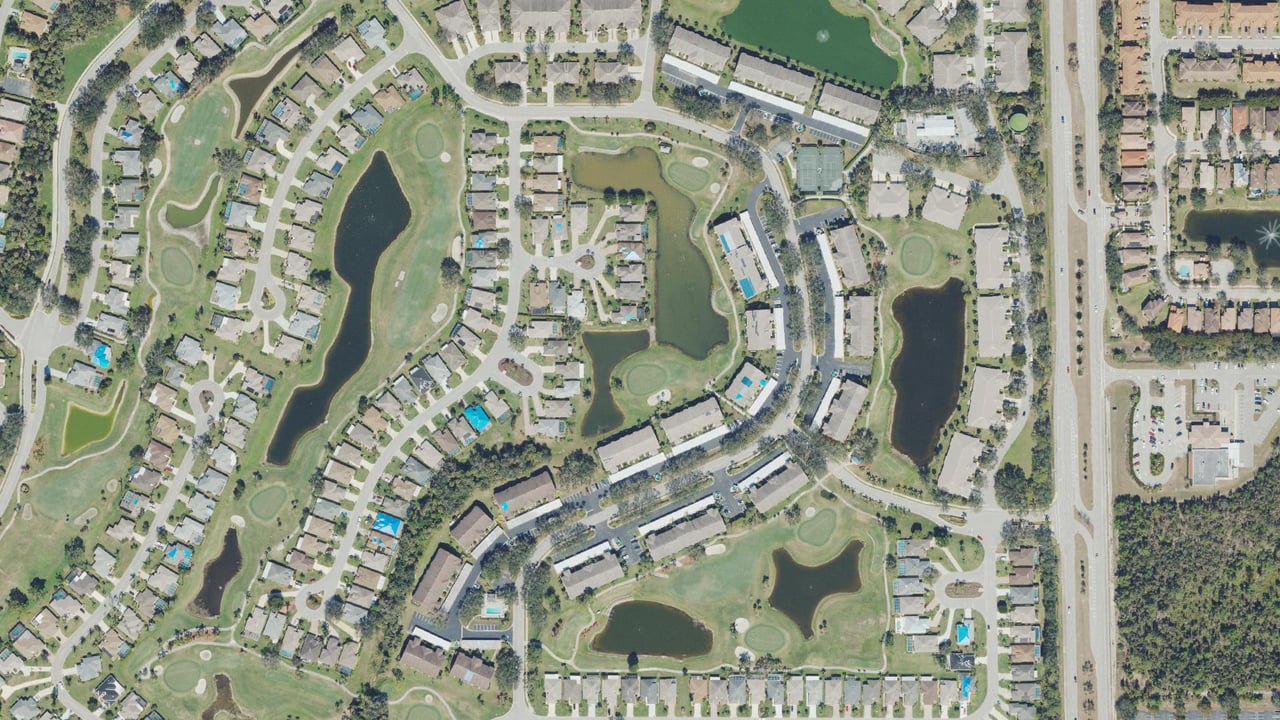
River’s Reach is a 220-unit condominium inside the gated golf community of Country Creek, in the Village of Estero, Lee County, Florida 33928. Every unit sits on Country Creek Drive. It was built between 1994 and 1999 in five phases, each declared as its own Florida condominium corporation, and it is the only part of Country Creek governed as a condominium at all. Everything below comes from primary public records: the Lee County Property Appraiser, the Florida Division of Corporations, the Florida Department of Business and Professional Regulation, FEMA, USGS, the Village of Estero and the Florida Statutes, each cited with the date it was retrieved.
Call Jesse direct at (239) 898-6072 for a confidential conversation about your River’s Reach condo.
Why McGreevy and Comisar Are the Best Realtor for River’s Reach at Country Creek
If you are searching for the best realtor for River’s Reach at Country Creek in Estero, whether you are ready to sell your River’s Reach condo or buy your next one, McGreevy and Comisar is the team that delivers. We lead Domain Realty Group, the #1 real estate team in Southwest Florida since 2012, Top 1% Real Estate Agents Nationally Since 2008, and as the leaders of Domain Realty Group our team has closed over $2.5 billion in real estate, with over $900 million in personal sales between Jesse and Marc.
Jesse moved to Estero in 2003 and bought his first home in Stoneybrook, two miles from the Country Creek gate, in January 2004. He still lives there. That is why this page can tell you that River’s Reach is the northernmost neighbourhood in the community, roughly 1,640 to 3,390 feet from the Corkscrew Road gate, and why that matters on a February afternoon.
Honors and recognition:
Top 1% Real Estate Agents Nationally Since 2008
5 Star Award for Customer Satisfaction for 21 Straight Years. Only 5 out of 21k+ Licensees (Gulfshore Life Magazine)
#1 Team in Southwest Florida since 2012
McGreevy and Comisar and their Domain Realty Group team have sold over $2.5 Billion in Real Estate
McGreevy and Comisar alone have over $900 million in Sales
Nationally Recognized Top Producing Realtors
Platinum Sales Production Award Winners
River’s Reach track record, trailing 12 months. In the last 12 months we tracked 12 closed River’s Reach sales through the Southwest Florida MLS, covering 13 September 2025 to 13 September 2026. That is 12 of the 48 closed sales in the whole of Country Creek, from a neighbourhood holding 220 of the community’s 966 homes. River’s Reach turns over harder than the rest of Country Creek, and the county roll says the same thing from a different direction: 82 of the 220 units record their most recent sale in 2021 or later, and nine already in 2026.
Data updated: September 2026. Source: Southwest Florida MLS Matrix and the Lee County Property Appraiser 2026 parcel roll.
For River’s Reach sellers: premium marketing including cinematic video, drone, professional photography, a qualified-buyer database, and discretion with off-market capability when a situation calls for it.
Selling your River’s Reach condo? Get a free home valuation at mcgreevyandcomisar.com/home-valuation or call Jesse direct at (239) 898-6072.
Buying in River’s Reach? Read how we represent buyers in Estero, or call Marc at (239) 287-5873 for a buyer consultation.
What This Page Gets Right That Others Get Wrong
River’s Reach is described badly almost everywhere, and the errors are not cosmetic ones about the number of pools. They are the kind of errors that surface at day twelve of an inspection period, when a buyer asks a question the listing cannot answer and the file goes quiet for a fortnight. Here is the short version of what the public records actually show, with every item sourced further down this page.
There are five condominium associations here, not one. Five declarations, five boards, five budgets, five estoppels. There is no River’s Reach umbrella entity, and a buyer who requests documents from the wrong one has requested nothing.
Phase IV was built before Phase III. The corporate filings, the declaration book numbers, the county’s year-built field and the state condominium register all agree. Any page reciting the phases in numeric order as a build sequence is wrong.
These buildings are two stories, and Florida’s milestone inspection and structural integrity reserve study requirements do not reach them. That is not our reading. It is the express text of both statutes, and since 31 December 2024 every resale contract here has been required to say so in conspicuous type.
All five phases are in flood Zone X, outside the Special Flood Hazard Area, under a Letter of Map Revision that took effect on 5 February 2026, not the 2022 flood maps most sources still cite.
Hurricane Irma, not Hurricane Ian, is the flood of record here. The gauge record on the Estero River is unambiguous, and the numbers are below.
There are nineteen buildings, numbered 1 through 16 and then 31 through 33. Buildings 17 through 30 never existed.
There are exactly four floor plans and no three-bedroom units, and the third digit of your unit number tells you which floor you are on.
Each of those is sourced in full below. For the community around it, see our guide to Country Creek and to Estero real estate.
What is River’s Reach at Country Creek, and how is it organised?
River’s Reach is a 220-unit condominium on Country Creek Drive inside Country Creek, Estero. It was built in five phases between 1994 and 1999, and each phase was declared as a separate Florida condominium corporation. All five are active today. There is no umbrella entity above them, so River’s Reach is five condominiums that share a name, a pool and a master association.
That structure is the single most important thing to understand about buying or selling here, because almost every practical question has five answers rather than one. Your leasing rules, your pet rules, your reserves, your estoppel, your milestone status and your board are all properties of your phase, not of River’s Reach.
The five phases, from the state and county records
I | RIVER’S REACH AT COUNTRY CREEK, INC. (N94000000513) | OR 2560 / 3787, 20 December 1994 | 48 | 1994 (8 units), 1995 (40) | $203,065 |
II | RIVER’S REACH II AT COUNTRY CREEK, INC. (N95000000765) | OR 2608 / 0113, 13 June 1995 | 56 | 1995 (24), 1996 (32) | $215,417 |
III | RIVER’S REACH III AT COUNTRY CREEK, INC. (N97000004077) | OR 2914 / 2629, 28 January 1998 | 36 | 1998 | $217,448 |
IV | RIVER’S REACH IV AT COUNTRY CREEK, INC. (N96000004936) | OR 2816 / 2698, 25 April 1997 | 40 | 1997 | $216,961 |
V | RIVER’S REACH V AT COUNTRY CREEK, INC. (N98000001357) | OR 3087 / 2522, 10 March 1999 | 40 | 1999 | $216,473 |
Total | five active corporations | plat PB 55, Page 34 | 220 | 1994 to 1999 | |
The unit counts have three independent witnesses that do not talk to each other: the Florida Division of Corporations and the recorded declarations, the Florida Department of Business and Professional Regulation’s condominium register, and the Lee County parcel roll, where a filter on DOR use code 04 and street name Country Creek Drive returns exactly 220 records. When three separate state and county systems agree on a number, that number is safe to build on.
There is no River’s Reach master association
A buyer reasonably assumes that five phases of one condominium report to one River’s Reach board. They do not. No intermediate Florida entity exists. The only body above the five phase corporations is The Villages at Country Creek Master Association, Inc., which governs the whole 966-home community.
There is one trap worth naming, because it will pollute a name search. A corporation called River’s Reach I Condominium Association, Inc. was filed on 6 April 1992 at a Country Creek Drive address, made zero filings, and was dissolved on 13 August 1993. It is a dead shell from before the real Phase I was chartered in 1994. It is not your association and it never was.
How the five phases relate to the master board
The master board seats seven directors and votes in three product-type districts, which is unusual and worth knowing. District 1 is the manor homes and houses and holds two seats. District 2 is the villas and holds one. District 3 is the condominiums and holds one, and because every condominium unit in Country Creek is a River’s Reach unit, District 3 is River’s Reach exactly.
That means River’s Reach is 22.8 percent of the community’s dwellings holding 14.3 percent of the board seats. It is worth understanding before a vote on a large capital item. Master board terms are two years and staggered, the board year begins in mid-March, and monthly meetings are held on the fourth Friday and are open to all owners.
Why was River’s Reach IV built before River’s Reach III?
Because it was, and four independent record systems say so. River’s Reach IV was incorporated first, recorded its declaration first, and was completed first. Phase III’s corporation was not even chartered until roughly three months after Phase IV’s declaration was already recorded. Any description that treats the phase numbers as a construction timeline is simply wrong.
This is the cheapest fact on this page to verify and the one most often gotten wrong, so here is the full proof laid side by side.
Florida corporate document number | N96000004936, filed 1996 | N97000004077, filed 1997 | IV chartered first |
Declaration book and page | OR 2816 / 2698 | OR 2914 / 2629 | IV recorded in an earlier book |
Declaration recording date, state register | 25 April 1997 | 28 January 1998 | IV recorded nine months earlier |
County year-built field | 1997 | 1998 | IV completed first |
Why it matters to a buyer rather than a trivia collector: age drives insurance pricing, reserve planning and component life on a Florida condominium. If you assume Phase III is older than Phase IV because three comes before four, you have the roof age, the plumbing age and the electrical age backwards on 76 units.
A data defect in the state register you should know about
The Department of Business and Professional Regulation has Phase IV filed under Collier County. River’s Reach is entirely in Lee County. It is a clerical error in the state’s own database, and the consequence is practical: any county-filtered search of the state condominium register returns four River’s Reach phases instead of five, and a title or due-diligence search that relies on that filter will quietly miss Phase IV. Search by name, not by county.
Which River’s Reach phase is my unit in, and how do I prove it?
Read the declaration book number in your legal description, not your building number. Book 2560 is Phase I, 2608 is Phase II, 2914 is Phase III, 2816 is Phase IV and 3087 is Phase V. Your building number will not tell you, because the buildings were not numbered in phase order and the ranges are not contiguous.
Your STRAP number on the Lee County Property Appraiser site follows the pattern 27-46-25-E3-070XX.XXXX, and the parcel page will show you the recorded legal description with the book and page in it. Search by street address to find it.
The apostrophe problem, and it is a real one
Phase I is recorded as “RIVER’S REACH.” Phases II through V are recorded as “RIVERS REACH,” with no apostrophe. This is not a typo in one record. It is how the instruments were drafted, and it means a records search on one spelling misses four fifths of the community. Search both. A title examiner who searches only the possessive form will not find Phases II, III, IV or V.
A quirk in the common-element legal description
The 16.01-acre common element that the five phases share, folio 10273088, is titled to all five corporations. But the county’s condensed legal description for that parcel cites only four of the five declarations and omits Phase III’s, OR 2914 / 2629.
It is most likely a scrivener’s omission rather than a substantive gap, and we are not asserting otherwise. But it is exactly the sort of thing a Phase III title examiner should confirm against the recorded submission rather than discover at closing, and no aggregator page is ever going to surface it.
How many buildings are in River’s Reach, and how are they numbered?
There are nineteen buildings, numbered 1 through 16 and then 31 through 33. Buildings 17 through 30 do not exist and never did. The three high-numbered buildings are Phase V. Even street numbers are on the west side of Country Creek Drive, odd numbers on the east, and the addresses descend as you move north.
Building 1, at 20900 Country Creek Drive, is the oldest: eight units completed in 1994. Site areas per building run from 5,565 to 13,726 square feet, which is the one dimension on which the phases genuinely differ from each other.
Is my unit on the first floor or the second floor?
The third digit of your unit number tells you. A unit number reads as building, then floor, then unit: in 1526, the 15 is the building, the 2 is the floor, and the 6 is the unit. A 1 in that position is a ground-floor unit and a 2 is a second-floor unit. The split across the community is exactly even.
There are 110 first-floor units and 110 second-floor units, and that 110 to 110 split is itself the proof that the decoding rule is right rather than a coincidence.
Does the floor change the value? On the county’s 2026 assessment, essentially not: the median just value is $214,441 for ground-floor units and $216,798 for second-floor units. That is a difference of about one percent, and it exists because the floor-plan mix is nearly identical on both levels rather than because the assessor is indifferent. Market pricing is a separate question from assessed value, and a ground-floor unit with no stairs has a buyer pool that a second-floor unit does not.
Ready to Sell Your River’s Reach Condo, or Just Want the Real Numbers First?
River’s Reach is a community where the generic answer is almost always wrong, because a Phase I owner and a Phase V owner face different associations, different boards, different reserve positions and, as of 2026, different flood-determination vintages. Before you decide anything, get the numbers for your specific unit rather than the community average.
If you are selling, start with a real valuation of your condo rather than a portal estimate: get a free River’s Reach home valuation, or call Jesse McGreevy direct at (239) 898-6072. Top 1% Real Estate Agents Nationally Since 2008, and confidential conversations are welcome.
If you are buying, read how we represent buyers in Estero and then call Marc Comisar at (239) 287-5873. We will identify your phase, pull the parcel record and the FEMA determination for the specific building, and tell you which of the five associations your documents have to come from before you write an offer.
Does River’s Reach need a milestone inspection or a structural integrity reserve study?
No, and this is not our interpretation. Florida’s milestone inspection requirement applies to buildings three habitable stories or more, and the structural integrity reserve study requirement applies to buildings three habitable stories or higher. Every River’s Reach building is two stories. Both statutes also carry an express exclusion that says so a second time.
This is the most consequential question a Florida condominium buyer can ask in 2026, and it is the question every competing page about this community leaves unanswered. So here is the actual text.
What the milestone inspection statute says
Section 553.899, Florida Statutes, sets the trigger at buildings that are “three habitable stories or more in height as determined by the Florida Building Code.” The same section then states the exclusion directly: “This section does not apply to a single-family, two-family, three-family, or four-family dwelling with three or fewer habitable stories above ground.”
River’s Reach buildings are two stories. The Lee County parcel roll carries a maximum-stories value of 2 on all 220 units, and no elevator is recorded anywhere in the parcel set, which is what you would expect of a two-story walk-up.
What the reserve study statute says
Section 718.112(2)(g), Florida Statutes, requires a structural integrity reserve study “for each building on the condominium property that is three habitable stories or higher in height.” And again the exclusion is explicit: “This paragraph does not apply to buildings less than three stories in height.”
The fact that settles it beyond argument
Since 31 December 2024, section 718.503(2)(e), Florida Statutes, has required the resale contract for a unit in a building like this to state, in conspicuous type, that the association is not required to have a milestone inspection or a structural integrity reserve study.
Read that again, because it is the whole point. The exemption is not something a buyer has to work out from the height of the building. Florida law requires it to be disclosed affirmatively, in the contract, in conspicuous type, on every River’s Reach resale. That converts this page’s central claim from an inference into a statutory certainty.
How the threshold got to where it is
The rule changed four times in four years, which is why so much of what is written about it is out of date. The threshold a buyer reads in a 2022 article is not the threshold in force now.
Chapter 2022-269 (SB 4-D) | Created the milestone requirement at three stories, with a mandatory 25-year trigger for buildings within three miles of the coast |
Chapter 2023-203 (SB 154) | Deleted the mandatory coastal trigger, leaving the shorter interval to local agency discretion |
Chapter 2024-244 (HB 1021) | Widened the dwelling exclusion to include four-family dwellings |
Chapter 2025-175 (HB 913) | Changed “three stories” to “three habitable stories” |
No 2026 amendment changed the threshold. Two stories has been outside the requirement in every version of the statute since it was created.
What we still tell buyers to ask
Being outside a requirement is not the same as having no structural or reserve information, and we would not let a buyer treat it that way. Ask each phase whether it has voluntarily commissioned a reserve study or a structural inspection. Nothing stops an association from doing one, and a board that has done one voluntarily is telling you something useful about how it operates.
Whether any of the five River’s Reach associations has done so is a gap we could not close from public records, and we are not going to guess at it. The route that would answer it: section 718.111(12) requires an association to post “any other inspection report relating to a structural or life safety inspection,” so a voluntary report would have to appear on the owner portal. Your seller can pull it. We ask for it on every condominium file we handle.
What Florida condominium rules DO apply to River’s Reach?
Plenty, and some of the most important ones are driven by unit count rather than by building height. All five River’s Reach associations exceed the 25-unit threshold in section 718.111(12), so all five carry the full digital records-posting obligation regardless of how tall the buildings are.
Here is the distinction that matters, because it is where most summaries go wrong: height-driven obligations miss these buildings, and unit-count-driven obligations catch them.
The records you are entitled to see
Because each phase exceeds 25 units, each of the five associations must post its declaration and every amendment, its bylaws, articles, rules, budgets and minutes digitally. In practice the portal is owner-gated, which means a buyer under contract cannot simply log in and read them.
The workaround is statutory and it works. Section 718.111(12)(c) gives an owner a records inspection right with a ten-working-day response window. A buyer exercises it through the seller, as the seller’s authorised representative, in writing. We do this as a matter of course rather than waiting to see whether the documents show up.
Reserves, and a subtlety worth understanding
Reserves remain mandatory here but waivable, and the reason is a piece of statutory plumbing rather than an oversight. The rule that removed the ability to waive reserves is conditioned on “an association that must obtain a structural integrity reserve study.” River’s Reach associations are not in that category, so the older waiver mechanism still applies to them.
That is not a criticism of these associations. It is a fact about the law, and it means a buyer should look at what each phase has actually funded rather than assuming the statute has funded it for them.
Financial reporting is about revenue, not unit count
A common error in condominium summaries is to tie the level of financial reporting to the number of units. It is tied to revenue. Ask what tier of report your phase produces and for the last two years of it, and do not assume a 220-unit community produces a 220-unit-sized report, because there is no such thing.
How is buying a River’s Reach condo different from buying elsewhere in Country Creek?
Country Creek contains both statutory regimes. River’s Reach is a Chapter 718 condominium. The Villages and the Villas sides are Chapter 720 homeowners associations. The differences are not academic, and several of them change the mechanics and the timing of a transaction directly.
Cancellation right on a resale | Seven business days from receipt of the documents | Three days |
Disclosure package | Statutory condominium documents package | HOA disclosure summary |
Reserves | Mandatory, with an opt-out mechanism | Opt-in, under section 720.303(6)(d) |
Digital records posting | Triggered at 25 units, so all five phases are in | Triggered at 100 parcels |
Insurance responsibility split | Set by statute at section 718.111(11)(f) | No statutory split; read the declaration |
Dispute resolution | Arbitration is the default path | Presuit mediation is mandatory |
One thing that is NOT different, and gets sold as though it were: the estoppel process is substantively the same under both chapters. Anyone telling you a condominium estoppel is a fundamentally different animal from an HOA estoppel here is padding.
The practical consequence of the cancellation row alone is that a River’s Reach buyer gets more than twice the review window that a buyer across the street gets, and that window does not start until the documents are actually received. On a five-association community where getting documents from the right entity is itself a task, that extra time is worth using rather than waiving.
What will a lender ask about River’s Reach, and what can go wrong?
Expect a full condominium project review rather than a streamlined one, and expect the questionnaire to go to your phase association rather than to the master. The project review waiver that speeds many condo loans does not apply here for two independent reasons, so the reserve and budget questions get asked in full.
This is where River’s Reach deals actually fall apart, and it is almost always avoidable with two weeks of lead time.
Why the project review is a full one
The limited-review shortcut fails twice over. The individual phases are small, in the 36 to 56 unit range, and the community sits under a master association. Either one is enough to push the file into a full project review, so a River’s Reach loan gets the complete set of questions about budget, reserves, litigation and delinquency.
Under a full review the reserve test bites. Conventional project standards want to see roughly ten percent of the budget going to reserves, or a reserve study of recent vintage supporting a lower figure.
Here is the trap, and it is specific to this community. Florida law does not require these associations to obtain a structural integrity reserve study, and it permits them to waive reserves. A secondary-market investor does not care what Florida permits. So a phase can be perfectly legal, fully compliant, and still fail a lender’s reserve test. That is not a contradiction, it is two different rulebooks, and the buyer is standing between them.
The master association question that is live right now
The master association levied a special assessment to fund the clubhouse phase of an $8 million renovation programme, and an owner has asked the Circuit Court whether a membership vote was required first. That matter is covered in full on our Country Creek community page.
Its relevance here is narrow and specific. A condominium questionnaire asks about special assessments and about deferred maintenance, and those questions reach the master association, not only your phase. An active assessment and an open dispute are exactly the sort of entries that generate an underwriting condition. A buyer who knows about it in week one handles it. A buyer who meets it in week four renegotiates or walks.
Two questions we flag as open rather than pretend to answer
Bundled golf and mandatory amenity fees. Country Creek’s golf is bundled and non-equity. At least one secondary-market project standard treats mandatory amenity fees as a potential ineligibility issue. Whether it bites here is a question for the specific lender and the specific program, and we raise it early rather than discovering it at underwriting.
FHA and VA approval status. We could not establish it from the federal condominium lookup, and the lookup failed a control query during our research, so its answer is not trustworthy enough to publish. This is a gap, not a negative. Treating an unreliable “no records found” as proof of non-approval would be exactly the kind of confident error this page exists to avoid. Your lender can confirm it in a phone call.
How do I get association documents and an estoppel for a River’s Reach unit?
Send the request to your phase corporation, not to River’s Reach and not to the master. There are five separate associations and each one issues its own estoppel certificate. A request addressed to the wrong entity does not get forwarded; it gets nothing, and you lose the days.
The estoppel rules as they actually operate
The statutory response window is ten business days. A certificate is effective for 30 days when delivered electronically or by hand, or 35 days by mail. If the association misses the deadline, no fee may be charged. And the certificate binds: amounts above what it states are waived.
The fee caps are worth knowing precisely, because the numbers printed in the statute are not the numbers currently in force. The caps are indexed, and the figures now indexed and published are $299 for a standard certificate, up to $119 more for expedited delivery, and up to $179 more where the account is delinquent, with aggregate caps that rise for multiple units.
The trap unique to a five-association community: a buyer purchasing two units in different phases is dealing with two associations and pays two full estoppel fees. There is no bundling across phases, because there is nothing to bundle them under.
Separately, association transfer or application fees are capped at $150 per applicant, spouses or a parent and dependent count as a single applicant, and no fee may be charged for a renewal by the same tenant.
This page describes public records and statutes. It is not legal advice, and we are not attorneys. On a specific document question, use a Florida real estate attorney.
What do the units in River’s Reach actually look like?
All 220 units are two bedroom, two bathroom, two-story-building condominiums with a carport, no garage and no private pool. There are four floor plans and no three-bedroom units anywhere in the community. Heated area runs from 1,125 to 1,238 square feet, and the county records no enclosed non-heated area on any parcel.
River’s Reach is unusually uniform for a community built across five phases and six years, and that uniformity is useful to both sides of a transaction. It means comparables are genuinely comparable, and it means the variables that do move price are few enough to name.
The four floor plans
1,125 | the eight units in Building 1 |
1,161 | a minority of the community |
1,237 | 62 percent of all units |
1,238 | the balance |
The ~1,237 square foot plan is the community. Nearly two thirds of River’s Reach is one floor plan, which is why an appraiser has an easy job here and why an owner claiming a rare layout should be asked which one.
The lanai is not in the square footage. On every one of the 220 parcels, total area equals heated area, and the appraiser carries no enclosed non-heated area at all. If a listing quotes a number materially above the heated figure on the roll, it is adding the lanai, and a buyer should know which number they are comparing.
The smallest and the oldest
The eight units in Building 1, at 20900 Country Creek Drive, are the 1,125 square foot plan, they were completed in 1994, and all eight are assessed at $187,789 for 2026. They are the oldest and the lowest-assessed units in River’s Reach. That is a fact about a specific building, which is more useful than a sentence about the community’s price range.
What the 2026 roll says about value
The median just value across all 220 units is $214,929, and 93 percent of the community falls between $200,000 and $220,000. That is a remarkably tight band, and it is the direct consequence of the floor-plan uniformity described above.
Does every River’s Reach unit have a carport, and are there elevators?
Every unit has a carport and there are no garages anywhere in River’s Reach. There are also no elevators. The buildings are two-story walk-ups reached by exterior stairs, which the county roll confirms indirectly: a maximum-stories value of 2 on all 220 parcels and no elevator recorded anywhere in the parcel set.
What the public record does not tell you is whether your carport is assigned. The roll records only that a carport exists. Whether it is a limited common element attached to your unit or unassigned parking is a question for the declaration and the phase’s parking rules, and the answer can differ between phases. Guest parking is surface parking on the common element under rules set by your phase association.
For a buyer, the no-elevator fact is not trivia. A second-floor unit here is an exterior stair climb with no alternative, permanently. That narrows the resale pool for a second-floor unit in a community whose buyers skew retirement-aged, and it is the strongest single argument for why a ground-floor unit can command a market premium that the assessment roll does not show.
What is the roof, repipe and maintenance history at River’s Reach?
This is the question that decides River’s Reach deals, and it cannot be answered from public county records. The appraiser’s permit feed begins in 2016, the appraiser disclaims its completeness, and Village of Estero permits do not reliably flow into it. What the county shows for a thirty-year-old, 220-unit community is 96 permit records total.
We are telling you this plainly rather than presenting a thin permit list as though it were a maintenance history. The absence of a roof record in the county feed is not evidence that the roofs are original, and it is not evidence that they are new. It is evidence that the county feed does not know.
What the county feed actually contains
Utilities | 51 |
Remodel and repair | 44 |
Roof | 1 |
Total | 96 across 220 units and 3 common parcels |
One roof permit for the entire community, on Building 32 in January 2026. Nothing at all on the common-element parcel or the master parcels. Fifty-eight of the 220 units have at least one permit record.
The 51 utilities permits are scattered single-unit entries, which is the signature of individual air conditioning and water heater replacements rather than a building-wide programme. There is no record of a community-wide repipe. Again: that means the county does not show one, not that one did not happen.
Where the real answer lives, and how we get it
Four document classes hold what the county does not:
The phase’s reserve schedule and any voluntary reserve study. Component ages and remaining life live here.
Board minutes, which record when a roof or repipe project was approved and funded.
The Village of Estero permit file for your specific building address. Village of Estero Community Development is the building department for this address since May 2016, and a public records request under Chapter 119 reaches the file.
The original 1994 to 1999 building permit files, for construction type and original component specification.
If you are selling, assemble these before you list. An unanswerable roof or repipe question is the fastest way to lose a River’s Reach buyer, and it is entirely preventable with two weeks of notice.
One gap we will not paper over
The county publishes no building-characteristics panel for condominium parcels, which means block versus frame construction is not establishable from the parcel roll. That matters directly to insurance pricing. The declaration exhibits and the original permit files hold the answer, and we pull them on a specific address rather than guessing from the look of the building.
Is River’s Reach in a flood zone?
All five phases are in Zone X, an area of minimal flood hazard, outside the Special Flood Hazard Area. No base flood elevation applies. That is confirmed by direct point queries against FEMA’s National Flood Hazard Layer at the coordinates FEMA itself recorded for these buildings, and the governing map is a Letter of Map Revision that took effect on 5 February 2026.
Being outside the Special Flood Hazard Area is the single largest carrying-cost fact about a River’s Reach unit, because it is the difference between a federally mandated flood policy and a discretionary one.
The governing map, with its case number
The map most sources still cite for this area is the 2022 flood insurance rate map. It has been superseded.
Revision | LOMR 25-04-3811P, “Estero River Redelineation” |
Issued | 23 September 2025 |
Effective | 5 February 2026 |
Community | Village of Estero, CID 120260 |
Basis | Updated topographic data. No project was built to earn it |
Panels revised | 12071C0579G, 12071C0583G, 12071C0587G, 12071C0591H |
What it did for River’s Reach specifically: it moved these buildings from shaded Zone X to unshaded Zone X. Both are outside the Special Flood Hazard Area, but the distinction is real to an insurer and to a lender reading a determination, and it was earned by better topography rather than by construction.
Note also that the Lee County Property Appraiser prints on every one of these parcels that flood map data is not available for parcels inside a municipality and that you should contact the municipality directly. The Village of Estero is the flood authority for this address, not the county appraiser. That single line explains a great deal of the wrong flood information circulating about this community.
What do the FEMA determinations on River’s Reach actually say?
FEMA has issued 34 map-change determinations naming Country Creek properties between 16 December 2008 and 25 June 2026, and fourteen of them are River’s Reach. They are association-level rather than lot-level: each names the recorded declaration of condominium as its legal description, and each removes named structures.
That structure matters. A determination that names the declaration and removes specified buildings covers those buildings, not merely one owner’s unit, which is why a River’s Reach buyer has something stronger to hand a lender than most condominium buyers do.
The building elevation table these determinations produced
The determinations record a lowest adjacent grade for each building, and read together they amount to a survey of the community that exists nowhere else in public form. Across the nineteen buildings at addresses 20601 through 20900 Country Creek Drive, lowest adjacent grade runs from 14.8 to 16.7 feet NAVD88. Phase V is buildings 31 through 33.
Every one of those determinations also carries the standard caution that portions of the property remain in the Special Flood Hazard Area or the floodway. The buildings came out. The whole parcel did not. Anyone summarising this as “River’s Reach is not in a flood zone” full stop is overstating it, and we would rather you heard the precise version from us.
The re-issuance treadmill, and why your letter’s date matters
This is the part no one else will tell you, and it has a direct consequence for one buyer in five.
The sequence ran: the 2022 flood maps, then determinations in December 2022 and January 2023, then a map revision in July 2024, then more determinations from September to November 2024, then the revision effective 5 February 2026.
Since that February 2026 revision, only Phase II has re-filed. Its current determination is case 26-04-4011A, dated 12 June 2026. Phases I, III, IV and V are still holding letters of 2024 vintage.
That is not a defect and it does not change the zone. But a determination issued against a superseded map is a weaker document to put in front of a lender’s determination service than one issued against the current map, and if you are selling in Phase I, III, IV or V, asking your board whether a refresh is planned is a fifteen-minute conversation that can save a fortnight at closing.
What a determination actually does for you
A Letter of Map Amendment or Revision removes the federal mandatory-purchase requirement for the structure it names. It does not make flooding impossible and it does not make insurance a bad idea.
The instruction that makes it useful: the letter stays with the property, but the buyer has to know it exists and hand it to the lender. A lender’s flood determination service reads the flood map. If nobody produces the letter, the determination service produces a requirement, and the buyer pays for a policy they did not need. We pull the determination for the specific building on every River’s Reach file we handle, for exactly this reason.
Which hurricane is the flood of record at River’s Reach, Irma or Ian?
Hurricane Irma in 2017, not Hurricane Ian in 2022, and it is not close. On the South Branch Estero River gauge less than a kilometre from these buildings, Irma crested more than a foot above Ian, and in a record running from 1987 to 2026 the eleven highest daily values are all from 2017. Ian ranks twelfth.
Southwest Florida real estate copy treats Ian as the benchmark event everywhere, because for much of the coast it was. At this specific address the gauge record says otherwise, and a buyer deserves the measurement rather than the regional assumption.
The gauge record
South Branch Estero River (USGS 02291597), 0.9 km away | 13.35 ft instantaneous, 13.10 ft daily mean | 12.35 ft instantaneous, 9.74 ft daily mean |
North Branch Estero River | 15.31 ft | 14.28 ft |
The South Branch gauge is not a convenient nearby proxy. It sits on the exact flooding source FEMA names for this community.
What Ian’s high water actually measured here
USGS surveyed high-water marks after Ian. The nearest to River’s Reach are on the Estero River at US 41, about 1.84 kilometres away, and they came in at 10.83 and 10.77 feet NAVD88.
Set those against the local base flood elevations of 13.7 and 15.0 feet NAVD88, and Ian’s documented high water was 2.9 to 4.2 feet below base flood elevation. Set them against the lowest adjacent grade of the River’s Reach buildings, 14.8 to 16.7 feet NAVD88, and Ian’s water was 4.0 to 5.9 feet below the ground at every building in the community.
And the comparison is conservative in the buyer’s favour, because the high-water-mark site is downstream of River’s Reach and tidally influenced, so it should if anything read higher than the site itself.
One honest caveat. USGS collected 60 high-water marks in Lee County after Irma and none of them is on the Estero River, so there is no surveyed Irma mark to set against these elevations the way there is for Ian. The Irma-versus-Ian ranking rests on the gauge record, which is a strong, continuous, thirty-nine-year instrument. The building-by-building elevation comparison rests on Ian, where the surveyed marks exist.
What does flood and wind insurance look like for a River’s Reach owner?
Your building’s flood coverage sits on the association’s master policy, not on yours, and because these buildings are outside the Special Flood Hazard Area your own flood policy is a choice rather than a requirement. Wind is the larger and less flexible cost, and a 1990s two-story condominium has fewer routes to a discount than an owner expects.
How condominium flood coverage is actually structured
A condominium association typically carries a Residential Condominium Building Association Policy covering the building. A unit owner’s HO-6 covers interior elements and contents, subject to the split in the declaration and the statutory allocation.
The exposure a buyer should ask about directly is what happens if the master flood policy lapses or is underinsured, because the unit owner’s policy does not backfill the building. Ask for the current master policy declarations page. It is a one-page document and the seller can get it.
The flood insurance discount, corrected
The Village of Estero participates in FEMA’s Community Rating System, and the discount is commonly quoted at 20 percent. For River’s Reach that number is wrong.
Village of Estero, CID 120260 | Class 6 | 20 percent | 10 percent |
Unincorporated Lee County | Class 5 | 25 percent | 10 percent |
River’s Reach is outside the Special Flood Hazard Area, so the applicable discount is 10 percent, not 20. The 20 percent figure is real, it is simply the inside-the-flood-zone rate. Being in Zone X is worth far more than the difference, but a buyer budgeting from the advertised number will be off.
The design wind speed at this site interpolates to roughly 157 mph under the current code’s risk category II contours. All of Lee County sits in the wind-borne debris region, and because these are two-story buildings, every glazed opening falls under the large-missile impact test rather than the small-missile one.
These buildings date from 1994 to 1999, before the 2002 statewide code. On the Florida wind mitigation form that means the building-code compliance question answers to the pre-2002 category, with no code-era credit attached.
And here is the finding that surprises most owners. The wind mitigation inspection framework is scoped to dwellings of one to four units. A River’s Reach owner therefore largely cannot convert a mitigation inspection into a credit on their own HO-6, because the building envelope that earns those credits is insured on the association’s master policy, not on yours. If your building’s openings have been upgraded, the benefit accrues at the association level. That is worth knowing before paying for an inspection that will not move your premium.
What the market is doing
Citizens Property Insurance, the state-backed insurer of last resort, held 6,151 personal residential multiperil and 2,006 personal residential wind-only policies in Lee County as of 31 July 2026. On the condominium association lines, Citizens held 5 policies covering 9 buildings on multiperil and 42 policies covering 98 buildings on wind-only.
Those association lines are down 89 percent and 57 percent respectively since December 2024, which is the clearest available signal that private capacity has returned to the Florida condominium association market. That is a genuinely good sign for a River’s Reach board renewing a master policy.
On the unit-owner side, the most recent filed rates for Lee County show the average HO-6 multiperil premium moving from $1,459 to $1,410, a decrease of 3.4 percent, across 801 policies, while the wind-only HW-6 average moved from $2,617 to $2,751, an increase of 5.1 percent.
Data updated: September 2026. Sources: FEMA National Flood Hazard Layer and Map Service Center, USGS gauge and high-water-mark data, the FEMA Community Status Book, and Florida Office of Insurance Regulation and Citizens filings.
What does a River’s Reach owner actually pay in property tax?
A River’s Reach unit sits in taxing district 316, “Village of Estero / Estero Fire,” and there is no Community Development District here. On a worked example from the roll, a unit assessed at $226,746 carried a 2025 tax bill of $2,970.85, and the only non-ad-valorem line on that bill was an $18.31 solid waste assessment.
That last detail is worth pausing on. In a great deal of newer Southwest Florida inventory, the non-ad-valorem section of the tax bill carries a Community Development District assessment that can run into four figures annually and continues for decades. River’s Reach has none. The line is $18.31 for garbage.
The worked example
Parcel | 20900 Country Creek Drive, Unit 111 |
2026 just value | $226,746 |
2025 tax bill | $2,970.85 |
Non-ad-valorem lines | Solid waste, $18.31. Nothing else |
Taxing district | 316, Village of Estero / Estero Fire. Municode E |
CDD | None |
The tax trap that catches Florida buyers
The prior owner’s tax figure is not your tax figure. Florida caps annual assessment increases on a property, and that cap does not transfer to a new owner. On the 2026 roll, 45 of the 220 River’s Reach parcels are carrying a capped assessed value below their just value, either through the homestead cap or through the 10 percent non-homestead limitation.
So on roughly one unit in five, the tax number a seller quotes from their own bill understates what a buyer will actually pay after the assessment resets. We run the buyer’s number rather than repeating the seller’s, and any agent who does not is setting up an unpleasant surprise in year two.
Who owns in River’s Reach, and how many people live here full time?
River’s Reach is majority seasonal and second-home. Sixty-two of the 220 units carry a homestead exemption, which is 28.2 percent, and about 35.5 percent of owners use the unit itself as their mailing address. Forty-six units, roughly 21 percent, are held by an LLC or a trust.
For a buyer that mix is information rather than a judgement. A predominantly seasonal community is quieter from May to October, has a different rhythm of amenity use, and often a different attitude to assessments than a community of full-time residents.
Where the owners come from
Florida | 95 |
Other US states | 117 |
Canada | 8 |
The leading out-of-state origins are Illinois with 17, Michigan with 13, Wisconsin with 11, Ohio with 11, Massachusetts with 10 and New York with 9. That is a classic Midwest-and-Northeast snowbird profile, and it is a real input into how you time a listing.
Turnover
River’s Reach moves. Eighty-two of the 220 units record their most recent sale in 2021 or later, and nine already in 2026. On the roll’s most-recent-sale field, 41 units show a post-2024 transfer above $50,000, with a median of $269,000 and a range from $142,500 to $340,000.
Treat that last set as roll data rather than as a verified qualified-sale set, because the roll’s sale field includes transfers that are not arm’s-length market sales. It is directionally useful and we have labelled it honestly rather than presenting it as a comparable set.
Where does River’s Reach sit inside Country Creek?
River’s Reach is the northernmost neighbourhood in Country Creek, roughly 1,550 to 3,310 feet from the clubhouse and 1,640 to 3,390 feet from the Corkscrew Road gate depending on which building you are in. Every one of the nineteen buildings sits within 205 feet of the master association’s golf tract, and seventeen of them are within 121 feet.
The community is gated, with a front gate on Corkscrew Road and a back gate, and the internal roads are private and owned by the master association on a dedicated 19.36-acre parcel.
Golf, lake and water exposure, measured by building
Golf. Every building is within 205 feet of the golf tract. Whether a specific unit faces a fairway depends on which side of the building it is on, which is a showing question rather than a records question, but the proximity is community-wide.
Water. This is where the phases genuinely differ.
III, IV, V | 11 through 16, and 31 through 33 | 136 units within 100 feet. Building 32 is 13 feet from a lake |
I and II | 1 through 10 | 256 to 394 feet from the nearest water |
River’s Reach is not on the Estero River, despite the name. The nearest mapped river channel is about 804 feet from the closest Phase I building and about 2,620 feet from the farthest Phase V building. The water behind Phases III and V is the community’s stormwater lake system. That is a pleasant view and a genuine amenity, and it is not a river frontage, and a listing that implies otherwise is one a buyer will check.
A name collision worth clearing up
This River’s Reach is not River Reach Estates in Bonita Springs. Different plat, recorded at Plat Book 77, Pages 39 and 40, different city, and 20 single-family lots assessed from roughly $874,000 to $2.5 million. If you are comparing prices and the numbers look impossible, you are looking at the wrong community.
Getting around
Miromar Outlets | 2.0 miles | about 6 minutes |
Coconut Point | 4.0 miles | about 9 minutes |
Gulf Coast Town Center | 5.5 miles | about 12 minutes |
Lee Health Coconut Point | 3.0 miles | about 8 minutes |
Southwest Florida International Airport | 12.7 miles | about 20 minutes |
Gulf Coast Medical Center | 10.2 miles | about 18 minutes |
NCH North Naples | 12.9 miles | about 21 minutes |
Barefoot Beach | 10.4 miles | about 20 minutes |
Bonita Beach Park | 11.5 miles | about 20 minutes |
Lovers Key | 15.8 miles | about 29 minutes |
Fort Myers Beach | 18.1 miles | about 33 minutes |
What can a River’s Reach owner actually use, and what is happening to the clubhouse?
A River’s Reach owner uses two sets of amenities. The phase associations own the 16.01-acre common element with the River’s Reach pool on it. Everything else, the golf course, the clubhouse, the tennis courts, the other pools and the roads, belongs to the master association and comes with master membership.
That division answers a question owners ask constantly, which is who to call about what.
What belongs to whom
The River’s Reach pool and the 16.01-acre common element (folio 10273088) | The five River’s Reach corporations jointly |
Tracts D, E and F inside the River’s Reach plat | The master association, not the condominiums |
Golf course, clubhouse, tennis, the other pools, private roads, retention areas | The master association |
The master declaration puts maintenance of the common areas, clubhouse, golf course, roadways and retention areas with the master. Your phase maintains your building and the River’s Reach common element.
The golf
Eighteen holes, par 61, 3,871 yards, an executive-length course designed by Gordon Lewis, which the association describes as newly renovated. The golf is bundled and non-equity with no documented buy-in, and members still pay a green fee. That combination is unusual and it is the single most useful thing to understand about Country Creek’s cost structure.
The public can play from 1 May through 31 October, and non-resident memberships are offered. Published 2026 maintenance closures were 20 July to 3 August and 14 to 21 September.
Everything else
Five community pools open dawn to dusk. Five tennis courts, four of them lighted Har-Tru clay-style and one hard court, recently renovated, with men’s and ladies’ league play. A fitness centre on the lower level of the clubhouse with 24/7 key-card access available from the administration office for a fee. Bocce with 26 co-ed teams running fall through spring, horseshoes daily and free, a Sunday morning cornhole league on court 5, and Wii bowling in the clubhouse dining room. The restaurant is Creekside, with a Grill Room and a Dining Room both overlooking the golf course and the Estero River.
The clubhouse project, current as of September 2026
Interior demolition began on 13 April 2026. The contractor is Garrett Construction and the project manager is Roger Harper. The scope, taken from the association’s own newsletter rather than from rumour: six of the nine columns removed from the dining and grill rooms, the bar relocated to the north side, a vaulted lobby ceiling, enlarged window openings, both downstairs activity rooms rebuilt and the HVAC updated.
It is a restoration, not a rebuild. The previous remodel was in 2008 and was the only one before this.
The amenities have not closed. Temporary administrative offices, a temporary pro shop, kitchen and dining have operated on a regular schedule since April, and golf, tennis, pools and events have continued throughout.
No completion date has been published in any 2026 issue of the community newsletter. The strongest available signal on timing is that the 7 November 2026 community service day luncheon is booked into the temporary dining facility, which means the permanent dining room is not expected to be open by then. We would rather give you that inference, clearly labelled, than a completion date nobody has actually published.
Owners following the project have weekly Tuesday clubhouse reports by email and on the association website, a dedicated community television channel, 24/7 project cameras and the monthly newsletter.
A maintenance culture worth naming
Adjectives about a well-maintained community are worthless. Checkable signals are not. This association runs an active resident volunteer corps doing sidewalk, bridge, retaining-wall and outbuilding-roof repair; a landscaping volunteer group logged 404 hours over nine months; a resident-built maintenance building expansion was valued by the golf committee at a $51,500 saving; and the community-wide service day is in its third year. There is also an active Ganoderma palm disease programme, and residents are asked not to trim a suspect palm before it has been assessed.
What schools serve River’s Reach?
River’s Reach does not feed a school, because Lee County does not run assignment zones in the way most buyers expect. It runs a choice model built on proximity zones. This address falls in elementary proximity zone Q, middle proximity zone GG, and High School South zone, sub-zone 2.
That distinction is not pedantry. A family buying here on the assumption that an address guarantees a specific school has misunderstood the system, and it is one of the more common and more painful misunderstandings in this market.
What you can actually rank
Elementary, zone Q | Bonita Springs, Pinewoods, San Carlos Park, Spring Creek, Three Oaks |
Middle, zone GG | Three Oaks Middle, Bonita Springs Middle Center for the Arts |
High, South sub-zone 2 | Bonita Springs, Cypress Lake, Dunbar (by waiver), Estero, Fort Myers, South Fort Myers |
The 2025-26 Florida school grades
Pinewoods Elementary | A |
Three Oaks Elementary | A |
San Carlos Park Elementary | A |
Spring Creek Elementary | B |
Bonita Springs Elementary | C |
Three Oaks Middle | A |
Bonita Springs Middle Center for the Arts | B |
Cypress Lake High | A |
Fort Myers High | A |
Estero High | B |
Bonita Springs High | B |
South Fort Myers High | C |
School District of Lee County overall | B |
How the choice model actually works
You are not guaranteed your first choice. You are guaranteed a seat at a school with capacity within your zone if you require transportation. First choice is subject to a lottery.
Transportation is zone-bound. The bus runs only to schools within your proximity zone, and not at all if you live within two miles of the school. For high school, the South sub-zone 2 list carries transportation to Estero, Bonita Springs, South Fort Myers, Fort Myers and Cypress Lake.
If you move mid-year, a moving waiver lets a student finish the academic year at the previous school. It expires at year end, and an in-zone school is required the following year.
Proof of address is specific. A driver’s licence is not accepted. A current utility bill, a signed lease or landlord letter, a homestead exemption, or a mortgage acceptance letter with a closing date within 30 days of the student starting will be.
What is the River’s Reach market doing right now?
River’s Reach is the highest-turnover neighbourhood in Country Creek. In the trailing 12 months we tracked 12 closed River’s Reach sales through the Southwest Florida MLS, a quarter of the 48 closed sales in the whole community, from a neighbourhood holding under a quarter of its homes. The county roll agrees from a different direction: 82 of the 220 units changed hands in 2021 or later.
Data updated: September 2026. Source: Southwest Florida MLS Matrix, closed sales 13 September 2025 to 13 September 2026, and the Lee County Property Appraiser 2026 parcel roll.
What the turnover means for each side
If you are buying, a high-turnover community with four floor plans and a tight value band is one of the easier places in Southwest Florida to establish what something is worth. There is almost always a genuine comparable, and it is genuinely comparable.
If you are selling, the same fact cuts the other way: you are rarely the only unit available, so the things that differentiate a River’s Reach listing are not the layout. They are the floor, the water or golf exposure, the condition of the interior, and above all whether the building and association questions have answers ready.
The value picture from the 2026 roll
Median just value, all 220 units | $214,929 |
Share assessed between $200,000 and $220,000 | 93 percent |
Lowest-assessed units | the eight 1,125 sq ft units in Building 1, at $187,789 |
Median just value, ground floor | $214,441 |
Median just value, second floor | $216,798 |
Assessed value is not market value, and we are not presenting it as such. What the roll is good for is showing how uniform this community is, and it is unusually uniform.
A deeper subdivision-level market pull, covering days on market, list-to-sale ratio, active and pending inventory and closed lease rates, is an MLS Matrix query we run on a specific unit when we price it rather than publishing a community average that would be stale within a quarter. Call us and we will run it on your address.
Thinking of Selling Your River’s Reach Condo?
Selling in River’s Reach rewards a listing agent who understands that this is five condominiums wearing one name, because the most common way a River’s Reach contract falls apart is a buyer discovering mid-inspection that the roof, repipe, reserve or milestone question for that specific phase has no answer ready. Getting those answers in hand before the sign goes up is most of the job.
What actually moves a River’s Reach sale
The buyer pool here is well defined and it is comparing River’s Reach against a specific set of alternatives: bundled golf with no buy-in, an Estero address inside the Village, no CDD, a two-story building outside Florida’s milestone and reserve-study regime, and a flood determination that takes the building out of the Special Flood Hazard Area. A listing that can prove all five from public records reaches a buyer who is already shopping on exactly those terms.
What slows a sale here is just as specific, and every item is fixable in advance:
No answer on the roof. The county feed shows one roof permit for the entire community, so a buyer cannot self-serve this. You have to supply it.
No answer on repipe. Same problem, same fix.
Documents requested from the wrong association. Five entities, and the request does not get forwarded.
A flood determination of superseded vintage. If you are in Phase I, III, IV or V your letter predates the February 2026 map revision.
The master association’s capital programme and the open Section 5.1 dispute, which will appear on a lender’s condominium questionnaire whether or not it appears in the listing.
What we do differently
Before we price anything we pull the parcel record, identify the phase from the declaration book number rather than the building number, pull the FEMA determination for that specific building, and establish which of the five associations issues the estoppel. Then we price against the right comparable set, which in a four-floor-plan community means genuinely like for like rather than a community-wide average.
Then we assemble the buyer’s objections before the buyer does: the phase’s reserve schedule, any voluntary structural or reserve study, the board minutes covering roof and plumbing work, and the Village of Estero permit file for the building address. A buyer who is told about an open item at showing negotiates on price once. A buyer who discovers it at day twelve of an inspection period negotiates on price and on trust.
Marketing is cinematic video, drone, professional photography, and direct exposure to a qualified-buyer database built over twenty years in Estero. Where a seller wants discretion, we can work a listing off-market first. Top 1% Real Estate Agents Nationally Since 2008.
Ready to talk about it? Get a free valuation at mcgreevyandcomisar.com/home-valuation or call Jesse direct at (239) 898-6072. If you would rather start with a quiet conversation about timing and what your unit would realistically bring, that is the call to make.
Frequently Asked Questions About River’s Reach at Country Creek
These are the questions people actually search for and actually ask us at showings, harvested from search expansion and from the specific ambiguities this research turned up. Every answer traces to a public record cited in the sources block below, and where the record does not answer the question we say so rather than filling the space.
How many units are in River’s Reach at Country Creek?
There are 220 units, across 19 buildings and five phases. Three independent systems confirm it: the recorded declarations and the Florida Division of Corporations, the state condominium register, and the Lee County parcel roll, where a filter on condominium use code and Country Creek Drive returns exactly 220 records.
How big are the units, and how many floor plans are there?
There are four floor plans: 1,125, 1,161, 1,237 and 1,238 heated square feet. The roughly 1,237 square foot plan accounts for 62 percent of the community.
Are there any three-bedroom units in River’s Reach?
No. All 220 units are two bedroom, two bathroom.
No. On every one of the 220 parcels the county records total area as equal to heated area, and carries no enclosed non-heated area. A listing quoting a number materially above the heated figure is including the lanai.
Is my unit on the first floor or the second floor?
The third digit of the unit number tells you: 1 is ground floor, 2 is second floor. Unit 1526 is building 15, second floor, unit 6. The community splits exactly 110 ground-floor and 110 second-floor units.
Do first-floor units sell for more than second-floor units here?
On the 2026 assessment roll there is almost no difference, with medians of $214,441 and $216,798. Market pricing is a separate question, and with no elevators in the community a ground-floor unit has a wider buyer pool than the assessment roll reflects.
FAQ: The Buildings, the Units and the Floor Plans
Are there elevators in River’s Reach?
No. The buildings are two-story walk-ups and second-floor units are reached by exterior stair. The county roll records maximum stories of 2 on all 220 parcels and no elevator anywhere in the parcel set.
Which building is the oldest?
Building 1, at 20900 Country Creek Drive. Its eight units were completed in 1994 and they are the 1,125 square foot plan, assessed at $187,789 for 2026, the lowest in the community.
How many buildings are there, and why do the numbers skip?
Nineteen buildings, numbered 1 through 16 and then 31 through 33. Buildings 17 through 30 never existed. The three high-numbered buildings are Phase V.
FAQ: The Five Associations and How They Work
Each phase was declared as its own Florida condominium corporation between 1994 and 1999, and they were never merged. Five declarations, five boards, five budgets, five estoppels.
Is there a River’s Reach master association?
No. No intermediate entity exists. The only body above the five phase corporations is The Villages at Country Creek Master Association, Inc., which governs the whole community.
Which phase am I in, and how do I check?
Read the declaration book number in your legal description, not your building number. Book 2560 is Phase I, 2608 is Phase II, 2914 is Phase III, 2816 is Phase IV and 3087 is Phase V.
Why was Phase IV built before Phase III?
Because it was. The corporate filing sequence, the declaration book sequence, the state register’s recording dates and the county’s year-built field all agree: Phase IV completed in 1997, Phase III in 1998. Phase III’s corporation was not chartered until about three months after Phase IV’s declaration was recorded.
Why does my legal description spell it “Rivers Reach” without an apostrophe?
Phase I is recorded as “RIVER’S REACH” and Phases II through V as “RIVERS REACH.” A records search on one spelling misses the other. Search both.
Do all five phases share the same pool?
Yes. One pool on a single 16.01-acre common-element parcel held jointly by all five corporations.
Who owns the ground my building sits on?
The 16.01-acre common element, folio 10273088, titled to the five River’s Reach corporations. Note that Tracts D, E and F within the River’s Reach plat belong to the master association, not to the condominiums.
Why is Phase III’s declaration missing from the common-element legal description?
The county’s condensed legal for that parcel cites only four of the five declarations and omits Phase III’s, at OR 2914/2629. It is most likely a scrivener’s omission, but a Phase III title examiner should confirm it against the recorded submission.
FAQ: Milestone Inspections, Reserves and Lending
Does River’s Reach need a milestone inspection?
No. Florida’s milestone requirement applies to buildings of three habitable stories or more, and the statute separately excludes dwellings with three or fewer habitable stories above ground. These buildings are two stories.
Does River’s Reach need a structural integrity reserve study?
No. The requirement applies to buildings three habitable stories or higher, and the statute states that the paragraph does not apply to buildings less than three stories in height.
How can I be certain about the milestone and reserve-study exemption?
Because Florida law requires the resale contract to say so. Since 31 December 2024, the contract for a resale here must state in conspicuous type that the association is not required to have a milestone inspection or a structural integrity reserve study.
Has my phase done a reserve study or structural inspection voluntarily?
That is a per-phase question and we could not establish it from public records. Nothing prevents an association from commissioning one, and if it has, statute requires it to be posted among the association’s records. Ask your phase and ask for the document.
What Florida condominium rules still apply to these buildings?
The unit-count-driven ones. All five phases exceed 25 units, so each must post its declaration, amendments, bylaws, articles, rules, budgets and minutes digitally under section 718.111(12). Height exempts these buildings from milestone and reserve-study rules; it does not exempt them from the records regime.
Can reserves be waived here?
Yes. The rule removing the ability to waive reserves is conditioned on associations that must obtain a structural integrity reserve study, and these associations are not in that category. Look at what your phase has actually funded rather than assuming the statute funded it.
How do I get the association’s records as a buyer?
Through the seller. Section 718.111(12)(c) gives an owner an inspection right with a ten-working-day response window, exercised in writing. The owner portal is gated, so a buyer under contract cannot simply log in.
How long does an estoppel take and what does it cost?
Ten business days. It is effective for 30 days delivered electronically or by hand, or 35 days by mail. If the association misses the deadline, no fee may be charged. The currently indexed caps are $299 standard, up to $119 more expedited and up to $179 more where the account is delinquent.
Do I pay one estoppel fee or five?
One, from your phase. But a buyer purchasing units in two different phases is dealing with two associations and pays two full fees, because there is nothing to bundle them under.
Is there a cap on association transfer or application fees?
Yes, $150 per applicant. Spouses, or a parent and a dependent, count as a single applicant, and no fee may be charged for a renewal by the same tenant.
How is buying here different from buying elsewhere in Country Creek?
River’s Reach is a Chapter 718 condominium; the rest of Country Creek is under Chapter 720. The differences that change a transaction include a seven-business-day cancellation right instead of three days, a statutory insurance responsibility split, reserves that work on an opt-out rather than opt-in basis, and arbitration rather than mandatory presuit mediation.
What will a lender ask about River’s Reach?
Expect a full project review rather than a limited one, because the phases are small and the community sits under a master association. The questionnaire goes to your phase, and it will ask about reserves, special assessments, litigation and deferred maintenance.
Can a phase be legally compliant and still fail a lender’s reserve test?
Yes, and this is the specific risk here. Florida permits these associations to waive reserves and does not require a structural integrity reserve study. Secondary-market project standards apply their own reserve test regardless. Two rulebooks, and the buyer stands between them.
Does the master association’s special assessment affect my loan?
It can. A condominium questionnaire asks about special assessments and deferred maintenance, and those questions reach the master association as well as your phase. The master levied an assessment for the clubhouse project and an owner has asked the court whether a membership vote was required. Raise it in week one, not week four.
Is River’s Reach FHA or VA approved?
We could not establish it reliably. The federal condominium lookup failed a control query during our research, so its answer is not trustworthy enough to publish. This is a gap rather than a negative, and your lender can confirm it quickly.
FAQ: Flood, Storms and Insurance
Is River’s Reach in a flood zone?
All five phases are in Zone X, outside the Special Flood Hazard Area, with no base flood elevation applicable, confirmed by point queries against FEMA’s National Flood Hazard Layer.
Which flood map governs, and is the 2022 map still current?
The 2022 maps have been superseded. The governing revision is LOMR 25-04-3811P, the Estero River Redelineation, issued 23 September 2025 and effective 5 February 2026. It moved these buildings from shaded to unshaded Zone X.
Do I have to buy flood insurance?
Not as a federal mandate, because the buildings are outside the Special Flood Hazard Area and are named in FEMA determinations. That removes the mandatory-purchase requirement. It does not make flooding impossible, and the building itself is covered on the association’s master policy rather than yours.
Why did my lender still require flood insurance?
Almost certainly because nobody handed them the determination letter. A lender’s flood determination service reads the map. The letter stays with the property but somebody has to produce it.
Is my phase’s flood determination current?
Only Phase II has re-filed since the February 2026 map revision, under case 26-04-4011A dated 12 June 2026. Phases I, III, IV and V are still holding 2024-vintage letters. That does not change the zone, but a current letter is a stronger document at closing.
Was River’s Reach flooded by Hurricane Ian?
The nearest surveyed high-water marks from Ian, on the Estero River at US 41, measured 10.83 and 10.77 feet NAVD88. The lowest adjacent grade at River’s Reach buildings runs 14.8 to 16.7 feet NAVD88. Ian’s documented water was 4.0 to 5.9 feet below the ground at every building in the community.
Which storm is actually the flood of record here?
Hurricane Irma in 2017. On the South Branch Estero River gauge less than a kilometre away, Irma crested at 13.35 feet against Ian’s 12.35, and in a record running from 1987 to 2026 the eleven highest daily values are all from 2017, with Ian twelfth.
What flood insurance discount does the Village of Estero’s rating earn?
Estero is Class 6 in FEMA’s Community Rating System, which is 20 percent inside the Special Flood Hazard Area and 10 percent outside it. River’s Reach is outside it, so the applicable discount is 10 percent, not the 20 percent commonly quoted.
Will a wind mitigation inspection lower my insurance?
Probably not on your own policy. The mitigation form framework is scoped to dwellings of one to four units, and the building envelope that earns the credits is insured on the association’s master policy rather than on your HO-6. These buildings also predate the 2002 code, so no code-era credit attaches.
FAQ: Maintenance, Taxes and Ownership
When were the roofs last replaced?
This is not answerable from public county records, and we will not pretend otherwise. The appraiser’s permit feed shows one roof permit for the entire community, on Building 32 in January 2026, and nothing on the common parcels. Ask for the phase’s reserve schedule, the board minutes and the Village of Estero permit file for your building address.
Have the buildings been repiped?
There is no record of a building-wide repipe in the county feed. The 51 utilities permits are scattered single-unit entries, the signature of individual air conditioning and water heater work. Confirm through the reserve schedule and board minutes.
The feed begins in 2016, the appraiser disclaims its completeness, and Village of Estero permits since incorporation do not reliably flow into it. Ninety-six records across 220 units is a limitation of the feed, not a maintenance history.
Are the buildings block or frame?
Not establishable from the parcel roll, because the county publishes no building-characteristics panel for condominium parcels. The declaration exhibits and the original building permit files hold the answer, and it matters directly to insurance pricing.
Does every unit have a garage?
No. There are zero garages in River’s Reach. All 220 units have a carport. Whether your carport is assigned to your unit is a declaration and parking-rules question, and it can differ by phase.
Can I rent my unit out, and are pets allowed?
Both are per-phase questions governed by your declaration and its rules, not by a community-wide policy. The five phases are five separate documents and we would not assume they match.
Is there a CDD at River’s Reach?
No. There is no Community Development District. On the worked tax example the only non-ad-valorem line is an $18.31 solid waste assessment.
What are the taxes on a River’s Reach unit?
On a worked example from the roll, a unit at 20900 Country Creek Drive assessed at $226,746 carried a 2025 bill of $2,970.85. Note that 45 of the 220 parcels carry a capped assessed value, so a seller’s tax figure can understate what a buyer will pay after the assessment resets.
How many owners live here full time?
Sixty-two of 220 units carry a homestead exemption, which is 28.2 percent, and about 35.5 percent of owners use the unit as their mailing address. River’s Reach is majority seasonal and second-home.
Where do the owners come from?
Ninety-five have Florida mailing addresses, 117 are in other US states led by Illinois, Michigan, Wisconsin, Ohio, Massachusetts and New York, and eight are in Canada. Forty-six units are held by an LLC or trust.
FAQ: Golf, Amenities, Location and Schools
Is the golf bundled, and is there a buy-in?
The golf is bundled and non-equity with no documented buy-in, and members still pay a green fee. The course is 18 holes, par 61, 3,871 yards, executive length, designed by Gordon Lewis.
Can the public play Country Creek?
Yes, from 1 May through 31 October. Non-resident memberships are also offered.
Do River’s Reach units look at the golf course?
Every one of the nineteen buildings is within 205 feet of the master’s golf tract and seventeen are within 121 feet. Whether a specific unit faces a fairway depends on which side of the building it is on.
Which units have a lake view?
Phases III, IV and V. Buildings 11 through 16 and 31 through 33, which is 136 units, sit within 100 feet of water, and Building 32 is 13 feet from a lake. Phases I and II are 256 to 394 feet from the nearest water.
Is River’s Reach on the Estero River?
No, despite the name. The nearest mapped river channel is about 804 feet from the closest Phase I building and about 2,620 feet from the farthest Phase V building. The water behind Phases III and V is the community’s stormwater lake system.
What is happening to the clubhouse right now?
Interior demolition began on 13 April 2026 and the building is being restored rather than replaced, by Garrett Construction. The amenities have not closed: temporary offices, pro shop, kitchen and dining have run on a regular schedule since April.
When will the clubhouse be finished?
No completion date has been published in any 2026 issue of the community newsletter. The clearest available signal is that the 7 November 2026 community service day luncheon is booked into the temporary dining facility.
What schools serve River’s Reach?
Lee County runs a choice model rather than assignment zones. This address sits in elementary proximity zone Q, middle proximity zone GG, and High School South zone sub-zone 2, each of which carries a list of schools you can rank.
Am I guaranteed the school I want?
No. You are guaranteed a seat at a school with capacity in your zone if you require transportation. First choice is subject to a lottery, and the bus does not run to schools outside your proximity zone or to any school within two miles of home.
Is this the same as River Reach Estates in Bonita Springs?
No. Different plat, different city, and 20 single-family lots assessed from roughly $874,000 to $2.5 million. If the prices you are comparing look impossible, that is why.
What will kill my sale fastest if I am selling?
An unanswerable roof, repipe, reserve or milestone question. Assemble the phase’s reserve schedule, any voluntary study, the board minutes and the Village of Estero permit history for your building address before you list, not after a buyer asks.
Frequently Asked Questions for River’s Reach Sellers
These are the questions River’s Reach owners ask us when they are thinking about selling, and the answers are specific to this community rather than to condominiums generally. If your question is not here, call Jesse direct at (239) 898-6072 and ask it.
Who is the best listing agent for River’s Reach at Country Creek?
We would say McGreevy and Comisar, and the case for it is on this page rather than in the claim. Top 1% Real Estate Agents Nationally Since 2008, #1 Team in Southwest Florida since 2012, and a listing process here that starts by identifying which of the five associations your documents have to come from.
What is my River’s Reach condo worth?
The 2026 roll puts the median just value at $214,929 with 93 percent of units between $200,000 and $220,000, but assessed value is not market value. Get a real valuation at mcgreevyandcomisar.com/home-valuation or call Jesse direct at (239) 898-6072.
How many River’s Reach units sold in the last 12 months?
We tracked 12 closed River’s Reach sales through the Southwest Florida MLS between 13 September 2025 and 13 September 2026. That is a quarter of all Country Creek sales from under a quarter of its homes.
How long does it take to sell a condo in River’s Reach?
That depends far more on document readiness than on the market. The single biggest determinant of time to contract here is whether the roof, repipe, reserve and association questions have answers waiting when a buyer’s agent asks.
What documents should I gather before I list?
Five: your phase’s reserve schedule, any voluntary structural or reserve study, board minutes covering roof and plumbing work, the Village of Estero permit file for your building address, and your building’s current FEMA determination letter.
Which association issues my estoppel?
Your phase corporation, not River’s Reach and not the master. Identify your phase from the declaration book number in your legal description: 2560 is I, 2608 is II, 2914 is III, 2816 is IV and 3087 is V.
How long will the estoppel take and what will it cost?
Ten business days by statute. The indexed caps are $299 for a standard certificate, up to $119 more for expedited delivery and up to $179 more where the account is delinquent. If the association misses the deadline, it may not charge a fee at all.
Do I need to order the estoppel before I list?
Not strictly, but ordering it early is one of the cheapest risk reductions available. It tells you now whether there is a balance, an open assessment or a surprise on your account, rather than telling your buyer’s lender in week three.
What will the buyer’s lender ask my association?
A full condominium project questionnaire, because the limited-review shortcut does not apply here. It will ask about reserves, special assessments, litigation, delinquency and deferred maintenance, and some of those questions reach the master association, not just your phase.
Can my sale fail because of the association rather than my unit?
Yes, and that is the most common way a River’s Reach deal dies. A reserve position that is legal under Florida law can still fail a secondary-market reserve test, and an unanswered questionnaire holds up the loan regardless of how good your unit looks.
Does the master association’s special assessment affect my sale?
It can appear on the buyer’s condominium questionnaire, along with the open question about whether a membership vote was required for it. Knowing your position and being able to speak to it is better than being surprised by it. The detail is on our Country Creek community page.
Should I get the FEMA determination letter before listing?
Yes. It is what removes the federal flood-insurance requirement for your building, and if nobody hands it to the buyer’s lender, the lender’s determination service reads the flood map and requires a policy your buyer does not need.
My phase’s flood letter is from 2024. Does that matter?
The zone has not changed, so it is not a defect. But only Phase II has re-filed since the February 2026 map revision. A letter issued against the current map is a stronger document at a closing table, and asking your board whether a refresh is planned costs one email.
What disclosures am I required to make?
Florida requires disclosure of known material defects not readily observable, and the statutory condominium resale package. Since 31 December 2024 the contract must also state in conspicuous type that the association is not required to have a milestone inspection or a structural integrity reserve study.
Is the milestone exemption a selling point or a red flag?
Handled well, it is a selling point, because it removes a cost and an uncertainty that weighs on three-story-plus condominiums across Florida. Handled badly, by letting a buyer discover it as an absence rather than hearing it as a fact, it reads as something being hidden.
What is the single most common reason a River’s Reach contract falls apart?
An unanswerable question about the roof or the plumbing. The county permit feed shows one roof permit for the whole community, so a buyer cannot self-serve it, which means the seller supplies it or nobody does.
Why can’t a buyer look up the roof history themselves?
Because the county feed begins in 2016, the appraiser disclaims its completeness, and Village of Estero permits do not reliably flow into it. Ninety-six permit records across 220 units in a thirty-year-old community is a limitation of the data, not a maintenance record.
How do I get my building’s permit history?
Village of Estero Community Development is the building department for this address since May 2016. A public records request under Chapter 119 reaches the file for your specific building address.
Does being on the first floor help my sale?
Probably more than the assessment roll suggests. There are no elevators in River’s Reach, so a second-floor unit is a permanent exterior stair climb, and in a community with this owner profile that narrows the buyer pool for the upper units.
Does a lake or golf view move my price?
Every building is within 205 feet of the golf tract, so golf proximity is community-wide rather than a differentiator. Water is different: 136 units in Phases III, IV and V are within 100 feet of a lake, and Phases I and II are 256 to 394 feet away.
Should I renovate before selling?
With four floor plans and 93 percent of the community assessed within a $20,000 band, interior condition is one of the few genuine differentiators here. That argues for cosmetic readiness rather than for a major project, and we will tell you honestly which is which for your unit.
How do I price against the other units for sale?
Against the same floor plan on the same floor in a comparable phase, not against a community average. In a four-plan community that is achievable, which is a genuine advantage River’s Reach sellers have over most Florida condominium sellers.
Is the roll’s sale history a good guide to my price?
Only loosely. The roll shows 41 units with a post-2024 transfer above $50,000, median $269,000, but the roll’s sale field includes transfers that are not arm’s-length market sales. Use MLS closed data, not the roll, to price.
When is the best time of year to list in River’s Reach?
The owner profile points at the answer: 117 of 220 owners have out-of-state mailing addresses, led by Illinois, Michigan, Wisconsin and Ohio, with eight in Canada. This is a seasonal buyer pool and it is looking when it is here.
Can I rent my unit while it is listed?
That is governed by your phase declaration and its rules, and the five phases are five separate documents. It is also a question your buyer will care about, because a tenant in place affects possession at closing.
Are there restrictions on for-sale signs?
Sign rules sit with the master association and your phase, and in a gated community with private roads they are usually meaningful. Check both before ordering anything, because the answer affects how the listing is marketed.
Do I have to sell a golf membership separately?
No. The golf here is bundled and non-equity with no documented buy-in, so there is no membership asset to transfer separately and no buy-in for your buyer to fund. That simplifies your transaction relative to an equity club.
Will my buyer need association approval?
Check your phase declaration, because approval rights and any application fee sit with your phase corporation. Where a fee applies it is capped at $150 per applicant, with spouses or a parent and dependent counting as one applicant.
How does the clubhouse construction affect my sale?
Honestly, and in both directions. The amenities have stayed open throughout, which is the reassuring part, and no completion date has been published, which is the part a buyer will ask about. Say both rather than only the first.
What if my buyer’s lender says the project is not approved?
Find out which approval is meant. Conventional project eligibility, FHA approval and VA approval are three different things, and we could not establish the federal condominium approval status reliably enough to publish, so that one is a phone call rather than an assumption.
Should I sell to a cash buyer to avoid all of this?
Not automatically. A cash buyer removes the lender questionnaire but not the document questions, and in a community this liquid you may be trading price for a convenience you can get anyway by preparing the file properly.
What does McGreevy and Comisar do that another agent will not?
Pull the parcel record, identify the phase from the declaration book number, pull the FEMA determination for your specific building, establish which association issues the estoppel, and assemble the buyer’s objections before the buyer raises them. Over $900 million in personal sales between Jesse and Marc.
Can I sell off-market?
Yes, where discretion matters we can work a listing off-market first through a qualified-buyer database built over twenty years in Estero. Whether it is the right call depends on your timing and your price expectation, and we will give you a straight answer rather than a preference.
What is my first step?
A conversation and a real valuation. Get a free valuation at mcgreevyandcomisar.com/home-valuation, or call Jesse McGreevy direct at (239) 898-6072 for a confidential discussion about timing and what your unit would realistically bring.
Downloadable Documents
These are primary documents behind the figures on this page, linked to the authority that publishes them rather than to a copy hosted here, so you are always reading the current version. Every one is a public record.
FEMA NFIP flood insurance for condominium associations (FEMA). How the association’s building policy and a unit owner’s policy fit together.
FEMA NFIP summary of coverage, residential condominium buildings (FEMA).
FEMA NFIP Risk Rating 2.0 guide for residential condominium buildings (FEMA). How a building’s flood premium is actually calculated now.
Letter of Map Revision 25-04-3811P, the Estero River Redelineation (FEMA Map Service Center). The map that governs this community, effective 5 February 2026.
Letter of Map Amendment 26-04-4011A (FEMA Map Service Center). The Phase II determination re-filed against the current map, 12 June 2026.
Village of Estero flood information brochure (Village of Estero), including the Community Rating System participation that sets the discount.
Uniform Mitigation Verification Inspection form OIR-B1-1802 (Florida Office of Insurance Regulation). The wind mitigation form, and the form whose one-to-four-unit scope limits its usefulness here.
Florida wind-borne debris region map (Florida Building Commission).
Fannie Mae Form 1076, condominium project questionnaire (Fannie Mae). The document your lender will send to your phase association.
Freddie Mac condominium project reviews fact sheet (Freddie Mac).
Citizens Property Insurance policies in force, detail by county (Citizens Property Insurance Corporation).
Villages at Country Creek Bypass, Village of Estero capital improvement project sheet (Village of Estero). The stormwater project that names this community directly.
2025 Taxing District Millage Book (Lee County Property Appraiser). The authority-by-authority millage stack for district 316.
Florida School Grades results packet, 2025-26 (Florida Department of Education).
Lee County Student Enrollment Plan 2026-2027 (School District of Lee County), the document that governs the choice and proximity model.
The five recorded declarations of condominium and their amendments are held by the Lee County Clerk of Court and are identified by book and page in the sources list below. The Clerk does not publish them as free downloads, so the reliable route to a current, complete set for a specific unit is the estoppel certificate and document package your phase association is required to provide, or a direct records order from the Clerk.
Your Local Real Estate Experts
McGreevy and Comisar are a top-reviewed Southwest Florida real estate team, and River’s Reach sits inside the Estero market they have worked for more than twenty years. Jesse McGreevy has lived two miles from the Country Creek gate since 2004.
Top 1% Real Estate Agents Nationally Since 2008
5 Star Award for Customer Satisfaction for 21 Straight Years. Only 5 out of 21k+ Licensees (Gulfshore Life Magazine)
#1 Team in Southwest Florida since 2012
McGreevy and Comisar and their Domain Realty Group team have sold over $2.5 Billion in Real Estate
McGreevy and Comisar alone have over $900 million in Sales
Nationally Recognized Top Producing Realtors
Platinum Sales Production Award Winners
McGreevy and Comisar lead Domain Realty Group, a full-service Southwest Florida real estate team. Learn more about our team at DomainRealtyGroup.com, or read more about McGreevy and Comisar.
Contact
Jesse McGreevy: (239) 898-6072 · [email protected]
Marc Comisar: (239) 287-5873
Office: 24031 S Tamiami Trl #101, Bonita Springs, FL 34134
Jesse McGreevy (Sales Associate) and Marc Comisar (Broker Associate) are licensed Florida REALTORS® with Domain Realty; Florida real estate licensure is regulated by the Florida Real Estate Commission (FREC).
Updated September 2026 · Jesse McGreevy and Marc Comisar, Domain Realty
Sources
Every fact on this page comes from primary public records. The systems are the Lee County Property Appraiser parcel roll, the Lee County Clerk of Court, the Florida Division of Corporations, the Florida Department of Business and Professional Regulation, the Florida Statutes, FEMA flood mapping and map-change determinations, USGS stream gauge and high-water-mark data, the Village of Estero, the School District of Lee County and the Florida Department of Education, and the secondary-mortgage-market project standards. Every source below was retrieved in September 2026.
Florida Division of Corporations, entity records
River’s Reach at Country Creek, Inc., document N94000000513. Florida Division of Corporations. https://search.sunbiz.org/
River’s Reach II at Country Creek, Inc., document N95000000765. Florida Division of Corporations. https://search.sunbiz.org/
River’s Reach III at Country Creek, Inc., document N97000004077. Florida Division of Corporations. https://search.sunbiz.org/
River’s Reach IV at Country Creek, Inc., document N96000004936. Florida Division of Corporations. https://search.sunbiz.org/
River’s Reach V at Country Creek, Inc., document N98000001357. Florida Division of Corporations. https://search.sunbiz.org/
The Villages at Country Creek Master Association, Inc., document N22433. Florida Division of Corporations. https://search.sunbiz.org/
River’s Reach I Condominium Association, Inc., document N48273, filed 6 April 1992 and dissolved 13 August 1993, the dissolved shell that pollutes a name search. Florida Division of Corporations. https://search.sunbiz.org/
Entity name search, “Rivers Reach at Country Creek.” Florida Division of Corporations. https://search.sunbiz.org/Inquiry/CorporationSearch/SearchResults?inquiryType=EntityName&searchTerm=RIVERS%20REACH%20AT%20COUNTRY%20CREEK
Entity name search, “Villages at Country Creek.” Florida Division of Corporations. https://search.sunbiz.org/Inquiry/CorporationSearch/SearchResults?inquiryType=EntityName&searchTerm=VILLAGES%20AT%20COUNTRY%20CREEK
Florida Department of Business and Professional Regulation, condominium register
Division of Condominiums, Timeshares and Mobile Homes. Florida DBPR. https://www2.myfloridalicense.com/condos-timeshares-mobile-homes/
Statewide condominium register extract, Condo_CW.csv, the source establishing unit counts and declaration recording dates for all five phases. Florida DBPR. https://www2.myfloridalicense.com/sto/file_download/extracts/Condo_CW.csv
Key financial indicators extract. Florida DBPR. https://www2.myfloridalicense.com/sto/file_download/extracts/keyfinancialindicators.csv
Condominium payment history extract. Florida DBPR. https://www2.myfloridalicense.com/sto/file_download/extracts/paymenthist_8002P.csv
Structural integrity reserve study reporting. Florida DBPR. https://www2.myfloridalicense.com/condos-timeshares-mobile-homes/condominiums-and-cooperatives-sirs-reporting/
Milestone inspection reporting. Florida DBPR. https://condos.myfloridalicense.com/inspections/
Division public records. Florida DBPR. https://www2.myfloridalicense.com/condos-timeshares-mobile-homes/public-records/
Lee County Property Appraiser and parcel records
Lee County parcel feature service, the source for the 220-parcel filter, floor plans, values, homestead counts, ownership mix, building numbering and site areas. https://services2.arcgis.com/LvWGAAhHwbCJ2GMP/arcgis/rest/services/Lee_County_Parcels/FeatureServer/0
Lee County Parcels open data. Lee County GIS. https://maps-leegis.hub.arcgis.com/datasets/lee-county-parcels
Lee County Property Appraiser parcel search, including the building and construction permit data panel. https://www.leepa.org/
2025 Taxing District Millage Book. Lee County Property Appraiser. https://leepa.org/TaxRoll/Millage%20Books/2025%20Taxing%20District%20Millage%20Book.pdf
Lee County Clerk of Court, recorded instruments
Declaration of Condominium, River’s Reach at Country Creek, phase I, OR Book 2560, Page 3787. Lee County Clerk of Court, Official Records.
Declaration of Condominium, River’s Reach II at Country Creek, OR Book 2608, Page 0113. Lee County Clerk of Court, Official Records.
Declaration of Condominium, River’s Reach III at Country Creek, OR Book 2914, Page 2629. Lee County Clerk of Court, Official Records.
Declaration of Condominium, River’s Reach IV at Country Creek, OR Book 2816, Page 2698. Lee County Clerk of Court, Official Records.
Declaration of Condominium, River’s Reach V at Country Creek, OR Book 3087, Page 2522. Lee County Clerk of Court, Official Records.
River’s Reach plat, Plat Book 55, Page 34. Lee County Clerk of Court, Official Records.
Declaration of Covenants, Conditions and Restrictions for The Villages at Country Creek. Lee County Clerk of Court, Official Records.
Official records search. Lee County Clerk of Court. https://or.leeclerk.org/LandMarkWeb
Official records services and copy requests. Lee County Clerk of Court. https://www.leeclerk.org/departments/official-records-services
Certified records ordering. Lee County Clerk of Court. https://www.clerkecertify.com/OrderOfficialRecords?PublisherCode=12071
Florida Statutes
Section 553.899, Florida Statutes, milestone inspections. Florida Legislature. http://www.leg.state.fl.us/statutes/index.cfm?App_mode=Display_Statute&URL=0500-0599/0553/Sections/0553.899.html
Section 718.112, Florida Statutes, bylaws, reserves and the structural integrity reserve study. Florida Legislature. http://www.leg.state.fl.us/statutes/index.cfm?App_mode=Display_Statute&URL=0700-0799/0718/Sections/0718.112.html
Section 718.111, Florida Statutes, the association, official records and insurance. Florida Legislature. http://www.leg.state.fl.us/statutes/index.cfm?App_mode=Display_Statute&URL=0700-0799/0718/Sections/0718.111.html
Section 718.116, Florida Statutes, assessments, liens and estoppel certificates. Florida Legislature. http://www.leg.state.fl.us/statutes/index.cfm?App_mode=Display_Statute&URL=0700-0799/0718/Sections/0718.116.html
Section 718.503, Florida Statutes, developer and non-developer disclosure, the provision requiring conspicuous-type disclosure of the milestone and reserve-study exemption. Florida Legislature. http://www.leg.state.fl.us/statutes/index.cfm?App_mode=Display_Statute&URL=0700-0799/0718/Sections/0718.503.html
Section 718.110, Florida Statutes, amendment of the declaration. Florida Legislature. http://www.leg.state.fl.us/statutes/index.cfm?App_mode=Display_Statute&URL=0700-0799/0718/Sections/0718.110.html
Section 718.301, Florida Statutes, transfer of association control. Florida Legislature. http://www.leg.state.fl.us/statutes/index.cfm?App_mode=Display_Statute&URL=0700-0799/0718/Sections/0718.301.html
Section 718.501, Florida Statutes, division powers and fees. Florida Legislature. http://www.leg.state.fl.us/statutes/index.cfm?App_mode=Display_Statute&URL=0700-0799/0718/Sections/0718.501.html
Section 718.1255, Florida Statutes, alternative dispute resolution. Florida Senate. https://www.flsenate.gov/Laws/Statutes/2026/718.1255
Section 720.303, Florida Statutes, homeowners association meetings, records and reserves. Florida Senate. https://www.flsenate.gov/Laws/Statutes/2026/720.303
Section 720.311, Florida Statutes, dispute resolution. Florida Senate. https://www.flsenate.gov/Laws/Statutes/2026/720.311
Section 720.30851, Florida Statutes, estoppel certificates. Florida Legislature. http://www.leg.state.fl.us/statutes/index.cfm?App_mode=Display_Statute&URL=0700-0799/0720/Sections/0720.30851.html
Section 720.401, Florida Statutes, disclosure prior to sale. Florida Senate. https://www.flsenate.gov/Laws/Statutes/2026/720.401
FEMA flood mapping and map-change determinations
National Flood Hazard Layer map service, the source of the Zone X determinations at the recorded building coordinates. FEMA. https://hazards.fema.gov/arcgis/rest/services/public/NFHL/MapServer
Letter of Map Revision 25-04-3811P, Estero River Redelineation, effective 5 February 2026. FEMA Map Service Center. https://msc.fema.gov/portal/downloadProduct?productTypeID=LOMR&productSubTypeID=LOMR&productID=25-04-3811P-120260
Letter of Map Revision 23-04-0983P. FEMA Map Service Center. https://msc.fema.gov/portal/downloadProduct?productTypeID=LOMR&productSubTypeID=LOMR&productID=23-04-0983P-120260
Letter of Map Amendment 26-04-4011A, the Phase II determination re-filed 12 June 2026. FEMA Map Service Center. https://msc.fema.gov/portal/downloadProduct?productTypeID=LOMC&productSubTypeID=LOMC&productID=26-04-4011A-120260
Letter of Map Amendment 24-04-7578A. FEMA Map Service Center. https://msc.fema.gov/portal/downloadProduct?productTypeID=LOMC&productSubTypeID=LOMC&productID=24-04-7578A-120260
Letter of Map Amendment 24-04-7773A. FEMA Map Service Center. https://msc.fema.gov/portal/downloadProduct?productTypeID=LOMC&productSubTypeID=LOMC&productID=24-04-7773A-120260
Community Status Book, establishing Village of Estero CID 120260 Community Rating System class. FEMA. https://www.fema.gov/flood-insurance/work-with-nfip/community-status-book
NFIP flood insurance for condominium associations. FEMA. https://agents.floodsmart.gov/sites/default/files/media/document/2025-07/fema-nfip-flood-insurance-condominium-associations-brochure-01-2025.pdf
NFIP summary of coverage, residential condominium buildings. FEMA. https://agents.floodsmart.gov/sites/default/files/media/document/2025-07/fema-nfip-summary-of-coverage-residential-condominium-buildings-brochure-05-2024.pdf
NFIP Risk Rating 2.0 guide, residential condominium building. FEMA. https://agents.floodsmart.gov/sites/default/files/media/document/2025-07/fema-nfip-risk-rating-2.0-simple-guide-residential-condo-building-11-2022.pdf
42 U.S.C. 4012a, flood insurance purchase and compliance requirements. Office of the Law Revision Counsel. https://uscode.house.gov/view.xhtml?req=granuleid:USC-prelim-title42-section4012a&num=0&edition=prelim
44 CFR Part 70, procedures for map correction. Electronic Code of Federal Regulations. https://www.ecfr.gov/current/title-44/part-70
USGS stream gauge and high-water-mark data
South Branch Estero River gauge, USGS 02291597, daily values 1987 to 2026. United States Geological Survey. https://waterservices.usgs.gov/nwis/dv/?format=rdb&sites=02291597¶meterCd=00065&statCd=00003
South Branch Estero River gauge, instantaneous values, Hurricane Irma window. United States Geological Survey. https://nwis.waterservices.usgs.gov/nwis/iv/?format=rdb&sites=02291597¶meterCd=00065
Short-Term Network high-water-mark data, Hurricane Ian, Florida. United States Geological Survey. https://stn.wim.usgs.gov/STNServices/HWMs/FilteredHWMs.json
Short-Term Network flood event index. United States Geological Survey. https://stn.wim.usgs.gov/STNServices/Events.json
National Hydrography Dataset, used to measure distance from the buildings to the Estero River channel. United States Geological Survey. https://hydro.nationalmap.gov/arcgis/rest/services/nhd/MapServer
Village of Estero
Community Rating System participation. Village of Estero. https://estero-fl.gov/community-rating-system/
Elevation certificates. Village of Estero. https://estero-fl.gov/elevation-certificate/
Flood information brochure. Village of Estero. https://estero-fl.gov/wp-content/uploads/library-ada/Flood%20Page/Final%20Flood%20Brochure%204-13-2021.pdf
Building permit application and permitting. Village of Estero. https://estero-fl.gov/building-permit-application/
Permit and inspection search. Village of Estero. https://fl-estero.gov-easy.com/home/PermitInspection/Search
Public records requests, Clerk of the Village. Village of Estero. https://estero-fl.gov/departments-services/clerk-of-the-village/public-records/
Villages at Country Creek Bypass capital improvement project sheet. Village of Estero. https://estero-fl.gov/wp-content/uploads/library-ada/CIP/Villages%20at%20Country%20Creek%20Bypass.pdf
Wind, building code and insurance regulation
ASCE 7-22 risk category II wind zone data for Florida. Florida Geographic Data Library. https://fgdl.org/zips/geospatial_data/archive/windzones_cat2_asce7_22_jun21.zip
Wind-borne debris region map. Florida Building Commission. https://floridabuilding.org/fbc/maps/Wind_borne_MAP_081208.pdf
Uniform Mitigation Verification Inspection form OIR-B1-1802. Florida Office of Insurance Regulation. https://floir.com/docs-sf/default-source/property-and-casualty/oir-b1-1802.pdf
Wind loss mitigation guide. Citizens Property Insurance Corporation. https://training.citizensfla.com/lms/courses/core/CIS_Resources/Job_Aids/PolicyCenter/Wind_Loss_Mitigation_Guide_Rev0426.pdf
Policies in force, detail by county. Citizens Property Insurance Corporation. https://www.citizensfla.com/policies-in-force
2026 recommended rate filing. Citizens Property Insurance Corporation. https://www.citizensfla.com/documents/20702/39142684/20251210+03Ba+2026+Recommended+Rate+Filing-+combined.pdf
Uniform mitigation verification inspection form changes. Citizens Property Insurance Corporation. https://www.citizensfla.com/-/20260319-uniform-mitigation-verification-inspection-form-changes
Secondary mortgage market project standards
General information on project standards. Fannie Mae Selling Guide B4-2.1-01. https://selling-guide.fanniemae.com/sel/b4-2.1-01/general-information-project-standards
Waiver of project review. Fannie Mae Selling Guide B4-2.1-02. https://selling-guide.fanniemae.com/sel/b4-2.1-02/waiver-project-review
Ineligible projects. Fannie Mae Selling Guide B4-2.1-03. https://selling-guide.fanniemae.com/sel/b4-2.1-03/ineligible-projects
Full review process. Fannie Mae Selling Guide B4-2.2-02. https://selling-guide.fanniemae.com/sel/b4-2.2-02/full-review-process
Form 1076, condominium project questionnaire. Fannie Mae. https://singlefamily.fanniemae.com/media/document/pdf/form-1076
Condominium project review requirements. Freddie Mac Guide Section 5701.6. https://guide.freddiemac.com/app/guide/section/5701.6
Condominium mortgages and project reviews fact sheet. Freddie Mac. https://sf.freddiemac.com/docs/pdf/fact-sheets/condo_mortgages_project_reviews_597.pdf
Condominium lookup. U.S. Department of Housing and Urban Development. https://entp.hud.gov/idapp/html/condlook.cfm
Schools
School proximity zones, 2026-27. School District of Lee County GIS. https://services2.arcgis.com/LvWGAAhHwbCJ2GMP/arcgis/rest/services/SchoolProximityZones_2627/FeatureServer
Student Enrollment Plan 2026-2027. School District of Lee County. https://go.boarddocs.com/fl/lee/Board.nsf/files/DMFNFY5FC164/$file/Student%20Enrollment%20Plan%202026-2027%20rev.%2010.14.pdf
Florida School Grades results packet, 2025-26. Florida Department of Education. https://www.fldoe.org/file/18534/SchoolGradesResultsPacket26.pdf
Association and community primary sources
The Villages at Country Creek, community and club site. The Villages at Country Creek Master Association. https://villagesatcountrycreek.org/
Golf. The Villages at Country Creek Master Association. https://villagesatcountrycreek.org/Golf
Dining. The Villages at Country Creek Master Association. https://villagesatcountrycreek.org/Dining
Master Board of Directors list, 2026-2027. The Villages at Country Creek Master Association. https://villagesatcountrycreek.org/
Meeting schedule, 2026-2027. The Villages at Country Creek Master Association. https://villagesatcountrycreek.org/
Meet your master board, establishing the three product-type voting districts. The Villager community newsletter. https://vcc.seabreezecommunications.com/2026/05/04/meet-your-master-board/
Clubhouse project progress, 28 August 2026. The Villager community newsletter. https://vcc.seabreezecommunications.com/2026/08/28/clubhouse-project-progress/
From the master board, August 2026. The Villager community newsletter. https://vcc.seabreezecommunications.com/2026/08/03/from-the-master-board-19/
From the master board, April 2026. The Villager community newsletter. https://vcc.seabreezecommunications.com/2026/04/06/from-the-master-board-16/
Golf news, August 2026, including the published 2026 course closures. The Villager community newsletter. https://vcc.seabreezecommunications.com/2026/08/03/golf-news-2/
Committee corner, August 2026. The Villager community newsletter. https://vcc.seabreezecommunications.com/2026/08/03/committee-corner-13/
Maintenance building refresh. The Villager community newsletter. https://vcc.seabreezecommunications.com/2026/04/06/maintenance-building-refresh/
What makes Villages at Country Creek exceptional, the volunteer-hours record. The Villager community newsletter. https://vcc.seabreezecommunications.com/2026/06/02/what-makes-vcc-exceptional/
September 2026 issue. The Villager community newsletter. https://vcc.seabreezecommunications.com/issue/september-2026/
Market data from Southwest Florida MLS, pulled September 2026. McGreevy and Comisar, Best Realtor for River’s Reach at Country Creek. Brokered by Domain Realty. Jesse McGreevy, FL Lic. SL3101296 · Marc Comisar, FL Lic. BK3060671.