Captiva Island
McGreevy and Comisar, the #1 team in Southwest Florida since 2012 (Domain Realty Group), sell and buy homes on Captiva Island with honest data on Ian recovery, flood rules and vacation rentals. Call Jesse at (239) 898-6072.
McGreevy and Comisar, the #1 team in Southwest Florida since 2012 (Domain Realty Group), sell and buy homes on Captiva Island with honest data on Ian recovery, flood rules and vacation rentals. Call Jesse at (239) 898-6072.
If you are looking for the best realtor in Captiva Island, Florida, whether you need to sell your Captiva home for the most money the market will bear, or buy a Gulf-front estate, a South Seas condo, or a vacation-rental investment on this five-mile barrier island, McGreevy and Comisar at Domain Realty is the team Captiva owners call first. We are the #1 Team in Southwest Florida since 2012 (Domain Realty Group), Top 1% Real Estate Agents Nationally Since 2008, with over $2.5 billion in real estate sold and over $900 million in personal sales between Jesse McGreevy and Marc Comisar. On a market this small, this expensive, and this misunderstood, the agent you hire is the single biggest variable in your outcome, and Captiva is a market that rewards depth.
Buyers comparing Captiva Island usually also look at Sanibel next door and Fort Myers Beach down the coast. If you are buying or selling here, our comparison of the best real estate agents in Fort Myers covers the Lee County agents who work the islands and shows how they stack up on the public record.
We do not paste generic island content. We sell here because we tell the Captiva story honestly: the Hurricane Ian recovery, the FEMA 50% Rule that reshaped the inventory, the loss of Lee County’s flood-insurance discount, the structural difference between Captiva’s seven-day short-term-rental minimum and Sanibel’s twenty-eight-day minimum, the $1-billion-class South Seas Island Resort rebuild, and the cold truth that the current active inventory is priced well above what is actually closing. That last point is everything for a 2026 seller: in August 2026 the typical Captiva seller closed at 94.5% of their original asking price after 207 days to reach a contract, so overpricing is the fastest way to sit. Sellers, call Jesse direct at (239) 898-6072. Buyers, call Marc at (239) 287-5873. Our office is at 24031 S Tamiami Trl #101, Bonita Springs, FL 34134. This page is long on purpose. Captiva deserves it, and so does your transaction.
If you’re searching for the best realtor in Captiva Island, Florida, whether you’re ready to sell your Captiva home or buy your next one, McGreevy and Comisar is the team that delivers. We’re the #1 real estate team in Southwest Florida since 2012 (Domain Realty Group), Top 1% Nationally since 2008, with over $2.5 billion in real estate sold and $900 million in personal sales between Jesse and Marc. We also own and operate three short-term-rental condos inside the gates of South Seas Island Resort: we underwrite Captiva from the inside, not from a desk on the mainland.
The Captiva market we operate in (twelve months ending August 2026, Florida Realtors SunStats, ZIP 33924): 100 homes sold across Captiva · a roughly $157.8 million sold market · average sold $1,577,575 · monthly medians ranging $560,000 to $2,275,000 · 94.5% median of original list in the latest month (August 2026, 9 sales) · 207 days median to contract · 149 active listings today against 188 a year ago. (Market data is the geography, not a claim that our team personally closed all 100, though we have closed Captiva and Sanibel-Captiva-corridor transactions across this cycle, and we bring that comp knowledge to every listing and offer.)
Honors and recognition:
Selling your Captiva home? Get a free home valuation → https://mcgreevyandcomisar.com/home-valuation OR call Jesse direct at (239) 898-6072 (text or call, same-day response).
Buying a home in Captiva? Call Marc at (239) 287-5873 for a personalized buyer consultation, or see how we represent home buyers across Southwest Florida.
About this analysis: Every market figure on this page comes from Florida Realtors SunStats for ZIP 33924, pulled September 29, 2026, covering August 2026 and the twelve-month series behind it, 100 closed sales, cross-referenced against the Lee County Property Appraiser tax roll. We deliberately do not quote MLS figures for Captiva: Sanibel and Captiva run their own association MLS, reporting is split between it and the Southwest Florida MLS, and no MLS pull here can state what share of the island it counted. ZIP 33924 also covers boat-access North (Upper) Captiva, so a handful of North Captiva sales sit inside these figures alongside Captiva Island proper. In the last 12 months we tracked every one of those 100 ZIP 33924 closings as SunStats reported them, month by month. We update this analysis quarterly.
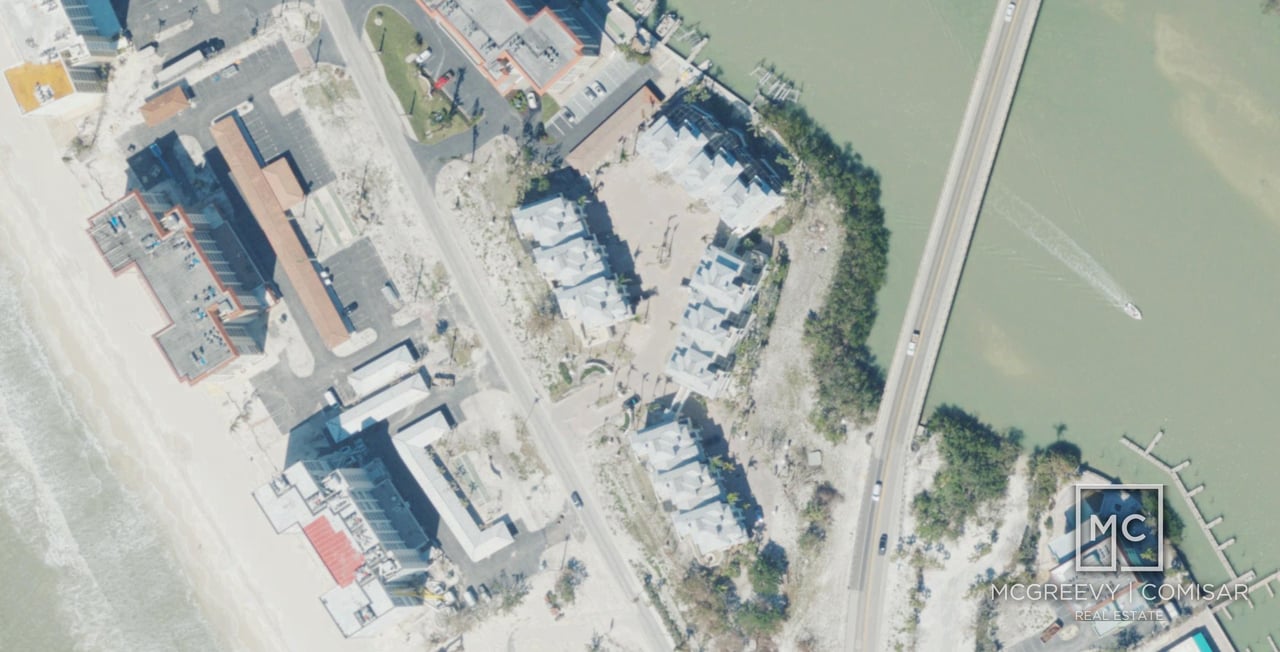
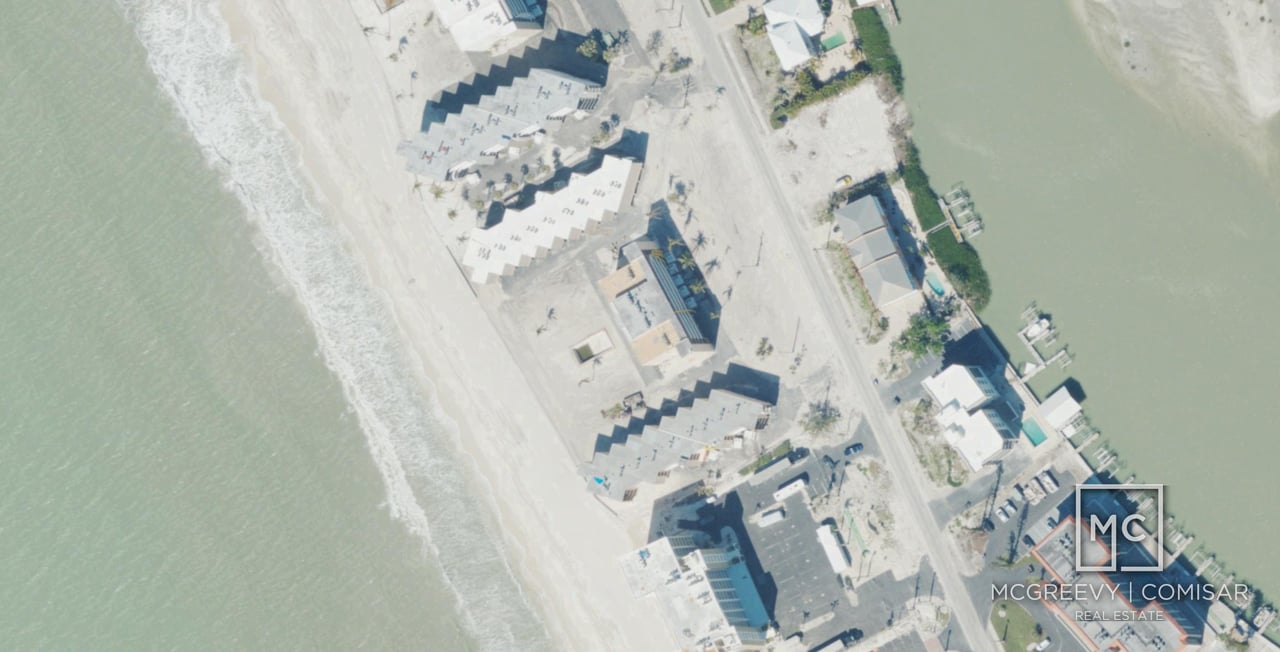
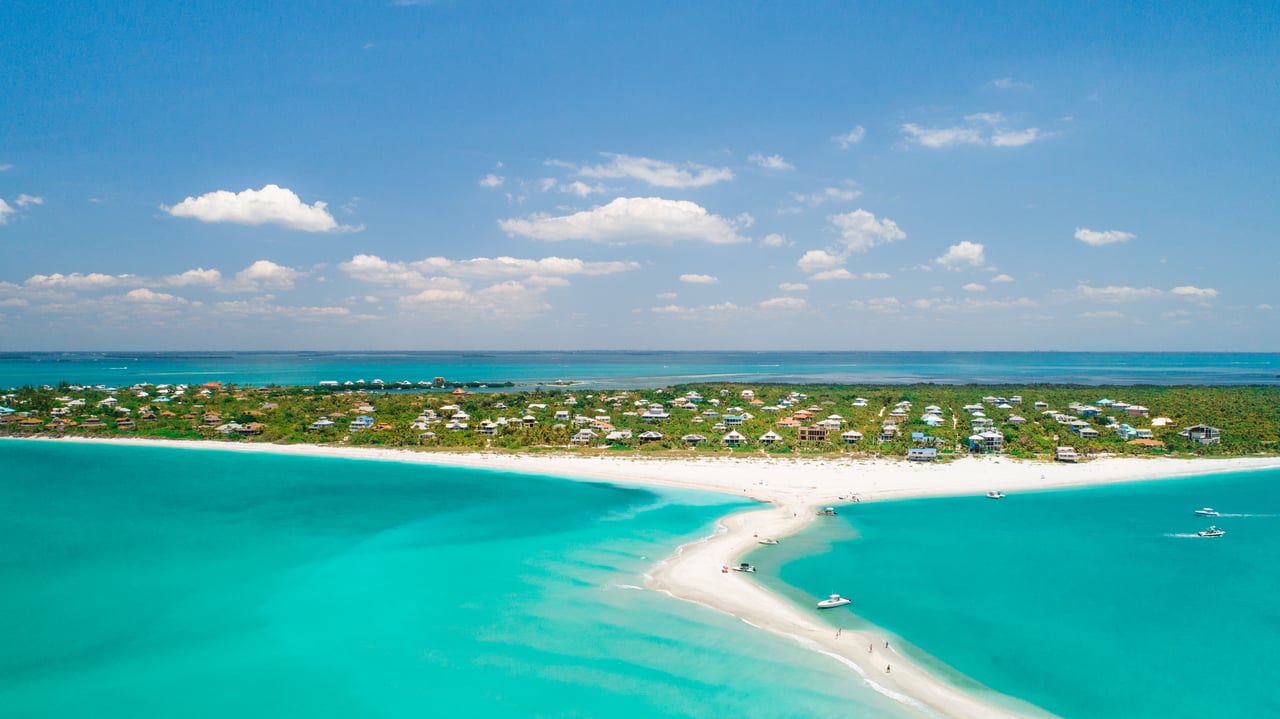
Captiva Island is a five-mile barrier island at the north end of the Sanibel-Captiva chain, in unincorporated Lee County, Florida. About four hundred people live here year-round; peak-season population runs near four thousand. There are no traffic lights, no city government, no high-rises, and no fast-food signs along the only road that runs the length of the island. What there is, in abundance, is a slow, sand-and-shell stretch of Gulf coastline that has spent the last three and a half years rebuilding from the most catastrophic storm in modern Southwest Florida history, and emerging, in 2026, more deliberate, more luxury-tier, and more honestly itself than it has been in decades.
If you have arrived on this page, you are almost certainly weighing one of three things: a primary or seasonal home on Captiva, a vacation-rental investment property, or a luxury second home you intend to use a handful of months a year. The honest answer to each runs through the same set of facts, and most realtor pages skip those facts. We don’t. Captiva is in the middle of the most dramatic rebuild story in Southwest Florida: a roughly one-billion-dollar South Seas Island Resort restoration (open with new amenities since May 2025; the new Captiva Landing waterpark opened December 22, 2025), a one-million-cubic-yard island-wide beach renourishment completed in 2025, a $328 million Sanibel Causeway rebuild delivered two years ahead of schedule, and an emerging civic conversation about whether to annex Captiva into the City of Sanibel rather than remain unincorporated.
Fact | Detail |
|---|---|
Location | Five-mile barrier island in the Gulf of Mexico, Lee County, Florida, immediately north of Sanibel across Blind Pass, immediately south of North Captiva across Redfish Pass |
Governance | Unincorporated Lee County: no city government, no mayor. Land use is governed by the Lee County Board of County Commissioners, the Captiva Plan (Lee Plan Goal 23), and the Captiva Code (Lee LDC Chapter 33, Article IX) |
ZIP code | 33924 |
Year-round residents | Approximately 400 |
Peak-season population | Approximately 4,000 |
Land area | Approximately 5.5 miles long by 0.5 miles wide; the Captiva Plan area runs from Blind Pass to Redfish Pass and explicitly excludes Upper Captiva, Cayo Costa, Useppa, Buck Key, and Cabbage Key |
Civic bodies | Captiva Community Panel (advisory), Captiva Erosion Prevention District (taxing special district), Captiva Civic Association (founded 1949) |
Beach miles | Approximately 4.85 miles of Gulf shoreline, FDEP reference monuments R-84 through R-109 |
Traffic lights | None |
Public access | One bridge in: the Sanibel Causeway from Punta Rassa onto Sanibel, then Sanibel-Captiva Road north across Blind Pass Bridge onto Captiva |
Sister-island branding | “Sanibel and Captiva”: shared chamber, shared conservation foundation (SCCF), shared K-8 school, shared causeway, and a shared #26 ranking in The New York Times “52 Places to Go in 2026” |
Behind the headlines, the math for buyers and sellers has changed. The destroyed lower-priced stock is gone or being rebuilt, and what is selling now is the surviving and rebuilt luxury tier. That single fact drives everything below, and it is exactly the kind of nuance a top Captiva listing agent has to price around. Selling? Call Jesse at (239) 898-6072. Buying? Call Marc at (239) 287-5873.
Captiva is a thin-volume, ultra-luxury barrier-island market, and it is one of the few places in Southwest Florida where the MLS is not the right instrument. Sanibel and Captiva run their own association MLS, so some agents report there and some report to the Southwest Florida MLS, and no single MLS pull can say what share of the island it actually counted. Every market figure on this page therefore comes from one source, the official Florida Realtors SunStats record for ZIP 33924. Data updated: September 2026.
Most recent complete month, August 2026 (vs. August 2025):
Metric (August 2026, ZIP 33924, all property types) | Value | YoY |
|---|---|---|
Closed sales | 9 | 0.0% |
Median sale price | $1,034,999 (9 sales) | +5.1% |
Average sale price | $1,483,778 | +13.5% |
Cash sales | 77.8% of closings | from 100.0% |
Median % of original list | 94.5% | from 90.6% |
Median time to contract | 207 days | from 80 |
Median time to sale | 218 days | from 86 |
Active inventory | 149 | −20.7% |
Months supply of inventory | 17.9 | from 41.0 |
Monthly dollar volume | $13.4 Million | +13.5% |
Source: Florida Realtors SunStats, ZIP 33924 (Captiva), all property types, August 2026, pulled September 29, 2026. Captiva closed 9 homes in August, so read the price columns above as a small sample rather than a trend. The twelve-month table below is the steadier read.
Over the trailing twelve months (September 2025 through August 2026), ZIP 33924 recorded roughly 100 closed sales and about $157.8 million in dollar volume. Read those numbers with the island’s scale in mind: on a barrier island this small, eight sales is an ordinary month and fifteen is a busy one, so the monthly median sale price legitimately swings between $560,000 and $2,275,000 depending on which homes happen to close. The signal is not any single month’s median, it is the direction: cash share above 70%, active inventory down 20.7% year over year, and months-of-supply cut from 41.0 to 17.9. Captiva is still firmly a buyer’s market, but it is tightening hard off the post-Ian bottom.
Captiva closes roughly eight homes a month. At that volume a single month’s median is not a trend, it is a sample. Over the twelve months ending August 2026 the ZIP 33924 monthly median ranged from $560,000 in February 2026 to $2,275,000 in July 2026, and monthly closings ranged from 2 to 15. Read the year first, then read the month.
Twelve months ending August 2026 (ZIP 33924, all property types) | Value |
|---|---|
Homes sold | 100 |
Total dollar volume | $157.8 million |
Average sale price across the year | $1,577,575 |
Range of monthly medians | $560,000 to $2,275,000 |
Typical closings per month | 8 |
Active inventory, August 2026 vs August 2025 | 149 vs 188 |
Source: Florida Realtors SunStats, ZIP 33924 (Captiva), all property types, monthly series September 2025 through August 2026, pulled September 29, 2026. Homes sold and dollar volume are sums of the monthly figures. The average is total volume divided by total sales. We do not publish a twelve-month median, because SunStats reports medians monthly and monthly medians cannot be averaged into an annual one.
What this means if you are selling. The median percent of original list price on Captiva was 94.5% in August (a 9-sale month), and the median home took 207 days to go under contract. The island is carrying 17.9 months of supply, down from 41.0 a year ago, so the direction is right, but a seller here is still negotiating against a long runway. Price to closed evidence, not to the asking prices of listings that have been sitting.
What this means if you are buying. Active inventory is down 20.7% year over year and months of supply has fallen by more than half, so the deepest part of the post-Ian buyer’s window has already closed. There are still 149 active listings, and the typical August seller gave up roughly 5.5% off their original ask (over the past twelve months that monthly figure has run from 83.2% to 98.7% of original list), but that leverage is narrowing, not widening.
There are fewer homes for sale on Captiva than a year ago. In August 2025, SunStats counted 188 active listings in ZIP 33924; in August 2026 that number was 149, down about 21 percent. Closed sales were level at 9 in each of those two months, and months of supply, which measures how long today’s listings would take to sell at the recent pace of sales, fell from 41.0 to 17.9, down about 56 percent.
What it means: Captiva is still a buyer-paced island market, with far more homes listed than sell in a typical month, so buyers keep real room to negotiate on price and terms. But the overhang is shrinking fast, and sellers who price to recent closed sales rather than to the listings that have been sitting are the ones best positioned as it tightens.
Source: Florida Realtors SunStats, ZIP 33924 (Captiva), All Property Types, August 2025 vs August 2026, pulled September 29, 2026.
With 149 active listings and 17.9 months of supply in August 2026, Captiva rewards sellers who price to closed sales and buyers who confirm insurability before they commit. McGreevy and Comisar are Top 1% Real Estate Agents Nationally Since 2008, and we own three rental condos inside South Seas Island Resort. Sellers, start with a free Captiva home valuation or call Jesse at (239) 898-6072. Buyers, see how we represent Captiva and Southwest Florida buyers or call Marc at (239) 287-5873.
Want the number for your specific property? Island-wide figures cannot price a Gulf-front estate and a village cottage the same way. Call or text Jesse at (239) 898-6072 for a free, comp-grounded Captiva valuation.
The honest framing starts with the storm. Hurricane Ian made landfall on Cayo Costa, the barrier island immediately north of Captiva, at approximately 3:05 PM Eastern on September 28, 2022, as a Category 4 hurricane with sustained winds of 150 mph. Captiva took the eyewall on its north end. Storm surge in this stretch peaked between ten and fifteen feet above ground level per the National Hurricane Center and U.S. Geological Survey storm-tide sensors. Captiva structures absorbed several hours of Category 4 wind, Gulf-side surge of eight to twelve feet, bay-side return-flow surge, and prolonged saltwater immersion. The Sanibel Causeway, the only road link, was severed in multiple locations, and for roughly three weeks Captiva was accessible only by boat and helicopter.
The federal disaster declaration is DR-4673-FL, signed September 29, 2022. In the months that followed, Lee County’s Department of Community Development began issuing Substantial Damage Determinations: letters telling owners that the cost to restore their structures equaled or exceeded fifty percent of pre-storm market value and that the structures would have to be brought into full current-code compliance (the “50% Rule”; see below). The cascade reshaped Captiva’s inventory. A meaningful share of the island’s older at-grade single-family stock either had to be torn down and rebuilt elevated, or sold as-is to an investor with the equity and patience to redevelop the lot. The lower-priced Captiva product is mostly gone, and what is selling in 2026 is the surviving high-end tier plus the newly completed elevated luxury rebuilds. That is exactly why the August 2026 median sale price sat at $1,034,999 (Florida Realtors SunStats, ZIP 33924, a 9-sale month) and the active inventory skews even higher.
Then 2024 added two more storms. Hurricane Helene made landfall in Florida’s Big Bend on September 26, 2024 as a Category 4, but its surge reached the Lee County coast, flooding structures still mid-rebuild. Two weeks later, on October 9, 2024, Hurricane Milton made landfall near Siesta Key as a Category 3. Milton destroyed the Mucky Duck (which had survived Ian relatively intact; locals called it “Lucky Duck”) with storm surge that breached windows and walls. Bubble Room’s permanent power was not restored until the end of January 2025. A buyer purchasing on Captiva in 2026 is buying into a barrier island that has taken three significant hurricane events in twenty-five months. That is not a small fact, but the community’s response, at the homeowner, resort, beach-district, and causeway levels, has been to rebuild with hurricane-grade engineering that did not exist in the prior generation of construction.
The recovery is real and accelerating, but unfinished. The Sanibel Causeway permanent rebuild was substantially completed in May 2025: $328 million total, delivered nearly two years ahead of FDOT’s schedule and engineered for Category 5 conditions. Lead joint venture: Superior Construction and The de Moya Group, under FDOT’s first-ever emergency phased design-build contract. Completed sections were tested mid-construction by Debby, Helene, and Milton in 2024: they held. CEPD’s 2025 Captiva Beach Renourishment Project, one million cubic yards of sand along 4.85 miles of Gulf shoreline at a final cost between $26 million and $31 million, contractor Great Lakes Dredge & Dock, engineering by APTIM, was substantially completed before October 31, 2025. As of mid-2026, the island has its sand back, the dune system is rebuilding under CEPD’s sea-oat program, and the quiet, low-rise sense of place that Captiva has carried for a century is recognizably itself again.
We pull the Substantial Damage Determination history, the FIRM-zone designation, and the elevation status on every Captiva property we represent, whether you’re selling and need to position your home’s storm-resilience honestly, or buying and need to know what you’re really getting. Sellers: (239) 898-6072. Buyers: (239) 287-5873.
You cannot understand Captiva real estate in 2026 without understanding South Seas Island Resort. South Seas sits on approximately 330 acres at the northern tip of Captiva, roughly one-third of the entire island, and its rebuild is the most consequential capital project in the recovery story. Clarence Chadwick, a Nebraska-born banker, bought the homesteaded acreage in 1923 and developed the salt-resistant “Chad Lime.” In 1942 it became the South Seas Plantation fishing camp; RCA executive Wally Watts acquired it for $225,000 in 1961; in September 1972, Bob Taylor and partner Ted Broek bought it for roughly $3.5 million and formed Mariner Properties, expanding to nearly nine hundred units across Beach Homes, Marina Villas, Bayside Villas, Harbourside Villas, Plantation Beach Club, Land’s End Village, Tennis Villas, and other named areas.
The single most important legal document in South Seas history is Lee County Resolution Z-73-202, adopted November 20, 1973, which rezoned the property to a special zoning district and capped density at three units per acre: a 912-unit total cap that has framed every legal fight since. MeriStar bought the property in 1998 and dropped “Plantation” from the name. In September 2021, a joint venture of Timbers Company, Wheelock Street Capital, and The Ronto Group acquired South Seas for approximately $125 million. The ownership entity is registered as WS SSIR Owner LLC; Greg Spencer, CEO of Timbers Company, is the public face of the rebuild.
Then Ian hit. South Seas absorbed a catastrophic strike. Per Spencer, 4.5 feet of sand covered the property post-storm, and the resort hauled off more than 120 million pounds of debris from Ian alone. The Harborside Hotel was damaged beyond repair; the original 18-hole golf course was destroyed; all signage, irrigation, and low-voltage lighting were lost. The total rebuild scope is approximately one billion dollars when complete. As of March 2026, roughly $250 million had been spent: approximately $125M acquisition plus $100M+ cleanup and resiliency, $26M for Captiva Landing, $6.6M for the Beach House restaurant, $2.85M for Harborside, and other improvements. Resiliency measures include inflatable “Guppy” flood barriers, engineered seawalls and rock revetments, 96-hour generators at every building, and new construction built to 185-mph wind code with first floors at twenty feet above sea level.
The reopening timeline: a soft Christmas 2024 reopening for vacation rentals; The Clutch walking golf course (Beau Welling Design, replacing the Ian-destroyed 18-hole course) opened May 1, 2024; the rebuilt Yacht Harbour Marina reopened May 17, 2025; the formal grand reopening was May 22, 2025, 967 days after Ian. The Bubble Room reopened July 14, 2025; the new Beach House restaurant on Sunset Beach opened October 15, 2025; and Captiva Landing, a 2.5-acre waterpark with waterslides, a lazy river, splash zones, an adult quiet pool, and the new Flippers quick-serve restaurant, opened December 22, 2025 at a final cost of $26 million. The Spa at South Seas, the hotel rebuild, and additional multifamily units authorized by the 2025 rezoning remain under construction.
That 2025 rezoning is itself a major story. On August 6, 2025, the Lee County Board of County Commissioners voted 3-1 to rezone approximately 120.5 acres at South Seas to Mixed Use Planned Development, authorizing a maximum of 193 multi-family dwelling units and 435 hotel units (628 new units total). Combined with the existing surviving units, total potential capacity post-rezoning sits at roughly 1,268 units: a 39% density increase above the historic 912-unit cap. The Captiva Civic Association, in coalition with about 20 petitioners, is challenging both the underlying 2023 Lee County LDC amendments and the rezoning. Lee Circuit Court Judge James Shenko ruled in CCA’s favor in July 2024, holding that the 1973 912-unit cap remains binding. Lee County and South Seas appealed; oral arguments before the Sixth District Court of Appeal of Florida were scheduled for April 30, 2026. And on April 2, 2026, the sale of the 22-acre Robert Rauschenberg Foundation property to a Wheelock-related South Seas entity for $45 million was recorded in Lee County Official Records: a parcel including about 1,000 feet of beachfront, Rauschenberg’s 8,000-square-foot studio, and ten buildings.
Why we cover South Seas with this level of detail: we own here. Jesse McGreevy and his wife Holly personally own and operate three short-term-rental condos inside the South Seas gates: two beachfront two-bedroom/two-bath units at Sunset Beach Villas and one one-bedroom/one-bath unit at Captiva Resort Villas (formerly the Tennis Villas). We have lived the South Seas rental program from the inside through the Ian rebuild, the Helene and Milton aftershocks, the Captiva Landing opening, the 2025 rezoning, and the marina reopening. When we talk about how the rental program works, what HOA assessments look like inside the gates, which beach buildings handle a storm best, or how post-Ian insurance is repricing year over year, we’re telling you from inside the gate. A dedicated South Seas Island Resort page is coming with full HOA fee schedules, recent sale comps within each named development area, and street-by-street analysis. We’ll link it here when it goes live.
“Sanibel and Captiva” is one of the longest-running co-brands in Florida tourism. The two islands share a chamber of commerce, a conservation foundation, a K-8 public school, a causeway, the J.N. “Ding” Darling National Wildlife Refuge, the Bailey-Matthews National Shell Museum, and a #26 sister-island ranking in The New York Times “52 Places to Go in 2026.” But they are structurally different markets, and the difference matters when you are writing, or accepting, a check.
Dimension | Sanibel | Captiva |
|---|---|---|
Status | Incorporated City of Sanibel (since 1974) | Unincorporated Lee County |
Governing body | Sanibel City Council | Lee County BoCC + Captiva Community Panel (advisory) |
Population (year-round) | ~6,382 (2020 census) | ~400 |
STR minimum (single-family) | 28 days per Sanibel Code Ch. 126, Art. VII | 7 days per Lee County rules |
Density rule | Capacity-based zones | 3 units per acre maximum (Captiva Plan) |
Building height | Sanibel LDC-defined (low-rise) | 35 ft above grade or 42 ft above mean sea level, whichever is lower, except South Seas |
Law enforcement | Sanibel Police Department | Lee County Sheriff’s Office, Captiva substation |
Fire/EMS | Sanibel Fire & Rescue District | Captiva Island Fire Control District + Lee County EMS |
Price tier | Broader range: condos from mid-six-figures, Gulf-front $5M+ | Essentially entirely luxury: twelve-month average sale $1,577,575 (SunStats, September 2025 to August 2026), deep ultra-luxury tier above |
The structural STR economic divergence is the single biggest investment-property differentiator between the two islands. A single-family home on Sanibel cannot be rented in weekly increments under the city’s twenty-eight-day minimum. The same home a few hundred yards north on Captiva, across Blind Pass Bridge, can be: Captiva is on Lee County’s seven-day-minimum framework. This rule shapes the entire economic character of Captiva (vacation-rental-dominant) versus Sanibel (more owner-occupied and longer-term-rental), and it is why an investor underwriting weekly-rental cash flow on these islands almost always lands on Captiva. The trade-off is governance: Captiva is unincorporated, which means the Lee County BoCC sets the land-use rules, and the past two years have shown the BoCC will entertain density increases the City of Sanibel would not. That tension is behind the emerging annexation conversation.
Beach character. Sanibel is world-famous for shelling: its east-west orientation scoops shells from Caribbean currents, and its beaches are firm and compact. Captiva’s sand is softer, the beach is shorter, and Captiva sunsets, because the island faces directly west into the open Gulf, are widely regarded as the best in Southwest Florida. If you are deciding between the two islands, that is a conversation we have constantly. Call Marc at (239) 287-5873 and we’ll walk you through which island fits your goals.
Captiva is small enough that locals navigate by mile marker and landmark rather than subdivision. For buyers comparing inventory, six rough zones define the island. They run from the gated South Seas Island Resort at the north tip, through Captiva Village and the Tween Waters area, along the Gulf-front estates of Captiva Drive and the bayside Roosevelt Channel, down to Blind Pass at the south end.
South Seas Island Resort occupies the entire northern third of the island: 330 gated acres with its own beach, marina, golf course, dining outlets, and the new Captiva Landing waterpark. Ownership types include whole-ownership homes (Beach Homes, Estate Residence, Land’s End Village), condo associations (Beach Villas, Bayside Villas, Marina Villas, Harbourside Villas, and others, each a separate legal entity), Hilton Grand Vacations-branded timeshare units, and a luxury rental pool. South Seas’s record sale in the recent recovery cycle was $9.67 million at 1119 Schefflera Court (Q4 2024). A dedicated South Seas Island Resort page is coming with full HOA fee schedules, recent sale comps, and street-by-street analysis. We’ll link it here when it goes live.
Captiva Village is the cluster around Andy Rosse Lane, the short east-west commercial strip that functions as the closest thing the island has to a downtown: a few blocks of eclectic galleries, beach-cottage shops, and restaurants in renovated 1920s to 1940s buildings. Mucky Duck anchors the Gulf end; Bubble Room sits adjacent at the corner of Captiva Drive. The Captiva Island Inn, rebuilt post-Ian at roughly $6 million, sits at 11509 Andy Rosse Lane. A dedicated Captiva Village page is coming. We’ll link it here when it goes live.
The Tween Waters area is mid-island. Tween Waters Island Resort & Spa, founded in 1931 and on the National Register of Historic Places since 2011, is the only resort on Captiva with both Gulf-of-Mexico and Pine-Island-Sound frontage. Old Captiva House is the resort’s historic dining room; Crow’s Nest Steakhouse opened in a new upstairs addition in July 2023. A dedicated Tween Waters page is coming. We’ll link it here when it goes live.
The Captiva Drive Gulf-Front Estates corridor, colloquially “Gold Coast” and “Millionaires Row”, runs the length of the island and is the address spine for the majority of Captiva’s high-end inventory. Pricing here tops out at the island record: $17.15 million at 16660 Captiva Drive in 2021, the highest-priced residential sale in the history of Sanibel-Captiva. A dedicated Captiva Drive Gulf-Front Estates page is coming. We’ll link it here when it goes live.
Roosevelt Channel / Bayside Captiva is the deep-water bayside corridor on Pine Island Sound: a protected boating artery suitable for yachts up to 60+ feet with shore power and high-speed lifts at private docks. Bayside estate inventory is smaller than the Gulf-front but commands prices in the same tier when the property includes deep-water dockage. A dedicated Roosevelt Channel and Bayside Captiva page is coming. We’ll link it here when it goes live.
Blind Pass / South End is the southernmost neighborhood, where Captiva narrows toward the Blind Pass Bridge. Turner Beach Park at 17200 Captiva Drive is the public access here. As of 2026, the Blind Pass waterway itself is closed by an accidental sandbar created by Sanibel’s 2024 and 2025 renourishment moving sand southward; the Lee County BoCC approved dredging-preparation work on April 7, 2026, with the dredge anticipated in 2027. A dedicated Blind Pass and South End page is coming. We’ll link it here when it goes live.
The “right” Captiva neighborhood depends entirely on your priorities: full resort amenities versus walkable village versus deep-water dockage versus open-Gulf sunsets. Buyers, call Marc at (239) 287-5873 and we’ll narrow it for you. Sellers, call Jesse at (239) 898-6072; neighborhood positioning is half the pricing decision.
If you are looking at any older home or condo on Captiva, anything built before about 2002, and especially anything that took damage from Ian, Helene, or Milton, you need to understand the 50% Rule before you write an offer or sign a listing agreement. It determines what the property can become, what insurance will cost, and what a lender will require.
The 50% Rule in plain English. Under FEMA’s National Flood Insurance Program guidance, “substantial damage” means damage of any origin whereby the cost to restore a structure to its pre-damage condition equals or exceeds fifty percent of the structure’s market value (structure value only, not land) before the damage occurred. Once a structure crosses that threshold, it must be brought into full current floodplain-management code compliance, which on Captiva typically means elevating to current FEMA Base Flood Elevation plus local freeboard. For new beachfront construction in VE Zone, that often means the bottom of the lowest horizontal structural member must sit twenty feet above sea level on pilings driven 20+ feet deep. The cost differential between “repair as-is” and “elevate and rebuild to current code” is often the deciding factor in whether a pre-Ian owner rebuilt or sold.
Lee County’s local codification: Ordinance 22-30. On November 8, 2022, just over a month after Ian, the Lee County BoCC adopted Ordinance 22-30. For most properties, “substantial improvement” is any combination of repair, reconstruction, rehabilitation, addition, or other improvement during a stated period whose cumulative cost equals or exceeds 50% of pre-improvement market value. For FEMA-designated repetitive-loss properties, the aggregation window is twelve months. In November 2022 Lee County reduced the cumulative aggregation window for most properties from five years to one year, a relaxation that let homeowners do more cumulative work before triggering substantial-improvement status, and the choice that set off the FEMA enforcement confrontation that followed.
The FEMA pushback: the CRS discount fight. In April 2024, FEMA alleged that nearly six hundred homeowners in Cape Coral and other Lee County jurisdictions had rebuilt vulnerable homes in flood zones post-Ian in violation of the 50% Rule. The penalty: Lee County’s 25% Community Rating System discount on NFIP premiums was stripped, effective October 1, 2024, affecting more than 51,000 federal flood-insurance policyholders in unincorporated Lee County. Captiva owners were directly affected. Most realtor pages don’t mention this because it is bad news, but it is the single most consequential ongoing fact for prospective Captiva buyers thinking about flood insurance cost, and a fact a Captiva seller has to be ready to address.
Captiva’s FEMA flood-zone profile. The entire island sits within FEMA flood hazard areas: predominantly VE (Coastal High Hazard / Velocity Zone) along the Gulf-front shoreline, AE (1%-annual-chance flood with wave heights under 3 feet) in interior and bayside areas, with scattered shaded-X (moderate risk) pockets at higher elevations. Lee County’s interactive FIRM viewer and the FEMA Map Service Center let you look up the specific flood zone and Base Flood Elevation for any parcel.
Whether you’re buying or selling, every pre-Ian Captiva home should come with documentation of whether it received a Substantial Damage Determination after Ian, Helene, or Milton, and what was done about it. A grandfathered, undisturbed pre-Ian structure that survived all three storms is one kind of asset; a rebuilt-elevated post-Ian structure is a different (newer, code-compliant, often more insurable) kind of asset; an at-grade pre-Ian structure patched together after 40% damage is the riskiest, because the next event that pushes cumulative cost over 50% triggers the full rebuild requirement. We pull this data on every Captiva property we represent. Sellers: (239) 898-6072. Buyers: (239) 287-5873.
Property insurance is the highest-friction line item in most Captiva underwriting, and 2026 is meaningfully different from 2019. Citizens Property Insurance, Florida’s state-backed insurer of last resort, is now the dominant carrier for many Captiva structures. At the macro level there’s good news: Citizens is implementing an average 8.7% rate reduction statewide for 2026, and its depopulation efforts cut exposure 67% entering 2026. None of that makes Captiva premiums cheap.
The Captiva-specific premium reality. Gulf-front property on Captiva and Sanibel is realistically projected at roughly $7,000 per year for HO-3 / windstorm-included coverage in 2026, about twice the Lee County average, with the islands more broadly in the mid-$7K to high-$8K range. Typical 2026 Captiva premiums for HO-3 with windstorm (or HO-3 plus a separate windstorm policy) can run $8K to $25K+ per year for a single-family home, depending heavily on age of structure, elevation, construction type, wind-mitigation features, distance from coast, and flood zone. A new elevated post-Ian build qualifies for substantial wind-mitigation credits: straps versus clips for roof-to-wall connections alone can save 30 to 50% on the wind portion. Get a 2026 Wind Mitigation Report on any home you are considering, or, if you’re selling a hardened home, get one done to prove the savings to your buyer.
Flood insurance. NFIP flood insurance is effectively required on every mortgaged Captiva property; the NFIP structural cap is $250,000, meaningfully below replacement cost for most Captiva homes. Private flood carriers offer up to $10 million in dwelling limits, replacement-cost contents, and loss-of-use benefits NFIP excludes. Typical 2026 flood premiums range from $250 to $1,500/year baseline; high-risk Gulf-front VE-zone Captiva properties commonly sit above $2,800/year, and the loss of the Lee County CRS discount raised every NFIP premium on the island.
My Safe Florida Home: the mitigation grant pathway. Florida’s flagship hurricane-hardening program offers free wind-mitigation inspections for eligible single-family detached homes, plus a 2:1 matching grant up to $10,000. Eligible improvements include impact windows, hurricane shutters, roof reinforcements, and garage-door upgrades. No income restriction, no home-value limit, no obligation to proceed after inspection.
The practical rule: insurance shopping should begin before making an offer, not after, and a smart seller pre-shops, too, so the home’s insurability is a selling point rather than a closing-day surprise. Insurability is not guaranteed; some carriers will not write Captiva at all, and binding can delay closing by two to four weeks. We coordinate this on every transaction. Call Jesse at (239) 898-6072 or Marc at (239) 287-5873.
Captiva’s economy is structurally dependent on the vacation-rental crowd: roughly 400 year-round residents against more than 2,000 properties available for booking online. The shape of that economy is set by a three-layer legal framework: Florida state preemption, Lee County rules, and the state DBPR licensing requirement, and any prospective investor should understand that framework before underwriting cash flow.
Florida state preemption. Florida Statute 509.032(7)(b) prohibits local laws adopted after June 1, 2011 from restricting, prohibiting, or regulating vacation rentals based solely on classification, use, or occupancy. Governments with pre-2011 STR-restricting ordinances are grandfathered (this is why Sanibel can hold a 28-day minimum). Lee County did not have a pre-2011 ban, which is why Captiva sits on the seven-day-minimum framework. Senate Bill 280 (2024), which would have centralized vacation-rental regulation under the state DBPR, was vetoed by Governor DeSantis in June 2024, so the 2011 preemption plus local patchwork continues to govern for 2025 and 2026.
The Captiva rule: seven-day minimum. Captiva condos and homes are governed by Lee County rules and require a minimum seven-night stay; Sanibel single-family homes require a 28-day minimum. This is the structural divergence that defines Captiva versus Sanibel investment underwriting. Condo associations on Captiva can be stricter than the county rule, so always pull the association documents.
State DBPR licensing. A Florida DBPR vacation-rental license is required if you rent your property for less than 30 days at a time more than three times per year. Application fee is $150. The DBPR license number must appear in every online listing.
Full compliance checklist for a Captiva rental owner: (1) DBPR Vacation Rental License; (2) Florida Sales Tax Certificate; (3) State Business Registration; (4) Lee County Tourist Development Tax Registration (5%, via the Lee Clerk of Court); (5) Lee County Local Business Registration; (6) a Local Contact Designation. Code-enforcement fines for non-compliance start at $1,000 per day for first offenses and escalate to $5,000 daily for repeat violations under Florida Statute Chapter 162.
The vacation-rental product mix has shifted upmarket. The post-Ian rebuild replaced at-grade cottages with elevated luxury homes, which has raised the average daily rate. Peak rental rates on Captiva run December through April; off-season runs June through October. Lee County tourism context for the underwriting investor: 3.32 million visitors in 2025 generating over $3.3 billion in direct spending, supporting more than 31,000 jobs, with the Lee Tourist Development Tax at 5%. We cover the operating economics of Captiva STR ownership, and how it interacts with a sell-versus-keep decision, in the Rental Market & Property Management section below. Investor question? Call Jesse at (239) 898-6072.
Captiva owners pay multiple layers of taxation: Lee County millage, Captiva Island Fire Control District millage, CEPD millage, and (for South Seas owners) resort-association assessments. Assessed value resets to the purchase price at closing, so a buyer’s first bill can differ sharply from the seller’s, and every layer appears on the TRIM notice each August.
Lee County property tax runs approximately 1.1% to 1.3% of assessed value annually for unincorporated parcels. The 2025 preliminary tax roll showed Captiva (as part of unincorporated Lee County) up 8.17% year-over-year, with the Captiva Fire District up 10.31%. Per the Lee County Property Appraiser, Captiva ZIP 33924 has among the highest median home values in Lee County. Assessed value resets to purchase price at closing: do not rely on the current seller’s tax bill as your future tax bill. The Florida Homestead Exemption ($50,000) and the Save Our Homes 3% annual assessed-value cap apply only to a primary residence; non-homesteaded second homes and rentals get higher effective rates.
Captiva Island Fire Control District (CIFCD) is a special-district fire department headquartered at 14981 Captiva Drive. Its FY2024 adopted millage was 2.6052 mills, a separate millage from Lee County’s general fund.
Captiva Erosion Prevention District (CEPD) is the independent special beach-and-shore-preservation district, chartered by Florida Special Act Chapter 2000-399. Its jurisdiction runs the full Captiva shoreline. The FY2025-26 CEPD millage rate is 0.3740 mills (equal to the rolled-back rate). CEPD pays for the beach renourishment projects that protect every Captiva property’s value.
HOA / association fees are highly variable. Single-family HOAs typically run $500 to $3,000 per year. Condo HOAs $1,500 to $8,000+ per quarter for resort-tier product. South Seas has a separate HOA-plus-resort-fee structure that varies by sub-community. Critical 2025 and 2026 context: Florida’s SB 4-D condo-safety law (post-Surfside) requires condos three or more stories to fully fund structural reserves by 2026. Always ask for the 2025/2026 association budget, the most recent reserve study, and the special-assessment history: some “cheap” monthly fees hide large pending assessments. There are no traditional Community Development Districts on Captiva; the closest analog is CEPD. We pull the full assessment picture on every Captiva listing and every Captiva offer. Call us: (239) 898-6072 (sell) / (239) 287-5873 (buy).
Captiva has no city government. What it has, in unusually dense form, is a layered civic fabric where four institutions (the Captiva Community Panel, the Captiva Erosion Prevention District, the Captiva Civic Association, and the Captiva Island Property Owners Association) function together as the de facto local government.
The Captiva Community Panel (CCP) was created by Lee BoCC resolution circa 2002 to coordinate community planning and propose goals, policies, and land-development regulations reflecting the island’s unique character. It has no taxing, zoning, or police power: its influence is advisory, but any Captiva-specific code or comprehensive-plan amendment typically passes through the Panel first. In January 2026, David Mintz was elected President (succeeding Jay Brown) and Bruce McDonald Vice President. The Panel meets monthly at the Captiva Civic Center; meetings are open to the public.
The annexation conversation. On May 7, 2024, CCP leadership appeared before the Sanibel City Council to discuss surveying Captiva residents about potential annexation into the City of Sanibel. The reasoning, in then-President Jay Brown’s words: “We’re convinced we cannot rely on Lee County to help Captiva to remain a low-density community.” The conversation has continued through 2025 and 2026, championed by CCP President David Mintz, but the Sanibel City Council has not formally endorsed it, and Florida Statute 171.0413 requires three formidable gates: a Sanibel ordinance, consent of owners of more than 50% of Captiva’s acreage, and a majority vote of Captiva registered electors in a referendum. For a buyer or seller, the meta-point is that Captiva landowners take density and character protection seriously enough to consider an extraordinary governance change, and that protectiveness is part of what keeps Captiva values where they are.
Captiva’s Gulf shoreline runs approximately 4.85 miles between Redfish Pass (north) and Blind Pass (south), spanning FDEP reference monuments R-84 through R-109. The full coastal-management program is run by CEPD, with renourishment, dune restoration, sea-oat plantings, and shoreline stabilization coordinated against sea-turtle nesting season and FDEP permit conditions.
The 2025 CEPD Beach Renourishment Project, the largest in district history, placed approximately one million cubic yards of beach-quality sand along the full 4.85-mile shoreline at a final cost between $26 million and $31 million. Engineering was by APTIM; the dredging contractor was Great Lakes Dredge & Dock; sand was placed under a 15-year FDEP Joint Coastal Permit and a USACE Department of the Army Permit; substantial completion was before October 31, 2025. A $900,000 state grant funded sea-oat planting on the rebuilt dunes, with the underrun redirected to dune-enhancement designs at the four named public beach entrances: Andy Rosse Lane, Wightman Lane, Laika Lane, and Alison Hagerup Beach Park.
Public beach access. Five primary access points along the Captiva Gulf shoreline: Alison Hagerup Beach Park at the north end (Captiva’s largest public lot); Andy Rosse Lane Park mid-village (foot access, adjacent to Mucky Duck and Bubble Room); Wightman Lane (foot access); Laika Lane (foot access); and Turner Beach at the south end at Blind Pass ($5/hour or $60/year via Lee County Annual Parking Pass). There is no street parking on Captiva by county ordinance.
Sea turtles and the seasonal calendar. Sea-turtle nesting season runs May 1 through October 31. The Sanibel-Captiva Conservation Foundation (SCCF) surveys 18 miles of Sanibel-Captiva beach daily during the season and has held the monitoring lead since 1992. 2025 nest count: 889 total nests on Sanibel and Captiva: 868 loggerhead plus 21 green turtle, the fourth-highest annual count since 1992. The Lee County Sea Turtle Lighting Ordinance requires beach residents to shield all lights visible from the beach during nesting season, a real consideration for any Gulf-front buyer planning a lighting or renovation project.
Blind Pass is closed in 2026. A massive sandbar created by Sanibel’s 2024 and 2025 renourishment moved sand southward and effectively sealed the inlet, creating a temporary land bridge between the two islands. On April 7, 2026, the Lee BoCC approved a Supplemental Task Authorization to prepare for a dredging project; the actual dredge is anticipated in 2027.
Captiva’s dining and retail scene is concentrated along Andy Rosse Lane and at Tween Waters mid-island, with South Seas’s outlets at the north end. The Old Florida character is real and protected: kitsch, beach-cottage aesthetic, hand-painted signs, restaurants in buildings half a century old. Captiva is not Sanibel: fewer restaurants, slower pace, limited after-dinner options, and the kitsch is the point.
The Mucky Duck at 11546 Andy Rosse Lane, the legendary Gulf-front British pub, opened in 1976, is the iconic sunset spot; destroyed by Milton’s surge in October 2024, it reopened in 2025 with new kitchen and systems. The Bubble Room at 15001 Captiva Drive, multi-room kitsch filled with vintage Christmas decorations and antique toys, famed for Orange Crunch Cake, reopened July 14, 2025. Keylime Bistro at the Captiva Island Inn reopened May 24, 2025 after a $6M rebuild. Old Captiva House at Tween Waters is consistently TripAdvisor’s #1 restaurant on Captiva; Crow’s Nest Steakhouse there is the only restaurant on Captiva with a second-level Gulf-sunset view. Cantina Captiva, RC Otter’s Island Eats, and Sunshine Seafood Café & Wine Bar round out the village cluster, several operated by Sandy Stilwell Youngquist’s hospitality group. Jungle Drums Gallery anchors the fine-art side of Andy Rosse Lane.
South Seas’s dining outlets (open as of 2026) include Harborside (Italian steakhouse), Redfish Grill, Beach House, Scoops & Slices, Tarpon Bar, The Clutch Clubhouse, Provisions market (open to the community), Starbucks (open to the community), and Flippers at Captiva Landing (new as of December 2025).
Cultural anchors. Captiva Chapel by-the-Sea at 11580 Chapin Lane, originally the island’s one-room schoolhouse (1901), converted to a chapel in 1903, maintains the adjacent Captiva Cemetery, which includes author Anne Morrow Lindbergh, who wrote portions of Gift from the Sea during retreats here. The Captiva Memorial Library is a Lee County branch. The Robert Rauschenberg Foundation Captiva Residency, which hosted more than 500 artists from 2012 through 2026, formally concluded its run in 2026 when the property sold to the South Seas joint venture for $45 million.
Captiva is unincorporated: there is no city to do the things a city does. The civic load is carried by a dense network of nonprofits and special districts, most serving both islands. Between them they run the beach program, the wildlife hospital, the sea-turtle science and the human-services safety net that a city would otherwise provide.
Sanibel-Captiva Conservation Foundation (SCCF). Founded October 31, 1967, SCCF is the largest private landowner across both islands: more than 1,800 acres on Sanibel, over 300 additional acres on North Captiva, plus critical mangrove habitat. SCCF operates the Marine Lab producing continuous water-quality, red-tide, and blue-green-algae monitoring data, the RECON real-time sensor network, the Native Plant Nursery, and the islands’ Sea Turtle Monitoring Program since 1992. In January 2026, SCCF launched the SanCap Resilience Community Survey, paralleling Sanibel’s 50-year plan update.
Captiva Community Panel (CCP). The de facto Captiva civic body since 2002, the official advisory body to the Lee County BoCC on land use and quality-of-life matters affecting Captiva. Its working groups span Mobility, Code Review, Traffic, Beach Access, Density, Short-Term Rentals, Wastewater, Sea Level Rise & Resiliency, Stormwater, and the Captiva Drive Walkway pedestrian-safety effort.
Captiva Erosion Prevention District (CEPD). The independent special beach-and-shore-preservation district, chartered by the Florida Legislature in 1959. Five elected non-partisan commissioners serve four-year terms. CEPD holds ad valorem taxing authority up to 10 mills, eminent-domain power within the district, and jurisdiction over all coastal projects. The 2025 island-wide renourishment is the largest project in its history; the 2026 dune-enhancement program is the active follow-on.
CROW: Clinic for the Rehabilitation of Wildlife. Founded 1968, CROW is the world-class wildlife hospital at 3883 Sanibel-Captiva Road, handling 5,000+ wildlife intakes per year, with an islands-wide patient population including Captiva shorebirds, sea turtles, and coastal mammals, and a 24/7 wildlife emergency line.
“Ding” Darling Wildlife Society. Founded 1982, the Friends-of-the-Refuge organization supporting the J.N. “Ding” Darling National Wildlife Refuge: approximately 6,400 acres of mangrove ecosystem, one of the largest undeveloped mangrove systems in the U.S., hosting more than 245 species of birds. The signature 4-mile Wildlife Drive reopened in stages from March 2023 after Ian.
F.I.S.H. of Sanibel-Captiva: Friends in Service Here. Founded 1982, the human-services nonprofit serving both islands: food pantry, financial assistance, transportation, and case management, and the safety net for the islands’ resort-economy workforce, which distributed millions in emergency assistance after Ian, Helene, and Milton.
Sanibel Sea School. Founded 2005, delivering marine-science education for children, families, and adults across both islands; Captiva family vacation rentals heavily use its day-camp offerings.
Captiva Civic Association (CCA). Founded 1949, the long-running civic and social organization, operator of the Captiva Civic Center at 11550 Chapin Lane, sponsor of the Independence Day parade, Captiva Holiday Village, and Taste of the Islands, and the named lead plaintiff in the Protect Captiva litigation against Lee County and South Seas.
Roster mentions: Captiva Island Property Owners Association (CIPOA), Friends of the Captiva Memorial Library, Captiva Chapel by-the-Sea (cemetery stewardship), and Volunteers in Medicine Sanibel (free primary and dental care for uninsured working adults).
There are no schools, hospitals, or urgent-care facilities on Captiva. Every educational and medical service runs through Sanibel or the mainland, with the Sanibel Causeway as the only road link. The Sanibel School, a public Pre-K through 8th grade school, is the nearest classroom, and HealthPark Medical Center in south Fort Myers is the closest acute-care emergency department, about 45 minutes away in normal traffic.
The Sanibel School is the only school on Sanibel or Captiva: a public Pre-K through 8th grade school in the School District of Lee County, serving roughly 226 students; it reopened in February 2023, about four months after Ian. After 8th grade, students attend mainland Lee County high schools, most commonly Cypress Lake High School in Fort Myers. Even very young Captiva children make a 30- to 45-minute one-way commute. Common private options include Canterbury School, Bishop Verot Catholic High School, and Evangelical Christian School (all Fort Myers), plus Naples-area choices. A dedicated Captiva schools page is coming with full zoning, ratings, and commute logistics. We’ll link it here when it goes live.
Healthcare runs through Lee Health, which operates four acute-care hospitals. The closest acute-care emergency department to Captiva is HealthPark Medical Center in south Fort Myers, about a 45-minute drive in normal traffic, longer in season, and structurally limited by the single causeway. The honest framing for a buyer: Captiva is not a place to live if you have time-sensitive medical needs requiring sub-30-minute ER response. Most residents maintain a Fort Myers, Bonita Springs, or Naples primary-care provider and use concierge medicine or telemedicine for routine care.
A meaningful share of Captiva buyers are out-of-state or international (Canadian, German, British, South American) and the closing process and tax framework differ enough from northern-state norms to warrant explicit attention. Florida places no residency or citizenship restriction on ownership, but FIRPTA withholding, non-homestead tax rates and remote closing logistics all need planning before you write an offer.
Foreign ownership is allowed. Florida has no residency or citizenship restrictions on real-estate ownership. Foreign buyers should plan around three frameworks: FIRPTA (10 to 15% of the gross selling price withheld at closing when foreign-owned U.S. real property is sold, pending the seller’s U.S. tax return); Florida property taxes (non-homesteaded rates apply); and U.S. tax filing obligations on rental income even for non-residents. We strongly recommend a Florida real-estate attorney plus a CPA familiar with cross-border tax on every foreign-buyer transaction.
Insurance shopping should begin BEFORE making an offer: insurability is not guaranteed, and binding can take 2 to 4 weeks. Inspections should include wind-mitigation, four-point, flood elevation certificate, and a structural-engineering review for any pre-Ian construction. Florida is a non-disclosure state in important ways: due diligence is on the buyer; ask explicitly for Substantial Damage Determination history, the association’s 2025-26 budget and reserve study, and any pending special assessments. Closing timelines: typical cash-buyer closings run 30 to 45 days; financed transactions 45 to 60. Out-of-state buyers can close remotely via mail-away closing plus Florida-permitted Remote Online Notarization. We manage out-of-state and international closings constantly. Buyers, call Marc at (239) 287-5873.
If you’re thinking, “I need to sell my house on Captiva Island, Florida,” or searching for the best Captiva listing agent or a luxury waterfront listing agent near me, you are in exactly the right place. Captiva is a market where pricing discipline separates a clean, high-net sale from a stale listing that bleeds through three price reductions, and the data this year is unambiguous about which side of that line most sellers are on.
Your listing credentials matter on a market this thin. McGreevy and Comisar bring:
What the Captiva data says about pricing your home (twelve months ending August 2026, Florida Realtors SunStats, ZIP 33924): 100 homes sold, roughly $157.8 million in volume, average $1,577,575, with monthly medians swinging from $560,000 to $2,275,000. In the latest month (August 2026, 9 sales) the median seller closed at 94.5% of their original asking price after 207 days to reach a contract, and over the past twelve months that figure has run as low as 83.2%, so homes that overprice out of the gate give back the difference and sit while they do it. Translation: a large share of today’s active inventory is priced above what the market is actually paying. We do not list you at the wishful number. We anchor your price to closed comps, position your home’s storm-resilience and insurability as the selling points they are, and market to the equity-rich, often all-cash, second-home and investor pool that actually transacts on Captiva, so your listing sells rather than seasons.
What is your Captiva home worth? Get a free, accurate valuation grounded in real closed comps, not a Zestimate, not a guess. Free home valuation → https://mcgreevyandcomisar.com/home-valuation
Talk to Jesse direct: (239) 898-6072, text or call. We respond same-day.
Want the complete Captiva seller’s guide: pricing strategy, marketing methodology, and our full listing process? A dedicated Sell Your Home on Captiva Island, FL page is coming. We’ll link it here when it goes live.
A few of the seller questions we field most often (the full Seller-Edition FAQ is further down this page): How much does it cost to sell a house on Captiva? · What is my Captiva home worth right now? · Why is my neighbor’s listing sitting? · When is the best time to list? · What are seller closing costs in Florida? · Should I sell or keep it as a rental? · Who is the best Realtor to sell my Captiva home?
If you’re searching to buy a home on Captiva Island, a Gulf-front estate, a South Seas condo, or a vacation-rental investment property, or you simply typed “best real estate agent in Captiva near me”, McGreevy and Comisar is the team that knows this island from the inside. We own and operate three short-term-rental condos within the South Seas gates, we pull the Substantial Damage Determination and FIRM-zone data on every property we show, and we know which listings are realistically priced and which are fishing.
Our buyer-side credentials:
The 2026 buyer’s reality: 17.9 months of supply means you have leverage on the right property. In August 2026 the median buyer paid 94.5% of original ask, about 5.5% off, and over the past twelve months that discount has run as deep as 16.8%. But “the right property” is the one priced near where comps actually clear, in a flood-zone and elevation profile you understand, with insurability confirmed before you remove contingencies. We do that diligence on every showing. Whether you want a turnkey resort-pool condo, a Gulf-front trophy on the Gold Coast, a deep-water Bayside estate, or a value play on a pre-Ian lot, we’ll match you to the property and structure the offer to win without overpaying.
Talk to Marc direct: (239) 287-5873 for a personalized Captiva buyer consultation, or start with our buyer services for Southwest Florida home buyers.
Captiva is one of the most established vacation-rental economies in Florida: roughly 400 year-round residents against more than 2,000 properties available to book online, so for many owners the real estate decision is inseparable from the rental decision. Whether you’re buying an investment property, deciding whether to keep your home as a rental, or wondering when to hand the keys to a property manager, here’s the honest framework. The rental guidance below is qualitative and structural rather than a rate sheet; for current weekly and seasonal rates on a specific unit type, call us and we’ll pull live numbers.
Seasonal vs. annual dynamics. Captiva’s rental economy is overwhelmingly short-term and seasonal. Peak rental demand runs December through April (snowbird and holiday season); the off-season runs June through October (hurricane season), when rates and occupancy fall sharply. This seasonality is the defining feature of Captiva rental underwriting: a pro forma that assumes year-round peak occupancy is fiction. The post-Ian rebuild shifted the product mix toward elevated luxury homes, which raised average daily rates but also raised the carrying cost (insurance, assessments, debt service) that the rental income has to cover.
The seven-day-minimum advantage. As covered above, Captiva’s Lee County seven-day STR minimum (versus Sanibel’s 28-day) is the single biggest reason Captiva is a vacation-rental market and Sanibel is not. It is why a weekly-rental cash-flow model works here. Confirm your specific condo association’s rules: associations can be stricter than the county minimum.
Rent vs. sell: the 2026 decision. With 17.9 months of supply and active inventory priced above what is clearing, some owners are better served keeping a well-located, insurable, code-compliant home in the rental pool and waiting for absorption to tighten, while others (especially owners of pre-Ian at-grade homes facing a 50%-Rule rebuild trigger or escalating insurance) are better served selling into the equity-rich, cash-heavy buyer pool now. There is no universal answer; it turns on your property’s elevation and storm history, your carrying costs, your tax basis, and your time horizon. Because Jesse and Holly personally own and operate three South Seas rental condos, we can model both sides of this from real owner experience, not theory.
When to use a property manager, and what to look for. A full-service Captiva property manager handles booking, guest screening, turnover cleaning, maintenance, DBPR/tax compliance, and after-hours response. For an out-of-state or international owner, professional management is effectively mandatory: Lee County’s Local Contact Designation requirement means you must have someone who can respond to issues within a reasonable distance. When evaluating a PM company, confirm: a valid Florida DBPR property-management or vacation-rental license, transparent fee structure (typically a percentage of gross rents plus turnover charges), clear owner-statement reporting, demonstrated occupancy and ADR track record on Captiva specifically, and a real 24/7 response capability. Verify licensing through the Florida DBPR (myfloridalicense.com).
Looking for property management on Captiva, or trying to decide whether to rent or sell? Call us at (239) 898-6072 and we’ll walk you through the economics and connect you with the right local resource. We’ve operated inside the Captiva rental market for years; we’ll tell you the truth about what your property can realistically earn.
McGreevy and Comisar at Domain Realty is the team to call when you are selling, buying, or simply trying to understand the Captiva Island market in 2026. We sell here, we own three rental condos inside South Seas Island Resort, and our credentials are not boilerplate:
We sell on Captiva because we tell the story honestly: the 50% Rule, the FEMA CRS discount loss, the 7-day versus 28-day STR divide between Captiva and Sanibel, the South Seas rezoning litigation, the annexation conversation, and what it actually costs to insure and operate a Captiva property in 2026. Captiva is not a market for generic, paste-from-another-island content. Buyers and sellers here deserve a team that pulls the Lee County Property Appraiser tax-roll data, the CEPD agenda packets, the Captiva Community Panel meeting videos, and the most recent Substantial Damage Determinations on every property we represent.
We also own and operate Captiva property ourselves. Jesse and his wife Holly personally own three short-term-rental condos inside the gates of South Seas Island Resort: two beachfront two-bedroom/two-bath units at Sunset Beach Villas and one one-bedroom/one-bath unit at Captiva Resort Villas (formerly the Tennis Villas). When you ask us how Captiva STR economics work, what guests prioritize, how HOA assessments inside South Seas have moved post-Ian, or which beach buildings rented strongest through the 2024 storm season, we’re answering as owners, not just as agents. Very few realtors who list on Captiva can say the same.
McGreevy and Comisar is a top-reviewed Captiva realtor. The quotes below are genuine five-star client reviews reproduced in the reviewer’s own words. We publish no aggregate score. Read the full set on the McGreevy and Comisar Google Business Profile.
★★★★★ “Not living in the area, Jesse made life easy for me when we decided to sell our condo. His attention to detail, patience, understanding, and tenacity in dealing with all the moving parts was truly impressive.” Eric Acra, verified Google review
★★★★★ “Their recommendation on pricing my unit was sound and proved prescient. I never questioned their integrity and found it easy to rely on their recommendations. I would work with them again in a heartbeat.” Charlie Carroll, verified Google review
★★★★★ “I highly recommend Jesse and his brokerage for any of your real estate needs. They offer ‘white glove’ service from beginning to end.” Rafael Lazcano, verified Google review
McGreevy and Comisar lead Domain Realty Group, a full-service Southwest Florida real estate team, and as the leaders of Domain Realty Group our team has closed over $2.5 billion in real estate. Learn more at DomainRealtyGroup.com.
Reach Jesse directly at (239) 898-6072 or [email protected]. Reach Marc directly at (239) 287-5873. Office: 24031 S Tamiami Trl #101, Bonita Springs, FL 34134.
Call or text Jesse at (239) 898-6072 or Marc at (239) 287-5873 if these answers raise questions about your specific property. Every Captiva transaction is different.
Over the twelve months ending August 2026 (Florida Realtors SunStats, ZIP 33924), 100 homes sold on Captiva for a total of roughly $157.8 million, an average of $1,577,575 per sale. Monthly medians ranged from $560,000 to $2,275,000, which is what an eight-sales-a-month island looks like: the mix of what happens to close in a given month moves the headline more than the market itself does. Asking prices today sit well above what is closing, because trophy Gulf-front estates skew the listings upward and a share of inventory is simply overpriced. The SunStats figures that show it: the median August 2026 sale closed at 94.5% of its original asking price after 207 days to contract, and over the past twelve months that figure has run as low as 83.2%. Condos generally run $500K to $900K; single-family $1.2M to $10M+; Gulf-front estates routinely $4M to $8M, with the island record at $17.15 million in 2021.
It is a buyer’s market by supply (17.9 months of inventory in August 2026, down from 41.0 a year earlier), and buyers are still negotiating off original list. Median percent of original list price was 94.5% and median time to contract was 207 days in August 2026, so the market remains slow and negotiable even as inventory tightens. Headline median prices look high mainly because the pre-Ian lower-priced stock is gone or rebuilt, so what’s selling skews luxury. Price gains are uneven across product tiers; this is a market that rewards pricing to actual closed comps, not to active asking prices.
For luxury cash buyers, yes: inventory favors buyers, you have negotiating leverage, and the South Seas rebuild plus completed beach renourishment and causeway are real long-term catalysts. For leveraged buyers, the honest answer requires more diligence: insurance and flood costs are meaningfully higher than pre-Ian, and any pre-Ian property requires Substantial Damage Determination review under the 50% Rule. Bring an agent who checks elevation, flood zone, and insurability before you remove contingencies. Call Marc at (239) 287-5873.
In August 2026, the median Captiva sale took 207 days to go under contract and 218 days to close (a 9-sale month; over the past twelve months the monthly median time to contract ranged from 16 to 318 days), a slow, seasonal, luxury market. Insurance binding is often the long pole in the closing timeline; budget 2 to 4 weeks for that step alone.
Single-family beachfront and Gulf-front estates ($1.5M to $10M+); bay-front and Roosevelt Channel canal-front homes ($1M to $5M); condos at South Seas and across the island ($500K to $3M); Hilton Grand Vacations timeshare interests inside South Seas; and an increasingly rare legacy stock of “Old Florida” cottages. North Captiva (Upper Captiva) is a separate boat-access-only island with its own market.
Six zones: South Seas Island Resort (gated, 330 acres, north tip); Captiva Village (the Andy Rosse Lane corridor); the Tween Waters area (mid-island, Gulf-and-Sound); Captiva Drive Gulf-Front Estates (“Gold Coast” / “Millionaires Row”); Roosevelt Channel / Bayside Captiva; and Blind Pass / South End. The right one depends on whether you want resort amenities, a walkable village, deep-water dockage, or open-Gulf sunsets. Dedicated neighborhood pages are forthcoming.
South Seas is a 330-acre gated resort on the north tip, operated by a Timbers / Wheelock / Ronto joint venture (acquired 2021 for ~$125 million). It carries full resort amenities, including the marina, beaches, dining, the Captiva Landing waterpark (opened December 22, 2025), The Clutch golf course and the upcoming spa, and a premium for those amenities plus rental-pool revenue potential. The 2025 MPD rezoning authorized 193 multi-family units and 435 hotel rooms beyond the existing inventory, though that authorization is under appeal.
No. North Captiva (Upper Captiva) is a separate island created when a 1921 hurricane cut Redfish Pass through what had been a single barrier island. It is accessible only by boat or small plane: no bridge, no car traffic, a different real estate market and different services. The Captiva Plan area explicitly excludes Upper Captiva, along with Cayo Costa, Useppa, Buck Key, and Cabbage Key.
Lee County millage runs approximately 1.1% to 1.3% of assessed value annually for unincorporated Captiva. The 2025 preliminary tax roll showed Captiva up 8.17% year-over-year. Assessed value resets to purchase price at closing: do not rely on the current seller’s tax bill. The Homestead Exemption ($50K) plus Save Our Homes 3% cap apply only to a primary residence; non-homesteaded second homes and rentals get higher effective rates.
Highly variable. Single-family HOAs typically run $500 to $3,000 per year. Condo HOAs $1,500 to $8,000+ per quarter for resort-tier product. South Seas has a separate HOA-plus-resort-fee structure that varies by sub-community. Florida SB 4-D requires condos three stories or taller to fully fund structural reserves by 2026: ask for the 2025/2026 budget, the reserve study, and the special-assessment history before you write an offer.
There are no traditional Community Development Districts on Captiva. The closest analog is the Captiva Erosion Prevention District (CEPD), which funds beach renourishment via an ad valorem millage on island properties (FY2025-26 rate: 0.3740 mills). Captiva owners also pay a separate Captiva Island Fire Control District millage (FY2024: 2.6052 mills). These layers (Lee County, CIFCD, CEPD) stack and appear on the TRIM notice each August.
Yes. Ian made landfall on Cayo Costa (just north of Captiva) on September 28, 2022 as a Category 4 with 150-mph winds. Captiva took the eyewall. Storm surge peaked 10 to 15 feet above ground level. The Sanibel Causeway was severed and Captiva was accessible only by boat and helicopter for roughly three weeks. South Seas sustained catastrophic damage and is now in a $1B-class rebuild. A meaningful share of pre-Ian homes received FEMA Substantial Damage Determinations. Hurricanes Helene and Milton (2024) added further surge and wind damage.
Captiva is a barrier island in a high-risk hurricane zone; that hasn’t changed. What changed is the engineering. New construction must be elevated above current FEMA Base Flood Elevation (often 14 to 20 feet above grade), on pilings driven 20+ feet deep, with impact-rated windows and reinforced roof-to-wall connections (185-mph wind code at South Seas). Working with an agent who documents Substantial Damage Determination history and elevation status on every property is critical. The high cash-sales share tells you who is comfortable transacting here.
If the cumulative cost to repair damage plus improvements on a property in a FEMA Special Flood Hazard Area equals or exceeds 50% of the structure’s pre-damage market value, the entire structure must be brought up to current floodplain regulations, on Captiva, typically elevating to Base Flood Elevation. Under Lee County Ordinance 22-30, the aggregation window is 12 months for repetitive-loss properties and was reduced from five years to one year for most properties post-Ian. FEMA’s response cost the county its 25% CRS discount on NFIP premiums, effective October 1, 2024, affecting 51,000+ policyholders.
Highly variable. Gulf-front 2026 Citizens or private windstorm policies on a single-family home typically run $8K to $25K+ per year; flood adds another $2K to $8K via NFIP or private market. Wind-mitigation features can cut the wind portion 30 to 50%, and new elevated construction qualifies for substantial credits. Citizens is implementing an average 8.7% statewide rate reduction for 2026. Insurance shopping should begin before making an offer.
All of Captiva sits within FEMA flood hazard areas: predominantly VE Zone (Coastal High Hazard / Velocity Zone, wave action 3+ feet) along the Gulf-front; AE Zone (1%-annual-chance, waves under 3 feet) on interior and bayside areas; scattered shaded-X (moderate risk) pockets at higher elevations. Lee County’s FIRM viewer and FEMA’s Map Service Center let you look up the specific zone and Base Flood Elevation for any address.
Beaches, water sports, shelling, fishing, dolphin tours, and the best sunsets in Southwest Florida. Beach access points include Alison Hagerup Beach Park, Andy Rosse Lane Park, Wightman Lane, Laika Lane, and Turner Beach. Captiva Cruises runs day trips to Cabbage Key, Useppa, North Captiva, Boca Grande, and Pine Island. South Seas amenities include Captiva Landing waterpark and The Clutch golf course. The “Ding” Darling refuge and Bailey-Matthews National Shell Museum (both on Sanibel) are common day trips.
No traditional downtown: Captiva is unincorporated with no central business district and no traffic lights. The closest analog is the Andy Rosse Lane corridor: a few blocks of restaurants, galleries, shops, and offices in renovated 1920s to 1940s buildings. Mucky Duck anchors the Gulf end; Bubble Room sits at the Captiva Drive corner. Captiva Village Square mid-island is the secondary retail node.
Captiva families are in the School District of Lee County. The Sanibel School (Pre-K to 8, the only school on either island, ~226 students) is the closest public option. After 8th grade, students attend mainland Lee County high schools, most commonly Cypress Lake High School in Fort Myers. Even young Captiva children make a 30- to 45-minute one-way commute. School choice is available.
There is no hospital on Captiva. Healthcare runs through Lee Health’s four acute-care hospitals; HealthPark Medical Center in south Fort Myers is the closest acute-care ER, about 45 minutes in normal traffic via the causeway. Sanibel has a walk-in urgent care plus Lee Health primary-care presence. Helicopter EMS is the protocol for severe trauma. Most residents keep a Fort Myers, Bonita Springs, or Naples primary-care provider.
Yes. The formal grand reopening was May 22, 2025. Open as of 2026: Harborside, Redfish Grill, Beach House, Scoops & Slices, Tarpon Bar, The Clutch golf course and clubhouse, the pools, Yacht Harbour Marina, the Captiva Landing waterpark (opened December 22, 2025), Flippers, Provisions, and Starbucks. Still under construction: the Spa at South Seas, the hotel rebuild on the former Harborside footprint, and the additional multifamily units (currently subject to appeal).
Yes. Florida has no residency or citizenship restrictions. Foreign buyers should understand FIRPTA (10 to 15% of the gross selling price withheld at closing pending the seller’s U.S. tax return), non-homesteaded property-tax rates, and U.S. tax filing obligations on rental income even for non-residents. We recommend a Florida real-estate attorney plus a CPA familiar with cross-border tax on every foreign-buyer transaction. Captiva has substantial Canadian, British, German, and South American buyer presence.
Typical cash-buyer closings run 30 to 45 days from contract; financed transactions 45 to 60, sometimes longer with appraisal or insurance-binding delays. Insurance binding can be the long pole: Captiva insurance shopping can take 2 to 4 weeks. Out-of-state buyers can close remotely via mail-away closing plus Florida-permitted Remote Online Notarization.
If you’re selling on Captiva, these are the questions we answer most. For your specific home, call Jesse direct at (239) 898-6072.
McGreevy and Comisar: the #1 team in Southwest Florida since 2012 (Domain Realty Group), Top 1% Nationally since 2008, with over $2.5 billion sold. On a market this small and this misunderstood, you want a team that prices to closed comps (not wishful active asks), knows the 50%-Rule and flood-zone realities cold, markets to the equity-rich cash buyer who actually transacts here, and, uniquely, owns and operates Captiva rental property firsthand. Call Jesse at (239) 898-6072.
The honest answer requires looking at your specific property class against recent closed comps: Gulf-front estate, Bayside dock home, South Seas resort condo, or village cottage all price differently. Over the last twelve months Captiva averaged $1,577,575 a sale across 100 closings, but your number depends on elevation, storm history, insurability, dockage, and finish level. Get a free, comp-grounded valuation at https://mcgreevyandcomisar.com/home-valuation or call Jesse at (239) 898-6072.
Typical Florida seller closing costs include the real estate commission, documentary stamp taxes on the deed (currently $0.70 per $100 of sale price in most counties), title and settlement fees, any owner’s title insurance you agree to provide, prorated property taxes and association dues, and payoff of any existing mortgage or liens. On a luxury Captiva sale these add up; we walk every seller through a net-proceeds sheet up front so there are no surprises. Call Jesse at (239) 898-6072.
Almost always, overpricing. In August 2026 the median Captiva sale closed at 94.5% of its original asking price after 207 days to get under contract, and over the past twelve months that figure has run as low as 83.2%. Homes priced to a wishful asking number sit, and then give back the difference anyway. The fix is pricing to closed comps from day one and marketing aggressively to the cash buyer pool. Let us take a fresh look: (239) 898-6072.
Captiva is a seasonal market. Buyer activity, particularly the snowbird and second-home pool, concentrates from roughly November through April, so listing into or just ahead of season generally captures the most qualified, motivated luxury buyers. That said, on a market with low transaction volume and high days-on-market, correct pricing and presentation matter more than timing. We’ll advise on the right window for your specific property. Call Jesse at (239) 898-6072.
It depends on your property’s elevation and storm history, your carrying costs (insurance, assessments, debt service), your tax basis, and your time horizon. A well-located, insurable, code-compliant home can be a strong vacation-rental hold while 17.9 months of supply works off; a pre-Ian at-grade home facing a 50%-Rule rebuild trigger or escalating insurance may be better sold into today’s cash-heavy buyer pool. Because we personally own and operate three South Seas rental condos, we can model both sides from real experience. Call Jesse at (239) 898-6072.
In Florida, sellers customarily pay the documentary stamp tax on the deed, the real estate commission, and (by local custom in many counties) the owner’s title insurance policy, plus settlement/closing fees, recording fees, prorated taxes and HOA/condo dues, and any lien or mortgage payoff. Costs vary by negotiation and county custom; we provide a line-item net sheet before you list. Call Jesse at (239) 898-6072.
A current survey is not legally required to sell, but most title companies and many buyers will want one, and on a barrier island with shifting shorelines, easements, dockage, and erosion-district considerations, a clean current survey can prevent closing-day delays. We advise most Captiva sellers to have one ready. Call Jesse at (239) 898-6072.
A South Seas sale has extra moving parts: the sub-community’s HOA documents and reserve study, any active or pending special assessments, the rental-pool status and Club Captiva amenity access, and the property’s storm and insurance history inside the gates. As owners of three South Seas units ourselves, we know how to position these for the resort-buyer pool. Call Jesse at (239) 898-6072.
You disclose honestly and position smartly. A buyer will want the Substantial Damage Determination history, what repairs or elevation work were done, the current FIRM zone, and the insurability picture. A properly rebuilt-to-code, elevated home is often more marketable than a patched at-grade survivor; we frame the resilience work as the value it is. Call Jesse at (239) 898-6072.
Real estate commissions in Florida are not set by law and are always negotiable between seller and broker. We’re transparent about our fee and what it buys: full luxury marketing, accurate pricing, negotiation, and a team that actually closes on Captiva. We’ll review the structure with you before you sign anything. Call Jesse at (239) 898-6072.
On a thin, high-value, high-complexity luxury market like Captiva, where pricing discipline, insurance/flood disclosure, and access to the cash-buyer pool determine the outcome, FSBO sellers routinely leave money on the table and expose themselves to disclosure and contract risk. The data shows agent-represented luxury homes net more. We’ll show you the math for your specific property. Call Jesse at (239) 898-6072.
Comp-anchored pricing first, then professional photography and video, full MLS and syndication exposure, targeting of the equity-rich second-home and investor pool that transacts on Captiva, and honest positioning of the home’s storm-resilience, insurability, and (where applicable) rental performance. We market to buyers who actually close here, not to tire-kickers. Call Jesse at (239) 898-6072.
Florida requires sellers to disclose known material defects that aren’t readily observable and that materially affect value (the Johnson v. Davis standard). On Captiva specifically, be prepared to address storm-damage history, any Substantial Damage Determination, flood-zone and elevation status, association assessments, and known structural or systems issues. We help you complete disclosures accurately and protectively. Call Jesse at (239) 898-6072.
It depends on price and property type, but the lever you control is pricing. The median Captiva sale took 207 days to go under contract in August 2026, but homes priced right to closed comps, and marketed to the cash pool, can move materially faster, especially in season. If speed matters, we’ll price and stage for velocity rather than for the last dollar, and tell you the trade-off honestly. Call Jesse at (239) 898-6072.
Often, yes. Captiva’s buyer pool skews heavily toward equity-rich, all-cash second-home buyers, investors, and family-trust money, which can mean faster, cleaner closings with no appraisal or financing contingency. We market your listing directly to that pool. Call Jesse at (239) 898-6072.
Yes, because it decides what the structure can become. Under FEMA’s substantial-damage standard and Lee County Ordinance 22-30, once cumulative repair or improvement cost reaches 50% of the structure’s pre-damage market value, the whole building must meet current floodplain code, which on Captiva usually means elevating to Base Flood Elevation. A rebuilt, elevated home and an untouched pre-Ian survivor are different assets, and buyers price them differently. Have your Substantial Damage Determination history, elevation certificate and repair records ready before you list.
It raises the buyer’s carrying cost, so it belongs in your pricing. FEMA stripped Lee County’s 25% Community Rating System discount on NFIP premiums effective October 1, 2024, affecting more than 51,000 federal flood policies in unincorporated Lee County, Captiva included, and Gulf-front VE-zone policies commonly sit above $2,800 a year. Sellers who hand buyers a current flood quote, an elevation certificate and a wind mitigation report remove a surprise that otherwise surfaces late, when buyers have the most leverage to renegotiate.
Yes, if your home has hardening features to prove. Insurance is the highest-friction line item in Captiva underwriting, and wind-mitigation features such as roof-to-wall straps instead of clips can cut the wind portion of a premium by 30 to 50%. A current report lets a buyer price insurance before the offer instead of after inspection. Owners of eligible single-family homes can request a free inspection through My Safe Florida Home, which also offers a 2:1 matching grant up to $10,000 for qualifying upgrades.
In Lee County, which includes Captiva, the seller customarily pays for the owner’s title insurance policy, although the purchase contract controls and the term can be negotiated. Sellers also pay Florida documentary stamp tax on the deed at $0.70 per $100 of sale price, which is $7,000 on a $1,000,000 sale. We build both into the net-proceeds sheet you see before you sign a listing agreement, so neither cost arrives as a closing-day surprise.
Price to closed sales of your own property type, never to the island-wide median. Captiva recorded about 100 closings in the twelve months ending August 2026, roughly eight a month, and the monthly median swung from $560,000 to $2,275,000 depending on which homes happened to close (Florida Realtors SunStats, ZIP 33924). A Gulf-front estate, a bayside dock home, a South Seas condo and a village cottage each need their own comparable set, adjusted for elevation, storm history, insurability and dockage.
Less than a year ago, but still a lot. SunStats counted 149 active listings in ZIP 33924 in August 2026, down from 188 in August 2025, and months of supply fell from 41.0 to 17.9 (Florida Realtors SunStats, pulled September 29, 2026). With about eight closings a month, buyers still have choices and time, so your listing competes on price, condition and documentation. Homes priced to recent closed sales are the ones that convert as the overhang shrinks.
Have the full compliance file and the booking history ready, because Captiva buyers often underwrite rental income. That means the Florida DBPR vacation rental license, the Florida sales tax certificate, the Lee County Tourist Development Tax registration (5%), the Lee County local business registration and the local contact designation. Add gross rents, occupancy by season and the condo association’s rental rules, since associations can be stricter than Lee County’s seven-night minimum. Clean records let a buyer verify income instead of discounting it.
Buyers will ask about it, so be ready to explain the public record accurately. On August 6, 2025 the Lee County Board of County Commissioners voted 3-1 to rezone about 120.5 acres at South Seas, authorizing up to 193 multi-family units and 435 hotel units. A July 2024 circuit court ruling held that the 1973 912-unit cap under Resolution Z-73-202 remains binding; the county and the resort appealed, and the Sixth District Court of Appeal scheduled oral argument for April 30, 2026. We present the record without speculating on the outcome.
The association budget, the most recent reserve study and the special assessment history, at minimum. Florida’s post-Surfside condo safety law, SB 4-D, requires condominiums three or more stories tall to fully fund structural reserves, and buyers know a low monthly fee can hide a large pending assessment. Add the rental rules, the association’s insurance declarations, any Substantial Damage Determination history for the building and your unit’s storm repair records. A complete packet up front shortens the buyer’s review period and protects your price.
Usually, yes. Under FIRPTA, when a foreign owner sells U.S. real property, generally 10 to 15% of the gross selling price is withheld at closing, pending the seller’s U.S. tax return. Captiva has a substantial Canadian, British, German and South American owner base, so this comes up often. Plan the withholding into your net proceeds early, and work with a Florida real estate attorney and a CPA familiar with cross-border tax well before closing.
It resets for the buyer, which shapes how buyers judge your carrying costs. Assessed value resets to the purchase price at closing, so a buyer cannot rely on your current tax bill. The $50,000 homestead exemption and the Save Our Homes 3% assessment cap apply only to a primary residence and do not carry over to the buyer. Captiva bills stack Lee County, Captiva Island Fire Control District and Captiva Erosion Prevention District millage, all shown on the TRIM notice each August, and taxes are prorated to the closing date.
It depends on how close the repairs come to the 50% threshold. Under Lee County Ordinance 22-30, repair and improvement costs are aggregated, so a large repair can trigger the full elevate-and-rebuild requirement. Many owners of at-grade pre-Ian homes have done better selling as-is to a buyer with the equity and patience to redevelop the lot to current code, which for new Gulf-front construction can mean the lowest structural member about twenty feet above sea level on pilings driven 20-plus feet deep. We model both paths before you spend.
Yes, it gives buyers documented confidence in the shoreline. The Captiva Erosion Prevention District’s 2025 project placed about one million cubic yards of sand along the full 4.85-mile Gulf shoreline at a final cost between $26 million and $31 million, substantially complete before October 31, 2025, with dune enhancement following. Gulf-front sellers should still disclose the sea-turtle lighting rules, which require beach-visible lights to be shielded from May 1 through October 31, and on the south end, the Blind Pass closure.
Yes, and many Captiva sellers do. Out-of-state owners can sign through a mail-away closing or Florida-permitted Remote Online Notarization, so you do not need to be on the island at closing. The work that matters is local: access for showings and inspections, property checks between storms, and coordination with your association and any rental manager. We coordinate those pieces for owners who live elsewhere, including Canadian and European owners managing a Captiva sale from home.
Typically 30 to 45 days for a cash buyer and 45 to 60 days for a financed buyer, sometimes longer. On Captiva the long pole is often the buyer’s insurance, because binding a policy can take two to four weeks and some carriers will not write the island at all. Cash buyers made up 77.8% of August 2026 closings in ZIP 33924 (Florida Realtors SunStats, a 9-sale month), which helps. Accepting an offer from a buyer with insurance quotes already in hand shortens the risk window.
It widens your buyer pool. Captiva follows Lee County’s seven-night minimum, while Sanibel single-family homes carry a 28-day minimum under the city’s grandfathered ordinance, so an investor underwriting weekly rental income almost always lands on Captiva. That lets a well-located, insurable Captiva home appeal to both second-home buyers and income buyers. Confirm your association’s rules first, because a condo association can be stricter than the county minimum, and buyers will read those documents before they commit.
List into the November-to-April buying season when you can, and have storm documentation ready whenever you list. Captiva’s second-home and snowbird buyers concentrate in season, while June through October is hurricane season, when showings thin out and any storm can interrupt inspections and insurance binding. A listing that launches in the fall with pricing, photography, elevation certificate and wind mitigation report complete is positioned for the first wave of in-season buyers.
These are the primary-source documents behind the planning, flood, storm and rental facts on this page, each linked at its official source. Files larger than 2 MB are labeled with their size.
McGreevy and Comisar: Best Realtor for Captiva Island. Brokered by Domain Realty. Jesse McGreevy, FL Lic. SL3101296 · Marc Comisar, FL Lic. BK3060671.
Last Updated September 2026 · By Jesse McGreevy and Marc Comisar, McGreevy and Comisar at Domain Realty · More about Jesse McGreevy, Marc Comisar and our team on the about page.
There's plenty to do around Captiva Island, including shopping, dining, nightlife, parks, and more. Data provided by Walk Score and Yelp.
Explore popular things to do in the area, including Redfish Grill, Wine Flight Up, and Shell City Burgers.
| Name | Category | Distance | Reviews |
Ratings by
Yelp
|
|---|---|---|---|---|
| Dining | 0.28 miles | 6 reviews | 2.8/5 stars | |
| Dining | 0.39 miles | 0 reviews | 0/5 stars | |
| Dining | 0.5 miles | 1 review | 4/5 stars | |
| Dining · $$$ | 0.99 miles | 44 reviews | 2.9/5 stars | |
| Dining | 1.87 miles | 6 reviews | 4.2/5 stars | |
| Dining · $$ | 1.87 miles | 46 reviews | 2.8/5 stars | |
| Dining | 1.91 miles | 0 reviews | 0/5 stars | |
| Dining · $$ | 1.94 miles | 17 reviews | 3.2/5 stars | |
| Dining · $$ | 1.94 miles | 60 reviews | 2.9/5 stars | |
| Shopping | 1.87 miles | 0 reviews | 0/5 stars | |
| Shopping | 1.96 miles | 0 reviews | 0/5 stars | |
| Shopping | 1.96 miles | 0 reviews | 0/5 stars | |
| Active | 0.39 miles | 1 review | 5/5 stars | |
| Active | 1.77 miles | 2 reviews | 3.5/5 stars | |
| Active | 1.79 miles | 0 reviews | 0/5 stars | |
| Active | 1.87 miles | 0 reviews | 0/5 stars | |
| Active | 1.88 miles | 15 reviews | 4.8/5 stars | |
| Active | 1.9 miles | 0 reviews | 0/5 stars | |
| Active | 1.9 miles | 2 reviews | 5/5 stars | |
| Active | 1.91 miles | 1 review | 3/5 stars | |
| Active | 1.94 miles | 6 reviews | 4.3/5 stars | |
| Active | 1.94 miles | 4 reviews | 5/5 stars | |
| Beauty | 1.77 miles | 30 reviews | 2.1/5 stars | |
|
|
||||
|
|
||||
|
|
||||
|
|
||||
|
|
||||
|
|
Thinking about buying or selling in Southwest Florida? Tell us what you are trying to do and we will tell you honestly what it will take. McGreevy and Comisar, Domain Realty Group.