The Place at Corkscrew
Enjoy the community’s two-story fitness center, beach-entry pool, tennis courts, spa, and more.
Enjoy the community’s two-story fitness center, beach-entry pool, tennis courts, spa, and more.
By Jesse McGreevy and Marc Comisar, Domain Realty. Updated September 2026.
The Place at Corkscrew is one of the Estero communities we cover in depth, and other nearby communities on our site include Bella Terra and Breckenridge. If you are buying or selling here, our comparison of the best real estate agents in Estero shows how local agents stack up on the public record.
McGreevy and Comisar are the #1 real estate team for selling and buying in The Place at Corkscrew, the 1,325-unit, 1,361-acre resort-amenity community on the north side of Corkscrew Road east of I-75, with an Estero, Florida mailing address and a jurisdiction that is not the Village of Estero. If you are thinking about selling your home in The Place at Corkscrew, we are the listing team owners here call first: Top 1% Real Estate Agents Nationally Since 2008 and the #1 Team in Southwest Florida since 2012. McGreevy and Comisar and their Domain Realty Group team have sold over $2.5 Billion in Real Estate, and McGreevy and Comisar alone have over $900 million in Sales. And if you are buying at The Place at Corkscrew, the single thing that decides your monthly number is the thing nobody else has published: the community's HOA dues went flat in 2024, so the entire spread in fixed carrying cost across all 1,325 homes comes from the CDD assessment, and that assessment changes depending on which side of a plat line your house sits on. In the trailing 12 months, 110 homes sold in The Place at Corkscrew for $82,510,192 at a median of $709,500 (Southwest Florida MLS, pulled July 2026), and the deep dive below proves we know every dollar of it.
This is the most thorough resource on The Place at Corkscrew anywhere online. It carries the complete cost-of-ownership stack broken out by phase and lot width from the district's own adopted budget, the Hurricane Ian answer taken from NOAA and FEMA rather than from a brochure, three specific corrections of record with receipts, the 1,316 versus 1,325 home-count discrepancy explained rather than papered over, the governing documents read line by line, the Lee County school choice mechanics that almost every competing page gets wrong, and a seller edition built from the actual market data. It is long on purpose. Use the Table of Contents to jump.
McGreevy and Comisar are the best realtor for The Place at Corkscrew because we pair the number one team track record in Southwest Florida with command of the one structure that quietly decides value here: a flat HOA assessment layered over a Community Development District bond whose per-home cost varies by phase and by lot width. Whether you are ready to sell or ready to buy, that is the knowledge that moves money.
Recent The Place at Corkscrew track record (trailing 12 months, Southwest Florida MLS, pulled July 2026): 110 homes sold, $82,510,192 in volume, median sold price $709,500, average sold price $750,093, sold price range $455,000 to $1,390,000, median $290.29 per square foot, median 76 days on market, and a 96.66% median sale-to-list ratio. Those are the market-wide numbers for the community. A 1,674 square foot entry plan on a 52-foot lot in Phase 1 and a 3,473 square foot Lennar National on a 75-foot lot in Phase 2 are two different markets inside one gate, and we price each against its own closed-sales set rather than against a community-wide average. In the last 12 months we tracked every one of those 110 closings. Our team has closed sales across the Corkscrew Road corridor, and we have represented both buyers and sellers inside these gates.
For sellers at The Place at Corkscrew, the buyer pool is dominated by primary-residence families and move-up buyers rather than by seasonal owners, which the Lee County certified tax roll confirms: 916 of 1,316 homes, 69.6%, carry a Florida homestead exemption. Reaching that buyer takes real marketing, which means cinematic video, drone, professional photography, and a qualified-buyer database built over two decades. It also takes knowing the specifics that out-of-area agents miss, and there are several here: a $1,000 resale contribution collected at closing, an annual food and beverage minimum, a CDD line on the tax bill that a buyer's lender will underwrite, and a phase differential most listing agents have never noticed.
Honors and recognition:
Across 4,000+ team transactions, the pattern never changes: the agent who has actually read the governing documents wins the negotiation.
Selling your home in The Place at Corkscrew? Get a free home valuation in 60 seconds at mcgreevyandcomisar.com/home-valuation, or call Jesse direct at (239) 898-6072 · [email protected] (confidential conversations welcome).
Buying a home in The Place at Corkscrew? Call Marc at (239) 287-5873 for a personalized buyer consultation, including the complete all-in fee stack, the phase-and-lot-width CDD math, and the storm data before you fall in love with the wrong listing.
The Place at Corkscrew is a fully built-out, all-ages, no-golf resort-amenity community of 1,325 platted single-family homes on 1,361 acres in unincorporated Lee County, built by Pulte and Lennar between 2017 and 2023 for master developer Cameratta Companies. These ten facts are the spine of everything below, and each one is expanded, sourced and cited in its own section.
The Corrections: Is The Place at Corkscrew in the Village of Estero? · How Many Homes Are in The Place at Corkscrew? · Is The Place at Corkscrew a 55 Plus Community?
Living and Market: What Is It Like to Live in The Place at Corkscrew? · Market Snapshot
The Money: The Complete Cost of Ownership Stack · The Corkscrew Farms Community Development District · What Are the HOA Dues at The Place at Corkscrew, and What Do They Cover? · The Food and Beverage Minimum and the HOA Owned Restaurant · What Are the Property Taxes at The Place at Corkscrew? · Closing Costs and One Time Charges
History and Homes: How The Place at Corkscrew Was Built · The Homes: Lot Widths, Setbacks and Floor Plans · Build Years and Phases
The Amenities: The Amenity Campus · The Barefoot Bar and Grill, the Bourbon Bar and the Cafe · Racquet Sports, Fitness and the Kids Club · Programming, Events and the Trolley
The Rules: Rules That Surprise New Owners · Pet Rules · Leasing and Rentals · Architectural Review · Vehicles, Gates and Daily Logistics
Governance and Risk: How The Place at Corkscrew Is Governed · Reserves, Milestone Inspection and SIRS · Hurricane Ian and the Federal Storm Record · Is The Place at Corkscrew in a Flood Zone? · Evacuation Zone E and Storm Surge · Insurance at The Place at Corkscrew
Location: Which Schools Serve The Place at Corkscrew? · Getting Around: Drive Times and the Corkscrew Road Widening · Services and Jurisdiction · The Environment: DR/GR, Conservation, Panthers and CREW
Decision Support: Comparable Communities on the Corkscrew Road Corridor · Phases, Streets and Future Subdivision Pages · The Place at Corkscrew vs The Preserve at Corkscrew: Which Estero Community Fits You? · Why Buy at The Place at Corkscrew: Honest Pros and Cons
Sell, Buy, Ask: Thinking of Selling Your Home in The Place at Corkscrew? · Your Local Real Estate Experts · Frequently Asked Questions: Buyer Edition · Frequently Asked Questions: Seller Edition · Sources and Authoritative References · Downloadable Documents
Living in The Place at Corkscrew means owning one of roughly 1,320 single-family homes inside a two-gate, 1,361-acre community where more than half the land is recorded conservation easement and the entire amenity budget goes to a resort campus rather than to a golf course. There is no golf here, no golf assessment, no cart fee and no minimum rounds, and the community's own marketing has always treated that as a feature.
The Place at Corkscrew sits on the north side of Corkscrew Road, roughly 8.2 miles and about 17 minutes from I-75 Exit 123 without traffic. It was permitted and platted as Corkscrew Farms, recorded as The Place, and marketed as The Place at Corkscrew, so a buyer running a title or permit search needs all three names. The land was a working farm and cattle operation until roughly 2015. Master developer Cameratta Companies acquired it and framed the project from the outset, in the words of the local press coverage, as a restoration project with a residential component. Source: News-Press, "Another Environmentally Friendly Community".
The first is the amenity campus, which is genuinely large for a community this size and is split deliberately across two sides of the pool deck. Children get the splash pad, the 100-foot waterslide, the sand volleyball court, the playground with two 33-foot zip tracks and a staffed Kids Club. Adults get a 24-hour fitness center, a movement studio, massage and facial rooms, a full restaurant, a cafe with an ice cream and smoothie bar, fire pits and a hard 21-and-over Bourbon Bar. Developer CEO Nick Cameratta described the design intent to the News-Press in 2017 in exactly those terms: amenities for all ages, deliberately placed in separate spaces.
The second is the cost structure. There is no club to join and no membership to buy, because amenity access is appurtenant to ownership and is funded through the quarterly assessment. That makes the assessment larger than a typical non-amenity HOA fee and it makes the community's total carrying cost the single most important thing a buyer needs to understand before writing an offer. We walk every buyer through the complete stack, by phase and by lot width, before they tour anything.
Honest limits are how you avoid a bad purchase, so here they are plainly. There is no golf. There is no retail inside or adjacent to the community, and the nearest Publix is 7.3 miles west. There is no boating, because the lakes are stormwater management and irrigation supply, swimming is prohibited and boats are prohibited except for licensed lake-maintenance contractors. There is no new construction left, because every one of the 1,316 single-family parcels on the 2025 certified county roll carries exactly one completed structure and there is not a single vacant residential lot inside the plats. And there is no walkable beach, because Bonita Beach is a modelled 35 minutes and Barefoot Beach is a modelled 40 minutes, and both run longer in season.
The Lee County certified roll settles this better than any impression could. 916 of 1,316 owners, 69.6%, carry a Florida homestead exemption, meaning they have declared this their permanent Florida residence. For an amenity community on the Estero corridor, roughly seven in ten primary-residence owners is high. Everything the developer, the builders and the association actually built corroborates it: a staffed weekday Kids Club, a Monday through Friday children's dance academy for ages 3 to 18, weekday morning fitness classes at 6:15 and 7:15 a.m., a 24-hour gym, and a commercial-use rule written around home offices. Source: Lee County Property Appraiser 2025 certified NAL tax roll.
Call Marc at (239) 287-5873 to talk through which phase, which lot width and which product fits how you actually plan to live.
The Place at Corkscrew market closed 110 sales in the trailing 12 months at a median sold price of $709,500, an average of $750,093, a median $290.29 per square foot, a median 96.66% of list price, and a median 76 days on market, for $82,510,192 in total volume (Southwest Florida MLS, Development key 12922, pulled July 2026). Eighteen homes are actively listed today, which works out to 1.96 months of supply.
Data updated: September 2026. Our September 29, 2026 Southwest Florida MLS pull of the Estero MLS map areas returned 73 closed sales for The Place at Corkscrew in the prior 12 months, at a median sold price of $695,000 and a median 76 days on market. Lee County's recorded, qualified sales for The Place over the same period total 107, so the MLS figure from that pull is a partial count of this community, and we are re-pulling the full MLS record before we quote supply or a new median. Figures elsewhere on this page carry their own dates.
The Place at Corkscrew, trailing 12 months (Southwest Florida MLS, pulled July 2026):
Metric | Closed, trailing 12 months | Active |
|---|---|---|
Count | 110 | 18 |
Median price | $709,500 | $759,500 list |
Average price | $750,093 | $824,911 list |
Price range | $455,000 to $1,390,000 | $520,000 to $1,290,000 |
Median price per square foot | $290.29 | $293.15 |
Median sale-to-list ratio | 96.66% | n/a |
Median days on market | 76 (n=107) | 39 |
Median living area | 2,445 sq ft | 2,491 sq ft |
Volume | $82,510,192 | $14,848,400 inventory |
Absorption is running 9.17 sales per month, and months of supply is 1.96.
1.96 months of supply reads as a strong seller's market. A 76-day median on market and a 96.66% median sale-to-list ratio read as a normalized one. Both are true at the same time, and naming that is more useful than picking a side.
Here is how to hold both. Months of supply is a stock measure. It says that if no new listing ever came on, today's 18 active homes would clear in about eight weeks at the current pace. That is genuinely tight. Days on market and sale-to-list are flow measures. They say that once a home is listed, buyers are taking their time and negotiating roughly three and a half points off the asking price. That is a market with real demand and disciplined buyers, not a frenzy.
The practical consequence for a seller is that pricing discipline beats scarcity. A correctly priced home in The Place at Corkscrew transacts inside the median window at close to ask. An aspirationally priced one sits, and the days-on-market range in the closed set runs all the way to 333 days, which is what that looks like when it goes wrong. For a buyer, the practical consequence is that there is negotiating room here, and the 96.66% median is the number to anchor on.
Our figure is median 76, average 89.9, computed on n=107 rather than 110. Three of the 110 closed rows carry a literal placeholder in the days-on-market column rather than a number. Those three rows were excluded rather than coerced to zero. Coercing them to zero, which is what a naive extraction does, produces a median of 72.5 and an average of 87.4, and both are wrong. We mention it because it is exactly the kind of quiet defect that makes one page's numbers disagree with another's, and because we would rather show the work.
Three things, all of them specific to this community. First, the CDD assessment, which is a non-ad-valorem line on the tax bill that varies by phase and lot width and which an automated model treats as invisible. Second, the flat HOA structure adopted in 2024, which means a 75-foot lot no longer pays more in dues than a 52-foot lot, breaking the usual lot-size-to-fee relationship a model would assume. Third, the annual food and beverage minimum, which is a real recurring obligation that appears in no public data feed. We model all three. That is why the valuation we hand a seller at The Place at Corkscrew looks nothing like a portal estimate. Get one free at mcgreevyandcomisar.com/home-valuation, or call Jesse direct at (239) 898-6072.
The Place at Corkscrew is not in the Village of Estero. It has an Estero, Florida 33928 mailing address assigned by the US Postal Service, and it is served by the Estero Fire Rescue District, but the property itself sits in unincorporated Lee County, in the Southeast Lee County planning community, in County Commission District 2. The Village boundary is 3.55 miles due west along Corkscrew Road. This is verified four separate ways, in three different agencies' datasets.
Every one of the 1,316 single-family parcels carries TaxingAuthority = 079 on the Lee County Property Appraiser's 2025 certified NAL roll. No exceptions and no mixed districts. District 079 is labeled "ESTERO FIRE," which is where the confusion starts, but the district's own millage sheet gives it away: it carries the Lee County Unincorporated MSTU at 0.8398 mills and the Lee County All Hazards Protection District at 0.0693 mills, two levies that by definition apply only to unincorporated property, and it carries no Village of Estero levy at all. A Village of Estero parcel sits in district 315 or 316 and pays the 0.7300 Village millage instead. Source: Lee County Property Appraiser 2025 Taxing District Millage Book, district 079 on page 44.
A point-in-polygon test against Lee County's own City Limits feature service at three separate points inside the community returns no features at all. The community lies outside every municipal boundary in Lee County. Source: Lee County City Limits feature service.
The FEMA National Flood Hazard Layer carries a Political Jurisdictions layer. Queried at the community centroid it returns POL_NAME1: LEE COUNTY, POL_NAME2: UNINCORPORATED AREAS, CID: 125124. The Village of Estero is a separate NFIP community, 120260. That is a federal agency, working from an entirely different dataset than the county tax roll, arriving at the same answer. Source: FEMA National Flood Hazard Layer map service.
Lee County's Planning Communities layer returns PLANCOMMUNITY = Southeast Lee County at all three test points. Southeast Lee County is an unincorporated planning community. Source: Lee County Planning Communities feature service.
The practical consequence is a small, checkable tax difference. The 2025 adopted millage in district 079 is 13.2005 mills. A comparable home inside the Village of Estero with the same fire district, taxing district 316, pays 13.0214 mills. The mechanism: The Place pays the Unincorporated MSTU plus All Hazards, 0.9091 mills combined, while a Village parcel instead pays the Village of Estero levy of 0.7300 mills. Net difference: 0.1791 mills more, which is about $116 a year at $650,000 of taxable value.
More than the money, being unincorporated changes who you call and who decides. Land use, zoning, development orders, building permits and code enforcement all run through the Lee County Department of Community Development, not the Village. Floodplain administration runs through Lee County as NFIP community 125124. Residents vote for the Lee County Board of County Commissioners, not for the Village of Estero Council. And the corridor streetscape standard differs: the Estero Council of Community Leaders has documented that the Village committed to funding streetlights, a multi-use path and landscaping along Corkscrew Road within the Village boundaries, while the unincorporated section gets sidewalks directly alongside the traffic rather than set back from it. Same road, two standards, decided by an invisible line. Source: Engage Estero, East Corkscrew Road development report.
The Place at Corkscrew has 1,316 single-family parcels on the Lee County 2025 certified tax roll and 1,325 single-family units on the Corkscrew Farms CDD assessment roll. Both numbers are correct, they measure different things, and the nine-unit gap has a documented explanation. Every other page you will read picks one number and copies it. We are going to show the work instead.
1,325 is the count of platted units on the CDD assessment roll, and it is the number every published source uses because it is the number the developer marketed. Pulte's VP of Sales gave it to the News-Press in May 2017. The association's own 2023 operating budget is headed "BASED ON 1325 HOMES." The audited financial statements say "The Association consists of 1,325 residential units." The CDD's FY2026 adopted budget assesses exactly 1,325 units, and the FY2027 proposed budget repeats the same count. It is the correct number for anything to do with the association, the assessment roll or the bonds.
1,316 is the count of DOR use code 001 single-family parcels on the Lee County Property Appraiser's 2025 certified NAL roll, machine-counted from the county's own 565,345-record file. It is the correct number for anything to do with property tax, assessed value or homestead status. On all 1,316 parcels, BuildingCount equals 1, ResidentialUnits equals 1, and ActYearBuilt is greater than zero, which is how we can state without hedging that the community is fully built out with zero vacant residential lots.
Plat phase | County single-family parcels, 2025 | CDD roll | Delta |
|---|---|---|---|
Phase 1-A | 54 | ||
Phase 1-B | 122 | ||
Phase 1-C | 101 | ||
Phase 1-D | 347 | ||
CDD Phase 1 subtotal, Series 2016 | 624 | 629 | 5 short |
Phase 2-A | 257 | ||
Phase 2-B | 249 | ||
Phase 2-C | 186 | ||
CDD Phase 2 subtotal, Series 2017 | 692 | 696 | 4 short |
Total | 1,316 | 1,325 | 9 short |
Two things fall out of that table. First, the county's recorded plat phases map onto the CDD's bond assessment areas exactly: plat phases 1-A through 1-D are CDD Phase 1 and the Series 2016 bonds, and plat phases 2-A through 2-C are CDD Phase 2 and the Series 2017 bonds. Two independent datasets splitting at the identical seam is not coincidence. Second, the gap is 0.7% on each side, which is an unremarkable rate of lot combination for a community where buyers assemble adjacent lots. The county roll carries six separate recorded replat legal descriptions inside the community, which is direct evidence that reconfiguration occurred.
Use 1,325 when you are talking about assessments, the CDD, association budgets or bonds. Use 1,316 when you are talking about the tax roll, assessed values, homestead rates or build-out. Do not present them as competing claims about the same measure, because they are not. If a listing or a page quotes one without saying which basis it is on, that page has not checked.
The Place at Corkscrew is not a 55 plus community. It is an all-ages community with no HOPA age restriction anywhere in its governing documents, and the evidence is overwhelming in both directions: the developer said so on the record, and the county tax roll and the association's own programming confirm it. At least one national 55 plus directory lists this community, which is wrong, and correcting it publicly is worth more to a buyer than repeating it.
Nick Cameratta told the News-Press in November 2017 that the amenity area had "special items for children, young adults and seniors," and that "we were very, very careful in our planning to make sure the amenities were designed to accommodate a variety of demographics to buy in the community." Restaurant Partners Inc., the current food and beverage operator, independently describes the property as "a resort-style, all-ages gated community." Source: Restaurant Partners Inc. managed properties.
An age-restricted community does not staff a childcare room. The Place runs a Kids Club for ages 2 to 9, with a signed waiver per child, a named director, photo identification required at drop-off and pickup, and a two-hour daily maximum. It hosts a full children's dance academy Monday through Friday for ages 3 to 18, priced monthly. It has a fenced playground with two 33-foot zip tracks, a splash pad, a 100-foot waterslide with a 42-inch minimum height and a staffed slide monitor, and a half basketball court with a regulation glass backboard. None of that exists in a 55 plus community.
The 2025 certified roll shows 916 of 1,316 homes homesteaded, 69.6%, and a build-out that ran from 2017 to 2023 with a peak of 332 homes delivered in 2021. That is a primary-residence absorption curve for working families, not a seasonal or retirement one. Only 11 of the 1,316 parcels carry the county additional homestead exemption for owners 65 and older.
None of this means The Place at Corkscrew is not attractive to retirees, because it plainly is: 24-hour fitness, five Har-Tru tennis courts, eight pickleball courts, bocce, a restaurant, a bourbon bar and a spa room are a strong retiree package. The correct statement is that this is an all-ages community with a heavy primary-residence family base and a real retiree contingent, not an age-restricted one. If you are buying specifically for age-restricted living, this is not that community, and we will tell you so before you tour it.
The complete fixed annual cost of owning a home at The Place at Corkscrew, before property tax, insurance and utilities, runs from $6,514.48 to $7,046.40 depending on which phase and which lot width you buy in. That number has three components, not one, and because HOA dues went flat in 2024, the entire spread across all 1,325 homes comes from the CDD line. Nobody else has assembled this.
Fixed annual cost, excluding property tax, using the FY2026 adopted CDD assessment, the 2024 HOA dues and the 2023 food and beverage minimum:
Phase | Lot width | Units | CDD FY2026 | HOA per year | F&B per year | Fixed total |
|---|---|---|---|---|---|---|
Phase 1, Series 2016 | 52 ft | 267 | $1,152.64 | $4,881.84 | $480 | $6,514.48 |
Phase 1 | 62 ft | 230 | $1,365.41 | $4,881.84 | $480 | $6,727.25 |
Phase 1 | 75 ft | 132 | $1,684.56 | $4,881.84 | $480 | $7,046.40 |
Phase 2, Series 2017 | 52 ft | 314 | $1,365.41 | $4,881.84 | $480 | $6,727.25 |
Phase 2 | 62 ft | 290 | $1,578.18 | $4,881.84 | $480 | $6,940.02 |
Phase 2 | 75 ft | 92 | $1,684.56 | $4,881.84 | $480 | $7,046.40 |
The total spread across all 1,325 homes is $531.92 a year, or 8.2%. In most Southwest Florida communities, a bigger lot means a bigger association bill. Not here, not since 2024. The association's board moved from lot-size-tiered assessments to a single flat assessment, recorded in the December 18, 2023 budget adoption minutes as "Allocations of costs amongst the community will be the same across the board. The cost will be equally shared to follow the HOA Association Documents." From that point forward, lot size stopped driving carrying cost at The Place at Corkscrew. The bond did.
A 52-foot lot in Phase 1 pays $1,152.64 of CDD assessment. An identical 52-foot lot in Phase 2 pays $1,365.41. That is $212.77 a year apart for two homes that may sit on the same street width, built by the same builder, to the same plan. Look at the debt-service component alone and it is even cleaner: $1,000.00 per year in Phase 1 against $1,200.00 per year in Phase 2, a flat 20% difference. The same $200 gap applies at the 62-foot width. At the 75-foot width the differential vanishes entirely, because both phases were set at $1,500.00.
Why does it exist? The Series 2017 bonds were issued later, at higher coupons of 3.75% to 5.13% against the Series 2016 range of 3.50% to 5.00%, for a larger par amount, and spread over fewer 75-foot lots, 92 rather than 132. The arithmetic flows from bond structure, not from anything about the houses.
And it does not end soon. Phase 1 debt service falls off the tax bill after the November 1, 2046 payment. Phase 2 debt service runs to November 1, 2050. From FY2026, that is 21 more years for a Phase 1 owner and 25 more years for a Phase 2 owner.
Take the community median just value of $650,000, a Phase 1 home on a 52-foot lot, homesteaded, purchased recently so that assessed value equals just value:
Line | Amount |
|---|---|
Property tax, school millage 5.3190 on $625,000 | $3,324.38 |
Property tax, non-school millage 7.8815 on $600,000 | $4,728.90 |
CDD assessment FY2026 | $1,152.64 |
HOA assessment, 2024 rate | $4,881.84 |
Food and beverage minimum, 2023 rate | $480.00 |
Total | $14,567.76 per year, about $1,214 per month |
That excludes homeowners and wind insurance, flood insurance if you elect it, electricity, water and sewer, internet and cable, interior pest control and any future special assessment. It is the fixed floor, not the whole cost of living.
Three of them, and they are the honest part.
First, the HOA figure is a 2024 figure. The last publicly verifiable approved budget is 2024, at $1,220.46 per quarter. All three of the association's web properties were down, expired or placeholder at the time of this research, so no 2025 or 2026 assessment could be sourced from a primary document. Historical increases ran +7.6%, +6.1% and +3.4% by lot size from 2023 to 2024. We are not going to extrapolate that into a 2026 number and print it as fact. If you are buying, the current assessment comes off the estoppel letter, and we order it.
Second, the food and beverage minimum is a 2023 figure, sourced to note 4 of the 2023 approved budget: "THE FIRST QUARTERLY ASSESSMENT STATEMENT (JANUARY 1, 2023) WILL INCLUDE AN ADDITIONAL ASSESSMENT OF $480.00 PER YEAR TO REFLECT THE MINIMUM EXPENDITURES AT THE BAREFOOT BAR & GRILL, BOURBON BAR AND CAFE." Whether it survived the change in food and beverage operator is not verified, and we say so rather than guessing.
Third, the FY2027 CDD assessment is proposed, not adopted. The district posted its FY2027 proposed budget on May 8, 2026, showing per-unit totals of $1,185.41 to $1,717.32, a uniform increase of $32.77 across every category. Every dollar of that increase is on the operations and maintenance side; debt service per unit is unchanged in every category. Florida CDDs adopt final budgets after a public hearing, typically in August or September, so as of this writing FY2027 is proposed only.
Call Jesse direct at (239) 898-6072 and we will build the address-specific version of this table for the exact home you are considering, with the current estoppel numbers rather than the last published ones.
The Place at Corkscrew is served by the Corkscrew Farms Community Development District, a Chapter 190 special-purpose unit of local government created by Lee County Board of County Commissioners Ordinance 15-16, effective December 15, 2015. It levies a non-ad-valorem assessment on all 1,325 units, collected on the Lee County property tax bill, and it carried $22,330,000 of bonds outstanding as of November 1, 2025. If you have read anywhere that this community has a "Conservation Development District," that phrasing is an error in a resident welcome packet. There is no such thing in Florida statute.
A Community Development District is a local unit of special-purpose government authorized by Chapter 190, Florida Statutes. It issues tax-exempt special assessment bonds to finance the infrastructure a developer would otherwise have to fund and roll into the sale price of every lot: roads, stormwater, water and sewer mains, entry features, landscaping and in many cases recreational facilities. The bonds are then repaid by the homeowners over time through an assessment on the tax bill. A CDD is not an HOA and it is not a scam. It is a financing mechanism, and it is the reason your purchase price was lower than it would otherwise have been. The trade is that you pay for the infrastructure over 30 years instead of in the price on day one.
Series 2016, Assessment Area One | Series 2017, Assessment Area Two | |
|---|---|---|
Covers | CDD Phase 1, 629 units | CDD Phase 2, 696 units |
Outstanding 11/1/2025 | $9,515,000 | $12,815,000 |
Coupon range | 3.50% to 5.00% | 3.75% to 5.13% |
Final maturity | 11/1/2046 | 11/1/2050 |
Remaining principal payments from FY2026 | 21 | 25 |
Total original principal on the Series 2016 schedule is $10,735,000, with $8,179,363 of interest over the life of the issue, for $18,914,363 of total debt service. Source: Corkscrew Farms CDD FY2026 Final Annual Budget.
Phase | Lot width | EAU | Units | Debt service per unit | O&M per unit | Discounts and fees | FY2026 total |
|---|---|---|---|---|---|---|---|
1 | Single Family 52 ft | 1.00 | 267 | $1,000.00 | $83.48 | $69.16 | $1,152.64 |
1 | Single Family 62 ft | 1.20 | 230 | $1,200.00 | $83.48 | $81.92 | $1,365.41 |
1 | Single Family 75 ft | 1.50 | 132 | $1,500.00 | $83.48 | $101.07 | $1,684.56 |
2 | Single Family 52 ft | 1.00 | 314 | $1,200.00 | $83.48 | $81.92 | $1,365.41 |
2 | Single Family 62 ft | 1.20 | 290 | $1,400.00 | $83.48 | $94.69 | $1,578.18 |
2 | Single Family 75 ft | 1.50 | 92 | $1,500.00 | $83.48 | $101.07 | $1,684.56 |
Every lot type rose exactly $13.98 from FY2025 to FY2026. The EAU, or Equivalent Assessment Unit, weighting is 1.00, 1.20 and 1.50 for the three lot widths. Note that Phase 1 debt service follows the EAU weighting exactly, while Phase 2 does not: $1,200 times 1.50 would be $1,800, but the Phase 2 75-foot rate was capped at $1,500 to match Phase 1. The budget does not explain why, and we are not going to invent a reason.
Roughly 94 cents of every CDD dollar at The Place at Corkscrew is bond repayment, not operations. The district's entire FY2026 General Fund is $110,617 and consists only of administrative and insurance lines. There are no landscaping, amenity, pool, lake or streetlight expenditures in the adopted General Fund at all, despite the budget narrative carrying generic boilerplate descriptions for all of them. Total debt service assessments in FY2026 are $1,653,857 against $110,617 of operations, so O&M is 6.3% of the total CDD levy.
That materially changes how the CDD fee should be explained to a buyer. This is a thin financing district, not an operating one. The HOA, not the CDD, performs and pays for essentially all field operations at The Place. When somebody tells you "the CDD takes care of the landscaping," that is not what this district's budget shows.
The assessment is collected under the Uniform Method, §197.3632, Florida Statutes, on the Lee County property tax bill, below the millage lines. Because it rides the tax bill, the standard 4% early-payment discount under §197.162 applies to the CDD assessment as well as to the ad valorem tax. A buyer who pays the November tax bill in November captures 4% off the entire bill, CDD line included. The district reimburses the Tax Collector the greater of actual cost or 2% of assessments collected. District fiscal year runs October 1 to September 30.
What is verified: prepayment exists as a mechanism. The FY2026 budget narrative states that the collection agent "also provides for the release of liens on property after the full collection of bond debt levied on particular properties." The district's own questions page describes the capital assessment as one that "will be prepaid by the developer at the time of closing" in some cases, and describes annual capital assessments as "generally fixed for the term of the bonds."
What is not verified, and what we will not publish a number for: the actual per-lot payoff amount, the calculation method, whether a prepayment premium applies, the notice window, and whether partial prepayment is allowed. Those live in the Master Assessment Methodology Report and the Trust Indenture, and neither document is posted on the district's site. The district posts 59 financial documents and none of them is the methodology report.
How you close that gap: a payoff quote is parcel-specific and routine. Request it from the district manager, Inframark Infrastructure Management Services, 210 North University Drive, Suite 702, Coral Springs, FL 33071, (954) 603-0033, who is named as records custodian on the district's own questions page. The bond Official Statements are also filed with EMMA under SEC Rule 15c2-12. We order the payoff quote for clients as a matter of course before an offer goes in.
Both the FY2026 and FY2027 budget narratives contain unlocalized boilerplate from the district manager's template. The FY2027 narrative refers to trustee fees "on the Series 2014 and Series 2015 Bonds," and the FY2026 narrative refers to arbitrage rebate liability "on its Series 2013A and 2020 bonds." Corkscrew Farms has no 2013A, 2014, 2015 or 2020 series. Both budgets' actual debt service funds are labeled Series 2016 and Series 2017 throughout. Do not rely on those sentences, and be careful of any page that quotes them, because it means that page copied a narrative without checking a schedule.
The Board of Supervisors meets at The Barefoot Bar & Grill, 19921 Beechcrest Place, Estero, FL 33928, inside the community. Meetings are public, and if you own here you can attend and speak. Source: Corkscrew Farms CDD.
The Place Master Association charges a flat quarterly assessment of $1,220.46 per home, $4,881.84 per year, identical for every one of the 1,325 homes regardless of lot width, as of the 2024 approved budget. That assessment buys something genuinely unusual: the association maintains the landscaping and irrigation on every individual private lot, not just the common areas. That is the reason the number looks high next to a conventional Lee County HOA fee, and it is the single most important thing to understand about it.
Lot width | 2022 quarterly | 2023 quarterly | 2024 quarterly | 2023 to 2024 change |
|---|---|---|---|---|
52 ft | $987.06 | $1,134.18 | $1,220.46 | +7.61% |
62 ft | $1,017.06 | $1,149.91 | $1,220.46 | +6.14% |
75 ft | $1,047.06 | $1,180.12 | $1,220.46 | +3.42% |
The 2024 composition per home is $1,105.46 per quarter of maintenance plus $115.00 per quarter of reserves. Assessments are billed quarterly, confirmed in both the budget notes and audit note A.14.
The individual home-site services are the unusual part, and each one is a separate budgeted expense line in the association's own accounts:
Then the community services:
This list matters more than the first one, because it is where buyers get surprised.
Management has changed at least twice. ICON Management Services ran the community through the developer era and into 2021. KW Property Management and Consulting, LLC, an association-management firm headquartered in Miami and unrelated to any real estate brokerage, took over by 2023, with an on-site office at 19900 The Place Blvd. The KWPMC-hosted document portal now returns a notice that the hosting contract for The Place Master Association expired on June 22, 2026, which suggests another transition. The current 2026 manager is not verified and we are not going to name one we cannot confirm.
The association's registered agent since December 2022 is attorney Richard DeBoest of Naples. The landscaping contractor of record is Down To Earth, with a resident work-order portal. The gate system is ISN, with a resident app.
The Place Master Association owns its restaurant, its bar and its cafe outright, books their revenue and their cost of goods sold on its own financial statements, and charged owners a mandatory $480 per year food and beverage minimum beginning with the January 1, 2023 quarterly statement. That is close to a country club food operation without a country club, and it is the least understood line item at The Place at Corkscrew.
This is not a leased tenant space. The evidence is unusually clean:
Restaurant Partners Inc., an Orlando food and beverage management company, states on its own site that it "manages all food and beverage operations at The Place at Corkscrew, including the Barefoot Bar and Grill, the Flip Flop Cafe, and the Bourbon Bar Lounge." That refines the ownership picture rather than contradicting it: the association owns the venues, holds the member accounts and bills the members, while RPI operates under contract to the board. Both facts belong on the page. The exact date of the RPI engagement is not verified, and the "Flip Flop Cafe" name appears on the operator's site but in none of the association's own 2019 to 2021 documents, which call it simply the Cafe and Market Place.
The arithmetic makes it obvious. In 2021 the restaurant generated $1,536,399 of revenue against $1,708,213 of expense, a loss of roughly $172,000, and the cafe ran roughly $48,000 negative on top of that. The $480 annual minimum, introduced for 2023, is a direct response to that operating deficit. The 2023 budget note reads: "THE FIRST QUARTERLY ASSESSMENT STATEMENT (JANUARY 1, 2023) WILL INCLUDE AN ADDITIONAL ASSESSMENT OF $480.00 PER YEAR TO REFLECT THE MINIMUM EXPENDITURES AT THE BAREFOOT BAR & GRILL, BOURBON BAR AND CAFE."
Whether the $480 minimum still applies after the change of operator is not verified. The 2024 budget worksheet does not carry it as a separate line, and the December 2023 budget adoption minutes record a resident question answered with "the F&B credits are separate from the operating budget," which reads as though it moved outside the operating budget rather than disappearing. The mechanics at The Place specifically, meaning whether the minimum is credited to your account, whether an unused balance is forfeited at year end and which quarter it is billed in, are also not verified for this community. Do not accept a page that states those mechanics confidently. Get the current fee schedule, and we will get it for you.
The identical $480 per year figure is documented at Cameratta's sister community Corkscrew Shores, where it is called the Captain's Club food and beverage minimum, billed with the first quarter and credited to the member's dining account. That strongly suggests the minimum is a Cameratta house pattern across its Corkscrew Road communities rather than a quirk unique to The Place. The practical consequence is that if you are choosing between The Place and Corkscrew Shores, the minimum is not a differentiator. It only differentiates against non-Cameratta communities.
The Rules and Regulations are explicit: "No cash will be accepted anywhere on the premises, with the exception of gratuities paid directly to the service staff." And: "in order to dine in the Barefoot Bar & Grill or the Bourbon Bar, members must have a valid credit card on file with their member account or must submit payment at the time of service." A member charge account with a card on file is effectively mandatory to eat here. It is a genuinely unusual operational fact and it deserves to be stated plainly rather than discovered on your first visit. It is also a tell about the structure: a leased restaurant would take cash. A member-charge club operation does not.
Property tax at The Place at Corkscrew is levied at the 2025 adopted rate of 13.2005 mills in taxing district 079, unincorporated Lee County with Estero Fire Rescue. Across the 1,316 homes on the certified roll the county billed $9,188,218 in 2025 ad valorem tax, a median of $6,809. Homesteaded owners paid a median of $6,143 and non-homesteaded owners paid a median of $7,899, and the gap between those two numbers is the most useful tax fact a buyer here can hold.
Authority | Category | 2025 adopted |
|---|---|---|
Lee County General Revenue | County | 3.7623 |
Public School, By Local Board | School | 2.2480 |
Public School, By State Law (RLE) | School | 3.0710 |
Lee County All Hazards Protection District | MSTU | 0.0693 |
Lee County Unincorporated MSTU | MSTU | 0.8398 |
Lee County Library District | MSTU | 0.4218 |
SFWMD District-Wide | Water management | 0.0948 |
SFWMD Everglades Construction Project | Water management | 0.0327 |
SFWMD Okeechobee Basin | Water management | 0.1026 |
Estero Fire Rescue District | Independent special district | 2.2880 |
Lee County Hyacinth Control District | Independent special district | 0.0192 |
Lee County Mosquito Control District | Independent special district | 0.2116 |
West Coast Inland Navigation District | Independent special district | 0.0394 |
Total | 13.2005 |
School millage is 5.3190 of that, 40.3%. Non-school is 7.8815, 59.7%. Lee County General Revenue alone is 28.5% and Estero Fire Rescue alone is 17.3%. Source: Lee County Property Appraiser 2025 Taxing District Millage Book.
Homesteaded, at just value V:
tax = (V minus 25,000) / 1000 × 5.3190 + (V minus 50,000) / 1000 × 7.8815
Non-homesteaded, at just value V:
tax = V / 1000 × 13.2005
Just value | Homesteaded tax | Non-homesteaded tax | Homestead saving |
|---|---|---|---|
$500,000 | $6,073 | $6,600 | $527 |
$600,000 | $7,393 | $7,920 | $527 |
$650,000, community median | $8,053 | $8,580 | $527 |
$700,000 | $8,713 | $9,240 | $527 |
$800,000 | $10,033 | $10,560 | $527 |
$900,000 | $11,353 | $11,880 | $527 |
$1,000,000 | $12,673 | $13,200 | $527 |
The homestead exemption itself is worth a flat $527 a year in year one, no matter what the house is worth, because both exemptions are fixed dollar amounts. Its real value is not that. Its real value is the Save Our Homes 3% assessment cap in every year after.
Across the 1,316 homes, total just value is $874,569,626 and total assessed value is $736,934,111. The difference, $137.6 million, is accumulated Save Our Homes and 10% non-homestead cap differential, an average of $104,589 per home of value sheltered from taxation. That is why the seller's tax bill is not your tax bill. The cap resets on transfer.
The measured version tells the story better than the model. The 400 non-homesteaded owners at The Place pay a median $1,756 a year more in property tax on a median home worth $51,263 less than the 916 homesteaded owners. That is the cap made visible.
Just value band | Homes | Share |
|---|---|---|
Under $400,000 | 12 | 0.9% |
$400,000 to $499,999 | 181 | 13.8% |
$500,000 to $599,999 | 327 | 24.8% |
$600,000 to $699,999 | 298 | 22.6% |
$700,000 to $799,999 | 261 | 19.8% |
$800,000 to $999,999 | 195 | 14.8% |
$1,000,000 and above | 42 | 3.2% |
Median just value is $651,252, mean is $664,567, minimum is $368,614 and maximum is $1,354,603. Only 42 homes, 3.2%, are assessed at or above $1 million, and not one exceeds $1.36 million. Two-thirds of the community sits between $500,000 and $800,000. That concentration is worth knowing, because it means the community trades as a coherent price band rather than as a wide luxury spread.
Phase | Homes | Median just value | Median 2025 tax | Homesteaded |
|---|---|---|---|---|
1-A | 54 | $584,746 | $6,885 | 51.9% |
1-B | 122 | $632,049 | $6,062 | 68.9% |
1-C | 101 | $675,313 | $6,054 | 82.2% |
1-D | 347 | $646,231 | $6,422 | 68.3% |
2-A | 257 | $629,115 | $6,448 | 70.8% |
2-B | 249 | $610,875 | $7,208 | 63.1% |
2-C | 186 | $745,768 | $8,318 | 78.0% |
Phase 2-C is the highest-value pocket in the community, with a median just value roughly $95,000 above the community median and the highest median tax bill. Phase 1-A is the lowest. Note also that CDD Phase 2 owners pay a median $892 a year more in property tax than CDD Phase 1 owners, which is mostly a newer-purchase effect: Phase 2 built later, so less Save Our Homes has accrued.
Millage is set annually at TRIM hearings in September, so the 13.2005 figure is the 2025 tax year, billed in November 2025. The 2026 preliminary roll is already posted and the 2026 rates will be adopted in September 2026. Any page quoting a Lee County millage without a year attached is quoting an unknown. Source: Lee County Tax Collector, Florida's property tax system.
Buying at The Place at Corkscrew carries a $1,000 resale contribution due from the transferee at closing, plus an estoppel fee, plus the ordinary Florida closing costs. The resale contribution is documented in the association's audited financial statements and is the one charge out-of-area agents most often miss, because it is not an HOA fee and it does not appear on a listing sheet.
The $1,000 falls on the transferee, meaning the buyer, as the documents are written. In practice it is negotiable like any other closing item, and we routinely put it on the table as a concession in a negotiation. But the default is buyer-side, and a buyer who does not know it exists finds it on the closing disclosure at the worst possible moment.
Florida law caps and regulates HOA estoppel certificate fees and turnaround times. The Place at Corkscrew's current estoppel fee is not verified in any document we could reach, and we are not going to print a number for it. Order it early. In a community with a member charge account tied to a restaurant, an estoppel can surface an unpaid dining balance that nobody was thinking about, and that is a real closing-delay risk here in a way it is not in most communities.
Documentary stamp tax on the deed in Lee County runs at the standard Florida rate of $0.70 per $100 of consideration, paid by the seller by custom. Title insurance payer is customary and varies by county and by negotiation; Lee County custom was not verified for this page and we will not state it as settled. Prorations of property tax, the CDD assessment and the HOA assessment all run through closing.
We build every client a line-by-line net sheet before an offer, buyer side or seller side, that includes the resale contribution, the estoppel, the CDD and HOA prorations and the documentary stamps. Call Jesse direct at (239) 898-6072 for yours.
With 1,325 homes under one flat HOA assessment and a CDD line that changes by phase and lot width, The Place at Corkscrew rewards an agent who has read the numbers. If you are selling, get a free The Place at Corkscrew home valuation or see how we approach selling a home in Estero, and call Jesse direct at (239) 898-6072. If you are buying, start your The Place at Corkscrew home search with Marc or read about buying a home in Estero, and call Marc at (239) 287-5873.
The Place at Corkscrew was developed by Cameratta Companies as land and master developer, with exactly two vertical builders, Pulte Homes and Lennar, and no third. First residents moved in during November 2017, construction peaked in 2021 with 332 homes delivered, and the last homes closed in 2023. The News-Press put the builder arrangement in one sentence in November 2017: "Lennar and Pulte are the exclusive builders in this community."
Cameratta Companies, led by CEO Nick Cameratta, acquired the 1,361-acre Corkscrew Farms property and developed it as a land developer rather than as a vertical builder. The affiliated entities named in the association's own waiver and release form are "The Place at Corkscrew, LLC., Cameratta Companies, PLC Land Development, LLC., Pulte Group, LLC, Pulte Homes LLC, Lennar Homes, LLC," which is a useful entity roster for anyone running a title or litigation search. PLC Land Development, LLC is the Cameratta-affiliated land development entity. The Declarant of record is The Place at Corkscrew, LLC, whose authorized member is Corkscrew Farms, LLC, whose manager is Joseph Cameratta.
Cameratta's Director of Design, Laura Youmans, personally designed the Barefoot Bar and Grill and Bourbon Bar interiors, a rare piece of nameable, checkable design authorship for a community amenity building. Source: Cameratta Companies, dining amenities at The Place.
Pulte Homes brought 15 Life Tested designs to the community, marketed at roughly 1,650 to 4,800 square feet, with 2 to 6 bedrooms, 2 to 3.5 baths and 2 to 3 car garages. Pulte's VP of Sales, Josh Graeve, announced construction of the first three Pulte models in May 2017 and stated the plan for 1,325 total homes with 629 in Phase 1. The Pulte sales center was at 17071 Ashcomb Way.
Lennar brought 15 floor plans across three collections, Estate Homes, Executive Homes and Manor Homes, sold under the Everything's Included program, marketed at roughly 1,667 to 3,867 square feet. Lennar broke ground on four models in July 2017. The Lennar sales center was at 17067 Ashcomb Way, directly next door.
An inference worth stating as an inference: because Lennar sold under Everything's Included, options were bundled rather than optioned up individually. The practical resale consequence is that two Lennar homes of the same plan at The Place tend to have far more uniform finish levels than two Pulte homes of the same plan, where buyers optioned individually. That is reasoning from the sales model, not a statement from any source, and we label it as such.
Only a handful of plan names are confirmable from primary or news sources for this specific community, and we are not going to invent the rest.
Plan | Builder | What is verified |
|---|---|---|
Nobility | Pulte | Single story, 3 bedrooms, 2.5 baths plus a separate pool bath, owner's retreat, coffered-ceiling gathering room, zero-corner sliding glass door, long kitchen island, formal dining. One of Pulte's first three models. |
Trevi | Lennar | Executive Home, 2,032 sq ft, 4 bedrooms, 3 baths, great room with formal dining, screened lanai with pool and spa. One of the four original Lennar models and named by a Lennar consultant as one of the two most popular Lennar plans here. |
The National | Lennar | Estate Home, 3,473 sq ft, 5 bedrooms, 3 full baths, open concept, large island kitchen, bonus space usable as a home theater. This plan debuted at The Place at Corkscrew, meaning this community was its first release anywhere. |
Summerville II | Lennar | Named by Lennar's on-site consultant as one of the two most popular Lennar plans. Two of the community's very first move-in families both bought Summerville IIs. |
A complete 30-plan roster with per-plan square footages does not exist in any allowed source. The community sold out, the builder community pages are dead, and the Internet Archive returned no snapshot of the Pulte page. Every complete plan list that surfaced in search was on a competitor brokerage domain. We would rather publish four verified plans than thirty invented ones. If you want the plan name on a specific address, we can pull it from the transaction history and the county building record.
The Place at Corkscrew was Lennar's first community anywhere to launch with its Wi-Fi Certified and Amazon Alexa smart home package. Two Lennar executives said so on the record to the News-Press in November 2017: Christina Traver, VP of marketing, said "This is the first community we launched with it," and Dave Meyers, director of sales, said "This is the first community that has launched this." Every Lennar home was Wi-Fi certified with heat mapping to eliminate dead spots, a video doorbell viewable and openable from a phone or tablet was included, and an Amazon Echo came with every home.
The buyer-relevant consequence in 2026 is practical rather than glamorous. Original-owner Lennar homes here should still carry the builder-installed smart home wiring and door hardware, and 2017 to 2019 vintage smart home gear is now approaching a decade old. That is a reasonable inspection talking point and a reasonable negotiating point, and it is the kind of thing a buyer's agent who has never sold here would not raise.
Milestone | Date |
|---|---|
CDD established, Lee County Ordinance 15-16 | December 15, 2015 |
Articles of Incorporation filed, The Place Master Association | September 21, 2015 |
Pulte begins three model homes | May 2017 |
Lennar breaks ground on four models | July 2017 |
Master Declaration recorded, Instrument 2017000047834 | March 7, 2017 |
First residents move in | November 2017 |
Phase I amenities complete | July 2018 |
Phase II amenities complete, pool, slide, fitness, cafe | Late 2018 |
Phase III complete, restaurant and bars, 500-plus at grand opening | August 2019 |
Pickleball expanded from four courts to eight | Announced 2019, built January 2020 |
Peak build year, 332 homes | 2021 |
Turnover from developer to homeowners | June 30, 2022 |
Last homes close | 2023 |
Note one discrepancy that we resolve in favor of the first-party document. The Estero Council of Community Leaders' Q3 2021 corridor report projected turnover at August 1, 2021 and build-out at December 2021. The association's own resident welcome letter states turnover occurred June 30, 2022, and the county roll shows construction running to 2023. Use the association's date and the county's build years.
The Lee Building Industry Association named The Place at Corkscrew Best Clubhouse at the 2019 Industry Awards, and the community was publicly announced as the number one selling community in Southwest Florida in 2019. Source: Cameratta Companies wins Best Clubhouse.
Every home at The Place at Corkscrew sits on one of three lot widths, 52, 62 or 75 feet, all nominally 170 feet deep, and the association's Architectural Review Committee Guidelines set a minimum air-conditioned square footage for each. Those minimums are the mechanism that maps product to lot, and they are why the 75-foot lots carry the larger plans. The lot geometry is also a genuine differentiator on this corridor.
The ARC Guidelines, section 4.01, state it verbatim: "The development has typical lot sizes of: 52' W x 170' D; 62' W x 170'D; and 75' W x 170' D within the master site plan. Lot widths are held relatively consistent for varying products, however due to the nature of the site layout, lot depths may vary substantially from the typical values provided."
Lot width | Minimum air-conditioned sq ft | Standard building envelope | Units community-wide |
|---|---|---|---|
52 ft | 1,600 | 42 ft wide by 115 ft deep | 581 |
62 ft | 1,800 | 52 ft wide by 115 ft deep | 520 |
75 ft | 2,200 | 65 ft wide by 115 ft deep | 224 |
The building envelope figures assume a 5-foot side setback and include a 22-foot standard pool depth.
Minimum front setback is 40 feet for front-load garages and 30 feet for side-load garages. Side is 5 feet detached, or zero for attached and zero-lot-line configurations with a minimum 10 feet between buildings. Rear is 10 feet, dropping to zero for accessory structures on lots abutting a lake maintenance easement and 5 feet where they do not. Water body setback is 20 feet. Maximum height is 35 feet and maximum two stories. And the guidelines are firm about it: "No variances shall be granted allowing a structure to extend beyond the setback line."
Pulte marketed it directly in 2017: "this beautiful Cameratta community that includes sidewalks and larger deeper lots, with a majority of the lots a minimum of 170-feet deep. Also, all lots have a minimum 40-foot setback creating a more expansive front yard." On a corridor where 40-foot-wide lots are common in newer communities, a 170-foot depth with a mandatory 40-foot front setback is a real, measurable difference in how the streetscape reads and in how much back yard you get.
An honest detail almost nobody has. The ARC Guidelines contain an Exhibit C table titled "LOTS NOT MEETING 170' DEPTH," listing exactly 20 lots with depths from 156 to 169 feet: 14 of the 52-foot lots and 6 of the 62-foot lots. Zero 75-foot lots fall short. So about 1.5% of the community is shallower than the marketed standard, and none of the premium-width lots is among them. If depth matters to you, that is a question to ask on a specific address, and it is answerable from the plat.
Lot area | Parcels |
|---|---|
8,000 to 8,999 sq ft | 185 |
9,000 to 9,999 | 269 |
10,000 to 10,999 | 206 |
11,000 to 11,999 | 228 |
12,000 to 12,999 | 141 |
13,000 to 13,999 | 126 |
14,000 to 14,999 | 60 |
15,000 to 15,999 | 25 |
16,000 to 16,999 | 18 |
17,000 to 17,999 | 28 |
18,000 to 18,999 | 12 |
19,000 and above | 18 |
Minimum 8,328 square feet, median 10,999, maximum 27,839.
A caution about square footage figures generally. The county's building-size field on these parcels runs from a minimum of 2,254 square feet to a maximum of 9,963, with a median of 4,341. Those are total area under roof including garage and lanai, not heated living area. The ARC minimums for living area are 1,600, 1,800 and 2,200 square feet, and the MLS median living area for the trailing 12 months of closed sales is 2,445 square feet. If a page quotes you a 4,341 square foot median "home size" for this community, it has misread a county field.
The guidelines distinguish two categories that carry real value differences:
There is a third, less obvious differentiator: gate proximity. With two manned gatehouses at opposite ends of a 1,361-acre site, drive time to Corkscrew Road differs meaningfully depending on which end of The Place Blvd a home sits on. That is a real question and we answer it address by address.
Two-story homes exist here; the ARC caps residences at two stories and 35 feet, so nothing exceeds that. Not every home has a pool. A pool can be added by ARC application, and the association's own document set includes a Custom Pool Alteration and Modification Application. Pools must be in-ground and either screen enclosed or fence enclosed, rear yard only, with anodized or dark bronze framing. And the deposits are steep, which we cover in the architectural review section.
Construction at The Place at Corkscrew opened in 2017, ran hardest in 2020 and 2021, and closed out in 2023. No home in the community is older than 2017 and none is newer than 2023, which is a precise, checkable statement almost no community of this size can make. It matters because it puts every roof, every air conditioning system and every pool heater in the community inside a narrow, known age band.
Plat phase | 2017 | 2018 | 2019 | 2020 | 2021 | 2022 | 2023 | Total |
|---|---|---|---|---|---|---|---|---|
Phase 1-A | 7 | 21 | 8 | 1 | 8 | 4 | 5 | 54 |
Phase 1-B | 20 | 68 | 24 | 2 | 8 | 0 | 0 | 122 |
Phase 1-C | 0 | 38 | 29 | 15 | 17 | 2 | 0 | 101 |
Phase 1-D | 0 | 88 | 131 | 55 | 56 | 12 | 5 | 347 |
Phase 2-A | 0 | 0 | 63 | 113 | 59 | 20 | 2 | 257 |
Phase 2-B | 0 | 0 | 0 | 62 | 109 | 61 | 17 | 249 |
Phase 2-C | 0 | 0 | 0 | 69 | 75 | 37 | 5 | 186 |
Total | 27 | 215 | 255 | 317 | 332 | 136 | 34 | 1,316 |
The build sequence is clean and sequential: Phase 1-A and 1-B in 2017 and 2018, then 1-C and 1-D through 2018 and 2019, then 2-A in 2019 and 2020, then 2-B and 2-C from 2020 into 2022. 649 homes, 49% of the community, were delivered in 2020 and 2021 alone.
Three practical consequences.
Building code. Every home here was permitted well after the March 2002 statewide Florida Building Code and after the 2007 and later code cycles that tightened wind-borne debris and opening protection requirements in Lee County. That generally supports better insurance pricing than an older-vintage community, though the specific rating depends on the wind mitigation inspection for the individual home.
Roof age. A 2017 home has a roof entering its tenth year in 2026. A 2023 home has a roof entering its fourth. Roof tile here is limited by the ARC to two approved products, so replacement is a known quantity rather than an open question, but the age gap across the community is real and it shows up in insurance quotes.
Smart home vintage. The Lennar Alexa package launched here in 2017, so an original-owner 2017 or 2018 Lennar home carries decade-old smart home hardware while a 2022 or 2023 home carries much newer equipment.
This is a trap and we are flagging it rather than walking into it. The ARC Guidelines reproduce the master engineering plans, which tag construction zones PH2A through PH2H. Those are engineering construction phases governing infrastructure sequencing, and they are numbered differently from the recorded plat phases in the county roll, which run 1-A through 1-D and 2-A through 2-C. They are not interchangeable. The engineering sequencing note reads, in part: "THE PROJECT OF INFRASTRUCTURE SHALL BE CONSTRUCTED IN PHASES AS INDICATED. AFTER COMPLETION PHASE 2B, PHASE 2C CAN BE COMPLETED, FOLLOWED BY 2E."
Lee County development order numbers, read off the same engineering sheets, are DOS 2016-00013 for Phase 1, DOS 2017-00086 for Phase 2, and DOS 2016-00096 for the existing amenity center. Civil engineering was by J.R. Evans Engineering, P.A.; environmental supplement plans were by Passarella and Associates.
The amenity campus at The Place at Corkscrew occupies roughly 20 acres and is split across three street addresses, not one building. The clubhouse and fitness building is 12,500 square feet at 19900 The Place Blvd. The restaurant is a separate 10,000 square foot building at 19921 Beechcrest Place. The Racquet Center and maintenance office are at 19880 The Place Blvd. Almost every competing page describes the restaurant as a room in the clubhouse. It is not.
Facility | Address |
|---|---|
Clubhouse, management office, Kids Club, activities, Cafe and Market Place | 19900 The Place Blvd |
Maintenance office and Racquet Center | 19880 The Place Blvd |
Restaurant and bars, Barefoot Bar and Grill, Bourbon Bar | 19921 Beechcrest Place |
From the developer's own published feature list: gated entries, resort style pool, spa, rock waterfalls, cabanas, waterslide, splash park, fire pits, beach volleyball, restaurant, bourbon bar, private party room, fitness center, movement and aerobics studio, Kids Club, massage therapy rooms, cafe with market place and ice cream, conference room, tennis courts, tennis pro shop, bocce courts, pickleball courts, basketball, flex field, playground, pavilion, dog park and a community trolley. Source: The Place at Corkscrew amenities.
Nick Cameratta described the plan to the News-Press as amenities for all ages "yet in separate spaces." That clause is the whole design. The splash pad, waterslide, sand volleyball and playground sit on one side of the campus; the fitness center, restaurant, cafe, bourbon bar and fire pits sit on the other. The architectural language is what the developer itself called "Southern Plantation-inspired," which is the documented design phrase and is worth knowing when you walk it.
Two facts here that a buyer should know before closing rather than after.
The waterslide only runs when a slide monitor is on duty. The Rules state it plainly: "The water slide will only be open when a slide monitor is on duty," and "The one Life Guard and one Slide Monitor are solely responsible for enforcement of the rules related to the Water Slide and its use." Minimum height is 42 inches. Everything else at the pool is explicitly unlifeguarded: "Except for the Slide Personnel, no attendants or supervision of any kind will be provided."
The entire pool deck closes for a full week, four times a year. The 2024 aquatics maintenance schedule set closures for February 5 to 9, May 13 to 17, August 12 to 16 and November 11 to 15, during which "the pool, spa, splash pad, slide and entire pool deck will be closed to residents" and water aerobics classes are cancelled. Four weeks a year without a pool is a real, specific, buyer-relevant detail and it appears on no listing.
Two more pool rules that tell you something about the culture: no flotation devices except noodles ("Rafts, innertubes, loungers, etc. are not permitted at any time. Only Noodles are permitted"), and one chair per person with no reserving, including an explicit prohibition on turning chairs on their side, which is a tell that towel-saving was a real problem.
The guest rules are unusually specific and they matter if you plan to host.
The published hours available for this community date from 2019 to 2021 and predate the change in food and beverage operator. We are not publishing specific current hours for the restaurant, the bars, the cafe or the Kids Club, because we cannot verify them as of 2026. Any page that gives you confident 2026 hours for the Bourbon Bar should be treated with suspicion. Call the on-site office and confirm, or ask us and we will.
The Place at Corkscrew operates a full-service restaurant, a hard 21-and-over bourbon bar and a cafe with a market, ice cream counter and smoothie bar, all inside a 10,000 square foot building at 19921 Beechcrest Place that is separate from the clubhouse. This is a country club food and beverage operation attached to a community with no golf course, and it is the single most distinctive thing about living here.
The association's full-service restaurant, with an indoor dining room, an outdoor patio and an outside pool bar. Cameratta's Laura Youmans designed it "as an industrial space with an urban vibe" with "a neutral color scheme and a blend of raw woods, exposed brick and unfinished metals."
The kitchen has been genuinely ambitious rather than decorative. The launch menu ran to tuna poke bowls, flatbread pizzas and grouper sandwiches. By the December 2020 newsletter the menu carried seafood cioppino at $21, herb-encrusted New Zealand rack of lamb at $26, hot buttered lobster roll at $19, shrimp and grits at $19, and pan-seared ahi tuna puttanesca at $19. A weekly rotating themed dinner ran Fridays and Saturdays after 5 p.m., with documented themes including Taste of Italy, Holiday Classics, Southern BBQ and Under the Sea. The original executive chef was Matthew St. Onge and the original food and beverage director was John Garces.
The building also holds a Multi-Purpose Room, reservable by members through management under a binding Facilities Use Agreement, which "will be considered scheduled once proper payment has been received."
The Bourbon Bar is the detail that surprises people. In the developer's own description: "the handsome Bourbon Bar is imbued with a feeling of warmth… rich wood finishes, a brushed iron chandelier and sconces, and groupings of soft leather sofas and crocodile-embossed chairs that create intimate conversation areas. A multi-toned distressed oak wood floor is paired with a copper ceiling accented with dark wood beams." Youmans is quoted on the build: "We also custom-designed real bourbon barrels into the niche." There is a cigar bar fire pit just outside the door.
The menu runs small plates: deviled eggs, bacon-wrapped chicken wings, a charcuterie plate, crafted cocktails and a curated collection of wine and fine bourbons. Live music has been a fixture, with named acts on the record.
And it is strictly 21 and over. The Rules: "All patrons in the Bourbon Bar must be 21 years of age or older. No person(s) under the age of 21 is permitted to be inside the Bourbon Bar." In an all-ages, family-heavy community, a hard-carded adults-only room is unusual, and it is a real selling point for empty-nesters who worry about buying into a community full of children.
The cafe sells small groceries including milk and bread, plus an ice cream counter, a smoothie and juice bar, coffee, seating and Wi-Fi. The developer marketed it, in 2019 and therefore before the remote-work wave, as "a welcome escape for those who work at home." It carries its own to-go phone line separate from the restaurant's. The current operator refers to it as the Flip Flop Cafe, a name that appears in none of the association's own documents, so treat the naming as unconfirmed.
No cash is accepted anywhere on the property, gratuities excepted. To dine, you must have a valid credit card on file with your member account or pay at the time of service. Practically, that means a member charge account is close to mandatory, and it means an unpaid dining balance can surface on an estoppel at closing. Both facts are worth knowing before you own here.
The association maintains seven standing committees: Amenities, Architectural Review, Communications, Finance, Food and Beverage/Social, Hearing and Landscape. A dedicated standing food and beverage committee is itself evidence of how central the restaurant is to this community's identity. Most homeowners associations do not need one.
The Place at Corkscrew runs eight lighted pickleball courts, five Har-Tru tennis courts plus a dedicated practice court with a ball-retrieving machine, competition-grade bocce, a half basketball court and a beach volleyball court, alongside a 24-hour fitness center, a movement studio, massage and facial rooms and a staffed Kids Club. The racquet program is staffed with a Director of Racquet Sports and a certified pickleball professional, which is not typical for a homeowners association.
At launch in 2017 the community opened with four pickleball courts, five Har-Tru tennis courts and a practice tennis court with a ball machine. In late 2019 Cameratta announced an expansion of four new pickleball courts, built in January 2020, "bringing the total to eight pickleball courts within the community." The doubling of pickleball capacity in direct response to resident demand is a good, sourced signal about how this community actually uses its amenities.
The practice court detail is the kind of thing only somebody who has been there would know. Nick Cameratta on the ball machine: "A tennis player can just go out and practice, you don't need anyone else. It is very cool." The machine also retrieves the balls. The Rules confirm the operational care around it: "The Ball Machine on the practice court must be covered after each use. Only balls that have been provided may be used with the Ball Machine. Standard tennis balls are not permitted and will damage the Ball Machine."
Court rules: dawn to 10:00 p.m., a court reservation system, tennis shoes required and black-soled shoes prohibited.
The association has employed, across the documented record, a Director of Racquet Sports and a second racquet professional who is IPTPA-certified and a 5.0 tournament player, a Lifestyle Director, a Director of Activities, a Kids Club director, a Fitness and Aquatics Manager, a food and beverage director, an executive chef, a cafe manager, a facilities manager and a licensed community association manager. In December 2020 the club hosted a free pickleball exhibition and question-and-answer session with Kyle Yates, then a top-five player in the world, alongside other area professionals. That is a real, nameable, checkable event, and it is not something a community without a serious racquet program pulls off.
Racquet programming on the record includes junior tennis for ages 7 to 10, adult cardio tennis, private and group pickleball lessons, weekly clinics and tournaments, plus junior tennis and pickleball birthday parties at $125 for up to 10 children and $10 per additional child.
Open 24 hours a day, seven days a week, with member ID access and no attendant. A waiver is required. Minimum age is 13, and 13 to 18 requires direct parent or guardian supervision. Closed-toe shoes required; sandals expressly not permitted. There is a separate movement studio.
The class schedule on the record has included Cardio and Strength, Pilates, HIIT, Balance, Barre Classic and Barre Express, bootcamp, personal training and water aerobics, priced at roughly $5 to $10 per class, with yoga and streamed sessions added later. Classes are a separate paid line, not included in the assessment. There is also a documented on-site licensed massage therapist by appointment and private swim lessons offered by a resident.
The Kids Club is run to a standard closer to licensed childcare than to a typical HOA playroom, and that cuts both ways.
For a family with young children this is a genuine amenity. For a parent who assumed drop-off daycare while they run errands, it is a genuine annoyance. We would rather you know which one you are before you close.
A 4,000 square foot fully enclosed dog park with benches, a water station and a leashing and unleashing area, open daylight to dusk. Vaccination and parasite control are required. Spike, choke, electric and prong collars are prohibited off leash.
The Place at Corkscrew runs a documented, year-round social calendar that includes a Polar Express holiday event that repeatedly sold out, an annual Light Post Decorating Contest that exists only because of a mandatory lamp post rule, a Holiday Golf Cart Parade, a Fill the Trolley toy drive for Golisano Children's Hospital, and a community trolley the developer named as the single feature that set the community apart.
Nick Cameratta, to the News-Press in November 2017: "One of the unique features is a trolley service that will run throughout the community shuttling people to the amenity areas. That is one of the items that sets us apart from other communities."
The documented service pattern, from the December 2019 newsletter, was Friday and Saturday, 5:00 p.m. to 11:00 p.m., end-of-driveway pickup and return from the restaurant, extended to 8 p.m. to 1 a.m. for the New Year's Eve party. It also drives the neighborhood every December for the Fill the Trolley toy drive benefiting Golisano Children's Hospital of Southwest Florida.
Honest status note: the August 2021 Rules list the trolley's hours as "T.B.D.," and whether the trolley still operates in 2026 is not verified. It is a headline differentiator and we are not going to advertise a service we cannot confirm is running. Ask at the office, or ask us and we will check before you tour.
Documented recurring activities include a Knitting Club on Tuesdays from 10 a.m. to noon, welcoming knitting, crochet, needlework and quilting; open pickleball Mondays and Fridays at 9 a.m.; Bingo on the first Monday of the month, doors at 6:15, play at 7, $10 for a three-card ten-game pack with a 50/50 raffle, 18 and over; a residents-only community garage sale every January with a master address list circulated the day before; and water aerobics two to three times a week.
A full children's dance program run by Zero Gravity Dance Center, ages 3 to 18, Monday through Friday, covering Petite Ballet, Ballet, Tumbling Tots, Acro, Hip-Hop, Lyrical and Contemporary, Pre-Jazz, Jazz and Musical Theatre, priced at $12 a class, $40 a month for one class a week or $75 a month for two. Monthly pricing on a weekday schedule only works in a community with year-round families, which is one more corroboration of the 69.6% homestead figure.
Events at The Place sell out and tickets are pre-purchased in the administration office, with the association's own newsletters carrying the instruction "Buy early, event will sell out." That is not a community running programming to fill an empty calendar. For a buyer weighing this community against a quieter one, it is the most honest signal available in either direction: if you want a social community, this is one. If you want privacy and quiet, this is a lot of activity.
The board explicitly disclaims social media: "Currently, there are no official HOA BOD social media sites… Any existing social media sites related to The Place are private groups and are not sponsored or affiliated with the board of directors." Official communications come by email and through kiosks: a glass kiosk outside the Amenity Building Conference Room plus three smaller kiosks at the mail center and by the pickleball and tennis courts. If you are relying on a Facebook group for community information here, you are not reading an official source.
The Place at Corkscrew has three rules that no other community page in this market mentions and that every new owner discovers within a week: trash cans must be bear-proof, the front-yard lamp post must stay lit during all hours of darkness, and no cash is accepted anywhere on the property. None of them is trivia. Each one tells you something structural about where this community sits and how it operates.
The Community Rules say it in four words: "Trash Cans must be bear-proof." Not suggested. Required. Cans must also be screened from the street and from adjacent homes, must have two handles and a tight-fitting lid, and are capped at 40 gallons in the Rules and Regulations dated November 6, 2023. The resident welcome packet says 45 gallons and a maximum of three bins, which is a genuine internal contradiction between two association documents and which we flag rather than resolve. Garbage incinerators are prohibited.
Why this matters more than it sounds. One line in a rules document tells a buyer more about the geography than a page of prose would. The Place sits on the eastern edge of Lee County's Density Reduction and Groundwater Resource area, against restored wetlands, with more than 700 acres of the site in recorded conservation easement and CREW conservation lands immediately east. Florida black bears are a real presence on this corridor. If you are moving from a coastal community, this is the fact that recalibrates where you actually are.
"Owner shall maintain the Front Yard Lamp (Post Lantern) and keep it operational during all hours of darkness." The fixture is specified down to the model number: a Sea Gull 82200-12 Wynfield, 23 inches, black, on a Sea Gull 8102-12 Signature 84-inch black steel post, with a matching Sea Gull 88200-12 coach light.
And this is where it gets charming rather than onerous. The community's annual Light Post Decorating Contest, first held in 2019, exists because every home has a mandatory lamp post. Decorations are confined to the flower bed around the post, first, second and third places are judged, and the winners are announced at 7 p.m. on the night of the Holiday Golf Cart Parade. An event that literally could not happen in a community without a mandatory lamp post is the kind of detail that proves somebody actually knows this place.
Practically, a burned-out post lantern is a compliance issue. If your bulb has been out for a year and you are heading toward a closing, fix it before the estoppel and the ARC file get pulled.
"No cash will be accepted anywhere on the premises, with the exception of gratuities paid directly to the service staff." Covered above in the food and beverage section, and repeated here because it belongs on any list of things new owners are startled by. Set up the member charge account with a card on file before your first visit.
Signage. No signs, posters, billboards, decorations, logos or advertising devices visible to the public. Only association-approved For Sale and For Rent signs, and the ARC Guidelines are specific: "The design of the sign must be as provided by the HOA. All Real Estate Companies are required to provide their own signs, to exact HOA specifications." Signs may be placed only in the front planting bed of the property being marketed. One security-system sign is permitted in the front yard. Flags are limited to one United States or Florida flag plus one official military, POW-MIA or first-responder flag, not larger than 4.5 by 6 feet.
Lakes. For stormwater management, retention and irrigation supply. Shoreline fishing only, from the amenity tract or directly behind your own residence. No swimming and no boats, except licensed lake-maintenance contractors. Feeding alligators is prohibited and is a violation of state law. Littoral plantings may not be cut or removed, and an owner who removes them pays for replacement.
Home business. Permitted only if it is "not apparent or detectable by sight, sound, or smell from outside," is permitted under zoning, "involves only telephone calls and correspondence to and from the Unit and does not require persons, suppliers, or tradesmen coming into the Community," and creates no nuisance. A home office is fine. A client-facing practice is not.
Records inspection. The association has adopted a formal §720.303(5)(c) records policy: written request by US Mail or certified mail only, no email and no verbal requests, one request per calendar month, records produced by the tenth business day, a maximum of eight hours of inspection per month across at most two visits, $0.25 per page for copies.
Holiday decorations. Permitted from the Saturday after Thanksgiving through January 15. For other holidays, 14 days before and 7 days after.
Moving pods may not sit in a driveway more than 14 days.
Construction hours are 7 a.m. to 7 p.m. Monday through Friday, 8 a.m. to 5 p.m. Saturday, and none on Sunday or holidays without ARC approval.
Violations run through a Hearing Committee of at least three members with 14 days' advance notice, under §720.305, Florida Statutes. Sanctions include fines and suspension of amenity privileges. An earlier version of the rules laid out a ladder of verbal warning, written warning, 30-day suspension and 60-day suspension. And the rules are explicit about one thing: "The suspension or revocation of a member's privileges to use the amenities does not abate the member's obligation to pay assessments."
Pet rules at The Place at Corkscrew are set by a recorded amendment to the Declaration, not merely by a board rule, which makes them more durable than most community pet policies. The Second Amendment to the Master Declaration, executed August 15, 2018, deleted and replaced Section 12.15 in full. Notably, the amended section sets no numeric limit on the number of pets and no weight limit, which is unusual and is worth knowing.
Quoted from the Second Amendment in relevant part:
There is no count cap and no weight cap in the recorded text. That is a meaningfully more permissive position than many Southwest Florida communities take, and it is recorded rather than discretionary. The board retains authority to adopt rules on noise, nuisance and where pets may be walked, and a board rule imposing a count or weight limit is not something we found, so treat the recorded text as the operative answer and confirm nothing has changed post-turnover.
A Pet Registration Form capturing name, species, age, weight and breed is part of the association's welcome packet. Register your dog.
"No animals are allowed inside the Fenced Pool Area and/or inside any Amenity Building." No animals in the pool, the spa or any water feature. Service Animals and Emotional Support Animals carry no amenity access restriction, but must be leashed and registered with the association with proper paperwork.
Fully enclosed, 4,000 square feet, open daylight to dusk, with benches, a water station and a separate leashing and unleashing area. Vaccination and parasite control are required. Spike, choke, electric and prong collars are prohibited off leash. And note the interaction with the Declaration: pets may not be left unattended in the dog park, because the recorded amendment names the dog park explicitly in its unattended-pet prohibition.
Leasing at The Place at Corkscrew is permitted, and the governing documents reference lessees and tenants throughout as an expected class of occupant. The minimum lease term, the maximum number of leases per year, and whether the association approves tenants are not verified, and we are not going to publish a number for any of them. This is the single largest open question about this community, and every page that gives you a confident lease-term figure should be asked where it got it.
Leasing is contemplated and permitted. The Declaration and the rules repeatedly reference "lessees" and "tenants" as a class. The commercial-use provision reads "The Owner (or family members or lessees) residing within The Place may conduct business activities…" The violation policy applies to "members, tenants, guests, and invitees" and makes members "responsible for the actions of their guests, tenants and invitees."
Signage for rentals is controlled. Only association-approved For Rent and For Lease signage is permitted, real estate companies must provide their own signs to exact HOA specifications, and signs may be placed only in the front planting bed of the property being marketed.
A transfer fee is charged on tenancies. The 2024 budget carries a line for "Transfer Fees/Resale Contributions," and the association's revenue accounts show transfer activity.
Tenants get amenity access as a practical matter, since the amenity structure is appurtenant to the unit and the rules treat lessees as authorized users, but the specific mechanics of card issuance to a tenant are not documented in what we could read.
These provisions live in the body of Section 12 of the recorded Master Declaration, Lee County Instrument No. 2017000047834, a 205-page recorded instrument. The association's posted copies are scanned images without extractable text, its document portal's hosting contract expired in June 2026, and the Lee County Clerk's official records search sits behind bot protection that blocks automated retrieval. The document exists and is public. It simply has to be pulled and read in a browser.
We pull Instrument 2017000047834 from the Lee County Clerk's official records, read Section 12, and cross-check it against the current estoppel and any post-turnover amendment recorded against the association since 2022. If you are buying here as an investor, or if you plan to lease your home seasonally, do not write an offer until somebody has actually read that section. Call Marc at (239) 287-5873 and we will do it as part of due diligence.
Lee County zoning here is RPD, Residential Planned Development, and the community's use restrictions are residential in character throughout. Whether Airbnb-style short-term rental is permitted is governed by the same unread Section 12, and we will not guess. Anyone telling you that weekly rentals are fine here, or that they are banned, is telling you something they have not verified.
Every exterior change at The Place at Corkscrew requires written Architectural Review Committee approval before work begins, under a 79-page set of ARC Guidelines amended February 20, 2023. The committee has 30 days to respond, and the guidelines carry a deemed-approval clause: "If the ARC does not respond to the applicant within the 30-day time period, the submission shall be deemed approved." That is a genuinely owner-friendly provision and most owners do not know it exists.
"These Standards and Criteria are adopted pursuant to the Declaration of Covenants, Conditions and Restrictions for The Place and apply to all homes on every Lot within The Place. No construction, improvement, or alteration shall commence on any lot in any manner or respect until approval by The Place Architectural Review Committee (ARC) has been granted." And: "No exterior changes to a house or lot may occur prior to written approval from the ARC." Scope explicitly includes grading, building additions, screen enclosures, drainage, landscaping, shutters and solar panels.
There is no review fee if the application precedes the work. "If an application is filed after the commencement of the work, the applicant may be subject to a one-hundred-dollar ($100.00) fine."
Improvement | Refundable deposit |
|---|---|
Owner-installed pool, spa, screen enclosure or lanai extension after the home is complete | $5,000 |
Homeowner-installed fence | $500 |
Exterior generator on a slab | $500 |
Solar roof panels | $500 |
Hurricane shutters | $500 |
Builder or contractor per-lot compliance deposit | $1,000 |
On top of the owner deposit, an aftermarket pool carries a $2,500 vendor damage and compliance deposit, a $2,500 fine for a vendor starting work without ARC approval and a further $2,500 fine for unapproved common-area access. Pool construction must complete within 90 days. If you are budgeting an aftermarket pool at The Place at Corkscrew, the deposits alone are a five-figure cash-flow item before a shovel moves.
Gazebos, greenhouses, trellises, arbors, permanent basketball hoops, wood-burning fire pits (propane only, 10 feet from structures), window air conditioning units, permanent awnings and any front-of-home awnings, gravel or artificial turf lawns, doghouses and tool sheds, private irrigation wells, artificial plants, red mulch, front-yard garage-door screening, and individual mailboxes. On that last one, the guidelines are blunt: "A mailbox kiosk center is required in the development. Individual lot mailboxes are NOT permitted." There is a central mail kiosk with numbered boxes.
"If you drain your pool into the storm water sewer system, the water drains back into our lakes. Therefore, to make our lakes environmentally safe, all pool water has to be dechlorinated. Using a product called Thiosulfate." You cannot simply drain a pool here. It is a small rule that says a great deal about how seriously the conservation easement obligations are taken on this site.
The association may levy fines, petition government agencies for stop orders, revoke prior approvals and withhold future approvals. Unapproved or non-conforming work must be removed at owner expense with attorney's fees. Variances are permitted for undue hardship, must be in writing, set no precedent, and cannot extend a structure beyond a setback line.
If you have an open ARC application, an approval with unmet conditions or unpermitted work at your home, it will surface. Deal with it before listing, not during a closing. We audit the ARC file as part of every listing preparation at The Place at Corkscrew.
The Place at Corkscrew has two manned gatehouses, a hard prohibition on parking anything with commercial markings outside a closed garage, and a golf cart culture strong enough to support an annual holiday parade. If you drive a work truck, read this section before you write an offer, because the parking rule here is genuinely restrictive.
The practical effect. Garages here are two or three cars. Because nothing with commercial markings, a rack or tools in the bed may sit outside, a contractor's work truck effectively cannot be parked at a home at The Place at Corkscrew unless it fits inside the garage. That is a hard restriction, it is enforced, and it is the rule most likely to disqualify a buyer who does not read it first. Boats and recreational vehicles are in the same position: garage or off site.
West Gate 239-390-0180 and East Gate 239-390-0188, with linked computer systems so a resident may call either gate, plus a dial-in message line. Guest and vendor passes are issued through the ISN Resident app or web portal, with passes valid for a maximum of three days. A valid driver license is required at the gate. USPS, UPS and FedEx use the resident gate without a pass. Vehicle transponders are issued to residents and are a budgeted association expense.
For a seller, the gate is not a marketing obstacle here in the way it is in some communities, but it does mean showings need to be arranged so that agents and buyers get through cleanly. We handle that, and we do it without you having to be home.
Golf carts are explicitly permitted on community roadways. Requirements: registration with the association, a decal on the driver's-side lower windshield, liability insurance, rearview mirrors on roadways, and compliant lights and reflectors for any operation from dusk to dawn. Florida's minimum operator age of 14 applies, with a note that the community may require a valid driver license. Operation is limited to roadways, not grass or preserve areas, and the member is responsible for damages. There is a documented Holiday Golf Cart Parade, which tells you how normal cart use is here.
Lee County Solid Waste Area 3, route 630A, Friday collection, with Waste Pro as the franchise hauler per the county's own GIS attribute. Bulk pickup and recycling bins are arranged by calling the hauler and the county. Remember the bear-proof requirement and the screening requirement: the can has to be bear-proof, and it has to be out of sight from the street and from adjacent homes when it is not collection day. Source: Lee County Solid Waste Districts feature service.
The Place at Corkscrew is governed by The Place Master Association, Inc., a Florida not-for-profit corporation organized under Chapters 617 and 720, document number N15000009065, filed September 21, 2015 and currently ACTIVE. Control passed from the developer to the homeowners at the annual turnover meeting on June 30, 2022. There is a second, separate governmental layer, the Corkscrew Farms Community Development District, covered in its own section above.
Field | Value |
|---|---|
Exact legal name | THE PLACE MASTER ASSOCIATION, INC. |
Entity type | Florida Not For Profit Corporation, Chapter 617 |
Document number | N15000009065 |
Date filed | September 21, 2015 |
Status | ACTIVE |
Principal and mailing address | 19900 The Place Blvd, Estero, FL 33928 |
Registered agent | Richard DeBoest, Naples, since December 2022 |
A naming point worth getting right. The community's recorded legal name is "The Place." The Master Declaration is titled "Master Declaration of Covenants, Conditions, Easements and Restrictions for The Place." The association's legal name is The Place Master Association, Inc. "The Place at Corkscrew" is the marketing name and the name of the Declarant LLC, and it is the correct common and search name. The permitting and platting name is Corkscrew Farms. A buyer running public records needs all three.
Also on file: registered trademark T17000000050, "THE PLACE AT CORKSCREW & DESIGN," a blue script wordmark over a gray tree silhouette, status active.
Document | Identifier | Date |
|---|---|---|
Master Declaration | Lee County Instrument No. 2017000047834, 205 pages | Recorded March 7, 2017 |
Articles of Incorporation | Florida document N15000009065 | Filed September 21, 2015 |
By-Laws | Exhibit "C" to the Declaration, beginning around page 54 of 205 | Recorded with the Declaration |
First Amendment | 11 pages, content not machine-readable | July 24, 2017 |
Second Amendment | Replaces Section 12.15, Animals and Pets | August 15, 2018 |
Rules and Regulations | Board-adopted, based on Declaration Section 12 | November 6, 2023 |
ARC Guidelines | 79 pages | Amended February 20, 2023 |
The Declaration was prepared by Charles Mann of the Pavese Law Firm in Fort Myers, who was also the incorporator and initial registered agent. Lee County has recorded by instrument number rather than book and page since 2004, so there is no book and page for this Declaration and any source quoting one should be questioned.
The Second Amendment recites that "pursuant to Section 14.3 of the Declaration, Declarant reserved, in its sole discretion, the unilateral right to amend the Declaration as long as Declarant holds property for sale in the ordinary course of business within the Community." The Declarant no longer holds property for sale, so that unilateral right has expired and any further amendment requires the member-vote procedure in the Declaration. Practically, that means the covenants are now genuinely in the owners' hands, and it also means any post-turnover amendment adopted since June 2022 would not appear in the Declarant-era document set. A full Lee County Clerk grantor and grantee search on "THE PLACE MASTER ASSOCIATION" for 2018 through 2026 is the correct way to be certain, and it has to be run in a browser.
The association's own resident welcome letter states it: "On June 30, 2022, at the annual/turnover meeting, the Homeowners Association was turned over from the developer to the homeowners and the first HOA Board of Directors (BOD) for The Place Master Association was elected, in keeping with Florida Statute."
Before turnover, the Declarant controlled the board and, in lieu of paying assessments on unsold lots, subsidized the budget under Declaration Section 4.6. The 2024 budget booked a $350,000 "Subsidy settlement" as other income, which reads as a post-turnover settlement of the Declarant's funding obligation. That is a normal and generally healthy outcome, and it is the kind of line item that only shows up if somebody reads the budget.
A five-member board: President, Vice President, Treasurer, Secretary and Member-at-Large. The board meets monthly, typically on Mondays, in the Barefoot Bar and Grill. Notices are posted in the glass kiosk outside the Amenity Building Conference Room and emailed as a courtesy.
Seven standing committees: Amenities, Architectural Review, Communications, Finance, Food and Beverage/Social, Hearing and Landscape.
The audited financial statements say the association holds title to "buildings, gatehouses, pools and spas, a clubhouse, tennis courts and roadways." The association's own resident welcome packet says "The CDD (Conservation Development District) owns the lakes, preserves and common areas." Those two statements conflict, and the welcome packet compounds it by misnaming the district: "Conservation Development District" is not a Florida statutory term. Chapter 190 governs Community Development Districts.
The county roll adds a real clue. Four significant tracts inside the community, including a $3.6 million parcel fronting Corkscrew Road, carry exemption code 20, the §196.199 government property exemption, and are fully tax-exempt. The only governmental entity inside the boundary is the CDD, so those are almost certainly district-owned infrastructure tracts.
The best reading is that the CDD holds the bonded infrastructure, meaning stormwater lakes, preserves and possibly some right-of-way, while the association holds the amenity campus and operates everything. The precise split of title is not verified and would require reading the recorded conveyances or the district's engineer's report. We are not going to state the split as fact, and neither should anyone else.
The association's Rules cite the Southwest Florida Water Management District in the littoral planting provision. Lee County is in the South Florida Water Management District, which is what the Articles of Incorporation and the county permitting record correctly say. The Rules contain a drafting error, and SFWMD is the right answer.
Neither Florida's milestone structural inspection statute, §553.899, nor the structural integrity reserve study requirement at §718.112(2)(g) applies to The Place at Corkscrew. This is a Chapter 720 homeowners association with no condominium or cooperative ownership anywhere in it, and no building here exceeds two stories. That removes the single largest post-Surfside cost shock affecting Southwest Florida buyers. The honest flip side, which has to be said in the same breath, is that reserves here are voluntary, non-statutory, and were last publicly reported at roughly 12% of estimated replacement cost.
Both statutes are limited by their own terms to (a) condominium or cooperative ownership and (b) buildings of three or more stories. Both conditions must be met, and here both fail.
Condition (a) fails, four independent ways:
A Florida Division of Corporations entity-name search on "PLACE AT CORKSCREW" and "PLACE MASTER ASSOCIATION" returns no condominium association. The only related entities are the master HOA, the Declarant LLC and the trademark.
Condition (b) fails as well. ARC Guidelines §4.02: "Residences shall be limited to a maximum of two stories, and the maximum height of any structure may not exceed thirty-five (35')." A 35-foot cap on any structure is a conventional two-story envelope and it reaches the amenity buildings too.
One honest caveat on the height point. We could not independently corroborate the story count of the clubhouse and restaurant buildings from a Lee County building record, because the county's certified roll has no stories field and the property appraiser's parcel pages do not publish one. We are not presenting the two-story cap as county-corroborated. It rests on the ARC Guidelines. That said, the ownership-form test alone is dispositive: even a five-story clubhouse owned by a Chapter 720 homeowners association would not trigger either statute.
Here is the part a page that only wants to sell you something would leave out.
The 2021 audited balance sheet showed a Replacement Fund of $0, and note E stated: "The Association has not conducted a study to determine the remaining useful lives and the replacement costs of the common property components, nor has the Association developed a plan to fund those needs." The audit carried the statutory disclosure: "THE BUDGET OF THE ASSOCIATION DOES NOT PROVIDE FOR FULLY FUNDED RESERVE ACCOUNTS FOR CAPITAL EXPENDITURES AND DEFERRED MAINTENANCE THAT MAY RESULT IN SPECIAL ASSESSMENTS…"
By the 2023 and 2024 budgets the post-turnover board was funding a non-statutory pooled reserve. The 2024 disclosure reads: "THE BUDGET OF THE ASSOCIATION PROVIDES FOR LIMITED VOLUNTARY DEFERRED EXPENDITURE ACCOUNTS … BECAUSE THE OWNERS HAVE NOT ELECTED TO PROVIDE FOR RESERVE ACCOUNTS PURSUANT TO SECTION 720.303(8), FLORIDA STATUTES, THESE FUNDS ARE NOT SUBJECT TO THE RESTRICTIONS ON USE OF SUCH FUNDS SET FORTH IN THAT STATUTE, NOR ARE RESERVES CALCULATED IN ACCORDANCE WITH THAT STATUTE."
The 2024 reserve budget worksheet projected a pooled reserve fund balance of $871,712 as of December 31, 2023 against a total estimated replacement cost of $7,340,306:
Component | Estimated replacement cost |
|---|---|
Common area exterior | $2,519,247 |
Electrical and mechanical | $1,699,585 |
Pool, spa and water features | $1,203,043 |
Roof | $749,697 |
Restaurant equipment | $425,195 |
Common area interior | $336,467 |
Pavement | $311,416 |
Paint | $95,656 |
Total | $7,340,306 |
Annual reserve contribution is $609,500. That is roughly 12% funded against estimated replacement cost, which is a legitimate special-assessment exposure and belongs on the page next to the good news, not instead of it.
The 2024 budget also added a line, "Professional fees to perform new reserve study, plus $14k," so a reserve study was commissioned for 2024. Its results are not verified, and getting them is a reasonable diligence item for any buyer here.
The correct summary is: The Place at Corkscrew trades a statutory reserve mandate for special-assessment risk. You will not get a milestone inspection bill or a SIRS-driven reserve step-up, which is what is hitting condominium owners across Southwest Florida right now. You could, in a bad year with a big-ticket failure, get a special assessment, because the reserve is voluntary and thinly funded relative to replacement cost. Saying only the first half of that would be misleading, and we are not going to.
Two mitigating facts worth weighing. First, the entire amenity plant was built between 2018 and 2019, so most of the big-ticket components are seven or eight years old rather than twenty-five. Second, the board has been funding a real reserve since turnover, at $609,500 a year, which was not happening under the developer. Both point the right direction. Neither eliminates the exposure.
Hurricane Ian made landfall in Lee County on September 28, 2022, and NOAA's official storm record books its Lee County impacts in two separate forecast zones. Coastal Lee: 60 direct deaths and $7.0 billion in property damage. Inland Lee, which is NWS forecast zone FLZ265 and is where The Place at Corkscrew sits: 0 deaths and no quantified property damage recorded. That distinction is real, it is federal, and it is the honest answer to the question every buyer in this market asks. It also has to be stated carefully, and we are going to state it carefully.
NOAA's National Weather Service API, queried at the community centroid, returns forecast office TBW, county FLC071 Lee County, and forecast zone FLZ265, which resolves to "Inland Lee." That is not our classification. It is the National Weather Service's own geography, and it is the geography NCEI uses when it books storm impacts. Source: NWS forecast zone FLZ265.
NWS zone | Event type | Direct deaths | Injuries | Property damage |
|---|---|---|---|---|
Coastal Lee (Zone) | Hurricane | 60 | 0 | $7.000 billion |
Inland Lee (Zone), FLZ265 | Hurricane | 0 | 0 | $0.00K |
Sources: NCEI Storm Events, Ian episode; Coastal Lee event record; Inland Lee event record.
A $0.00K entry for Inland Lee does not literally mean that not a single shingle came off east of I-75. NCEI damage figures are zone-level accounting by the National Weather Service, not a parcel-by-parcel survey. What the entry means is that the NWS attributed effectively all of Lee County's catastrophic Ian loss to the coastal zone and recorded no separate quantified loss for the inland zone. That is still a meaningful, citable, government-sourced distinction, and it is far better evidence than any anecdote. The correct phrasing is that NOAA's official storm record attributes 60 deaths and $7 billion in property damage to Coastal Lee and records no quantified property damage for the Inland Lee zone. We will not phrase it as "zero damage," and neither should anyone else.
We would also say this plainly: sixty people died a few miles west of here. There is nothing to celebrate in a geographic accident. The reason this data belongs on the page at all is that buyers moving to Southwest Florida are trying to make a real risk decision with real money, and they deserve the federal record rather than a brochure.
Quoted from the episode narrative:
"The highest wind reported in Lee County from Hurricane Ian was a gust to 140 mph at a weatherSTEM station at the Cape Coral yacht club at 4:20 PM EST on September 28. Catastrophic damage was caused by the storm surge that most severely affected coastal areas. Surveys indicate a maximum storm surge near 15 feet near the northwest part of Fort Myers Beach, with widespread 10 to 12 feet of inundation across parts of Fort Myers, Fort Myers Beach and Bonita Beach… Rainfall generally ranged from 5 to 10 inches with a maximum of 9.82 inches reported south of Charlotte Park. Lee County emergency management reported over 50,000 buildings damaged, of which 5,369 were destroyed, 14,245 received major damage, 16,314 received minor damage, and another 17,871 were affected. Preliminary damages totaled $6.8 billion. There were 60 fatalities directly attributed to Hurricane Ian by the medical examiner."
Three things in that paragraph do the work.
The catastrophe in Lee County was surge, and surge is a coastal phenomenon. NCEI says it in plain language. The Place at Corkscrew sits at 21 to 29 feet of ground elevation, roughly 12 to 13 road miles inland.
Lee County was not the rainfall-flooding county in Ian. County rainfall ran 5 to 10 inches with a maximum of 9.82 inches. For comparison, the same NCEI narrative records 26.95 inches in Charlotte County near Grove City and 21.45 inches in Sarasota County northeast of North Port.
The 140 mph gust was measured at the Cape Coral Yacht Club, on the water, roughly 25 road miles northwest of this community. Wind at an inland Corkscrew Road location was materially lower. We could not find a verified anemometer reading within a few miles of The Place, and we are not going to estimate one.
This is the strongest single piece of evidence available, and it comes with two caveats that must travel with it.
The community sits in Census Tract 12071040138, Lee County Tract 401.38, confirmed by the US Census Bureau geocoder. Querying FEMA's OpenFEMA National Flood Insurance Program redacted claims dataset for every claim ever filed in that tract returns five claims in the entire history of the dataset:
Date of loss | Event | Rated flood zone | Paid on building |
|---|---|---|---|
2022-09-28 | Hurricane Ian | X | $0 |
2022-09-28 | Hurricane Ian | X | no payment recorded |
2017-09-10 | Hurricane Irma | X | no payment recorded |
2017-09-10 | Hurricane Irma | AE | no payment recorded |
2017-09-09 | Hurricane Irma | X | no payment recorded |
Two NFIP claims from Hurricane Ian in the whole tract, and neither produced a recorded building payment. For scale, the same dataset filtered to all of Lee County with a date of loss between September 1 and October 15, 2022 returns 28,696 claims. The tract containing The Place at Corkscrew accounts for two of them. Source: FEMA OpenFEMA FIMA NFIP Redacted Claims.
Caveat one: the census tract is larger than the community. Tract 401.38 covers a swath of southeast Lee County, so the two Ian claims are not necessarily from inside The Place at Corkscrew, and the community is a subset of the sample. The finding is directionally powerful. It is a tract-level statistic, not a community-level one.
Caveat two: NFIP claim counts are conditioned on how many households carry NFIP policies. In a Zone X area with no mandatory purchase requirement, far fewer households carry flood insurance than in an AE zone, so a low claim count partly reflects low take-up rather than purely reflecting low loss. The correct framing is that federal flood insurance claims in this census tract are essentially nonexistent, two Ian claims and neither paid on the building, in a county that saw more than 28,000 Ian claims, with the take-up caveat attached. It is not proof that no home took on water.
Caveat three, which is really the most important one: wind is a separate peril from flood, and none of these figures measure it. Flood claims say nothing about roof damage, screen enclosure loss, tree damage or fence damage. Every one of those happened widely across inland Lee County in Ian.
Stated plainly so nobody fills the hole with a realtor blog:
If a page tells you confidently how The Place at Corkscrew fared inside the gates during Ian, ask it for the source.
Lee County published a Hurricanes Helene and Milton After-Action Report, and it is the right primary source.
Hurricane Helene, September 26, 2024, made landfall in the Big Bend. In Lee County a peak storm surge of 5.12 feet was measured, and the county's own report states that although Helene had the potential for significant impact, "the County was fortunate that impacts were limited."
Hurricane Milton, October 9, 2024, made landfall near Siesta Key as a Category 3. Lee County was not the landfall county, but three tornadoes touched down in Lee County that day: an EF-2 in the Fort Myers area that tracked 11.29 miles with estimated peak winds of 132 mph, an EF-0 at Punta Rassa and an EF-1 near Buzzard Bay. More than 50 tornado warnings were issued across South Florida.
The lesson that applies here is the one about tornadoes, and it cuts against the inland argument. All three Milton touchdowns were in western and coastal Lee County, well away from Corkscrew Road. But tornadoes spawned by outer rainbands are the wind hazard that does not care about being inland. An inland location protects against surge. It does not protect against a tornado, and it does not protect against sustained hurricane-force wind. Any page that leaves that out is selling rather than informing. Source: Lee County Hurricanes Helene and Milton After-Action Report.
The Florida Department of Environmental Protection's March 2025 impact report records that seven major structures were assessed with major structural damage from Milton throughout Lee County within the Coastal Building Zone. The Coastal Building Zone is by definition a coastal designation, and The Place at Corkscrew is nowhere near it.
The entire Place at Corkscrew community sits inside a single FEMA Flood Zone X polygon, "Area of Minimal Flood Hazard," with no base flood elevation, no Special Flood Hazard Area anywhere in it, and no zone variation by phase or by street. That was verified at fourteen separate points across the community plus an envelope query of the whole footprint. There is no federal mandatory-purchase requirement for flood insurance on a mortgage here.
The FEMA National Flood Hazard Layer, layer 28, Flood Hazard Zones, queried across the community footprint returns exactly one flood hazard polygon:
FLD_ZONE   : X
ZONE_SUBTY : AREA OF MINIMAL FLOOD HAZARD
STATIC_BFE : null
DEPTH      : null
SFHA_TF    : F
DFIRM_ID   : 12071C
Fourteen individual point queries, spread from the Corkscrew Road entrance to the north end of The Place Blvd and out to both the northwest and southeast corners, returned identical attributes at every single point. Because the community sits inside one Zone X polygon, there is no phase-to-phase or street-to-street flood zone variation to report here. That is unusual. Most Southwest Florida communities of this size straddle at least two designations.
FEMA layer 16, Base Flood Elevations, queried over an envelope materially larger than the community, returned zero features. That is the expected result and it follows directly from the Zone X designation, because a base flood elevation is by definition the elevation of the 1-percent-annual-chance flood inside a Special Flood Hazard Area, and there is no such area here.
Just as important, FEMA layer 1, Letters of Map Revision, returned zero features across the same envelope. The Zone X here is native to the effective flood insurance rate map. It is not the product of a developer buying its way out of an A zone with an engineered fill LOMR. That is a distinction that matters, and almost nobody checks it.
The governing Lee County panel is 12071C0625F, effective August 28, 2008. A Collier County panel index polygon also returns at these coordinates because of an overlapping index tile, but the governing panel for a Lee County parcel is the Lee panel. One honest caveat: the effective panel date is 2008, and Lee County flood mapping has been the subject of post-Ian remapping discussion. We found no preliminary or pending revision covering this specific panel, but we did not prove a negative. Confirm at the FEMA Map Service Center for any specific address. Source: FEMA Map Service Center.
USGS 3D Elevation Program point queries, in feet NAVD88, from the bare-earth digital elevation model:
Location | Elevation, ft NAVD88 |
|---|---|
Entrance area, Corkscrew Road | 29.2 |
The Place Blvd, mid community | 28.9 |
Kinzie Lane | 28.8 |
Elkgrove Lane | 27.6 |
Beechcrest Place | 26.2 |
Northwest corner | 26.0 |
The Place Blvd, north end | 25.7 |
Southeast corner | 24.5 |
Ashcomb Way, west | 21.0 |
Range: roughly 21 to 29 feet above sea level, with most of the community between 25 and 29 feet. For context, NCEI's Lee County narrative for Ian records a maximum storm surge near 15 feet at the northwest end of Fort Myers Beach.
Three caveats belong with those numbers. The elevation model is a 10-meter gridded surface, so any single reading may fall on a road, a lake surface, a berm or a lot, and the 21.0 foot reading at the western edge is the lowest and the most likely to be a water surface rather than a building pad. These are ground surface elevations, not finished floor elevations, and finished floors in a modern Lee County subdivision are set above surrounding grade, so pads are almost certainly at or above these figures. And NAVD88 in Southwest Florida runs roughly a foot below the older NGVD29 datum, so any older document quoting NGVD29 will read about a foot higher. Source: USGS 3DEP elevation point query service.
No, not federally. The federal mandatory purchase requirement under 42 U.S.C. §4012a attaches only to structures located in a Special Flood Hazard Area, and the flood hazard layer returns SFHA_TF = F at every point in this community. There is no federal trigger for a mortgage here.
Two qualifiers that belong in the same paragraph, not in a footnote:
A private lender may still require it. Lenders are free to impose flood coverage as a condition of credit in Zone X. That is a lender-by-lender business decision, not a federal mandate, and it does happen.
Should you buy it anyway? That is a personal risk decision, and a preferred risk policy in Zone X is materially cheaper than an SFHA policy. Roughly a quarter of NFIP claims nationally come from outside high-risk areas. We do not sell insurance and we are not going to tell you what to do, but we will say that the cost of a Zone X preferred risk policy is small enough that it is worth pricing rather than dismissing.
Unincorporated Lee County holds a CRS Class 5 rating, which FEMA confirmed it would maintain, producing a 25 percent NFIP premium discount for policyholders in unincorporated Lee County. Because The Place at Corkscrew is in unincorporated Lee County and not in the Village of Estero, it is the Lee County CRS class that applies here, not the Village's.
A nuance we are not going to skip. CRS discounts at a given class apply at the full stated rate inside Special Flood Hazard Areas. Discounts for preferred risk and Zone X policies are structured differently under the CRS schedule. So the correct statement is "unincorporated Lee County is a CRS Class 5 community," not "you get 25 percent off your Zone X policy." The exact CRS credit applicable to a Zone X policy here should be confirmed with an insurance agent. Source: SWFL Business Today on Lee County's CRS classification.
Because there is no base flood elevation here, there is no FEMA-required lowest floor elevation for these homes and no elevation certificate requirement for NFIP rating purposes under the older framework. Any elevation requirements that exist come from Lee County's own construction and drainage standards and from the South Florida Water Management District permit for the surface water management system, not from federal flood mapping. The actual as-built finished floor elevations for these homes were not obtained and are a genuine gap, closable from the plat or the district permit.
The Place at Corkscrew is in Lee County Evacuation Zone E, Surge Zone 5, verified at five separate points against Lee County's own published evacuation zone feature service. Zone E is the last zone Lee County calls, corresponding to the Category 5 surge modelling composite. It is not a no-evacuation zone, and we are not going to tell you it is.
Every point queried inside the community returns the same polygon:
County      : Lee
CountyZone  : E
Surge_Zone  : 5
The full domain of the layer is A/1, B/2, C/3, D/4, E/5 and NC for no surge zone. The Surge_Zone attribute maps each evacuation zone to the SLOSH Maximum-of-MEOWs composite that would inundate it. Zone E corresponds to Surge Zone 5, meaning the only surge scenario modelled to reach it is a Category 5 storm. Source: Lee County Evacuation Zones dataset.
Running the same query at other locations gives the contrast that makes the finding meaningful:
So the community sits three and a half miles east of a Zone A area and immediately west of an NC area. It is essentially at the inland edge of the zone system: one step further east and the designation goes to NC.
The right statement is: Evacuation Zone E, the lowest-priority and last-evacuated of Lee County's five surge zones, called only in a Category 5 scenario. The wrong statement, which appears on other pages, is "no evacuation zone." Lee County has an NC category and this community is not in it.
The two facts look contradictory and they are not. SLOSH Maximum-of-MEOWs composites are deliberately conservative and are drawn to mappable boundaries such as roads and parcel lines, so a zone polygon commonly extends past the modelled water's edge. A Category 5 surge reaching 25-plus feet of still water 12 miles inland is not what the modelling actually shows for this location. The zone designation should be read as an administrative boundary for evacuation planning, not as a prediction that water will reach your doorstep. We did not obtain the underlying surge raster to state a modelled inundation depth, and we are not going to publish one we did not compute.
If a Category 5 storm is forecast for this stretch of coast, you will be asked to leave, and you should. In every lower-category scenario, Lee County's own modelling does not place this community inside the surge envelope, and the county will be evacuating zones A through D first. For most storms, the operative question at The Place at Corkscrew is wind and power, not water. Look up any specific address at Lee County's own tool: Lee County Find My Evacuation Zone, and read the county's preparedness material at leegov.com/hurricane.
Homeowners insurance at The Place at Corkscrew is an individual fee-simple question, not an association one. Every home here is a single-family residence under a Chapter 720 homeowners association, so there is no master property policy covering your structure and no HO-6 wall-in scenario. You buy your own HO-3 with wind, and the association separately insures the common property. That is a simpler and generally cheaper structure than a condominium, and it is one of the real advantages of buying here rather than into a coastal condominium.
The build year, and it is favorable. Every home was permitted between roughly 2016 and 2023, well after Florida's modern building code cycles took hold in Lee County. Newer construction with documented opening protection typically rates better than pre-2002 stock. The specific benefit depends on the wind mitigation inspection for the individual home, which is the single highest-return document a buyer here can order.
The roof. Roof age is the dominant underwriting variable in Florida right now. In this community roofs run from 2017 to 2023, so a 2017 original roof is entering its tenth year while a 2023 roof is entering its fourth. That is a real spread inside one community and it shows up in quotes.
Flood, separately. Zone X, no mandatory purchase requirement, unincorporated Lee County at CRS Class 5. See the flood section above for the nuance on how the CRS credit applies to a Zone X policy.
Distance from the coast. Roughly 12 to 13 road miles inland at 21 to 29 feet of elevation. Wind rating territories in Florida are drawn on distance to coast, so this is a favorable position relative to a Bonita Beach or Fort Myers Beach address, though not relative to an inland Central Florida one.
Estero Fire Rescue's ISO Public Protection Classification is not verified. That number directly affects homeowners insurance premiums and it is a genuinely valuable figure. We would rather tell you we do not have it than print a guess. It is obtainable from the fire district.
Whether the association carries flood coverage on common elements, and whether the governing documents require owners to carry flood insurance, is also not verified from the documents we could read. Ask for the association's current certificate of insurance during your inspection period.
We put every buyer at The Place at Corkscrew in front of a wind mitigation inspection and a real quote before the inspection period closes, because in this market the insurance number can move the affordability math more than a quarter point of mortgage rate. Call Marc at (239) 287-5873.
There are no zoned schools for The Place at Corkscrew, because the School District of Lee County does not use simple neighborhood attendance boundaries. It runs a choice and lottery system. This address is in Elementary Proximity Zone Q, Middle Proximity Zone GG and High School South Zone Sub-zone 3, verified in the district's own GIS in both the 2025-2026 and 2026-2027 datasets. And because the nearest school of any kind is 6.1 miles away, no student living at The Place at Corkscrew can ever qualify for the district's within-two-miles P1 proximity preference. Any page that lists "the assigned elementary school" for this community has not read the enrollment plan.
Sources: Lee County Student Enrollment Plan 2026-2027; Lee County school zones.
The nearest public school of any kind to The Place at Corkscrew is Pinewoods Elementary at 6.1 straight-line miles. Because no school is within two miles, no student at this address can ever earn the P1 preference. The strongest proximity preference available to a family here is P2, "the school most near the residence within school zone," which for elementary means Pinewoods and for middle means Three Oaks Middle.
That is a real and material point for a buyer with children, and it is one that competing content simply does not have. It does not mean you will not get your first choice. It means you are competing in the lottery one preference tier below a family that lives two blocks from the school building, and that is worth knowing before you buy rather than in March of your first year.
Level | 2025-2026 | 2026-2027 |
|---|---|---|
Elementary | Proximity Zone Q | Zone Q |
Middle | Proximity Zone GG | Zone GG |
High | South Zone, Sub-zone 3 | South 3 |
Queried at four points spread across the community, all four returning identical results in both datasets. The zones are stable year over year, which is itself worth saying.
Elementary, Proximity Zone Q, rank all five: Bonita Springs Elementary, Pinewoods Elementary (nearest, the P2 school), San Carlos Park Elementary, Spring Creek Elementary, Three Oaks Elementary.
Middle, Proximity Zone GG, rank both: Bonita Springs Middle Center for the Arts, Three Oaks Middle (nearest, the P2 school).
High, South Zone Sub-zone 3: Bonita Springs High, Estero High, South Fort Myers High. Plus the schools of any contiguous sub-zone within the South Zone. Whether Sub-zone 2 is contiguous to Sub-zone 3, and therefore whether Cypress Lake, Dunbar and Fort Myers High become selectable, is not verified, because we did not obtain the sub-zone boundary map. Confirm with the district.
Florida Department of Education 2025-2026 school grades, released July 2026:
School | Zone | 2025-26 | 2024-25 | 2023-24 | Points |
|---|---|---|---|---|---|
Pinewoods Elementary | Elem Q, nearest, P2 | A | A | A | 72 |
Three Oaks Elementary | Elem Q | A | A | A | 74 |
San Carlos Park Elementary | Elem Q | A | C | C | 66 |
Spring Creek Elementary | Elem Q | B | C | C | 59 |
Bonita Springs Elementary | Elem Q | C | C | C | 51 |
Three Oaks Middle | Middle GG, nearest, P2 | A | A | B | 70 |
Bonita Springs Middle Center for the Arts | Middle GG | B | B | B | 57 |
Estero High School | High South 3 | B | B | B | 64 |
Bonita Springs High School | High South 3 | B | B | C | 62 |
South Fort Myers High School | High South 3 | C | C | C | 49 |
The headline for a family here: you rank a five-school elementary set that includes three A-rated schools, a two-school middle set led by A-rated Three Oaks Middle, and a three-school high set led by B-rated Estero High.
A sourcing note. The Florida Department of Education's primary grade file blocks automated retrieval, so the per-school grades above come from a published news-media grade table cross-checked against the School District of Lee County's own July 2026 press release. The cross-check that validated the column alignment: the district's release states that San Carlos Park Elementary improved to an A from a C, and the table shows San Carlos Park as A, C, C. Verify any specific grade against the FDOE file before relying on it. Sources: FDOE school grades; Lee County 2025-2026 school grades release.
The School District of Lee County maintained an overall B for 2025-2026 and posted its highest point total in a decade. 29 schools improved their letter grade from the prior year, no school in the district received a D or an F, and 24 schools earned an A with 29 earning a B, so nearly two-thirds of the district's traditional public schools are now rated B or higher.
School | Type | Straight-line miles |
|---|---|---|
Pinewoods Elementary | Public elementary, Zone Q | 6.1 |
Florida Gulf Coast University | Public university | 6.8 |
Capstone Academy Charter School | Charter K-8 | 7.9 |
Three Oaks Elementary | Public elementary, Zone Q | 8.1 |
Three Oaks Middle | Public middle, Zone GG | 8.2 |
Estero High School | Public high, South 3 | 8.5 |
3 Oaks Academy | Private K-12 | 8.5 |
Gateway Charter schools | Charter | 8.8 |
Bonita Springs High School | Public high, South 3 | 9.2 |
San Carlos Park Elementary | Public elementary, Zone Q | 9.6 |
Bonita Springs Charter School | Charter K-8 | 10.3 |
Spring Creek Elementary | Public elementary, Zone Q | 10.6 |
Those are straight-line distances. Road distances are longer, because Corkscrew Road is the only westbound route. School bus ride times from the community are not verified and we are not going to estimate them.
Charter options in range include Gateway Charter School (PK-12, A-rated, 8.8 miles), Bonita Springs Charter School (K-8, A-rated, 10.3 miles) and Capstone Academy (K-8, C-rated, 7.9 miles). Florida SouthWestern Collegiate High School is A-rated at 91 points, the highest-scoring high school in the county, though further out.
Private options include 3 Oaks Academy (K-12, Estero, 8.5 miles), Crosspointe Academy, Concordia Christian High School, Palms Day School, Educational Pathways Academy and Gospel Baptist Christian School. No private school in Florida receives an FDOE grade, so no comparable rating exists for that list.
For early childhood, Creative World School at Estero publishes that it provides bus transportation to and from San Carlos Elementary, Pinewoods Elementary and Three Oaks Elementary, which is a genuinely useful logistics fact for a working family here.
The Place at Corkscrew is a modelled 8.2 miles and about 17 minutes from I-75 Exit 123 without traffic, with Coconut Point, FGCU, Gulf Coast Town Center and Miromar Outlets all clustered in a 20 to 22 minute band and RSW airport at 16.6 miles and about 32 minutes. And the segment of Corkscrew Road that fronts this community is still two lanes, and is not scheduled for widening until Phase 3, projected to begin in the early 2030s and currently unfunded. That is the honest version and it is the version a buyer needs.
These are free-flow modelled driving distances and times on OpenStreetMap road data, computed from the community centroid. They contain no traffic. They are floor values. Corkscrew Road is the single westbound artery, so peak-hour and in-season times from January through April run materially longer.
Destination | Miles | Minutes, free flow |
|---|---|---|
Publix at Estero Crossing, Corkscrew Road | 7.3 | 16 |
I-75 Exit 123, Corkscrew Road interchange | 8.2 | 17 |
Coconut Point Mall, Estero | 10.2 | 20 |
Florida Gulf Coast University | 10.2 | 22 |
Gulf Coast Town Center | 10.5 | 21 |
Miromar Outlets | 10.6 | 22 |
Lee Health Coconut Point, Estero | 12.6 | 29 |
RSW, Southwest Florida International Airport | 16.6 | 32 |
Gulf Coast Medical Center, Fort Myers | 17.5 | 28 |
Bonita Beach Park | 21.6 | 35 |
HealthPark Medical Center, Fort Myers | 22.1 | 37 |
Barefoot Beach Preserve | 22.4 | 40 |
NCH North Naples Hospital | 24.7 | 41 |
Downtown Fort Myers | 26.7 | 41 |
Downtown Naples, Fifth Avenue South | 32.2 | 48 |
Corkscrew Swamp Sanctuary, Collier County | 36.5 | 57 |
The everyday cluster is genuinely tight. Interstate access, the region's three major shopping centers and the university all sit around ten miles out in a 20 to 22 minute band.
RSW at 16.6 miles and about 32 minutes is a real advantage for a seasonal owner or a frequent traveler. A great many Naples addresses are 45 minutes or more from the airport.
Beach access is the honest trade-off. Bonita Beach at a modelled 35 minutes and Barefoot Beach at 40 minutes are real numbers, and in season they get worse. A page that presents this as a beach-adjacent location has lost the plot. The correct framing is that this community trades roughly half an hour of beach drive for 21 to 29 feet of elevation, a Zone X designation and the last-called evacuation zone. For a lot of buyers that is a good trade. For a buyer whose actual daily life is on the sand, it is not.
And Corkscrew Swamp Sanctuary is a trap. Despite sharing the name and sitting only about 8 miles away as the crow flies, Audubon's Corkscrew Swamp Sanctuary is 36.5 road miles and roughly 57 minutes, because access is from Sanctuary Road off Immokalee Road in Collier County. The genuinely close natural area is CREW Corkscrew Marsh, off Corkscrew Road, which is a different place entirely. Multiple published pieces about this corridor imply the Sanctuary is nearby. It is nearly an hour away.
Phase 1, Ben Hill Griffin Parkway to Bella Terra: complete. Widened to six lanes in some segments and four in others, with bike lanes, sidewalks, drainage upgrades and an early wildlife crossing. Built 2022 to 2023.
Phase 2, Bella Terra Boulevard to just east of Alico Road: under construction from 2024 through spring 2026. Scope is four 11-foot travel lanes plus a new signal at Corkscrew Road and Alico Road. The contractor, Bergeron Land Development, holds a $26.6 million contract covering 22-foot grassed and landscaped medians, upgrading more than 3.5 miles of utilities including potable watermain, raw watermain and sewer forcemain, more than 15,000 linear feet of drainage pipe up to 60 inches in diameter, an eight-acre stormwater pond and lighting on both sides of the road. Source: Bergeron Land Development, Corkscrew Road.
Now the geography, which is the part nobody publishes. Phase 2 ends just east of Alico Road, which is still west of The Place at Corkscrew. The segment of Corkscrew Road directly serving this community remains two lanes.
Phase 3, Alico Road east to Verdana Village, is the phase that would widen the segment fronting The Place, and it is projected to begin in the early 2030s, with a projected start around 2031 and completion around 2035. The source itself describes it as pending funding and construction agreements. Treat it as planned, not as funded and scheduled. Phase 4, Verdana Village east to the Kingston area, has start and completion dates to be determined within the same 2031 to 2035 planning horizon. Corkscrew Road west of I-75 to Three Oaks Parkway sits beyond 2035 in county capital plans.
What that means for you. If you buy here, you are buying a two-lane approach from Alico Road east for at least the next several years, on a corridor that is adding tens of thousands of dwelling units. That is a legitimate reason to buy something further west, and we will say so. It is also a legitimate reason the pricing here is what it is.
The Estero Council of Community Leaders publishes a corridor development summary, and the numbers are large. Verdana Village is roughly 80% built out and includes retail anchored by a Publix. Estero Crossing is a planned mixed-use project on East Corkscrew Road with retail and apartments underway. Kingston, a Cameratta project, has Phase 1 underway and proposes 10,000 dwelling units, a 240-unit hotel, 700,000 square feet of commercial and 3,287 acres of restoration, conservation and flow-way. FFD is a 5,208-acre site south of Corkscrew Road. Corkscrew Grove Village, announced by Alico Inc. in March 2025, is a 4,660-acre master plan proposing two villages with up to 4,500 homes each plus 6,000 acres of permanent conservation area.
This is a two-sided fact and it deserves to be treated as one. The corridor is adding retail, medical, services and a fire station, which are genuine amenity gains for a community that currently has none of them within seven miles. It is also adding an enormous number of rooftops onto a road that will not be widened past Alico until the 2030s. Both belong on the page. Sources: Engage Estero development summary; News-Press on Corkscrew Road construction.
I-75 widening through Collier and Lee counties has been reported as starting in 2026, sourced to local news relaying FDOT plans. Confirm directly against FDOT before relying on it. A north-south connector corridor study east of Corkscrew Road is at feasibility stage with routing unsettled, and should not be presented as a project. A Lee MPO one-percent sales tax proposal to fund roadway projects was under discussion as of January 2026 and had not been adopted.
Services at The Place at Corkscrew run through Lee County and its independent special districts, not through the Village of Estero. Fire and emergency medical service comes from Estero Fire Rescue, law enforcement from the Lee County Sheriff's Office, water and sewer from Lee County Utilities, and solid waste through Lee County Solid Waste Area 3 with Friday collection. Permitting and code enforcement run through the Lee County Department of Community Development.
Lee County's Fire Districts layer returns, at every test point in the community:
FIREDISTRICT  : Estero
TAXAUTHORITY  : 029
ADDRESS       : 21500 Three Oaks Parkway, Estero, FL 33928
PHONE         : 239-390-8000
Estero Fire Rescue is an independent special fire control district, not a Village of Estero department, which is why it serves an unincorporated community. It levies 2.2880 mills, 17.3% of the total tax bill, which makes it the second-largest single line on your tax bill after Lee County General Revenue.
Station 45 is the local story. Cameratta Companies donated five acres to Estero Fire Rescue for Station No. 45, on the north side of Corkscrew Road just east of the community, and groundbreaking took place in December 2021. The station houses an ALS fire engine, an ALS ambulance and a brush truck for wildland fires, and doubles as a training center. The architect's own description places the five-acre site as "surrounded by residential development and a protected preserve." Response times on this stretch of Corkscrew Road were a real problem before Station 45. They are less of one now. Sources: Cameratta Companies on Station 45; Firehouse on the Station 45 groundbreaking; SchenkelShultz, Estero Fire Station No. 45.
What we are not going to publish: a measured response time to this community, Estero Fire Rescue's ISO Public Protection Classification, or which agency provides ambulance transport. All three are obtainable from the district and none of them should be estimated on a real estate page.
The Lee County Sheriff's Office is the agency of jurisdiction, because in Florida general law enforcement in unincorporated county territory is the constitutional responsibility of the sheriff. Note that the Village of Estero also contracts with the Lee County Sheriff's Office for policing, so the practical answer is the same agency either way, but the jurisdictional basis differs and only the county version is correct here. We are not publishing crime statistics for this area, because we did not obtain them from a primary Lee County Sheriff's Office or Florida Department of Law Enforcement source, and anything else is not worth reading.
Lee County Utilities, a county department, provides both potable water and sanitary sewer, at 239-533-8845. Not a private utility, not Bonita Springs Utilities, not the Village. Lee County GIS confirms the community sits inside the current LCU water service area, the current wastewater franchise area, and both the future water and future sewer service areas, meaning the county's long-range utility planning treats this as permanently served territory. Corroborating detail: the Corkscrew Road Phase 2 project scope included upgrading more than 3.5 miles of potable watermain, raw watermain and sewer forcemain along the corridor.
Irrigation is a separate question. All lots are on the community's Master Irrigation System, private wells are prohibited by the ARC Guidelines, and the association budgets irrigation as a per-home expense line. Whether the irrigation source is reuse water, surface water from the lake system or shallow wells, and whether it is HOA-metered or individually metered, is not verified.
Lee County GIS returns HAULER: WP, HAULDAY: F, HAULAREA: 3, C_Route: 630A, so the community is in Solid Waste Area 3, route 630A, Friday collection. The hauler code resolves to Waste Pro, which maintains a Lee County residents page. The hauler-code expansion is an inference rather than a spelled-out attribute, and Lee County has used multiple franchise haulers over time, so confirm the current Area 3 franchisee before relying on the name. Whether collection is curbside at each home or contracted by the association behind the gate is also not verified; in gated Lee County communities either arrangement occurs. Source: Waste Pro Lee County.
Building permits, zoning approvals, development orders and code enforcement all run through the Lee County Department of Community Development. Lee County is also the floodplain administrator for these parcels as NFIP community 125124. Ancillary authorities that also apply: the South Florida Water Management District for environmental resource and consumptive use permitting on the surface water management system, the Florida Department of Environmental Protection for state environmental permitting, Estero Fire Rescue for fire code plan review, and Lee County Utilities for connection permits. Source: Lee County Department of Community Development.
Attribute | Value |
|---|---|
Zoning | RPD, Residential Planned Development, verify date January 30, 2018 |
Future Land Use | Density Reduction / Groundwater Resource (DR/GR), non-urban area |
Planning Community | Southeast Lee County |
County Commission District | District 2 |
Watershed | Imperial River |
Residents vote for the Lee County Board of County Commissioners, District 2, and for the independent special district boards. They do not vote for the Village of Estero Council. They also elect the Corkscrew Farms CDD Board of Supervisors, which meets inside the community at the Barefoot Bar and Grill. Source: Lee County BOCC District 2.
The Place at Corkscrew sits inside Lee County's Density Reduction / Groundwater Resource future land use overlay, which is the single most important planning fact about this location and the reason the community looks the way it does. DR/GR is a restrictive designation intended to protect groundwater recharge and natural systems in eastern Lee County. It caps residential density and forces large conservation set-asides, which is why 1,325 homes sit on 1,361 acres with more than 700 acres in recorded conservation easement rather than being built out at suburban density.
Development is tightly regulated to protect groundwater and wetlands. Land set-asides are not optional, and large projects in this overlay frequently dedicate half or more of their land to preserves, wetlands, lakes and habitat restoration. Stormwater is expected to be managed on site, 100 percent, so communities retain and treat their own stormwater internally, which in this corridor often improves water quality compared with the prior agricultural use. Hydrologic restoration is a core requirement, meaning developers remove old agricultural berms and re-enable sheet flow. And wildlife corridor connectivity, particularly for the Florida panther, is a persistent condition of approval.
The risk-stack consequence is genuinely favorable and worth stating. A 100-percent on-site stormwater retention requirement, combined with a Zone X designation and 21 to 29 feet of ground elevation, is about as good as a flood-risk profile gets in Lee County. This community is not discharging its stormwater onto anybody, and it is not receiving anybody's.
The property was a working farm and cattle operation until roughly 2015, and the project was framed from the outset as a restoration project with a residential component. The developer's published figures are more than 700 acres of the 1,361-acre site restored to wetlands and uplands and placed into recorded conservation easement, with roughly 99,500 trees and more than 1.7 million ground-cover plants installed. A 2017 News-Press account puts the conservation figure at over 750 acres, so the two developer-sourced numbers differ slightly and we quote both rather than picking one.
The engineering plans repeatedly cite "PRESERVE/BUFFER AREA (LEE COUNTY C.E. INSTR. No. 2016000126456)," which is the recorded Lee County conservation easement instrument number. Environmental supplement plans were prepared by Passarella and Associates. Named lakes on the plans include Lakes 4, 7, 9 and 10, with Lake 4 labeled at 16.89 acres.
One honesty note. The recorded conservation easement instrument itself, with grantee, exact acreage and recording details, was not pulled. Until it is, treat the "700-plus acres" figure as the developer's number rather than as independently verified. It is corroborated by the engineering sheets and by the DR/GR requirements, and it is very likely correct, but corroborated is not the same as verified and we mark the difference.
A Lee County Board of County Commissioners agenda attachment for the neighboring Kingston project references "surface water from 'The Place at Corkscrew' under Corkscrew Road" and describes lands "placed under conservation easement to Lee County," which establishes both that this community's surface water system is designed to move water southward beneath Corkscrew Road as part of the corridor flow-way, and that conservation easements in this corridor run to Lee County.
The Place at Corkscrew sits in the Florida panther Secondary Zone, not the Primary Zone. That was verified at three points against the Florida Fish and Wildlife Conservation Commission's published Panther Habitat Zones layer, which returns ZONE: Secondary at every one.
The distinction is substantive. The Primary Zone "is currently occupied and supports the only known breeding population of Florida panthers in the world." The Secondary Zone covers lands contiguous with the Primary Zone and areas panthers may currently use and into which the population could expand. Secondary Zone lands carry a materially lower federal consultation burden.
Both of these things are true at once and both belong on the page. Panthers do move through this corridor. The wildlife crossing built as part of Corkscrew Road Phase 1 is direct evidence that Lee County treats this corridor as panther habitat connectivity. And the community itself is in the Secondary Zone rather than the Primary Zone, which is the accurate, sourceable version of the developer-era claim that the property was not being used by panthers. Sources: FWC Panther Habitat Zones; USFWS Panther Focus Area.
CREW, the Corkscrew Regional Ecosystem Watershed, is a roughly 60,000-acre watershed and land acquisition project spanning eastern Lee and northern Collier counties, managed through the CREW Land and Water Trust in partnership with the South Florida Water Management District. The CREW Corkscrew Marsh trail system is accessed from Corkscrew Road east of this community, and it is the genuinely close natural area.
We can confirm the geographic relationship: Lee County's evacuation zone layer returns NC, no surge zone, in the CREW and Corkscrew Marsh area southeast of the community, which places those lands immediately east and southeast along the corridor. We did not compute the road distance to the CREW Corkscrew Marsh trailhead and we are not going to guess it. It is almost certainly a short drive. Confirm at CREW Land and Water Trust.
Do not confuse CREW Corkscrew Marsh with Audubon's Corkscrew Swamp Sanctuary. They are different places. The Sanctuary is 36.5 road miles away in Collier County.
The South Florida Water Management District is the water management district of record for all of Lee County, which corrects the association Rules' erroneous reference to the Southwest district. The watershed is the Imperial River, which discharges to Estero Bay at Bonita Springs. Panther Island Mitigation Bank lies among the conservation lands to the north of this corridor.
Several environmental documents would sharpen this section and were not obtained: the South Florida Water Management District Environmental Resource Permit for the project, which would give permitted acreage, wetland impact and mitigation acreage and the finished floor and stormwater design criteria in one document; the US Army Corps of Engineers Section 404 permit and any associated Fish and Wildlife Service biological opinion; the Lee County RPD rezoning case file with its development-order conditions; and the recorded conservation easement instrument itself. All four are public. We name them so a serious buyer knows what to ask for.
One reported figure we are deliberately not publishing: a widely repeated claim that Cameratta spent roughly $10 million on environmental enhancements at The Place. That figure appeared only on a competitor lead-generation domain, and we do not repeat numbers we cannot trace to a legitimate source.
The communities most often cross-shopped against The Place at Corkscrew are its two Cameratta siblings, Corkscrew Shores and Verdana Village, plus WildBlue, Bella Terra, The Preserve at Corkscrew and Wildcat Run. The single differentiator that decides most of these comparisons is that The Place is the amenity-maximalist, no-golf, fully-built-out option on this corridor, with the most restaurant, the most staff, the most programming and the most children's infrastructure, and correspondingly the highest recurring association cost.
The Estero Council of Community Leaders publishes corridor home counts sourced to the East Corkscrew Alliance and Lee County Community Development, which is a far better source than any brokerage page.
Community | Total homes | Status | Jurisdiction |
|---|---|---|---|
The Place at Corkscrew | 1,325 | Built out, turnover 2022 | Unincorporated Lee County |
Verdana Village | 2,400 | Started fall 2021, roughly 80% built out | Unincorporated Lee County |
Corkscrew Shores | 648 | Complete, turnover December 2020 | Unincorporated Lee County |
WildBlue | 1,000 | Build-out around 2024 | Unincorporated Lee County |
Corkscrew Estates | 59 | Started fall 2021 | Unincorporated Lee County |
Bella Terra | 1,899 | Built out by 2013 | Village of Estero |
Stoneybrook | 1,119 | Built out | Village of Estero |
Grandezza | 978 | Built out | Village of Estero |
The Preserve at Corkscrew | 441 | Built out by 2016 | Village of Estero |
Wildcat Run | 450 | Built out, 1980s vintage | Village of Estero |
The corridor held 6,849 homes closed as of 2021, rising to a projected 16,109 homes and roughly 35,000 people at full build-out.
The jurisdictional split in that table is the most under-reported differentiator on this corridor. The Place, Verdana, Corkscrew Shores and WildBlue are outside the Village of Estero and governed by Lee County. Bella Terra, Stoneybrook, Grandezza, The Preserve and Wildcat Run are inside the Village. Same road, two governments, and as the ECCL documented, two different standards of corridor streetscape finish.
The closest direct comparison, because it is the same developer one community further east, and because Cameratta built it as the answer to The Place's biggest weakness.
Verdana has an indoor sports complex with indoor pickleball, indoor tennis and indoor basketball, plus a resort pool, spa, fitness center, dog park, a full-service restaurant and bar and a craft lounge. Critically, it has The Shoppes at Verdana Village, more than 78,000 square feet of grocery, retail, medical and dining anchored by a 49,500 square foot Publix and a Publix Liquor. The Place has no retail whatsoever.
The trade-offs run the other way too. Verdana is newer, so more homes are still under builder warranty. It is much larger and denser at 2,400 homes. It is farther east, so the commute is worse. And it is still absorbing, so there is still construction traffic. The Place is fully built out, quieter and has zero remaining construction inside the gates. Sources: Verdana Village; Cameratta Companies on the Verdana Publix.
Cameratta's immediately prior Corkscrew Road community, 648 homes, sold out in 2020, and the community The Place buyers most often cross-shop.
Built around a 240-acre former limerock mine lake with an electric-boat-only policy. Pulte was the sole builder, so it lacks The Place's Pulte and Lennar variety. It is roughly half the size, which cuts both ways: less amenity scale, but a much smaller association funding it. It carries the same $480 a year food and beverage minimum, called the Captain's Club minimum there. Turnover was December 2020, a year and a half before The Place.
The clean trade: Corkscrew Shores is a lake community. The Place is an amenity community. Corkscrew Shores has nothing remotely like the waterslide, the Kids Club, the trolley or the Bourbon Bar. The Place has no boating at all. If your weekends are on the water, that is the whole decision.
1,000 homes on the north side of Corkscrew on a 2,960-acre master plan with a large boatable lake system, built out around 2024. Positioned at a higher price point than The Place with larger and more custom-feeling product. The trade is straightforward: The Place is family-and-amenity heavy, WildBlue is water-and-luxury heavy.
1,899 homes, built out by 2013, and inside the Village of Estero, so it gets Village-funded corridor streetscape and pays the Village millage rather than the Unincorporated MSTU.
It is a full decade older than The Place, which is the whole comparison. Original roofs, air conditioning systems and pool equipment at Bella Terra are at or past replacement age, while The Place's are 2017 to 2023. On amenities, Bella Terra has a 7,000 square foot clubhouse with a fitness center, resort pool with spa and waterfall, pickleball and tennis, plus a baseball field and a basketball court. Compare 7,000 square feet to The Place's 12,500 square foot clubhouse plus a separate 10,000 square foot restaurant building. Bella Terra is far larger in home count and far smaller in amenity square footage per home, and it has no on-site restaurant. It is also, per home, materially cheaper to belong to. If low carrying cost is your priority, Bella Terra beats The Place. If amenity depth is your priority, it is not close. Learn more at Bella Terra in Estero.
Cameratta's first Corkscrew Road community, 441 homes, built out by 2016, inside the Village of Estero. The smallest of the three Cameratta communities on this road and the one with the most modest amenity package. Useful as the "Cameratta build quality without the resort overhead" alternative. See The Preserve at Corkscrew.
The corridor's original golf community, 450 homes, 1980s vintage, and the eastern edge of development on this road for decades. A private golf and country club with mandatory golf membership, an entirely different cost structure and an older, more traditional demographic. This is the community a buyer chooses instead of The Place when they want golf. The Place has no golf at all, which its own marketing has always treated as a feature: no golf assessment, no cart fees, no minimum rounds. See Wildcat Run.
The newest entrant, on Corkscrew Road across from WildBlue Boulevard, sited between Wildcat Run, Bella Terra and The Preserve, which puts it west of The Place and closer to I-75. That is a genuine commute advantage. Resort-style pool and a new amenity center. The trade against The Place: RiverCreek is brand new and still selling, so a buyer gets warranty and choice but also years of construction. The Place is finished.
On the Corkscrew Road corridor, The Place at Corkscrew is the amenity-maximalist, family-primary-residence, no-golf, fully-built-out option. Its nearest substitutes are Verdana, the same developer's newer community with actual retail but still building, and Corkscrew Shores, the same developer's smaller and lake-focused community that is cheaper to run. Its argument against everything else on this road is the combination of build vintage, amenity depth, the flat HOA structure and the fact that nothing is left to build. We sell in all of them, and we will put the fee math and the lifestyle math side by side before you tour anything. Call Marc at (239) 287-5873.
The Place at Corkscrew is a single master association with no sub-associations, so unlike a multi-village master-planned community it has no separate neighborhood boards, no separate neighborhood budgets and no second estoppel. What it does have is a seven-phase recorded plat structure that maps exactly onto the CDD's two bond assessment areas, and that structure is the correct organizing frame for street-level analysis here.
A Florida Division of Corporations entity-name search on "PLACE AT CORKSCREW" and "PLACE MASTER ASSOCIATION" returned only the master association, the Declarant LLC and the trademark. No sub-association, neighborhood association or condominium association bearing the community name exists on file. The Declaration's structure contemplates "Parcels" that could be sub-associated, but no such entity appears of record. That is a genuine simplification advantage over a multi-village community: one set of documents, one budget, one estoppel, one board.
Plat phase | Homes on the certified roll | CDD phase | Bond series | Debt service ends |
|---|---|---|---|---|
Phase 1-A | 54 | Phase 1 | Series 2016 | 11/1/2046 |
Phase 1-B | 122 | Phase 1 | Series 2016 | 11/1/2046 |
Phase 1-C | 101 | Phase 1 | Series 2016 | 11/1/2046 |
Phase 1-D | 347 | Phase 1 | Series 2016 | 11/1/2046 |
Phase 2-A | 257 | Phase 2 | Series 2017 | 11/1/2050 |
Phase 2-B | 249 | Phase 2 | Series 2017 | 11/1/2050 |
Phase 2-C | 186 | Phase 2 | Series 2017 | 11/1/2050 |
Knowing which phase a home sits in tells you three things at once: its CDD assessment, how many more years of bond debt service it carries, and roughly its build vintage. That is a genuinely useful piece of address-level intelligence and it is the reason we ask for the phase before we price anything here.
Only four street names are confirmable from primary association or engineering documents: The Place Boulevard (the spine road, with the amenity campus at 19900), Kinzie Lane, Beechcrest Place (19921, the restaurant address) and Ashcomb Way (17067 and 17071, the two model sales centers).
An independent mapping query of the community footprint surfaces the rest of the internal street network: Elston Way, Elkgrove Lane, Utopia Lane, Cabrini Way, Deming Lane, Newberry Lane, Bittersweet Lane, Mesic Lane, Zephyr Lily Court, Waterloo Way, Pratt Court, Brooksin Court, Blossom Hill Court, Cortland Court, Corbina Court, Rosehill Court and Elmdale Way, all within the community envelope of roughly 26.4520 to 26.4633 north and -81.6770 to -81.6534 west.
What we cannot yet do, and will not fake, is map street names to recorded plat phases. The association's ARC Guidelines carry an Exhibit H3 with a lot-number-to-street table covering lots 479 through 1167, but it survives only as an image. And a warning worth repeating: the ARC's engineering phases, tagged PH2A through PH2H, are not the recorded plat phases 1-A through 1-D and 2-A through 2-C. Do not conflate them, and be suspicious of any page that does.
Cul-de-sac lots. The ARC Guidelines include a "Typical Fence Detail on Cul-De-Sac Lots" exhibit specifically because pie-shaped cul-de-sac lots need a different fence layout, which confirms The Place has a meaningful number of them. The exact count and locations are not verified.
Gate proximity. With two manned gatehouses at opposite ends of a 1,361-acre site, drive time to Corkscrew Road differs noticeably by where on The Place Blvd a home sits. Practical, and rarely mentioned.
Dedicated /neighborhoods/ sub-pages for the phase-level and street-level neighborhoods of The Place at Corkscrew are coming, with full CDD assessment schedules by lot, recent sale comps by phase, and street-by-street analysis. We will link them here when they go live. In the meantime, if you want the phase, lot width, CDD assessment and comparable set for one specific address inside The Place at Corkscrew, call Jesse direct at (239) 898-6072 and we will pull it.
The Place at Corkscrew suits buyers who want a larger, newer, no-golf resort amenity campus with a flat HOA assessment, while The Preserve at Corkscrew suits buyers who want a smaller, older, 441 home gated community with a lower median price and amenities bundled into dues.
Decision point | The Place at Corkscrew | The Preserve at Corkscrew |
|---|---|---|
Home types and count | 1,325 platted single-family homes | 441 single-family homes, no villas, coach homes or condominiums |
Era built | Built between 2017 and 2023 | 2011 to 2015 construction window |
Builder | Pulte and Lennar, for master developer Cameratta Companies | Pulte Homes and Lennar Homes, for developer Cameratta Companies |
Price level | Median sold price $709,500 (trailing 12 months, Southwest Florida MLS, pulled July 2026) | Median sale price $585,000 (last 12 months, pulled July 8, 2026) |
HOA dues | $1,220.46 per quarter, the same for every home | $810 per quarter ($3,240 per year) |
Golf or club model | No golf; resort amenity campus with a $480 per year food and beverage minimum | No golf course and no marina; clubhouse, pool and courts bundled into HOA dues |
CDD | Yes, the Corkscrew Farms CDD, varying by phase and lot width | Yes, the Cypress Shadows CDD |
Gated | Yes, gated entries | Yes, a single manned entrance on Corkscrew Road |
Flood zone | FEMA Zone X across the whole community | Generally mapped in FEMA Zone X |
Jurisdiction | Unincorporated Lee County | Village of Estero |
Choose The Place at Corkscrew if you want the 1,325-home resort campus built from 2017 to 2023 and accept a $1,220.46 quarterly HOA assessment, a phase-based CDD line and a $480 annual food and beverage minimum. Choose The Preserve at Corkscrew if you prefer 441 homes built from 2011 to 2015, an $810 quarterly HOA and a Village of Estero location. Both are gated, both sit in FEMA Zone X, and neither has golf.
The Place at Corkscrew is a strong buy for a family or an active buyer who wants the deepest amenity package on the Corkscrew Road corridor, a recent build year, a clean flood profile and no golf assessment, and who is willing to pay roughly $6,500 to $7,050 a year in fixed association and district cost plus tax to get it. It is a weaker fit for a boater, a golfer, a beach-first buyer, a contractor with a marked work truck, or anyone who wants a low-fee community. Here is the balanced picture with the numbers behind it.
For a family or an active couple who want a big amenity package, a recent build, a clean flood profile and no golf bill, and who are clear-eyed about roughly $6,500 to $7,050 a year of fixed cost plus a CDD bond running two more decades, The Place at Corkscrew is one of the strongest values on the Corkscrew Road corridor. For a boater, a golfer, a beach-first buyer, a contractor with a marked truck, or a buyer whose priority is the lowest possible carrying cost, one of the other communities on this road is a better fit and we will tell you which one. Call Marc at (239) 287-5873 and we will be candid about it.
If you are thinking about selling your home in The Place at Corkscrew, list with the team that knows this community to the dollar: McGreevy and Comisar, the #1 Team in Southwest Florida since 2012 and Top 1% Real Estate Agents Nationally Since 2008. This community has a market that reads two ways at once and a fee structure most listing agents have never taken apart, and both of those things decide what your home sells for.
In the trailing 12 months, The Place at Corkscrew closed 110 sales at a median of $709,500, an average of $750,093, a median $290.29 per square foot, a median 96.66% of list price and a median 76 days on market, with sales ranging from $455,000 to $1,390,000, for $82,510,192 in volume (Southwest Florida MLS, pulled July 2026). Against 18 active listings today from $520,000 to $1,290,000 with a $759,500 median list price, that is 1.96 months of supply. In the last 12 months we tracked every one of those closings.
Your market reads as a strong seller's market and a normalized one at the same time, and pricing for the wrong one costs you money.
1.96 months of supply says inventory is scarce. A 76-day median on market and a 96.66% median sale-to-list ratio say buyers are taking their time and negotiating roughly three and a half points. Both are true. The resolution is that scarcity gets you the showing and pricing gets you the contract. Sellers who read only the supply number list high, sit past the median, and end up taking less than they would have with a correct opening price. The days-on-market range in the closed set runs to 333 days, and that is what that mistake looks like on a chart.
Our listing strategy at The Place at Corkscrew is built around that tension, not around a slogan.
Every one of these is documented and every one changes a listing plan:
Our credentials are our listing credentials:
Cinematic video, drone, professional photography, a two-decade qualified-buyer database and 4,000+ team transactions of pattern recognition go behind every listing.
Get a free home valuation at mcgreevyandcomisar.com/home-valuation, or call Jesse direct at (239) 898-6072 for a confidential conversation and an address-specific net sheet that includes the estoppel, the CDD proration, the HOA proration, the resale contribution and the documentary stamps.
McGreevy and Comisar are the top-reviewed real estate experts for The Place at Corkscrew, and reaching us is simple. Whether you are selling or buying, you work directly with Jesse and Marc rather than being handed to a junior agent, and you get a team that knows the phase-and-lot-width CDD math, the flat HOA structure, the federal storm record and the Lee County school choice mechanics to the dollar and to the citation.
Jesse McGreevy (Sales Associate, SL3101296) and Marc Comisar (Broker Associate, BK3060671) are licensed Florida REALTORS® with Domain Realty; Florida real estate licensure is regulated by the Florida Real Estate Commission (FREC).
Our credentials, verbatim:
You can meet Jesse McGreevy and Marc Comisar, and read the full McGreevy and Comisar team story, on our website. McGreevy and Comisar lead Domain Realty Group, a full-service Southwest Florida real estate team. Learn more at DomainRealtyGroup.com.
McGreevy and Comisar are the top-reviewed Estero realtor team on the Corkscrew Road corridor, and the reviews come from families we have actually represented.
★★★★★ "Marc's knowledge of the Southwest Florida real estate market is unmatched. He took the time to understand exactly what I was looking for in a home and quickly identified properties that checked all my boxes." Verified Google review
★★★★★ "Working with Jesse was easy, I was kept up to date on all feedback from showings and the many open houses. Highly recommend!" Verified Google review
★★★★★ "We had been on the market for several months with no offers. When we signed with Marc our house was sold in 2 weeks. He has a unique system for selling homes." Verified Google review
★★★★★ "Not living in the area, Jesse made life easy for me when we decided to sell our condo. His attention to detail, patience, understanding, and tenacity in dealing with all the moving parts was truly impressive." Verified Google review
★★★★★ "He knew the area and therefore knew exactly where to take us to find the exact kind of neighborhood we were looking for and he was right on the money." Verified Google review
Read more five-star reviews on Google
Call Jesse direct at (239) 898-6072, or reach Marc at (239) 287-5873, and let us build the address-specific version of everything on this page for the home you are actually considering.
The Place at Corkscrew generates more specific buyer questions than almost any community in the Estero market, because the cost stack has three moving parts, the jurisdiction is not what the mailing address says, and Hurricane Ian is still the center of every Southwest Florida conversation. These are the questions buyers actually ask, answered with dated primary sources and with an honest "we do not know" wherever no source exists.
Yes. The community is served by the Corkscrew Farms Community Development District, created by Lee County Ordinance 15-16, effective December 15, 2015. It is a Chapter 190 special-purpose unit of local government, and its assessment is collected on your Lee County property tax bill.
Corkscrew Farms Community Development District. If you have seen it called a "Conservation Development District," that phrasing comes from an error in a resident welcome packet. There is no such thing in Florida statute. Chapter 190 governs Community Development Districts.
Between $1,152.64 and $1,684.56 in fiscal year 2026, depending on your phase and lot width. A Phase 1 52-foot lot pays $1,152.64. A Phase 2 75-foot lot pays $1,684.56.
Because the assessment varies by phase as well as by lot width. Phase 1 is financed by the Series 2016 bonds and Phase 2 by the Series 2017 bonds, which were issued later at higher coupons. A 52-foot lot in Phase 1 pays $1,152.64 while an identical 52-foot lot in Phase 2 pays $1,365.41, a difference of $212.77 a year.
The 75-foot lots, at $1,684.56 in FY2026, in both phases. The equivalent assessment unit weighting is 1.00, 1.20 and 1.50 for the 52, 62 and 75 foot widths, though Phase 2 caps the 75-foot debt service at the Phase 1 rate rather than scaling it.
The bond portion repays the infrastructure debt and is fixed to the bond amortization schedule. The operations portion funds the district's own administration. At The Place they are wildly lopsided: roughly 94 cents of every CDD dollar is bond repayment, and the district's entire FY2026 operating budget is $110,617.
Series 2016, covering Phase 1, matures November 1, 2046. Series 2017, covering Phase 2, matures November 1, 2050. From fiscal 2026 that is 21 more annual principal payments for Phase 1 and 25 for Phase 2.
$22,330,000 as of November 1, 2025, split $9,515,000 on Series 2016 and $12,815,000 on Series 2017.
Prepayment exists as a mechanism, and the district's own budget narrative describes the collection agent providing "for the release of liens on property after the full collection of bond debt levied on particular properties." The actual per-lot payoff amount is not published anywhere, because the Master Assessment Methodology Report and Trust Indenture are not posted. A payoff quote is parcel-specific and routine. Request it from the district manager, Inframark, at (954) 603-0033. We order it for clients.
Usually some of it, rarely all of it. A paid-off bond removes the debt service line from the buyer's tax bill permanently, which improves their monthly qualification and is a real selling point. Whether the market pays you back dollar for dollar depends on the buyer pool and the price band. We can model it for your specific home before you spend the money. Call Jesse direct at (239) 898-6072.
The debt service portion does, when the bonds mature or are prepaid. The operations and maintenance portion does not, because the district continues to exist and to have administrative costs. At The Place the O&M portion is $83.48 per unit in FY2026, proposed at $121.58 for FY2027.
No. It is a non-ad-valorem assessment on your property tax bill, not a feature of your mortgage. Paying off a mortgage changes nothing about it, except that you will now pay the tax bill directly rather than through escrow.
If your lender escrows your property taxes, the CDD assessment is inside that escrow, because it is billed on the same tax bill. If you pay taxes directly, you pay it directly, and paying the November bill captures the 4 percent early payment discount on the CDD line as well as on the ad valorem tax.
No. Unlike ad valorem tax, the CDD assessment is tied to the lot and its equivalent assessment unit weighting, not to your purchase price. It does not reset on sale.
That is a tax question, not a real estate question, and the answer depends on how the assessment is characterized and on your individual circumstances. Ask your CPA. We are not going to give you a deduction answer on a web page.
$1,220.46 per quarter, $4,881.84 per year, as of the 2024 approved budget, flat for every home. We label that as a 2024 figure deliberately: the association's public web properties were down or expired at the time of this research, so no 2025 or 2026 figure could be sourced from a primary document. Get the current number from the estoppel, and we will pull it for you.
The same for every home. The association moved from lot-size-tiered assessments to a single flat assessment for all 1,325 homes in the 2024 budget, recorded in the board minutes as "Allocations of costs amongst the community will be the same across the board."
Landscape maintenance, mulch, whitefly treatment, irrigation and tree trimming on every individual home site, plus two manned gatehouses, common-area landscaping, lakes and preserves, roads, sidewalks, streetlights, drainage, the entire amenity campus including the 24-hour fitness center and Kids Club, insurance on common property, management, legal and audit, and a non-statutory reserve contribution of $115 per home per quarter.
Yes. The association budgets landscape maintenance, mulch and irrigation for each individual home site as separate expense lines, and the 2021 audited statements carry $1,312,996 of home site landscape maintenance. This is the unusual part of the fee and it is a large share of why the number looks high.
No. There is no bulk service. The only cable and internet line in the association budget is a small administrative one for the clubhouse. The resident welcome packet lists Comcast, CenturyLink and DirecTV as consumer contacts residents call themselves. You contract individually.
No. There is no residential hauling line in the association budget, only trash removal at the amenity and restaurant buildings. Residential solid waste runs through Lee County Solid Waste Area 3, route 630A, Friday collection.
From 2022 to 2023 the quarterly assessment rose from $987.06 to $1,134.18 on 52-foot lots. From 2023 to 2024 it rose again to $1,220.46, an increase of 7.61%, 6.14% and 3.42% by lot size as the tiers collapsed into one flat rate. We do not have verified 2025 or 2026 figures and we are not going to extrapolate one.
None is documented in anything we could read. The honest structural answer is that the exposure exists, because reserves here are voluntary and non-statutory and were last publicly reported at roughly $872K against $7.34M of estimated replacement cost. A 2024 reserve study was commissioned; its results are not verified. Ask for it in your inspection period.
Roughly 12 percent funded against estimated replacement cost at the last public figures, with a $609,500 annual contribution. Two mitigating facts: the amenity plant was built in 2018 and 2019, so most big-ticket components are seven or eight years old, and the post-turnover board has been funding a real reserve since 2023, which the developer-era board was not.
Management history runs ICON Management Services through 2021, then KW Property Management and Consulting, an association-management firm unrelated to any real estate brokerage, from 2023. The KWPMC-hosted portal shows a hosting contract that expired June 22, 2026, which suggests another change. The current 2026 manager is not verified.
Yes, and this is the one out-of-area agents miss: a $1,000 resale contribution due from the transferee at closing, under Section 4.13 of the Declaration. There was also a $500 initial capital contribution on the original conveyance from the builder, which is historical for most homes now.
As written, the transferee, meaning the buyer. In practice it is negotiable like any closing item, and in a market running at 96.66% of list it is a live concession lever. We put it on the table routinely.
No. It is a contribution to the association, not a deposit.
The association charges an estoppel fee, as Florida law contemplates. The current amount is not verified in any document we could reach and we are not going to print a number. Order it early, because in a community with member charge accounts tied to a restaurant, an estoppel can surface an unpaid dining balance nobody was thinking about.
$480 per year, introduced with the January 1, 2023 quarterly statement to reflect minimum expenditures at the Barefoot Bar and Grill, the Bourbon Bar and the Cafe. Whether it still applies after the change of food and beverage operator is not verified, and we say so rather than guessing.
That is what a minimum means. As documented in 2023 it was billed as an additional assessment, so it was owed regardless of use. The current mechanics, including whether it is credited to your dining account and whether an unused balance is forfeited, are not verified for this community and should be confirmed from the current fee schedule.
As documented in the 2023 budget note it was assessed per home, at $480 per year. Confirm the current structure with the association.
Because the community was built that way. The association books restaurant and cafe revenue, cost of goods sold, payroll and inventory on its own financial statements, and the member charge form is an association form. The association now contracts an outside operator, Restaurant Partners Inc. of Orlando, to run the venues, but it still owns them and still bills the members.
Correct. The Rules state: "No cash will be accepted anywhere on the premises, with the exception of gratuities paid directly to the service staff." A member charge account with a credit card on file is effectively required in order to dine.
Through your member charge account, which is billed to the credit card on file on the 10th of each month. Set the account up before your first visit.
In practice yes, because the property does not take cash and day guests must be accompanied by the member at all times. Plan on hosting on your account.
The 2023 budget note describes the minimum as reflecting "MINIMUM EXPENDITURES AT THE BAREFOOT BAR & GRILL, BOURBON BAR AND CAFE," which reads as though all three venues count. The precise crediting mechanics are not verified and should be confirmed with the association.
At the 2025 adopted rate of 13.2005 mills. Measured across the 1,316 homes on the certified roll, the median 2025 bill was $6,809, with homesteaded owners at a median $6,143 and non-homesteaded owners at a median $7,899. For a new purchase at the $650,000 community median, model roughly $8,053 homesteaded or $8,580 non-homesteaded.
Potentially a lot, because the sale resets the assessment cap. Across the community, accumulated Save Our Homes and 10 percent cap differential averages $104,589 per home of value sheltered from taxation. The seller's bill is not your bill, and any page or listing that quotes the current tax as your future tax is misleading you.
69.6 percent, 916 of 1,316 parcels on the 2025 certified roll. That is high for an amenity community on this corridor and it tells you this is a primary-residence community rather than a seasonal one.
13.2005 mills in taxing district 079, which is The Place, against 13.0214 mills in district 316, Village of Estero with Estero Fire. The difference is 0.1791 mills, about $116 a year at $650,000, because The Place pays the Unincorporated MSTU and All Hazards levies instead of the Village levy.
Florida homestead portability lets you transfer accumulated Save Our Homes benefit from a prior Florida homestead to a new one, subject to statutory limits and timing. Because the benefit here averages north of $100,000 of sheltered value community-wide, portability is worth real money at The Place. Run your specific numbers with the Property Appraiser's estimator or with a CPA.
There is no single answer, because the dominant variables are roof age, wind mitigation features and carrier appetite, and roofs here range from 2017 to 2023. We are not going to publish a premium figure we cannot source. What we will do is get you a wind mitigation inspection and a real quote inside your inspection period. Call Marc at (239) 287-5873.
Generally yes, because Florida wind rating territories are drawn on distance to coast and this community is roughly 12 to 13 road miles inland at 21 to 29 feet of elevation. It is also in Zone X with no mandatory flood purchase requirement. That combination is favorable, though the specific number is carrier-dependent.
Typically yes. Every home here was permitted well inside modern Florida building code cycles, which generally supports better pricing than pre-2002 stock. The benefit is realized through the wind mitigation inspection, which is the highest-return document a buyer here can order.
FEMA Flood Zone X, area of minimal flood hazard, across the entire community. Fourteen separate point queries of the National Flood Hazard Layer returned identical results, with no base flood elevation, no Special Flood Hazard Area and no zone variation by street or phase.
Not federally. The mandatory purchase requirement attaches only inside a Special Flood Hazard Area, and this community's Special Flood Hazard Area flag is false at every point. An individual lender may still require it as a condition of credit, which is not the same thing as a federal mandate.
That is a personal risk decision. A preferred risk policy in Zone X is materially cheaper than a policy inside a high-risk area, and roughly a quarter of NFIP claims nationally come from outside high-risk areas. We do not sell insurance, but we do think the cost here is small enough to be worth pricing rather than dismissing.
They measure different things. A flood zone is FEMA's rating of rainfall and riverine flood hazard for insurance and construction purposes. An evacuation zone is the county's storm surge planning geography. The Place at Corkscrew is in flood Zone X, the lowest-risk flood designation, and in evacuation Zone E, the last-called surge zone. Both statements are true simultaneously.
Evacuation Zone E, Surge Zone 5, verified at five points against Lee County's own feature service. Zone E is the last zone Lee County calls and corresponds to the Category 5 surge modelling composite. It is not a no-evacuation zone; Lee County has an NC category and this community is not in it.
Zone E is the last zone in the sequence and is called only in the most extreme forecast scenarios. We are not going to assert an evacuation history we did not verify from Lee County Emergency Management records. Check the county's own material at leegov.com/hurricane and look up any address at Lee County's evacuation zone tool.
Roughly 21 to 29 feet NAVD88, with most of the community between 25 and 29 feet, measured at nine points against the USGS 3D Elevation Program. Those are ground surface elevations, not finished floor elevations, and finished floors in a modern Lee County subdivision sit above surrounding grade.
We cannot tell you what happened inside the gates, because no government or news-media account of conditions inside this specific community during Ian exists in any source we would use. What the federal record does show: NOAA books zero deaths and no quantified property damage to the Inland Lee forecast zone that contains this community, and FEMA's claims file shows two Ian flood insurance claims in the entire census tract, neither paid on the building, against 28,696 claims countywide. Those are tract-level and zone-level figures with real limits, and we set the limits out in the storm section above.
NOAA's Storm Events record books 60 direct deaths and $7.0 billion in property damage to Coastal Lee, and zero deaths and no quantified property damage to Inland Lee. Those were real deaths a few miles west of here, and the only reason to publish the comparison is that buyers making a six-figure risk decision deserve the federal record rather than a brochure.
Only in the most extreme modelled scenario. Lee County's surge modelling places this community outside the Category 1 through 4 composites and inside only the Category 5 composite. Note also that surge zone polygons are drawn conservatively to mappable boundaries, so the designation is an administrative planning boundary rather than a prediction that water reaches the doorstep.
NCEI's own narrative is the cleanest answer: "Catastrophic damage was caused by the storm surge that most severely affected coastal areas," with a maximum surge near 15 feet at Fort Myers Beach and 10 to 12 feet of widespread inundation in coastal areas. County rainfall ran 5 to 10 inches. The 140 mph gust everyone quotes was measured at the Cape Coral Yacht Club, on the water, roughly 25 road miles from here.
Not verified. We could not source a power outage duration for this community, or confirm whether utilities here are undergrounded, and we are not going to estimate either.
Not documented in anything we could read. The community is not a designated public shelter. Lee County publishes shelter locations at hurricane time and those change by storm.
Varies by home and by builder package. What is documented is that accordion and roll-down hurricane shutters are permitted with ARC approval, that shutters may be closed only during a Storm Event defined as winds above 50 mph expected within five days, and that out-of-state owners may leave shutters installed June 1 through November 30 only if they are not full-time residents. Verify opening protection on the specific home through the wind mitigation inspection.
Tile, from an ARC-approved palette limited to Barcelona 900 Canvas Dark Blend or Saxony 900 Slate Weathered Ash, with bronze metal accents permitted. Roof material and roof age are both underwriting inputs, and roof age here ranges from 2017 to 2023, so it varies materially from home to home.
No. Both statutes require condominium or cooperative ownership and buildings of three or more stories, and both conditions fail here. This is a Chapter 720 homeowners association with no condominium ownership anywhere in it, and the ARC Guidelines cap residences at two stories and 35 feet.
It means no statutory reserve step-up and no milestone inspection bill, which is the shock hitting condominium owners across Southwest Florida. It does not mean no special assessment risk. Reserves here are voluntary and roughly 12 percent funded against estimated replacement cost. The community trades a statutory mandate for discretion, and discretion cuts both ways.
A 12,500 square foot clubhouse with two stories of fitness, a separate 10,000 square foot restaurant building, a 12,000 square foot resort pool with a 600 square foot spa, a 100-foot waterslide, a splash pad, cabanas, rock waterfalls, fire pits, beach volleyball, eight pickleball courts, five Har-Tru tennis courts plus a practice court with a ball machine, bocce, half basketball, a flex field, a playground with two 33-foot zip tracks, a 4,000 square foot dog park, a 24-hour fitness center, a movement studio, massage and facial rooms, a staffed Kids Club, a cafe with a market, ice cream and smoothie bar, the Barefoot Bar and Grill, the 21-and-over Bourbon Bar, and a community trolley.
12,500 square feet, plus a separate 10,000 square foot restaurant and bar building at its own street address, 19921 Beechcrest Place. Almost every competing page describes the restaurant as a room in the clubhouse. It is a separate building.
Yes, the Barefoot Bar and Grill, owned by the association and operated under contract by Restaurant Partners Inc. It has an indoor dining room, an outdoor patio and an outside pool bar, and the documented menu has run to seafood cioppino, rack of lamb, lobster roll and shrimp and grits.
It is a member amenity, accessed by member ID with day-guest and houseguest rules, and the property does not accept cash. Treat it as a private club dining room, not a public restaurant.
Yes, strictly. The Rules: "All patrons in the Bourbon Bar must be 21 years of age or older. No person(s) under the age of 21 is permitted to be inside the Bourbon Bar." It has rich wood finishes, a copper ceiling, crocodile-embossed chairs, custom bourbon barrels built into a niche and a cigar fire pit just outside the door.
No. It is hard-carded at 21 and over, with no exception written into the rules.
There is a cafe and market place selling coffee, small groceries including milk and bread, ice cream and smoothies, with seating and Wi-Fi. The developer marketed it as a place for residents who work from home.
Yes, a 100-foot waterslide at the resort pool, with a 42-inch minimum height and a staffed slide monitor. Importantly, "The water slide will only be open when a slide monitor is on duty."
Not documented in the association material we could read, and we are not going to state it either way without a source. Ask on your tour.
There is one resort pool plus a spa. The adult separation at The Place is achieved through the 21-and-over Bourbon Bar and the fire pit areas rather than through a separate pool.
Eight. The community opened in 2017 with four, and Cameratta announced an expansion of four more in late 2019, built in January 2020, bringing the total to eight.
Five Har-Tru courts, plus a dedicated practice court with a ball machine that also retrieves the balls. Tennis shoes are required and black-soled shoes are prohibited.
Documented programming includes open pickleball on Mondays and Fridays at 9 a.m., private and group lessons, weekly clinics and tournaments, and a charity pickleball tournament benefiting Golisano Children's Hospital. The community has employed an IPTPA-certified pickleball professional and hosted a free exhibition with a then top-five world-ranked player.
Yes. 24 hours a day, seven days a week, accessed by member ID, with no attendant. A waiver is required, the minimum age is 13, and 13 to 18 requires direct parent supervision. Closed-toe shoes are required.
Extra. Classes have been priced at roughly $5 to $10 each, and the association books fitness and spa lesson revenue as a separate income line.
Group classes, including Pilates, barre, yoga, bootcamp and dance programming, and it doubles as the space for the children's dance academy that runs Monday through Friday.
There are private massage and facial rooms at the clubhouse, and an on-site licensed massage therapist has operated by appointment. Services are billed separately from the assessment.
A community trolley that shuttles residents to the amenity areas, described by the developer as the single feature setting the community apart. Documented service ran Friday and Saturday, 5 p.m. to 11 p.m., end-of-driveway pickup and return from the restaurant. Whether it still operates in 2026 is not verified, and we are not going to advertise a service we cannot confirm.
Yes, ages 2 to 9 only, staffed, with a waiver per child, a two-hour daily maximum, a pager issued to the parent who may not leave the amenity building, photo identification at drop-off and pickup, no diaper changing and no medications. It is closer to licensed childcare than to a playroom, which is a benefit or an inconvenience depending on what you expected.
Yes, a 4,000 square foot fully enclosed dog park, open daylight to dusk, with a water station and a separate leashing area. Vaccination and parasite control are required. There is no weight or size restriction in the recorded pet provisions, though pit bulls, wolf hybrids and dogs exhibiting aggressive behavior are prohibited.
Up to six per member per day, accompanied by the member at all times, with a waiver and release and an ink stamp on the back of the hand. There is also a community-wide cap of 100 registered guests per day across all members.
Yes. Houseguests staying in your home may use the amenities unaccompanied with a temporary entry device, for a maximum of 15 days per registration, after which they must re-register.
Yes, a member ID card, which is non-transferable, in the association's own words, "even if they are in your family."
No. It is all ages, with no age restriction anywhere in the governing documents, a staffed Kids Club for ages 2 to 9, a weekday children's dance academy and a 69.6 percent homestead rate. At least one national 55 plus directory lists it, and that listing is wrong.
Both, weighted toward families. The homestead rate of 69.6 percent and the children's programming point to a primary-residence family base, while the racquet program, the 24-hour gym, the restaurant and the Bourbon Bar draw a real retiree contingent. Only 11 of 1,316 parcels carry the 65-and-over county additional exemption.
It works, but understand what you are buying into. Roughly 30 percent of owners are non-homesteaded, so you would not be alone, but the community is programmed year round for full-time families rather than around a seasonal calendar. And a non-homesteaded owner here pays a median $1,756 a year more in property tax than a homesteaded one.
More than in a seasonal community, because most of the community does not leave. Documented year-round programming includes weekday fitness classes, water aerobics, open pickleball, the Kids Club, the dance academy and the restaurant. The pool deck does close for a full maintenance week in August.
Pulte Homes and Lennar, exclusively, for master developer Cameratta Companies. The News-Press reported in November 2017 that "Lennar and Pulte are the exclusive builders in this community."
2017 through 2023, with 27 homes in 2017, 215 in 2018, 255 in 2019, 317 in 2020, a peak of 332 in 2021, 136 in 2022 and 34 in 2023. Nothing is older than 2017 and nothing is newer than 2023.
No. It is fully built out with zero vacant residential lots, verified by machine count of the 2025 certified county roll: every one of the 1,316 single-family parcels carries exactly one completed structure.
No. Every purchase is a resale. If you want new construction on this corridor, Verdana Village and RiverCreek are still delivering, and we sell in both.
1,316 single-family parcels on the 2025 certified county roll and 1,325 units on the CDD assessment roll. Both are correct and they measure different things. Use 1,325 for assessments and association matters, 1,316 for tax roll and build-out matters.
Because they are quoting different registers. The CDD assesses platted lots as originally recorded. The county roll reflects current parcels after splits and combinations. Six recorded replat legal descriptions inside the community confirm that reconfiguration occurred, and the gap is 0.7 percent on each side of the phase seam.
1,361 acres, of which more than 700 acres were restored and placed into recorded conservation easement.
Three widths, 52, 62 and 75 feet, all nominally 170 feet deep. Community-wide that is 581 lots at 52 feet, 520 at 62 feet and 224 at 75 feet. Measured lot areas run from 8,328 to 27,839 square feet with a median of 10,999.
Minimum air-conditioned square footage and buildable envelope. A 52-foot lot has a 1,600 square foot minimum and a 42 by 115 foot envelope. A 62-foot lot has an 1,800 square foot minimum and a 52 by 115 foot envelope. A 75-foot lot has a 2,200 square foot minimum and a 65 by 115 foot envelope. Since 2024, lot width no longer changes your HOA dues, only your CDD assessment.
The larger plans, by necessity, because the ARC sets a 2,200 square foot minimum on 75-foot lots. The actual plan-to-lot-width assignment is not published in any allowed source, and we are not going to invent one. We can determine it for a specific address from transaction and county records.
No. Many do, and a pool can be added by ARC application. Budget for the process: a $5,000 refundable owner deposit, a $2,500 vendor deposit, a 90-day completion window, and mandatory in-ground construction with either screen or fence enclosure in the rear yard only.
Yes, by ARC application, using the association's Custom Pool Alteration and Modification Application. Note one condition that surprises people: pool water must be dechlorinated with thiosulfate before it can be drained, because the storm sewer drains back into the community's lakes.
The guidelines require a written response within 30 days of receipt of all required documents, and carry a deemed-approval clause: if the ARC does not respond within 30 days, the submission is deemed approved. After approval you have 45 days to start and 120 days to complete.
Yes. The ARC Guidelines treat lake-frontage lots differently, requiring rear perimeters kept open so as not to interfere with a neighbor's lake view, with a 20-foot water body setback. We are not going to publish a generic premium percentage, because the premium varies by lake, by orientation and by phase. We calculate it from the closed comps for your specific view.
Preserve lots exist and the guidelines require native plant species preserved where the community abuts natural preserve areas, with exterior lighting directed within the parcel and no spillover onto conservation areas. Better is a preference question: preserve lots buy privacy and wildlife, lake lots buy sightlines and light.
Yes. The ARC caps residences at two stories and 35 feet, so two-story homes exist and nothing exceeds that. The county roll shows one building per parcel with no detached casitas or guest houses anywhere in the community.
Some do; Pulte marketed two to three car garages. Note the practical consequence of the parking rule: anything with commercial markings, racks or tools in the bed must be inside a closed garage at all times, so garage capacity is a real buying criterion here for a work vehicle.
Median living area of 2,445 square feet across the trailing 12 months of closed sales, and 2,491 square feet across current actives. Be careful with county figures: the county's building size field on these parcels is total area under roof including garage and lanai, not heated living area.
Median $290.29 per square foot across 110 closed sales in the trailing 12 months, and $293.15 median on the 18 active listings (Southwest Florida MLS, pulled July 2026).
Mostly in three ways: roof and mechanical age, smart home vintage for original-owner Lennar homes, and phase, since the 2017 and 2018 homes are concentrated in Phase 1-A and 1-B and therefore carry the lower CDD assessment and the earlier bond maturity. Finish level differences are more about how a home was optioned than about the year.
Southwest Florida production homes of this vintage are predominantly concrete block on the first floor. We are not going to state a community-wide construction class from a source we did not verify. The county roll carries a construction class field per parcel and the appraisal on your specific home will settle it.
Not verified community-wide. The ARC Guidelines reference propane for fire pits and the association budgets LP gas at the restaurant, but home-level utility configuration varies. Confirm per address.
It has an Estero, FL 33928 mailing address and is served by Estero Fire Rescue, and it sits in the greater Estero market. It is not inside the Village of Estero corporate limits, which are 3.55 miles west. See our Estero area guide for how the wider market fits together.
Because postal city names are assigned by the US Postal Service and have nothing to do with municipal boundaries. 1,309 of the 1,316 parcels carry ZIP 33928, an Estero ZIP, and that is why this gets stated wrong constantly.
Yes, slightly. You pay the Lee County Unincorporated MSTU at 0.8398 mills and the All Hazards Protection District at 0.0693 mills instead of the Village of Estero levy at 0.7300 mills, a net 0.1791 mills more, about $116 a year at $650,000.
Lee County Department of Community Development. The Village of Estero has no permitting or code authority here. For issues inside the gates, the association's Hearing Committee handles covenant enforcement under §720.305.
Estero Fire Rescue, an independent special fire control district, levying 2.2880 mills. Station 45 sits on five acres Cameratta donated, on the north side of Corkscrew Road just east of the community.
Lee County Utilities, a county department, for both potable water and sanitary sewer. The community is inside both the current and the future county water and sewer service areas.
Lee County Solid Waste Area 3, route 630A, Friday collection, with Waste Pro as the franchise hauler per the county's own GIS attribute. Whether collection is curbside at each home or contracted by the association behind the gate is not verified.
8.2 miles and about 17 minutes to Exit 123 at Corkscrew Road, modelled without traffic. Add time in season and at peak hours, because Corkscrew Road is the only westbound route.
16.6 miles and about 32 minutes, modelled free flow. That is a genuine advantage over most Naples addresses.
Bonita Beach Park at 21.6 miles and about 35 minutes, Barefoot Beach Preserve at 22.4 miles and about 40 minutes, both modelled without traffic and both longer in season. This is not a beach-adjacent community and we will not pretend otherwise.
Coconut Point at 10.2 miles and about 20 minutes, Miromar Outlets at 10.6 miles and about 22 minutes, with Gulf Coast Town Center at 10.5 miles and about 21 minutes. All three sit in the same tight band.
The Publix at Estero Crossing on Corkscrew Road, 7.3 miles and about 16 minutes. There is no retail inside or adjacent to the community. Verdana Village's Publix, at the Shoppes at Verdana Village, is further east.
Lee Health Coconut Point at 12.6 miles and about 29 minutes, with Gulf Coast Medical Center at 17.5 miles and about 28 minutes and HealthPark Medical Center at 22.1 miles and about 37 minutes. NCH North Naples is 24.7 miles.
Florida Gulf Coast University is 10.2 miles and about 22 minutes by road, and 6.8 miles straight line. That is close enough to matter for a family with a college student living at home.
Residents contract individually with providers, and the welcome packet lists Comcast, CenturyLink and DirecTV as the consumer contacts. There is no bulk service. We are not going to publish a speed claim we did not verify. Check the specific address with the providers.
The Lee County Sheriff's Office is the agency of jurisdiction, and the community is gated with two manned gatehouses, an app-based guest pass system and a 100-guest-per-day cap. We are not publishing crime statistics we did not pull from a primary Lee County Sheriff's Office or Florida Department of Law Enforcement source, and neither should any other page.
The Community Rules require that "Trash Cans must be bear-proof," which tells you the answer without anyone having to say it. Florida black bears are a genuine presence on this corridor, which sits against restored wetlands and CREW conservation lands.
Yes, as in essentially every Southwest Florida stormwater lake system. The Rules prohibit swimming in the lakes entirely, prohibit boats, and state that "Feeding of alligators is prohibited and is a violation of state law." Shoreline fishing is permitted only from the amenity tract or directly behind your own home.
None, because Lee County does not zone that way. It runs a choice and lottery system. This address is in Elementary Proximity Zone Q, Middle Proximity Zone GG and High School South Sub-zone 3, verified in the district's own GIS in both the 2025-2026 and 2026-2027 datasets.
You rank the schools in the proximity zone linked to your address during Open Enrollment through the FOCUS Parent Portal. Placements are made at the end of the enrollment period, so applying on day one confers no advantage. When applications exceed seats, a lottery runs, applying preferences for Exceptional Student Education, siblings, P1 within two miles, P2 nearest school in zone, and then statutory hardship categories.
No. The enrollment plan states plainly that preferences "are not guaranteed after Open Enrollment." Proximity is a tiebreaker in a lottery, not an entitlement.
P1 is the preference for a residence within two miles of the school. No home at The Place at Corkscrew can ever qualify for it, because the nearest school of any kind is Pinewoods Elementary at 6.1 miles. The best available preference here is P2, nearest school in zone.
Pinewoods Elementary is the nearest and therefore the P2 school, and it is A-rated at 72 points. Actual attendance is a lottery outcome and varies year to year, so we are not going to state a distribution we did not measure.
Not verified. With the nearest school at 6.1 miles straight line and Corkscrew Road as the only westbound route, expect a real ride. Ask the district for the current route time for your address.
Yes, though none is close. 3 Oaks Academy, a private K-12 in Estero, is 8.5 miles. Crosspointe Academy, Concordia Christian High School, Palms Day School, Educational Pathways Academy and Gospel Baptist Christian School all sit between 9.4 and 10.2 miles. No private school in Florida receives a state grade, so no comparable rating exists.
Yes. Gateway Charter School, PK-12 and A-rated, is 8.8 miles. Bonita Springs Charter School, K-8 and A-rated, is 10.3 miles. Capstone Academy, K-8 and C-rated, is 7.9 miles. Florida SouthWestern Collegiate High School is A-rated at 91 points, the highest-scoring high school in the county.
Not verified. Bus stop placement in gated communities varies by district practice and by community agreement. Confirm with Lee County Schools transportation for your address.
Yes, a fully enclosed and fenced playground with swings, slides, shade structures and two 33-foot Sky Run Zip Tracks, plus an under-roof pavilion with picnic tables, restrooms and drinking fountains, and a grass flex field.
Leasing is permitted and the governing documents reference lessees and tenants throughout. The minimum lease term, the maximum leases per year and whether the association approves tenants are not verified, because they live in Section 12 of the 205-page recorded Declaration, which is not available in machine-readable form. If you are buying to lease, do not write an offer until somebody has read that section. We pull it.
Not verified, and we will not guess. Any page that gives you a confident number should be asked for its source. The answer is in Lee County Instrument No. 2017000047834, Section 12, and it has to be read in a browser at the Clerk's official records.
Governed by the same unread Section 12. Not verified. Anyone telling you weekly rentals are fine here, or that they are banned, is telling you something they have not checked.
As a practical matter yes, because amenity access is appurtenant to the unit and the rules treat lessees as an authorized class of user. The specific mechanics of issuing member ID cards to a tenant are not documented in what we could read.
Yes. A Pet Registration Form capturing name, species, age, weight and breed is part of the association's welcome packet.
No weight limit and no numeric limit on the number of pets appears in the recorded pet provision, which is unusually permissive. However, "Pit bulls, 'wolf hybrids', or other dogs prone to or exhibiting aggressive behavior) are prohibited," and no reptiles, amphibians, poultry or livestock may be kept in the community.
No. "No animals are allowed inside the Fenced Pool Area and/or inside any Amenity Building." Service animals and emotional support animals carry no amenity access restriction, but must be leashed and registered with the association with proper paperwork.
Yes, literally. The Community Rules state: "Trash Cans must be bear-proof." Cans must also be screened from the street and from adjacent homes, with two handles and a tight-fitting lid.
The Rules and Regulations cap it at 40 gallons. The resident welcome packet says 45 gallons with a maximum of three bins. That is a genuine contradiction between two association documents, and we flag it rather than pick one. Ask the office.
Yes. "Owner shall maintain the Front Yard Lamp (Post Lantern) and keep it operational during all hours of darkness." The fixture is specified down to the model number. It is also the reason the community's annual Light Post Decorating Contest exists.
It is a covenant compliance item and will be treated as one, through the association's warning and hearing process. Practically, replace the bulb. If you are heading toward a listing, fix it before the ARC file gets pulled.
Not without prior written ARC approval. The garage wall lantern is a specified fixture, and landscape lights and floodlights likewise require approval. Solar lights are permitted if they cast no light onto another unit or onto the conservation easement.
Yes, with ARC approval and a $500 refundable deposit. Fences must be aluminum, dark bronze, 48 inches high, Style Ascot 2-rail, with 60-inch gates, aligned with the building envelope, often with a required continuous hedge planted 3 feet on center outside the fence.
No, if it carries commercial markings, racks or tools in the bed. Those "must be parked in the enclosed garage at all times." This is the single most restrictive rule at The Place at Corkscrew and it disqualifies some buyers. Overnight parking in the roadway is also strictly prohibited and can result in towing.
Only inside a closed garage. Boats, trailers of any kind, campers, motor homes and recreational vehicles must be garaged at all times, and amenity lot parking is capped at 24 continuous hours with no overnight trailers, recreational vehicles or boats.
Yes, reviewed individually by the ARC with a $500 refundable deposit. Panels must not be visible from development streets, must run parallel to the roofline, and must use black or roof-color framework.
Only from the approved palette. There are 11 approved Sherwin-Williams combinations, each specifying body, trim, front door and shutter, and garage door, and the anti-monotony rule allows no more than one duplication on every third lot. Repainting outside the palette is not an option.
Yes. One United States or Florida flag plus one official military, POW-MIA or first-responder flag, not larger than 4.5 by 6 feet. Holiday decorations are permitted from the Saturday after Thanksgiving through January 15, and for other holidays 14 days before and 7 days after.
Yes, on community roadways, with registration, a windshield decal, liability insurance, rearview mirrors and compliant lights for operation from dusk to dawn. Florida's 14-year-old minimum operator age applies. There is an annual Holiday Golf Cart Parade.
No. Individual lot mailboxes are prohibited, in the guidelines' own words, and there is a central mail kiosk with numbered boxes.
No, and it never has. There is no course, no golf assessment, no cart fee and no minimum rounds. If you want golf on this corridor, Wildcat Run is the traditional private club option and Grandezza is nearby, and we sell in both.
The Place, by a wide margin on amenity depth: a bigger clubhouse plus a separate restaurant building, a waterslide, a Kids Club, eight pickleball courts and a trolley against Corkscrew Shores' smaller package. Corkscrew Shores wins on water, with a 240-acre former mine lake and electric boating, which The Place has nothing comparable to.
That depends on the current year figures for both and we are not going to compare a verified 2024 number for one against an unverified number for the other. What we can say structurally: Verdana has retail, an indoor sports complex and newer homes; The Place has a deeper outdoor amenity package, is fully built out and is closer to I-75. Call Marc at (239) 287-5873 and we will run both current fee schedules side by side.
Only if you actually use water. WildBlue is positioned higher, on a 2,960-acre master plan with a boatable lake system and larger, more custom-feeling product. The Place is family-and-amenity heavy with no boating at all. If your weekends are on a boat, the answer is yes. If they are not, you are paying for something you will not use.
Different questions. Bella Terra is a decade older, inside the Village of Estero, larger in home count and materially cheaper to belong to, with a 7,000 square foot clubhouse and no restaurant. The Place has 2017 to 2023 construction, a 12,500 square foot clubhouse plus a separate 10,000 square foot restaurant building, and higher fixed cost. Age of systems is the axis that decides this one.
Older communities inside the Village of Estero, such as Bella Terra and Wildcat Run, generally do not carry the same district structure as the newer Cameratta and GL communities east of them. We are not going to state a blanket answer for every community on the road without checking each one, and we will check the specific ones you are considering.
Not the only one on the corridor, but it is unusual. Corkscrew Shores runs the same $480 minimum through its Captain's Club, and Verdana Village has a restaurant and bar. What is distinctive at The Place is the scale of the operation, a separate 10,000 square foot building, a full kitchen with a named executive chef, a 21-and-over bourbon bar and a standing board committee for food and beverage.
The Place has eight outdoor courts and has employed a certified pickleball professional. Verdana Village has indoor pickleball, which in a Southwest Florida August is not a small thing. If pickleball is your deciding amenity, tour both.
Fully built out. Zero vacant residential lots on the 2025 certified county roll, all 1,316 parcels improved, construction complete in 2023, turnover to homeowners June 30, 2022.
The recorded Master Declaration at Instrument 2017000047834 including Section 12, the By-Laws, the Second Amendment on pets, the November 2023 Rules and Regulations, the 79-page ARC Guidelines, the current association budget and estoppel, the Corkscrew Farms CDD FY2026 adopted budget, and the association's most recent audited financials. We provide the whole reading list and walk you through it. Call Jesse direct at (239) 898-6072.
Honestly: fixed cost of roughly $6,500 to $7,050 a year before tax, a CDD bond running to 2046 or 2050, thinly funded voluntary reserves, no retail within seven miles, beaches 35 to 40 minutes away, a two-lane road out front until the 2030s, no boating, no golf, a hard prohibition on parking a marked work truck, and four weeks a year with the pool deck closed. All of that is in the pros and cons section above with the numbers attached.
McGreevy and Comisar. We are the Top 1% Real Estate Agents Nationally Since 2008 and the #1 Team in Southwest Florida since 2012, and this page is the argument: the phase-and-lot-width CDD math, the federal storm record, the corrections of record and the market data, assembled from primary sources rather than copied. Call Jesse direct at (239) 898-6072 or Marc at (239) 287-5873.
Selling at The Place at Corkscrew has a set of questions that no generic seller page answers, because this community's market reads two ways at once and its fee structure has three moving parts a buyer's lender will underwrite. These are the questions sellers here actually ask, answered from the same primary sources as the rest of this page.
McGreevy and Comisar, the #1 Team in Southwest Florida since 2012 and Top 1% Real Estate Agents Nationally Since 2008. We track every closing in this community, we know the phase-and-lot-width CDD math that decides a buyer's monthly payment, and we price against the phase-level comparable set rather than a community average. Call Jesse direct at (239) 898-6072.
It depends on your phase, your lot width, your view, your build year and your condition, which is exactly why a portal estimate misses here. Get a free valuation in 60 seconds at mcgreevyandcomisar.com/home-valuation, then call Jesse direct at (239) 898-6072 for the address-specific version with the real comparable set.
110 closed sales, median $709,500, average $750,093, range $455,000 to $1,390,000, median $290.29 per square foot, $82,510,192 in total volume (Southwest Florida MLS, pulled July 2026).
18 active listings, from $520,000 to $1,290,000, with a median list price of $759,500 and $14,848,400 of total inventory. Median days on market on the active set is 39.
Both signals are live at once. 1.96 months of supply reads as a strong seller's market. A 76-day median on market and a 96.66% median sale-to-list ratio read as normalized. The resolution is that scarcity gets you the showing and pricing gets you the contract. This is the single most important thing a seller here can understand.
Months of supply is a stock measure: 18 active listings divided by 9.17 sales a month equals 1.96 months. It tells you how fast today's inventory would clear at the current pace. It does not tell you how long an individual listing sits, and at The Place the median answer to that is 76 days.
Plan on the median 76 days on market plus contract-to-close time. The average is 89.9 days and the closed range runs from 1 day to 333 days, which is the spread between a correctly priced home and an aspirationally priced one.
96.66% median sale-to-list ratio across 110 closed sales, with a 96.39% average. Budget roughly three and a half points of negotiation into your opening price rather than pretending it will not happen.
If you price correctly, roughly the 3.34 points implied by the 96.66% median. If you price above the phase-level comparable set, considerably more, and it will take longer. The data does not reward testing the market here.
That is a positioning question and it depends on where the search-filter breakpoints fall relative to your value, which at this community cluster around $500,000, $600,000, $700,000 and $800,000 because 67 percent of homes sit in that band. We model your specific position against those breakpoints before setting a price.
Generally yes, because the ARC minimum living area scales with lot width, so a 75-foot lot carries a larger house. But the fee relationship inverted in 2024: HOA dues are now flat across all lot widths, so a 75-foot lot no longer costs more to hold in dues, only in CDD assessment. That is a selling point on a wide lot and almost nobody is using it.
Usually, though the gap varies by lake, by orientation and by how open the rear perimeter is. The ARC Guidelines actively protect lake sightlines by requiring rear perimeters kept open so as not to interfere with a neighbor's view, which supports lake-lot value. We price it against your specific view's closed comps rather than applying a generic premium.
Partially, and in this community the answer skews favorable because adding one after the fact is expensive and slow: a $5,000 owner deposit, a $2,500 vendor deposit, ARC approval, a 90-day completion window and mandatory screen or fence enclosure. A buyer who wants a pool and finds one already installed is buying a saved process, not just a hole in the ground.
On roof and mechanical age, yes, mechanically so. On CDD cost, no, and possibly the reverse: a 2018 home is likely in Phase 1, which pays $200 a year less debt service at the 52 and 62 foot widths and sheds it four years sooner, in 2046 rather than 2050. That is a real advantage and it belongs in your listing.
That is the right question and it is the one we answer. Median just values by phase run from $584,746 in Phase 1-A to $745,768 in Phase 2-C, a $161,000 spread inside one community. A community-wide average misprices most homes here. Call Jesse direct at (239) 898-6072 for your phase-level set.
Southwest Florida's buyer traffic concentrates from January through April, but this community's 69.6 percent homestead rate means its buyer pool is less seasonal than a coastal condominium market. The better question is what inventory looks like the week you list, and with only 18 active listings today, the timing math is genuinely different from a market with a hundred.
In season brings more buyers and more competing listings; summer brings fewer of both. With months of supply at 1.96, a summer listing at The Place faces unusually thin competition. We will look at the current active count and the pending pipeline before recommending either.
Yes, with eyes open. June through November brings slower traffic and more insurance scrutiny, but it also brings less competition. What we do differently here is get ahead of the storm question with the federal record, the Zone X designation and the NOAA and FEMA data, rather than letting a buyer's agent frame it.
It rarely changes the economics, because the CDD assessment prorates at closing like the rest of the tax bill. It does change the conversation, because a buyer looking at a November tax bill with the CDD line on it needs it explained rather than discovered. We put it in the listing package up front.
Not really, because those 18 are spread across three lot widths, seven phases, a $520,000 to $1,290,000 price range and two view types. Your genuine competing set is usually three to six homes, not eighteen, and identifying exactly which ones is the first thing we do.
That is a bet on a macro variable nobody controls, and it cuts both ways: lower rates bring more buyers and also more sellers, which raises inventory. With 1.96 months of supply today, the scarcity side of the equation is currently in your favor. We will not pretend to forecast rates for you.
Yes. Florida law requires disclosure of Community Development District obligations before closing, and a buyer's lender will underwrite the assessment as part of the housing expense ratio in any case. Get your phase and lot width right on the disclosure, because a wrong number is worse than none.
Florida's homeowners association disclosure requirements under Chapter 720 apply here, since this is a Chapter 720 association. The exact current statutory form and timing should be confirmed with your closing agent or attorney, and we coordinate it as part of the listing.
The assessment itself is the disclosable obligation, and the community-level outstanding balance of $22,330,000 as of November 1, 2025 is public in the district's adopted budget. Being straightforward about the structure is far better positioning than letting a buyer's agent surface it as a discovery.
Yes, in the sense that the assessment continues on the parcel. It is a lien on the lot, not a personal debt, and it runs with the land unless it is prepaid.
Sometimes, and it depends on your price band and the payoff figure. It removes the debt service line from the buyer's tax bill permanently and improves their qualification. The per-lot payoff amount is not published, so step one is a payoff quote from the district manager, Inframark, at (954) 603-0033. We get it before advising you either way.
As written it is due from the transferee, meaning the buyer. In practice it is a negotiating item like any other, and in a market running at 96.66% of list it can be a useful concession that costs you less than a price reduction.
Yes, and we do. Offering to cover it is a $1,000 concession that reads larger to a buyer counting closing cash than a $1,000 price cut does.
Recurring mandatory charges belong on the table, and the last documented figure is $480 per year. Whether it still applies after the change of food and beverage operator is not verified, so the honest disclosure is the current fee schedule from the association rather than a figure from 2023.
By framing it accurately: it is $40 a month toward food and drink at a restaurant, a bourbon bar and a cafe you actually have on site, in a community with no golf assessment and no cart fees. And note that the same $480 minimum exists at Corkscrew Shores, so against the most likely cross-shopped community it is not a differentiator at all.
It is not a statutory disclosure item, but it is a material fact a buyer will discover, and getting there first is pure credibility. It also costs them only 0.1791 mills, about $116 a year at $650,000, which is a much easier conversation when you frame it than when they find it.
It is not a legal disclosure duty and we are not going to frame it as one. It is a practical fact a family buyer will care about, and having the accurate answer ready, including the Zone Q, Zone GG and South Sub-zone 3 designations and the three A-rated elementary options, turns a potential objection into a demonstration of competence.
An estoppel certificate is the association's official statement of what is owed on your account at closing, including assessments, any special charges and transfer fees. The closing agent orders it, and you should ask for it early. In this community it can also surface an unpaid member charge balance from the restaurant.
Florida law sets a statutory turnaround, and management companies generally meet it. We are not going to publish The Place's current fee or exact turnaround, because neither is verified in any document we could reach. Order it the day you go under contract.
The most common surprise at The Place is a member charge account balance, because the community is cashless and all dining is billed to your account on the 10th of each month. Settle the account before listing so it never becomes a closing issue.
Clear it before you list. An open application, an approval with unmet conditions, or unpermitted exterior work will surface, and the association can withhold future approvals and levy fines. We audit the ARC file as part of every listing preparation here.
It is a covenant compliance item, because the rule requires it operational during all hours of darkness, and it is the sort of thing that turns into a violation letter at the worst moment. It is also the first thing a buyer sees at dusk. Replace the bulb.
Any approvals, conditions and open applications on your home are part of the file that follows the property. Put the ARC history in the listing package rather than leaving it for the buyer to reconstruct.
The recorded Declaration and its amendments, the By-Laws, the current Rules and Regulations, the ARC Guidelines, the current budget and financials, and the estoppel. We assemble the whole package, including the Corkscrew Farms CDD budget, because a prepared buyer closes and an ambushed one renegotiates.
Three things, in this order: what does it actually cost per month all in, what happened here during Hurricane Ian, and is this in Estero or not. Every one of those has a documented answer on this page, and having them ready is worth real money in a negotiation.
With what it buys. The assessment maintains the landscaping, mulch and irrigation on every private lot, funds two manned gatehouses, and funds a 12,500 square foot clubhouse plus a separate 10,000 square foot restaurant building, a 12,000 square foot pool, eight pickleball courts, five Har-Tru tennis courts and a staffed Kids Club. Then point out there is no golf assessment, no cart fee and no minimum rounds, which at a bundled golf community would add thousands.
The federal record, with the caveats attached. NOAA books 60 deaths and $7.0 billion in property damage to the Coastal Lee zone and no quantified property damage to the Inland Lee zone that contains this community, and FEMA's claims file shows two Ian flood claims in the entire census tract, neither paid on the building, against 28,696 countywide. Then say plainly that the tract is bigger than the community, that Zone X take-up is low by definition, and that wind is a separate peril. The honest version is more persuasive than the overclaimed one and it is the only version we will help you tell.
Most see it as a positive: no construction traffic, no builder inventory undercutting resales, no phase still selling against you. Lead with it. The corridor around you is still building, which makes a finished community more valuable rather than less.
Usually not, and that is a real risk to your deal. An unexplained non-ad-valorem line on a tax bill reads as a hidden fee. We explain it up front, in the listing package, with the actual amortization schedule and the maturity date, because a buyer who understands the structure stops treating it as a reason to discount.
The usual Florida items plus community-specific ones: brokerage commission, documentary stamp tax at $0.70 per $100 of consideration, title and closing costs per local custom and negotiation, the estoppel fee, prorated HOA dues, prorated CDD assessment and prorated property tax, and any settlement of your member charge account. We build you a line-by-line net sheet before you list. Call Jesse direct at (239) 898-6072.
Florida's deed documentary stamp tax runs at $0.70 per $100 of consideration outside Miami-Dade, so on a $709,500 sale, the community median, that is roughly $4,967. Payer is customary and negotiable.
Title insurance payer is customary and varies by county and by negotiation. We did not verify Lee County's current custom for this page and we are not going to state it as settled. Your closing agent will confirm it, and it is negotiable in any case.
The quarterly HOA assessment prorates by day within the quarter. The CDD assessment prorates with the property tax bill, since it rides that bill. Both belong on your net sheet from the start, and both are on ours.
Real estate commissions are negotiable and always have been. What matters more than the rate is the net, and the net is decided by the price you achieve and the days you spend achieving it. We will show you the math on both before you sign anything.
Compensation practices changed across the industry and the answer depends on how you choose to structure your listing. We will walk you through the current options and the practical consequences for buyer traffic at your price point. Call Jesse direct at (239) 898-6072.
You can. What you would be taking on here is a market with a 96.66% median sale-to-list ratio and a 76-day median on market, a signage rule that requires association-specification signs, an estoppel that can surface a restaurant balance, an ARC file that has to be clean, and a CDD structure that out-of-area buyers routinely misread. Those are the specific places a for-sale-by-owner loses money in this community, and they are the places we add it.
Only if the discount is worth the certainty to you, and you should know the discount before you decide. With 1.96 months of supply and a 96.66% median sale-to-list ratio, this is not a market where you have to accept an investor haircut to transact. We will price the difference for you honestly, including if the answer is that the cash offer is fine.
Condition is one of the two biggest value axes here, alongside phase and product. What pays: paint from the approved palette, landscaping compliance, a clean lanai and pool cage, and resolving anything on the ARC file. What rarely pays: large-scale kitchen or bath remodels in a resale market at $290 per square foot. We will tell you which side of that line your project falls on before you spend the money.
Depends on age and on insurance appetite. A 2017 roof entering its tenth year is an underwriting question for the buyer's carrier; a 2021 roof usually is not. The tile palette here is limited to two approved products, so replacement scope is at least a known quantity. We get you a quote and an insurance read before you decide.
Sometimes, and it is most valuable to the seasonal buyer segment, which is roughly 30 percent of ownership here. It is worth less to the primary-residence family buyer who dominates this community. We will tell you which buyer your specific home targets before you decide whether to include the furniture.
Because the specific facts on this page are what a buyer's agent will use against you if you do not know them first: the phase differential, the flat HOA structure, the resale contribution, the reserve position, the P1 school finding, the two-lane road and the storm record. We have already done that work. McGreevy and Comisar are the Top 1% Real Estate Agents Nationally Since 2008 and the #1 Team in Southwest Florida since 2012, and we track every closing inside these gates. Call Jesse direct at (239) 898-6072.
Every substantive claim on this page about The Place at Corkscrew traces to a primary source: the association's own recorded and published documents, the Corkscrew Farms Community Development District, Lee County, the School District of Lee County, the State of Florida, FEMA, NOAA, USGS, the US Census Bureau, the US Fish and Wildlife Service, the developer, the builders and local news. No competitor brokerage, listing aggregator, personal-brand agent site or single-community lead-generation domain is cited anywhere on this page, by policy. Several such sites surfaced during research making specific claims about this community's flood zone and its Hurricane Ian experience. None was used. Where a source could not be verified, we said so in the text rather than publishing a number.
Market data from the Southwest Florida MLS, Matrix, Development key 12922, pulled July 2026.
These are the actual governing, financial and regulatory documents behind every number on this page, each linked to its official authority source rather than to a copy we host. If you are buying or selling at The Place at Corkscrew, this is the reading list, and we will walk you through any of it. Call Jesse direct at (239) 898-6072.
Document | What it tells a buyer or seller | Official source |
|---|---|---|
Corkscrew Farms CDD FY2026 Final Annual Budget | The entire CDD picture in 22 pages: the Non-Ad Valorem Assessment Summary showing all six phase and lot-width combinations from $1,152.64 to $1,684.56, both bond amortization schedules, the $22,330,000 outstanding, the November 2046 and November 2050 maturities, and the General Fund that proves 94 cents of every CDD dollar is debt service | |
Corkscrew Farms CDD FY2027 Proposed Budget | The proposed FY2027 assessments of $1,185.41 to $1,717.32, a uniform $32.77 increase entirely on the operations side with debt service per unit unchanged, plus the restated presentation that grosses debt service up to include collection costs | |
Corkscrew Farms CDD FY2025 Final Annual Budget | The prior adopted year, for anyone reconstructing the assessment history or checking the $13.98 year-over-year change | |
Lee County Ordinance 15-16, establishing the district | The ordinance that created the Corkscrew Farms Community Development District effective December 15, 2015, which is the document that settles the "does this community have a CDD" question | |
Corkscrew Farms CDD FY2021 Audit | The most recent posted independent audit of the district | |
Architectural Review Committee Guidelines, amended February 20, 2023 | The 79-page rulebook that governs every exterior change: the two-story and 35-foot cap, minimum living areas by lot width, the 40-foot front setback, the 11 approved paint schemes and the anti-monotony rule, the paver driveway requirement, the fence and pool standards, the $5,000 pool deposit, the 30-day deemed-approval clause, and the thiosulfate pool-draining condition | |
Rules and Regulations of The Place Master Association | The community rulebook: bear-proof trash cans, the always-lit front yard lamp post, the cashless property, the commercial vehicle and overnight parking prohibitions, the guest caps of 6 per member and 100 community-wide, the 15-day houseguest limit, the waterslide monitor requirement, the golf cart rules, the lake rules and the hearing committee process | |
Resident Welcome Packet | The practical operating manual: the June 30, 2022 turnover date, both gatehouse numbers, the ISN guest pass system, the member charge authorization form, the pet registration form, the quarterly week-long pool closure schedule, and the utility and trash contacts that prove cable, internet and solid waste are not in the HOA fee | |
Audited Financial Statements, year ended December 31, 2021 | The Chapter 720 characterization that defeats milestone inspection and SIRS, the 1,325-unit count, the $500 initial and $1,000 resale contributions, the restaurant and cafe revenue and expense lines that prove the association is the restaurateur, the $60,210 food inventory, and the reserve disclosure showing a $0 Replacement Fund and no reserve study as of that year | |
2023 Approved Operating Budget | Budget note 4, the single documentary source for the $480 per year food and beverage minimum, plus the last year of lot-size-tiered assessments before the flat structure | |
2024 Approved Budget, reserve worksheet and adoption minutes | The move to a flat $1,220.46 quarterly assessment for all 1,325 homes, the board minutes recording the equal-allocation decision, the $115 per quarter reserve line, the $871,712 projected reserve balance against $7,340,306 of estimated replacement cost, and the $350,000 developer subsidy settlement | |
Recorded By-Laws, Exhibit "C" to Instrument 2017000047834 | The By-Laws as recorded, carrying the Lee County clerk recording header that independently confirms the Declaration instrument number and its 205-page length | |
Second Amendment to the Master Declaration, August 15, 2018 | The recorded amendment that replaced Section 12.15 on pets: leashed at all times, no unattended pets outside including in the dog park, no commercial pet activities, pit bulls and wolf hybrids prohibited, no reptiles amphibians poultry or livestock, and notably no weight limit and no limit on the number of pets | |
First Amendment to the Declaration, July 24, 2017 | The first recorded amendment. Note it is a scanned image with no extractable text, so its substantive content could not be read | |
Lee County Clerk of Court, official records search | Where to pull Instrument No. 2017000047834, the full 205-page recorded Master Declaration, including the Section 12 use restrictions that hold the unpublished leasing rules. This search must be run in a browser | |
Florida Division of Corporations, Articles of Incorporation filed image | The founding corporate document: Chapter 617 and Chapter 720 powers with no reference to Chapter 718 or 719, the two membership classes, the water management system power, and the South Florida Water Management District approval requirement on dissolution | |
Lee County Property Appraiser 2025 Taxing District Millage Book | The full certified millage stack for district 079, Estero Fire in unincorporated Lee County, totalling 13.2005 mills, alongside districts 315 and 316 for the Village of Estero comparison that produces the 0.1791 mill difference | |
Lee County Property Appraiser 2025 certified NAL tax roll | The 565,345-record certified roll from which the 1,316 parcel count, the year-built distribution, the value distribution and the 69.6 percent homestead rate were machine counted. Anyone can re-run the same filter and check the work | |
FEMA Map Service Center, search by address | Where a buyer confirms the flood zone for one specific address rather than trusting a community-wide claim. The governing Lee County panel here is 12071C0625F, effective August 28, 2008 | |
OpenFEMA FIMA NFIP Redacted Claims dataset | The federal flood insurance claims file behind the census tract finding: five claims all-time in tract 12071040138, two from Hurricane Ian, neither paid on the building, against 28,696 Ian claims countywide | |
NOAA NCEI Storm Events, Hurricane Ian episode | The official federal storm record splitting Lee County into Coastal Lee at 60 deaths and $7.0 billion, and Inland Lee at zero deaths and no quantified property damage, plus the full Lee County narrative on surge, rainfall and building damage counts | |
Lee County Hurricanes Helene and Milton After-Action Report | The county's own account of the 2024 season: Helene's 5.12 foot peak surge in Lee County with limited impacts, and Milton's three Lee County tornadoes including the 11.29 mile EF-2 with 132 mph estimated peak winds | |
Lee County Find My Evacuation Zone | Confirm the evacuation zone for a specific address against the county's own tool. The Place at Corkscrew returns Zone E, Surge Zone 5 | |
School District of Lee County Student Enrollment Plan 2026-2027 | The document that proves there are no zoned schools here: the three residential and choice zones, the nine sub-zones, the proximity zone mechanism, the FOCUS Parent Portal ranking process, the lottery, and the P1 and P2 preference definitions that determine what a family at The Place can and cannot qualify for | |
School District of Lee County, 2025-2026 school grades report | The district's own release of the current school grades, including the San Carlos Park improvement that validates the grade table used on this page, the district B rating and the zero D or F schools finding | |
Estero Council of Community Leaders, Greater Estero Community Report, Q3 2021 | The corridor development table with home counts sourced to Lee County Community Development, the 6,849 closed homes and 16,109 projected total, and the documented difference in corridor streetscape standards inside and outside the Village boundary | |
Bergeron Land Development, Corkscrew Road Phase II | The full contractor scope on the $26.6 million widening: four travel lanes from Bella Terra Boulevard to just east of Alico Road, the new Alico Road signal, 3.5 miles of utility upgrades and the eight-acre stormwater pond. Read it alongside the map and note where the project ends | |
Lee County Property Appraiser tax estimator and parcel search | Model your own tax bill at your own purchase price and read the Property Appraiser's own warning that the prior owner's exemption comes off and the November bill goes up |
Market data from the Southwest Florida MLS, pulled July 2026. McGreevy and Comisar, Best Realtor for The Place at Corkscrew. Brokered by Domain Realty. Jesse McGreevy, Sales Associate. Marc Comisar, Broker Associate. Florida real estate licensure is regulated by the Florida Real Estate Commission (FREC).
Last Updated September 2026 · By Jesse McGreevy and Marc Comisar, McGreevy and Comisar at Domain Realty · More about Jesse McGreevy, Marc Comisar and our team on the about page.
2,054 people live in The Place at Corkscrew, where the median age is 46 and the average individual income is $80,352. Data provided by the U.S. Census Bureau.
Total Population
Median Age
Population Density Population Density This is the number of people per square mile in a neighborhood.
Average individual Income
There's plenty to do around The Place at Corkscrew, including shopping, dining, nightlife, parks, and more. Data provided by Walk Score and Yelp.
Explore popular things to do in the area, including Alive Coffee, Step up to the Plate Play Indoor Baseball, and The Place Clubhouse.
| Name | Category | Distance | Reviews |
Ratings by
Yelp
|
|---|---|---|---|---|
| Dining | 0.56 miles | 3 reviews | 3.7/5 stars | |
| Active | 0.86 miles | 0 reviews | 0/5 stars | |
| Nightlife | 0.31 miles | 1 review | 1/5 stars | |
| Beauty | 0.18 miles | 0 reviews | 0/5 stars | |
|
|
||||
|
|
||||
|
|
||||
|
|
||||
|
|
||||
|
|
The Place at Corkscrew has 687 households, with an average household size of 3. Data provided by the U.S. Census Bureau. Here’s what the people living in The Place at Corkscrew do for work — and how long it takes them to get there. Data provided by the U.S. Census Bureau. 2,054 people call The Place at Corkscrew home. The population density is 960 and the largest age group is Data provided by the U.S. Census Bureau.
Total Population
Population Density Population Density This is the number of people per square mile in a neighborhood.
Median Age
Men vs Women
Population by Age Group
0-9 Years
10-17 Years
18-24 Years
25-64 Years
65-74 Years
75+ Years
Education Level
Total Households
Average Household Size
Average individual Income
Households with Children
With Children:
Without Children:
Marital Status
Blue vs White Collar Workers
Blue Collar:
White Collar:
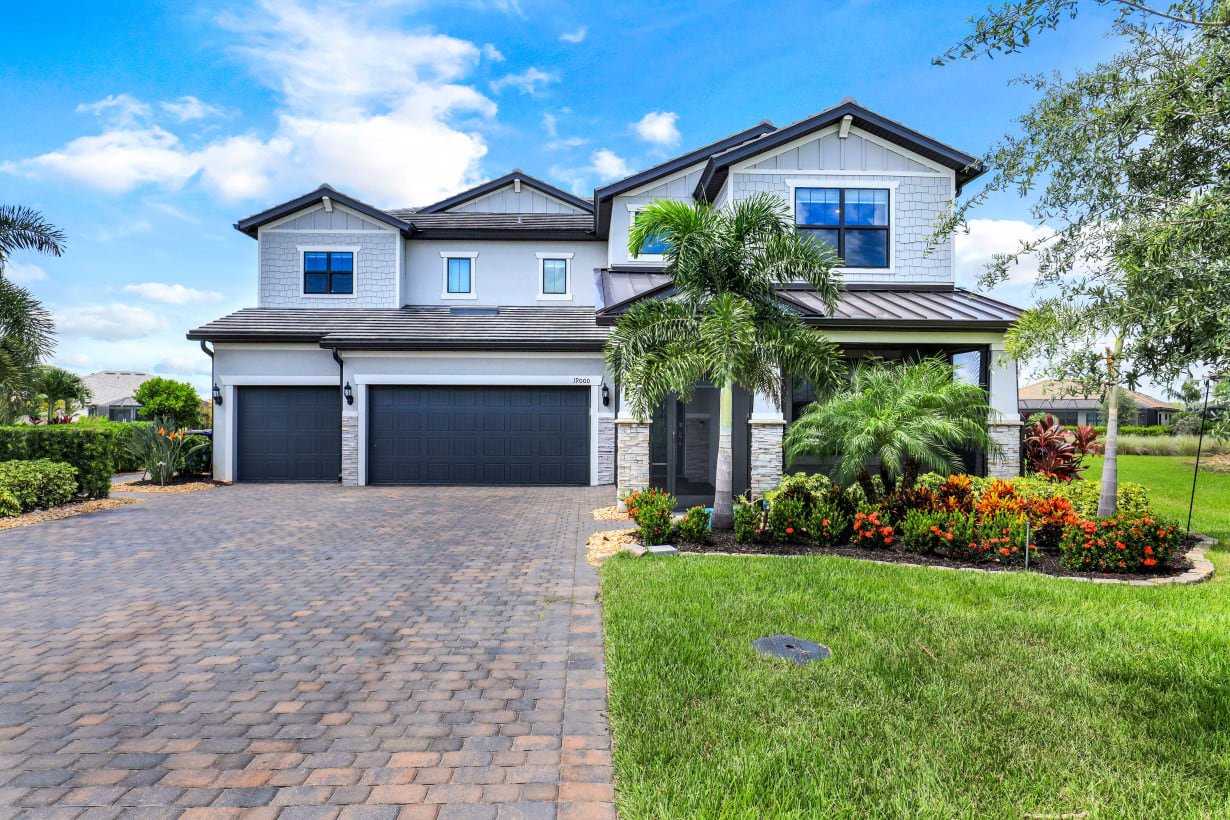
Thinking about buying or selling in Southwest Florida? Tell us what you are trying to do and we will tell you honestly what it will take. McGreevy and Comisar, Domain Realty Group.