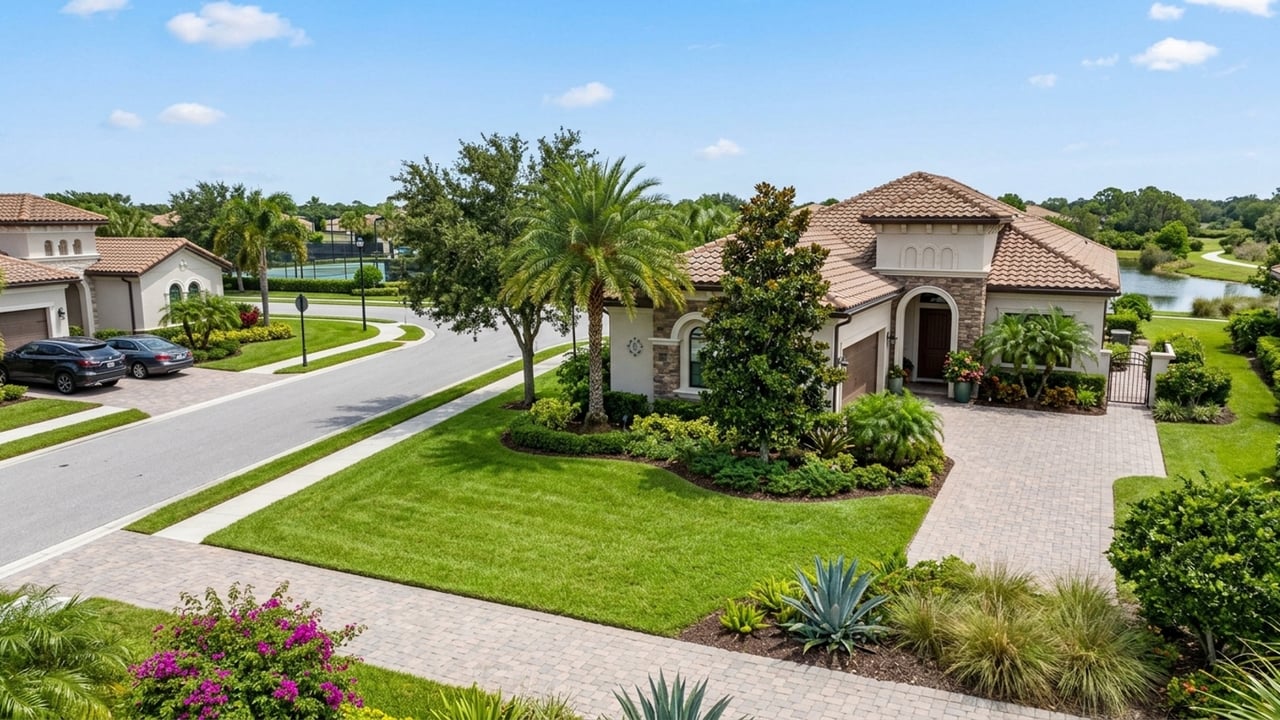
Housing Options and Retirement Communities in Bonita Springs, FL
Bonita Springs Jesse McGreevy September 17, 2026
Bonita Springs Jesse McGreevy September 17, 2026
As of mid-2026, the median sale price for homes in Bonita Springs, FL is around $570,000, with roughly 738 homes sitting in active inventory. That's a steady selection - enough that you're not forced into a rushed decision, but not so much that sellers are desperate.
Finding the right fit here means knowing what you're actually buying into: the fee structures, the community rules, the property types. Buyers looking specifically at retirement communities and the broader reality of living in Bonita Springs will find the range surprisingly wide - from manufactured-home cooperatives with minimal overhead to luxury gated neighborhoods where the amenities rival a resort.
The Housing for Older Persons Act (HOPA) sets the legal foundation for age-restricted communities nationwide. The common 80/20 rule requires that at least 80% of occupied units house at least one resident who is 55 or older - that threshold is what gives a community the legal right to restrict buyers and renters by age.
Beyond that federal baseline, what you actually experience day to day depends entirely on the type of community you choose. Structure, ownership model, and the level of daily support vary more than most buyers expect before they start touring.
These are independent-living neighborhoods built around shared recreational amenities. You own your home, pay monthly or quarterly HOA dues, and the association handles the common areas. Properties run from attached villas to larger single-family homes, and exterior upkeep is typically the association's responsibility - which is exactly what draws a lot of buyers here.
Independent living facilities operate closer to residential hotels: you rent an apartment, and communal dining and activities are part of the package. Assisted living adds daily personal care and medical support for residents who need it.
Continuing Care Retirement Communities, or CCRCs, layer multiple levels of care on a single campus. The idea is that you move in while you're healthy and can transition to assisted living or nursing care without relocating entirely.
Senior apartments are age-restricted rentals without the medical component of assisted living - a straightforward option for older adults who want to downsize without a purchase commitment.
Mobile-home communities in this area often operate as resident-owned cooperatives. You buy the manufactured home and a share in the community itself, which produces a different fee structure than you'd see in traditional real estate. Worth understanding before you compare monthly costs.
Homes here spend an average of 76 days on the market before closing, and buyers are landing at roughly 94.5% of the original list price. During a recent month, 195 homes sold across the city. None of that screams panic on either side of the table, which means there's room to negotiate if you've done your homework.
Valencia Bonita is the name that comes up first in any conversation about luxury 55+ living in Bonita Springs. Developed by GL Homes, it's a 347-acre gated neighborhood off Bonita Beach Road, positioned between VillageWalk and Bonita National Country Club. The development includes 997 single-family homes and villas, and the centerpiece is a 45,000-square-foot waterfront clubhouse with a full spa, pool, outdoor bar, tennis and pickleball courts, and two dog parks. Palmira and Worthington Country Club also belong in this tier.
Buyers who need a lower entry price tend to look at manufactured-home 55+ cooperatives. Bonita St. James Village is one option in this category - age-restricted living without the price tag that comes with a large clubhouse and resort amenities. The trade-off is a smaller footprint, but the monthly carrying costs reflect that directly.
Buying locks in your base housing cost, though you'll still face annual property taxes and the possibility of HOA fee increases. Renting keeps you flexible - useful if you want to spend a season here before committing to a purchase.
Renters skip the maintenance headaches. Buyers build equity in a market where housing demand has stayed consistent.
Bonita Springs carries a cost of living index of 120 - that's 20% above the national average and 23% above the Florida state average. Housing is the main driver. Local housing costs run about 61.4% above the average city, so this isn't a market where you can afford to underestimate your monthly budget.
The average senior apartment in Bonita Springs runs $1,832 per month, with most units falling somewhere in the $1,850 to $2,715 range. Building age, location, and included amenities move that number up or down. Waterfront views and updated interiors push toward the higher end, reliably.
HOA and condo fees vary considerably depending on the property type. The county-wide median sits at roughly $469 per month. At Valencia Bonita, single-family home owners pay $360 per month, while villa owners pay $450 per month to cover landscaping and shared amenities. On the other end of the spectrum, Bonita St. James Village charges around $95 per month. That gap matters when you're working out a fixed monthly budget.
Short answer: generally no. Medicare focuses on medical expenses - it doesn't cover room and board in independent or assisted living facilities.
If you need help funding long-term housing costs, you're looking at private funds, long-term care insurance, or specific state Medicaid waivers if you qualify. A financial advisor is the right person to help you map that out; it's not something to figure out after you've already signed a contract.
Bonita Springs currently has about 3.8 months of housing supply, which puts it in reasonably balanced territory for buyers. The Gulf Coast location delivers beach access, golf courses, and nature preserves. Florida's lack of a state income tax gets mentioned by practically every buyer moving to Bonita Springs from out of state, and the warm winter climate is the obvious draw for the seasonal crowd. The local infrastructure is built to handle a large population that swells and contracts with the seasons.
That 120 index for the cost of living in Bonita Springs is something you feel in your actual monthly spending. Groceries and utilities track closer to national averages, but the 61.4% housing premium is real and requires honest planning - especially if you're working with a fixed income. Property taxes and homeowners insurance belong in that calculation too. Coastal Florida insurance premiums have real teeth, and buyers sometimes underestimate them until they see the first quote.
Access to medical care is a practical priority for most buyers in this market, and the region has multiple regional hospital networks and specialized outpatient centers to draw from.
Daily conveniences - groceries, pharmacies, restaurants, and various activities around Bonita Springs - are distributed throughout the city. The layout generally assumes you're driving, so before you fall in love with a specific neighborhood, check how far it puts you from the services you'd actually use every week.
Buying into an age-restricted community means accepting that an HOA governs how you use and maintain your property. The rules exist to protect a specific standard of living, and the association enforces them. Read the bylaws before you make an offer - not after closing.
The maintenance reduction is the headline benefit. For attached villas, associations typically handle lawn care, exterior painting, and roof repairs - a meaningful shift in how much time and money you spend on the physical property.
You also get private access to amenities: resort-style pools, fitness centers, organized social programming. These aren't add-ons you pay for separately; they're woven into the neighborhood structure.
Associations regulate property modifications, parking, and how long guests can stay. You can't change your landscaping or exterior paint color without approval. That level of oversight works well for some buyers and feels suffocating to others - know which camp you're in before you buy.
HOA fees can and do increase annually as insurance and maintenance costs rise. If you're on a fixed income, build in a buffer for that.
Online listings will get you oriented, but they won't tell you whether the roads are noisy at 7 a.m. or whether the clubhouse feels well-maintained or tired. Tour in person, and go at different times of day. What looks peaceful on a Tuesday afternoon can feel different on a Saturday morning.
A local real estate agent can pull the community's financial documents and flag any history of special assessments - information that doesn't show up in the listing photos.
Ask about the reserve fund. A low reserve balance means the association doesn't have enough set aside for major repairs, and that gap eventually lands on homeowners as a special assessment. Ask for the current balance and the most recent reserve study.
Ask about rental restrictions too. Many communities cap the number of units that can be rented at any given time, or require minimum lease terms - relevant if you're thinking about renting the place out during the months you're not here.
Contact the community's sales center or a local agent to schedule a showing. While you're there, look at the actual condition of the clubhouse, roads, and landscaping - not just the model unit.
If you can, talk to current residents. They'll tell you things the marketing materials won't.
The county-wide median HOA fee is $469 per month. Fees vary widely: Valencia Bonita charges $360 per month for single-family homes and $450 for villas to cover landscaping and amenities, while manufactured-home co-ops like Bonita St. James Village charge around $95 per month.
No. The federal 80/20 rule requires that at least 80% of occupied units have at least one resident who is 55 or older - only one person in the household needs to meet the age threshold. That said, individual communities can set tighter requirements, so check the specific bylaws.
Valencia Bonita is the top luxury option, with a 45,000-square-foot waterfront clubhouse, full spa, and tennis courts. Palmira and Worthington Country Club are also notable in this category. For specifics on golf and beach memberships, verify directly with each association - those arrangements can change.
Bonita Springs carries a cost of living index of 120, with housing costs running 61.4% above the national average. You'll want to compare Bonita Springs and its specific local housing premiums against what you find in neighboring Southwest Florida cities before drawing conclusions.
It depends on the community's bylaws. Many HOAs restrict how often and for how long you can rent, and minimum lease terms are common - specifically to discourage short-term vacation rentals. Read the rental policy before you buy if this matters to your plan.
Resale is generally the faster path. The city currently has about 738 homes in active inventory, representing roughly 3.8 months of supply, and resale homes are spending a median of 76 days on the market before closing.
Our team’s unprecedented professionalism, skill, and attention to detail has allowed us to set sales records for the past 20+ years. We will ensure your buying or selling experience exceeds your expectations.