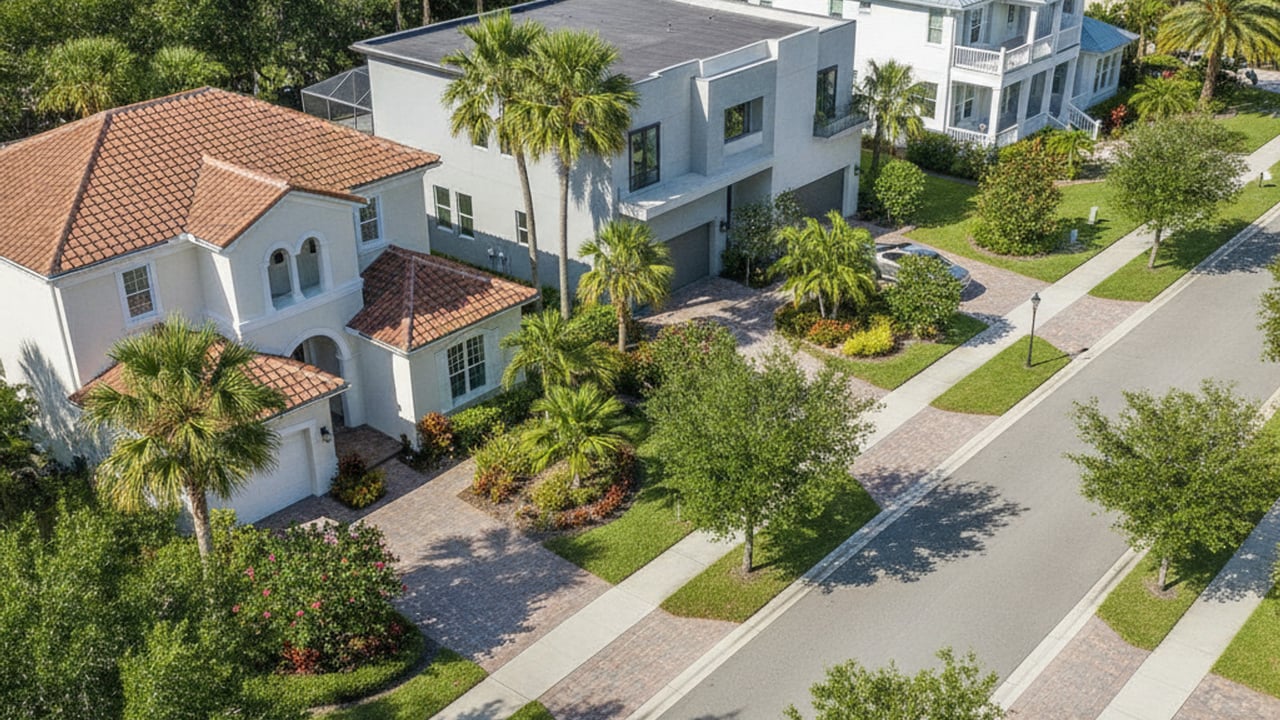
Understanding Property Taxes in Bonita Springs, FL for 2026
Bonita Springs JESSE MCGREEVY August 13, 2026
Bonita Springs JESSE MCGREEVY August 13, 2026
The median sale price in the Bonita Springs, FL housing market right now is around $570,000, with homes sitting on the market roughly 76 days. If you're budgeting for a purchase here, property taxes are a real line item - not a rounding error. Recent data shows 195 homes sold in the area, which tells you buyer interest in Southwest Florida hasn't cooled off.
Property taxes in Florida are assessed at the county level, so as a Bonita Springs homeowner you're dealing directly with Lee County. Knowing how the county calculates your bill, what exemptions you can claim, and when payments are due keeps you from getting blindsided after closing.
Florida has no state income tax, which means local governments lean hard on property and sales taxes to fund everything from roads to schools. In Bonita Springs, your property tax bill reflects levies from Lee County, the city itself, the school district, and several local agencies - all stacked together into one combined millage rate.
That rate shifts slightly depending on exactly where your property sits and whether it falls inside a special district. Two homes a few streets apart can have meaningfully different bills.
The effective property tax rate in Lee County generally runs between 1% and 1.2% of a home's assessed value, which tracks closely with the broader Florida average. If you own inside the Bonita Springs city limits, you're paying the county rate plus a municipal millage rate for local city services. Buyers coming from high-tax states often like what they see here - but the final number always comes back to what the county says your property is worth.
Millage rates are set annually by the Lee County Commission, the Bonita Springs City Council, and the school board as part of their budget process. Here's the thing worth understanding: even if the millage rate itself drops in a given year, your total tax bill can still go up if your property's assessed value rises. Florida law does cap how fast that assessed value can grow for primary residents, which provides some protection against big market swings - but it's not a freeze.
The Lee County Property Appraiser values every parcel in Bonita Springs as of January 1 each year. That valuation is what drives the tax bills mailed out in the fall.
Your bill is essentially a straightforward multiplication problem: taxable value times the combined millage rate for your specific tax district. Once you understand the pieces, the math isn't complicated.
Market value is what a buyer would pay for the property today - in Bonita Springs, that's approximately $590,806 for a typical home. Assessed value is the number the county actually uses for tax purposes, and it's usually lower than the open-market price. For long-term residents with homestead exemptions, the gap between those two numbers can grow significantly over time because state-mandated caps slow the assessed value's climb.
Florida calculates property taxes using millage rates: one mill equals one dollar of tax for every $1,000 of assessed property value. So if a home has a taxable value of $400,000 and the combined millage rate is 15 mills, the tax bill is $6,000. That combined rate pulls from the county, city, public schools, and water management districts.
Take a buyer purchasing near the current median sale price of $570,000. If the county appraises that home at $450,000 and the buyer qualifies for a $50,000 homestead exemption, the taxable value drops to $400,000. Apply a hypothetical 15-mill rate to that $400,000 and you're looking at a $6,000 annual property tax bill.
One thing I tell every buyer: don't rely on the current owner's tax bill as your benchmark. A property's assessed value typically resets after a sale, so what the seller paid last year tells you almost nothing about what you'll owe next year.
To get an accurate picture before you make an offer, use the online tools from local government offices or run your own estimate based on the purchase price.
A reasonable rule of thumb for Florida is to calculate 1% to 1.2% of your expected purchase price. At the current median sale price of $570,000, you should budget roughly $5,700 to $6,800 annually. That range gives you a safe cushion when you're working out monthly mortgage payment calculations.
The primary ZIP codes for the City of Bonita Springs are 34133, 34134, 34135, and 34136. Tax rates can vary across these areas depending on specific municipal boundaries and fire districts, so the ZIP code matters. The Lee County Property Appraiser's website lets you pull the exact millage rate for any specific address - that's the most precise way to run your numbers.
Property taxes aren't the whole story. Florida funds state government largely through sales tax, which applies to most retail purchases, commercial real estate leases, and short-term rentals. Individual counties can layer their own local discretionary surtaxes on top of the state baseline.
Florida's base state sales tax rate is 6%. Lee County adds a local surtax, bringing the total combined sales tax rate for purchases made in Bonita Springs to a higher percentage. That combined rate applies to everything from home appliances to dinner out.
Whether you're shopping in 34134 near the coast or 34135 further inland, the sales tax rate is consistent across Bonita Springs. The rate follows county boundary lines, not individual city or ZIP code lines - so there's no ZIP code shopping to be done here.
The Lee County Tax Collector handles billing and payment collection for all Bonita Springs properties. Bills go out to homeowners on November 1 each year.
If your taxes aren't escrowed through your mortgage lender, you're responsible for making those payments directly - no reminders beyond that initial bill.
Florida property tax records are public information, and they're easy to find. Anyone can visit the Lee County Tax Collector's website, search by a Bonita Springs address or owner name, and pull up current and historical tax bills. Before closing, it's worth running that search to confirm there are no outstanding tax liens on the property.
The tax collector's online portal accepts payment by e-check, credit card, or debit card. E-check is typically free; credit card payments usually carry a convenience fee. You can also mail a physical check or go in person to a local tax collector office.
Taxes become due November 1 and are delinquent if not paid by March 31 of the following year. Florida runs a discount system to incentivize early payment: pay in November and you get a 4% discount. That discount shrinks by 1% each month until March, when the full face value is due. If you're paying out of pocket rather than through escrow, November is the obvious month to write that check.
Florida has several exemptions that reduce a home's taxable value - and none of them apply automatically. You have to go through the Lee County Property Appraiser and file for them yourself.
That step is worth doing. For most homeowners, the homestead exemption alone makes a meaningful difference in what they owe year over year.
The Florida homestead exemption reduces a primary residence's taxable value by up to $50,000. Qualifying also triggers the Save Our Homes cap, which limits annual assessed value increases to 3% or the inflation rate - whichever is lower. Veterans, surviving spouses, and individuals with certain disabilities may qualify for additional exemptions beyond the standard homestead.
Homeowners aged 65 and older who meet specific income requirements may qualify for an additional homestead exemption in Lee County, which can provide meaningful relief for retirees on fixed incomes. The income limits and application deadlines are posted on the property appraiser's website - check there for current figures rather than relying on anything secondhand.
If you think the county has overvalued your property, you can challenge it. Start with an informal review through the appraiser's office to discuss the valuation. If that conversation doesn't resolve things, you can file a formal petition with the Value Adjustment Board - you have 25 days from receiving your Notice of Proposed Property Taxes in August to do so.
New builds and master-planned communities come with tax quirks that catch buyers off guard. Bonita Springs has seen steady development, so this applies to a real slice of the market here.
Understanding how new construction is taxed - and what a Community Development District actually means for your bill - keeps your first-year budget from going sideways.
When you close on a new-construction home, the initial tax bill is often based only on the vacant land value because the structure wasn't complete on January 1. The following year, the appraiser assesses the finished home - and that bill jumps. Always estimate your taxes based on the final purchase price, not what the builder quotes you from the land-only assessment.
Many neighborhoods in Bonita Springs fall under a Community Development District (CDD), authorized under Chapter 190 of the Florida Statutes. CDDs levy special assessments to fund infrastructure like roads, water systems, and neighborhood amenities. Bonita Springs has numerous CDDs - such as Brooks of Bonita Springs CDD, Bonita Village CDD, and Bay Creek CDD - and those charges appear right on your annual property tax bill alongside county taxes. When you're comparing homes, always check whether a property sits in a CDD.
Property tax burdens vary across Southwest Florida based on municipal services and county budgets. Florida's overall tax environment is considered favorable, but local millage rates are what determine your actual cost of ownership in any specific town.
Towns with extensive local services or large public infrastructure projects generally carry higher municipal millage rates. Properties in specific fire districts or newly formed CDDs also tend to see higher total bills than those in older, unincorporated areas. If a community is heavily amenitized, expect the tax burden to reflect that.
Homes in unincorporated parts of Lee County often have lower total tax bills because they aren't paying city-level millage rates. That said, those properties may rely on well water, septic systems, or private trash collection - costs that show up somewhere else in your budget. The tax rate alone doesn't tell the whole story.
It depends on the specific tax district and county. Bonita Springs property taxes are assessed by Lee County, where the combined rate typically runs around 1% to 1.2% of assessed value. Rates in nearby cities depend on their respective county and municipal millage calculations.
You apply directly through the Lee County Property Appraiser - online or in person - before the annual deadline. Qualifying reduces your taxable value by up to $50,000 and also triggers the Save Our Homes assessment cap.
The Lee County Tax Collector mails bills on November 1 each year. Pay in November and you get a 4% discount; that discount drops by 1% each month until the full amount is due in March.
Yes, almost certainly. Florida law requires the Lee County Property Appraiser to reassess the property at its just market value the year following a purchase, which removes the previous owner's Save Our Homes cap. Base your estimates on your purchase price, not on what the seller was paying.
Yes. Florida allows homeowners to transfer accumulated Save Our Homes savings to a new primary residence through a process called portability. You apply for portability when you file for your new homestead exemption with Lee County.
It depends on the community. Bonita Springs has numerous CDDs - including Brooks of Bonita Springs CDD and Bayside Improvement CDD - that levy special assessments for infrastructure. Those charges are collected on your annual Lee County tax bill right alongside standard property taxes, so you'll see them itemized when you look up any specific address.
Stay up to date on the latest real estate trends.
Fort Myers
Fort Myers
Fort Myers
Fort Myers
Fort Myers
Fort Myers
Fort Myers
Estero
Our team’s unprecedented professionalism, skill, and attention to detail has allowed us to set sales records for the past 15 years. We will ensure your buying or selling experience exceeds your expectations.