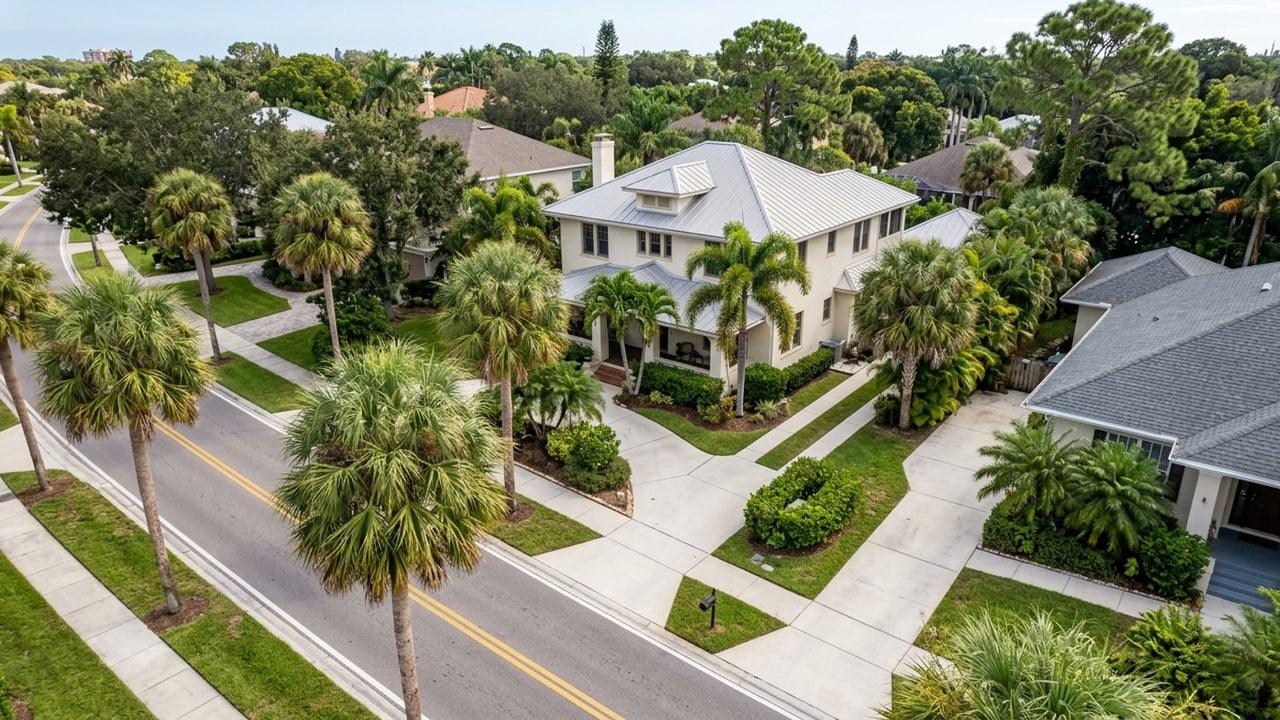
What to Expect When Buying a Home in Fort Myers, FL
Fort Myers Jesse McGreevy September 17, 2026
Fort Myers Jesse McGreevy September 17, 2026
Fort Myers anchors the Cape Coral-Fort Myers metropolitan area, serving a population of about 875,607 residents in a recent estimate. The city itself has grown fast - adding roughly 16% more residents since 2020 to reach an estimated population of 101,581.
If you're buying here, you're looking at a market where the median sale price hovers around $334,800. That range covers downtown condos, established single-family homes along McGregor Boulevard, and quite a bit in between.
Housing inventory in Fort Myers currently sits at roughly 713 available homes - a mix of new construction, 55+ communities, and historic properties near the downtown River District. That's a meaningful number, and it matters for how you approach the search.
Homes are taking an average of 74 days to sell right now. That's slower than previous years, which means you actually have time to look more than once before writing an offer.
Fort Myers draws a wide range of buyers - year-round residents relocating for work, people picking up a winter property, and everything in between. As the county seat of Lee County, it sits close to major employment centers and municipal services, which keeps demand broad.
First-time buyers often gravitate toward South Fort Myers or San Carlos Park, where you tend to get more space per dollar. Active adults frequently look at the specialized golf and recreation developments scattered throughout the area.
The median sale price has dipped about 6% year-over-year. With 4.4 months of supply on hand, this market leans slightly toward buyers - there's real room to negotiate on both price and terms.
Sellers are accepting offers at an average of 94.9% of their list price, and only about 2% of homes are selling above asking. Make offers based on recent comparable sales. You don't need to bid over asking to get a deal done here.
The median sale price for a home in Fort Myers is approximately $334,818, based on mid-2026 data - below the national average, which is part of why the city attracts so many out-of-state buyers. During the most recent tracking period, 493 homes sold across the city, spread across multiple price tiers from entry-level townhomes to luxury waterfront estates.
Entry-level homes and condos often list below the median, which gives buyers with tighter budgets real options. Single-family homes in established subdivisions generally price closer to the $334,000 median or above, depending on square footage and how recently they've been updated.
The upper end of the market is a different conversation entirely. Properties in areas like Gulf Harbour Yacht and Country Club push well above the median - private boat docks, direct access to the Caloosahatchee River, and price tags to match.
Seventy-four days on market changes your strategy. You don't have to rush an offer the morning a home hits the Multiple Listing Service.
With the average sale-to-list ratio around 94.9%, it's worth identifying listings that are overpriced relative to recent sales. Sellers in this environment are generally willing to negotiate to get to closing.
Fort Myers has distinct areas - brick-paved historic streets, master-planned communities, waterfront enclaves, and everything in between. The Downtown Fort Myers area, also called the River District, offers walkable streets, the Arcade Theatre, and the Sidney & Berne Davis Art Center. Drive south and east and the character shifts quickly to larger subdivisions and golf course communities. Before you focus your search, it's worth spending time in these different zones to see which one actually fits how you live day to day.
Whiskey Creek has a settled, established feel - mature landscaping, older homes that have been well maintained. McGregor Boulevard, lined with thousands of cabbage palms, connects many of the city's historic properties, including the Edison and Ford Winter Estates.
Buyers who want direct water access tend to focus on Gulf Harbour Yacht and Country Club. Deep-water marinas, upscale amenities - but plan for higher price tags and association fees before you fall in love with a listing there.
Gateway functions almost like a small town within the city - extensive trails, sports facilities, nearby schools, and commercial space and dining built into the development. It's a popular choice for buyers who want most of what they need close at hand.
Pelican Preserve is built around the 55+ active adult model, with a large town center and 27 holes of golf. If you're considering either of these communities, read the homeowners association rules and monthly dues carefully before you make an offer.
Fort Myers sits on the southwestern coast of Florida, serving as the commercial and governmental hub of Lee County. The Caloosahatchee River connects the city to the Gulf of Mexico, and Interstate 75 and U.S. Route 41 run north and south through the area - your main arteries to Naples to the south and Punta Gorda to the north.
Getting around within Lee County is almost entirely car-dependent. That's worth factoring into your daily budget and routine before you commit to a specific part of town.
Primary ZIP codes include 33901 for the downtown area, along with 33905, 33907, 33908, and 33966. Wikipedia lists additional Fort Myers ZIP codes spanning 33901-33903, 33912-33913, 33916-33919, 33965-33967, and 33993-33994.
The ZIP code matters more than people expect. Property taxes and insurance rates vary by location, and you'll want to confirm whether a property sits within the actual city limits or in unincorporated Lee County - that distinction affects which municipal services you receive.
Southwest Florida International Airport (RSW) is the main commercial hub, about 14 miles from the city center - a real convenience if you travel frequently or if family is flying in to visit. Page Field (FMY), a general aviation airport, sits just 4 miles from downtown. Punta Gorda Airport (PGD), roughly 22 to 24 miles away, adds domestic flight options through budget carriers if you're flexible on routing.
The overall cost of living in Fort Myers runs approximately 4% above the national average, driven largely by housing and transportation costs. Florida's lack of a state income tax helps offset some of that, but it doesn't cover everything.
The median household income within the city limits is around $63,000. Countywide in Lee County, that median rises to over $76,000 - a reflection of the broader earning potential across the surrounding metro area.
Budget carefully for local utility rates, property taxes, and homeowners insurance premiums. Insurance is the number that catches a lot of buyers off guard - windstorm and flood coverage in coastal Florida adds real weight to your monthly housing expenses, and you need to price that out before you finalize what you can afford.
Groceries, healthcare, and dining out track closely with national averages. Entertainment costs are more variable - free beach access on one end, expensive golf club memberships on the other.
Fort Myers has grown by more than 16% since 2020, landing at a recent estimated population of 101,581 - the 25th-most populous city in Florida. That pace of growth drives demand for commercial services, restaurants, and infrastructure, but it also means you'll be dealing with ongoing road construction and new development projects for the foreseeable future. That's not a reason to avoid the area, but it's useful to go in with your eyes open.
Over 490 homes sold in Fort Myers in recent months, and the overwhelming majority of those transactions involved a local real estate agent. Someone who knows Lee County's specific zoning rules and flood maps can save you from expensive surprises. Someone who doesn't can cost you.
Look for agents with recent closing experience in your target neighborhoods specifically - an agent who specializes in downtown condos may not be the right fit if you're evaluating a master-planned community in Gateway.
Interview more than one agent before you sign a buyer representation agreement. Ask about their recent sales volume in Fort Myers and how familiar they are with the homeowners associations in the areas you're considering.
Local brokerages often have early access to upcoming listings. An active agent monitors the Multiple Listing Service daily and moves fast when something matching your criteria hits the market.
Real estate commissions are negotiated between the seller and their listing broker, who often offers a portion to the buyer's agent. Before you make an offer on anything, review your representation agreement so you understand exactly how your agent gets paid and whether any broker administration fees apply.
Ask your agent for an estimated net sheet early in the process. It lays out all expected costs - agent fees, title insurance, local recording charges - so you're not reading numbers for the first time at the closing table.
Start with pre-approval from a local lender. A pre-approval letter tells sellers you're a serious buyer, and it tells you exactly what budget you're actually working with. Once you have it, you can tour homes that fit your real numbers rather than a rough guess.
In a market where homes are sitting for an average of 74 days, you have time to see a property more than once before drafting an offer. Use that time.
Local lenders understand Florida's insurance and tax requirements in a way that out-of-state banks often don't. They'll factor estimated windstorm and flood insurance premiums into your debt-to-income ratio - which matters a lot in a coastal market. You'll need recent pay stubs, tax returns, and bank statements to get through the process. Once you're in it, keep your finances steady: don't open new credit cards or make large purchases until after closing.
Florida homes need thorough inspections - HVAC systems, roofs, and any sign of water intrusion are the areas that tend to produce surprises. Hire a licensed inspector and take the due diligence period seriously.
If the inspection turns up issues, your agent can negotiate repairs or a credit at closing. Once all contingencies are cleared, the title company prepares the final documents and you're headed to closing day.
It depends on where the property sits and how you're financing it. If the home is in a designated high-risk flood zone and you're using a mortgage, your lender will require flood insurance. Cash buyers can decide for themselves, though it's generally a smart call in coastal Florida.
Closing costs typically range from 2% to 5% of the purchase price, covering title fees, lender charges, and prepayments for escrow. Property taxes in Lee County vary by municipality, and buyers should expect them to be reassessed at the new purchase price after closing.
Yes. Local and state programs often provide down payment and closing cost assistance to qualified buyers. Eligibility depends on household income, the home's purchase price, and completing an approved homebuyer education course.
Insurance premiums have become a significant piece of the monthly housing budget in Florida. Get insurance quotes during your inspection period - you need to know the premium fits within your pre-approved debt-to-income limits before you're committed.
It comes down to lifestyle and commute. Fort Myers has the historic districts, direct access to Interstate 75, and the primary airport. Cape Coral is known for its extensive network of navigable canals and newer residential construction. Neither is the wrong answer - they just suit different priorities.
Summer. May through September typically brings fewer out-of-state buyers, and while inventory can dip slightly, sellers tend to be more willing to negotiate. If your schedule allows for it, that window is worth considering.
Our team’s unprecedented professionalism, skill, and attention to detail has allowed us to set sales records for the past 20+ years. We will ensure your buying or selling experience exceeds your expectations.