Estero, FL vs. Cape Coral, FL: A Tale of Two Florida Lifestyles
Jesse McGreevy March 18, 2026
Jesse McGreevy March 18, 2026
If you are looking at homes in Southwest Florida, you have likely narrowed your search down to two heavy hitters: Estero and Cape Coral. On a map, they look like neighbors, separated only by a short drive. But on the ground? They are completely different worlds.
Choosing between them isn't just about the price of a 3-bedroom house; it’s about choosing a specific lifestyle. Estero is a master-planned, manicured corridor defined by gates and golf courses. Cape Coral is a sprawling, water-centric "boating wonderland" defined by canals and independence.
Before we dive into the numbers, here is a quick look at how these two markets stack up in 2026.
At a Glance:
Estero
Primary Vibe: Manicured, gated, “village” feel
HOAs: Very high (≈95% of homes)
Water Access: Limited (river/bay access via boat launches)
Median Age: ~48 (mix of retirees & students)
Commute: Easy access to I-75
Cape Coral
Primary Vibe: Boating lifestyle, open, suburban sprawl
HOAs: Very low (≈90% non-HOA)
Water Access: Extensive (400+ miles of canals)
Median Age: ~38 (younger workforce)
Commute: Requires crossing toll bridges
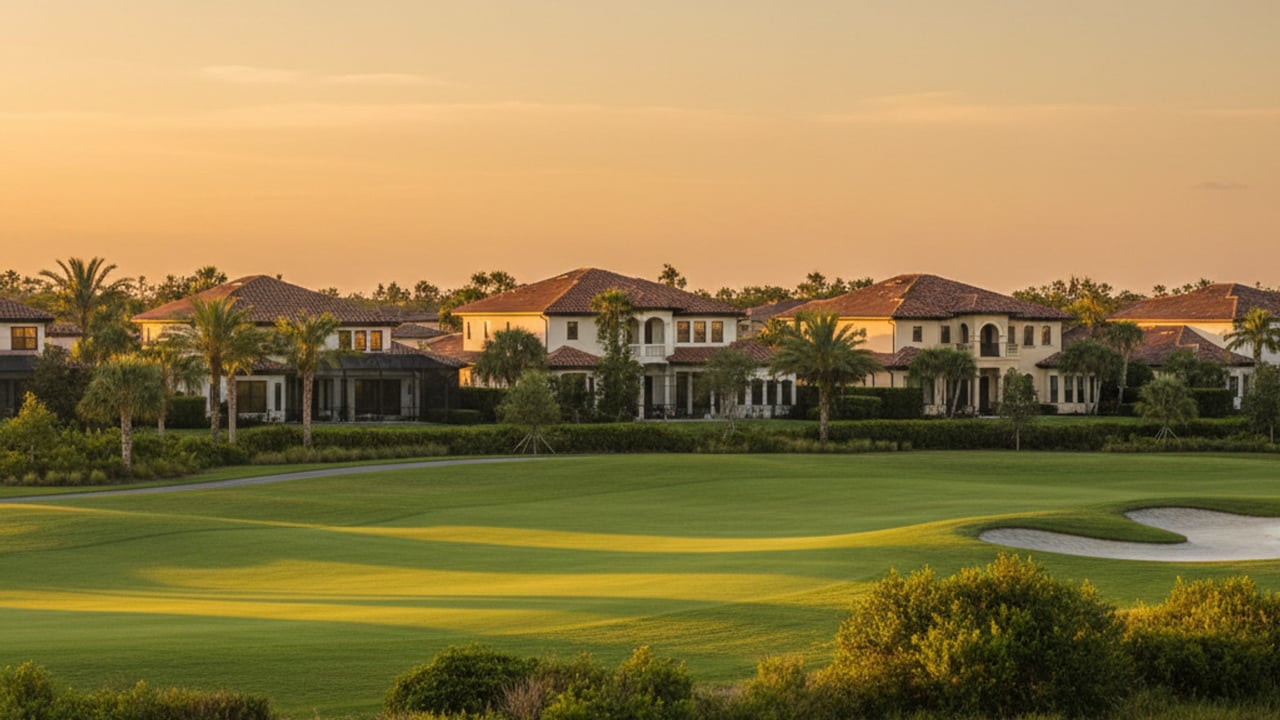
When you drive into Estero, you immediately notice the landscaping. The Village of Estero has strict design codes—signage is uniform, architecture is Mediterranean, and the grass is always green. It feels like "resort-style living." Almost everyone here lives in a gated community that serves as its own mini-town, complete with a clubhouse, pickleball courts, resort pools, and 24-hour security guards. It’s quiet, organized, and polished.
Because Florida Gulf Coast University (FGCU) is right off Ben Hill Griffin Parkway, there is a pocket of college-town energy near the campus, but the rest of the village remains calm and upscale.
Cape Coral offers a completely different energy. We call it "backyard living." Life here revolves around your private lanai, your pool, and—if you’re lucky—your boat dock. Most neighborhoods are open, meaning no guard gates and no uniform design codes. You might see a brand-new modern mansion right next to a 1970s ranch. It feels more like a traditional suburb, but with a massive footprint. It is younger, a bit louder, and offers a sense of freedom you don't get inside Estero's gates.
This is where the math gets tricky. A common mistake buyers make is looking at the list price and assuming Cape Coral is drastically cheaper. While the purchase price might be lower in the Cape, the monthly carrying costs often even out once you factor in the "hidden" fees specific to each city.
In Estero, the sticker price is higher, and your monthly overhead is defined by Homeowners Association (HOA) and Community Development District (CDD) fees.
HOA Fees: Expect to pay anywhere from $300 to over $600 per month. However, this often includes your cable, high-speed internet, lawn care, and access to massive amenities.
CDD Fees: Many communities pass the cost of infrastructure (roads, sewers) to the homeowner. This appears on your annual tax bill but can add $1,000 to $3,000+ a year to your costs.
In Cape Coral, you generally avoid the HOA fees, but you have to watch out for the Utility Expansion Project (UEP) and flood insurance.
The UEP: The city is slowly moving from well/septic to city water/sewer. If you are buying in the North Cape (specifically the North 1 East area active in 2026), you might face an assessment of roughly $30,000 to $35,000. This is a debt attached to the property. You can pay it off or roll it into your taxes, but you must budget for it.
Flood Insurance: Because Cape Coral is a peninsula crisscrossed by canals, a huge portion of the city is in a high-risk flood zone. Premiums here are typically higher than in Estero, which sits slightly further inland and has newer construction built to higher elevation codes.
If you plan to work in Fort Myers or travel frequently, your location matters immensely.
Estero is a strategic win for commuters. The village sits directly along the I-75 corridor. You can hop on the interstate and be at Southwest Florida International Airport (RSW) in 15 minutes or down to Naples in 20 minutes. There are no toll bridges to pay just to get home. Traffic can get heavy on Corkscrew Road during "season" (winter months), but you generally have multiple escape routes.
Cape Coral is a peninsula, which creates a funnel effect. To get to Fort Myers or I-75, you must cross a bridge—usually the Cape Coral Bridge or the Midpoint Bridge. Both have tolls ($2), and both get backed up during rush hour.
The Reality: A commute from Cape Coral to downtown Fort Myers is manageable (about 30 minutes). However, if you need to get to I-75 during peak times, it can take 45 minutes or more just to get out of the city.
Let’s clear up a major misconception: Neither Estero nor Cape Coral has a beach on the Gulf of Mexico.
If your goal is toes-in-the-sand, Estero is actually the better location. From the center of Estero, you are a 15 to 20-minute drive down Bonita Beach Road to reach Bonita Beach or Lovers Key State Park. It is a straight shot west.
Cape Coral is surrounded by water, but it is mostly river and canal water. To get to a Gulf beach (like Fort Myers Beach or Sanibel Island), you have to drive back across the bridges and through South Fort Myers. Depending on traffic, that drive is 30 to 60 minutes.
Shopping: Estero wins hands down. Coconut Point Mall is an outdoor lifestyle center with high-end retail and dining that attracts people from all over the county.
Boating: Cape Coral wins. With over 400 miles of canals, you can keep a boat in your backyard. Just make sure you check if the canal has "Gulf access" (no bridges blocking your path) or if it is "freshwater" (landlocked).
Parks: The Cape Coral Yacht Club is a historic staple, though currently undergoing major redevelopment in 2026 to modernize the facilities.
Both cities are popular for relocation, but they handle infrastructure differently.
Safety Estero consistently ranks as one of the safest areas in the region. FBI data usually places its crime rate about 66% below the national average. It is quiet, well-lit, and heavily patrolled by private security within the gated communities. Cape Coral is also statistically very safe for a city of its size (200,000+ residents), though property crime is slightly more common simply because neighborhoods are open and accessible to the public.
Schools Estero is served by the South Lee County school zone, which includes newer high schools and elementary schools that generally receive high marks. Cape Coral has a unique system: The Cape Coral Charter School Authority. This is a municipal charter system exclusive to the city, offering parents an alternative to the county public school district. It is a massive draw for residents who want more educational choices.
Healthcare Access to care is excellent in both. Estero residents utilize Lee Health at Coconut Point, a massive medical complex with an ER. Cape Coral has its own full-service hospital, Cape Coral Hospital (also Lee Health), located centrally on Del Prado Blvd.
Here is the quick verdict to help you decide.
Estero Pros & Cons
Pros: Central location on I-75, upscale "resort" aesthetic, fantastic shopping (Coconut Point), generally lower flood risk.
Cons: High monthly HOA fees are unavoidable, traffic congestion on Corkscrew Rd, less nightlife/entertainment than bigger cities.
Cape Coral Pros & Cons
Pros: Waterfront living at a better price point, no HOAs (freedom to park boats/RVs), younger demographic, massive canal system.
Cons: Toll bridges to leave the city, heavy traffic on veterans Pkwy, active UEP assessments ($30k+ in some areas), higher flood insurance costs.
It depends on how you buy. Cape Coral homes often have lower list prices, but higher flood insurance and utility assessments can narrow the gap. Estero homes cost more upfront and have high monthly HOA fees, but you often save on insurance and future infrastructure costs.
Neither city sits directly on the Gulf beach. However, Estero is physically closer to the sand; it is a quick 15-20 minute drive to Bonita Beach or Lovers Key. Cape Coral residents must cross bridges and drive through Fort Myers to reach the beach, which takes significantly longer.
Estero has the advantage of being directly on I-75, making travel to Naples or the airport seamless. Cape Coral residents must cross toll bridges to reach Fort Myers, which creates significant bottlenecks during morning and evening rush hours.
For the most part, no. About 90% of Cape Coral consists of single-family homes on open streets with no HOA fees or restrictions. Estero is the opposite; roughly 95% of the housing stock is located inside gated communities with strict HOAs and CDD fees.
Our team’s unprecedented professionalism, skill, and attention to detail has allowed us to set sales records for the past 20+ years. We will ensure your buying or selling experience exceeds your expectations.