Estero, FL: Where Ancient History Meets Modern Vision
Jesse McGreevy March 18, 2026
Jesse McGreevy March 18, 2026
If you are looking at homes for sale in Estero, you probably see a polished, modern village known for the stunning Coconut Point Mall, the bustling campus of Florida Gulf Coast University (FGCU), and distinct architectural standards. It feels master-planned and deliberate. But if you scratch the surface, you’ll find that Estero has one of the most bizarre and fascinating backstories in all of Southwest Florida.
We aren't just talking about citrus farmers and fishermen, though we had those too. We are talking about an ancient Native American capital built on shells and a utopian "Hollow Earth" society that brought electricity to the region long before the big cities had it.
Located right between the hustle of Fort Myers and the luxury of Naples, Estero sits along the winding Estero River. Understanding this history isn't just trivia; it explains why the village looks the way it does today. The preservation of historic lands—specifically the state parks—is the direct reason we enjoy so much green space and river access amidst our modern growth.
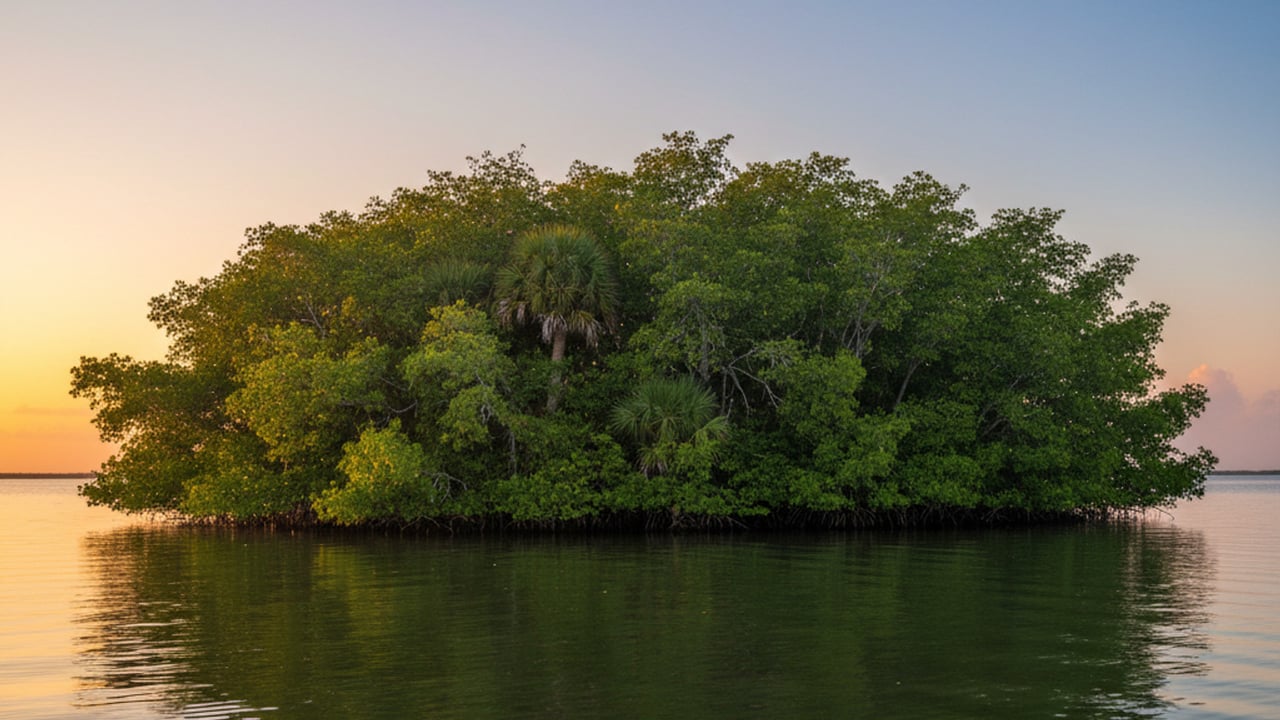
Long before modern zoning laws or golf course communities, this area was the domain of the Calusa Indians. If you take a boat out into Estero Bay today, you will see Mound Key Archaeological State Park. To the untrained eye, it looks like a mangrove island, but it is actually a massive feat of engineering.
Mound Key is believed to be "Calos," the ancient capital of the Calusa kingdom. The entire island was constructed by hand using shells, accumulating over centuries to rise more than 30 feet above the waters of the bay. It wasn't just a pile of refuse; it was a complex city with canals and high ground for the chief’s residence.
The Spanish arrived in the 1500s—figures like Ponce de Leon and Pedro Menendez—and even established the first Jesuit mission in the New World right here on Mound Key. However, by the mid-1700s, disease and conflict led to the decline of the Calusa. Today, visiting Mound Key gives you a quiet, rugged glimpse into a civilization that ruled Southwest Florida for nearly 2,000 years.
After the Calusa era, the area remained wild and largely unsettled until the late 19th century. One of the first pioneers to make a real mark was Gustave Damkohler, a German homesteader who arrived around 1882.
Damkohler saw potential in the land, specifically for growing citrus. However, the waterway running through his property had a rather unfortunate name: "Mosquito Creek." Realizing that "Mosquito Creek" wasn't exactly great for branding or attracting neighbors, the early settlers renamed it the Estero River. "Estero" is simply the Spanish word for estuary, reflecting the river's connection to the bay.
In those days, the river was the highway. There were no major roads connecting Estero to the rest of the state. The early economy relied entirely on citrus farming, fishing, and sawmills, with goods shipped down the river and out to the Gulf of Mexico for trade.
This is the part of the timeline where Estero’s history takes a sharp turn from the typical "pioneer farming village" narrative. In 1894, the area became the home of the Koreshan Unity, led by a charismatic physician named Cyrus Teed.
Teed, who took the name "Koresh" (the Hebrew translation of Cyrus), preached a unique set of beliefs called Cellular Cosmogony. The central tenet was that the earth was not a convex sphere floating in space, but a hollow shell, and that the entire universe existed inside that shell. He brought his followers from Chicago to Florida to build a "New Jerusalem."
Gustave Damkohler, the pioneer mentioned earlier, deeded over 300 acres of his land to the Unity to help them build their utopia.
The Koreshans were incredibly industrious. They didn't just build homes; they built a self-sustaining city. They constructed a bakery, a printing press, a machine shop, and a grand Art Hall for concerts and plays. Perhaps most impressively, they built a power plant that provided the first electricity to the area, lighting up the dark Florida nights years before neighboring towns had power.
They were also politically ambitious. In 1904, the Koreshans successfully incorporated the "Town of Estero." This wasn't a small village; they incorporated a massive tract of land covering about 110 square miles. However, the local non-Koreshan residents weren't thrilled with the Unity’s politics or their vast boundaries. Due to rising political tensions, the state legislature abolished the town's incorporation in 1907.
As the 20th century rolled on, the Koreshan influence began to wane, and the mechanics of Florida travel changed forever.
In the 1920s, the construction of the Tamiami Trail (US 41) and the arrival of railroads shifted commerce from the river to the road. Estero became a quiet agricultural stop along the highway. The Koreshan membership declined over the decades, and in a final act of preservation, the remaining members donated their land to the state in 1961. This is why we have the Koreshan State Park today—a beautiful slice of history that remains protected from development.
The area remained relatively sleepy until the late 1990s. The opening of Florida Gulf Coast University (FGCU) in 1997 changed the game, bringing youth and infrastructure to the region. This was followed by the construction of Germain Arena (now Hertz Arena) and the massive Coconut Point retail center.
With rapid growth came the need for local control. Residents wanted to ensure that Estero didn't just become another stretch of highway sprawl. They wanted to protect the aesthetic and the quality of life. On December 31, 2014, the community officially incorporated as the Village of Estero. This allowed the locals to manage zoning, keep taxes low, and maintain the high architectural standards you see when driving through the village today.
The name "Estero" is the Spanish word for estuary. It was adopted in the late 19th century to replace the river's original, less appealing name, "Mosquito Creek." The change was likely driven by early settlers like Gustave Damkohler to make the area sound more inviting for commerce and settlement.
The park preserves the settlement of the Koreshan Unity, a utopian community that moved to Estero in 1894 believing in a "Hollow Earth." The last surviving members donated the land to the state in 1961 to preserve their buildings, botanical gardens, and history for future generations.
The modern Village of Estero was officially incorporated on December 31, 2014. However, the Koreshan Unity had previously incorporated the "Town of Estero" in 1904, though that municipality was abolished by the state in 1907.
Our team’s unprecedented professionalism, skill, and attention to detail has allowed us to set sales records for the past 20+ years. We will ensure your buying or selling experience exceeds your expectations.